
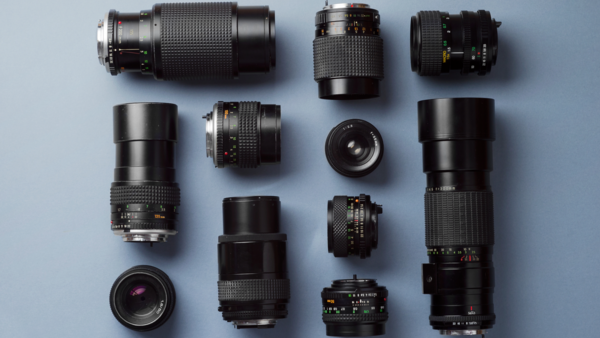
I love G.A.S. (Gear Acquisition Syndrome). I really do. But being as "stony broke" as I am, I am very restricted in the purchases I can actually make. That being said, if I had the means, I would be up to my eyeballs in all the new shiny things. It's a siren song we all hear: "Surely if I just had this—insert arbitrary piece of gear here—my images would finally be the best."
Let's take a deep dive into the idea that having the latest and greatest models or the newest tech can somehow transform us into better photographers. I know from personal experience that the performance gap between the current generation of camera technology and the one before it is much smaller than the gap in the skills required to truly observe nature. Being solely focused on gear is rarely a pursuit of quality; it is a psychological trap—a form of procrastination that provides a false sense of progress.
In this piece, I want to explore the logical drivers of consumerism, the law of diminishing returns in technical specifications, and, of course, the non-gear investments that provide true, lasting improvements: time, deliberate practice, and an overall vision for your work.
The Psychological Trap of Consumerism
There seems to be a very distinct, underlying message from the camera industry. It's one that targets us at a subconscious level: "Your creativity is limited by your current equipment."
Gear as Procrastination: This targeted message creates a persistent feeling of inadequacy that we are told only a brand-new purchase can fix. In the way these tools are marketed to professionals and hobbyists alike, it's almost as if buying a new camera is sold as an easier, more immediately gratifying path than the hard work of learning in-field techniques, mastering advanced post-processing, studying light theory, or committing to difficult practice routines. Dare I say, for many, the new camera is a convenient and expensive detour from the actual work of self-improvement. It's much easier to input a credit card number than it is to spend four hours in the rain mastering a composition.
The Dunning-Kruger Effect and Gear: If I may briefly touch on a psychological concept known as the Dunning-Kruger effect. A simple way to think about this is the gap between confidence and actual skill. Without pointing fingers, this often affects beginners or slightly advanced hobbyists who are under the illusion that overvaluing the status of their gear will mask a lack of fundamental mastery.
When you haven't mastered the fundamentals, it is very easy to wrongly accuse your equipment of technical flaws. You see high noise or soft focus and assume the sensor is outdated, when in reality, the fault lies in a lack of understanding of exposure or shutter speed, for example. The gear becomes the scapegoat for our own ignorance.
The Law of Diminishing Returns in Technical Specs
When we look at the history of digital cameras, there was once a time of giant leaps. If you go from a simple point-and-shoot to a modern entry-level mirrorless, the jump in technology is significant. But when you look at an entry-to-mid-level mirrorless camera today versus a high-performing flagship, the "performance gap" has narrowed to a sliver.
We are often sold on "marginal gains" that have very little impact on the average photographer's work.
Frame Rates: Sure, frames per second are a thing, but unless you are professionally working in a genre like sports or wildlife that demands high-speed bursts, having 30 fps versus 10 fps isn't as important as the marketing makes you think.
The Megapixel Holy Grail: High megapixels give you an advantage when cropping, certainly. But if you aren't printing billboards, the difference between 24 megapixels and 60 (or 120) isn't something to lose sleep over. A 24-megapixel sensor is still capable of producing world-class, professional results.
The Dynamic Range Myth: I'll be honest: the dynamic range of modern cameras is a wonder to behold. But if there is only a marginal difference between 14 and 15 stops of light, I'm okay with that. Putting a massive marketing emphasis on a single stop of light doesn't justify the cost of an upgrade. Trust me, if you're a newbie reading this: 14 stops is more than adequate.
Low-Light Performance vs. the Humble Tripod: Low-light performance is another topic that dominates the spec world. While cameras like the Sony a7S series made significant jumps in ISO capability, they aren't the "be-all and end-all." In a low-light landscape situation, a $100 tripod will always serve you better than a $4,000 low-light body. You have the option to stack images in post-production, or simply have the patience to let a long exposure do the work. I am not going to be turned off the notion that my camera takes clean images at ISO 6,400 rather than 12,800.
The Focus Shift: In my humble opinion, the narrative needs to shift. Let's be completely honest: almost any camera created in the last five years is "good enough." If you find yourself in a perpetual pursuit of technological perfection, that pursuit itself becomes a distraction from the pursuit of compelling art (say that 10 times fast).
The Real Investments: Time, Education, and Focus
There are many things one can do as a "real" investment into their progression that don't involve circling like a crow over the shiny things being shoved into our faces each year. Let's call this your Non-Gear Investment Portfolio.
The Investment of Time: The first and most obvious investment is time. Deliberate patience, the studying of masterworks, or simply spending a dedicated amount of time observing how light moves across a hill can have huge ramifications for your work. You cannot buy the ability to see light; you have to earn it through observation.
Education and Mentorship: There is always further education. The crew at Fstoppers has created some wonderful video tutorials that cover almost every genre. But there is also the investment in mentorship or photography clubs that provide high-quality, honest critiques. If you can develop a "thick skin" and take on board what is said about your images, it has huge implications for how you see future opportunities.
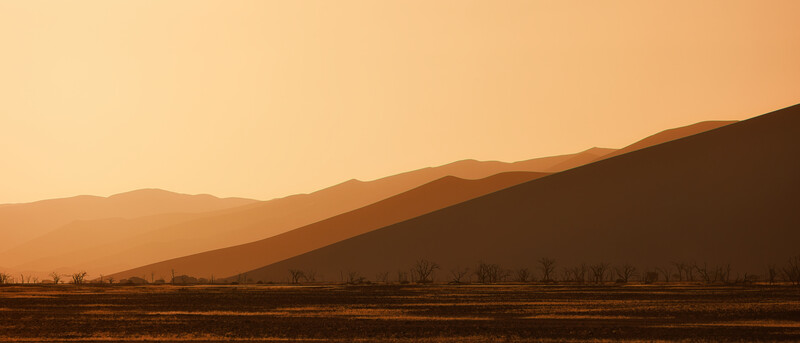
Experiences Over Equipment: Instead of upgrading a camera you don't really need to upgrade, spend that budget on travel. There is nothing more progressive for your art than the experience of photographing new scenes—landscapes, architecture, or historical sites you've only ever seen in books. Experiences have been a total game-changer for me personally. Finding access to unique locations provides a fresh subject matter and a perspective that no new sensor could ever provide. The image below was captured on a half-busted Sony a7 III that was years old, but the location and the experience of it all just make it so much more. Tutorials like Photographing the World: Japan II – Discovering Hidden Gems are a great example of how location-driven work can elevate your photography.
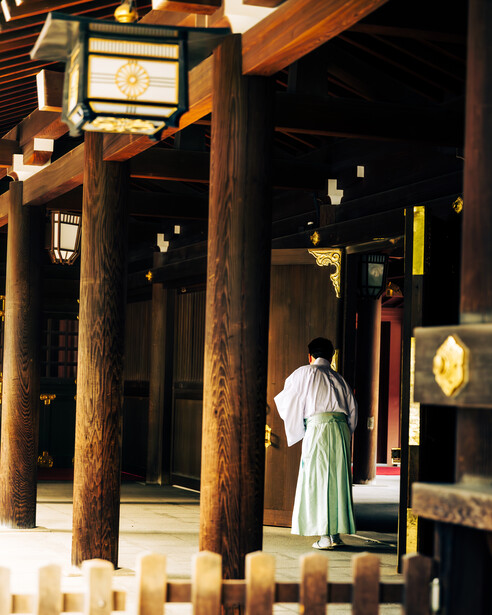
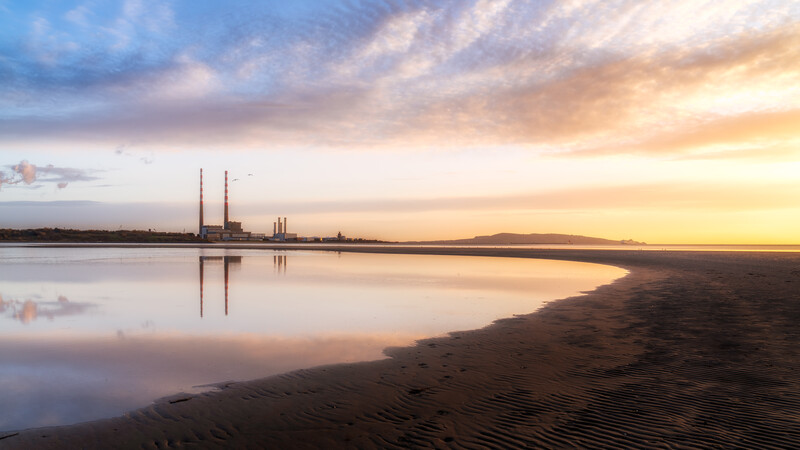
The Intimacy of the Tool: One of the beautiful things about owning a specific camera for a long time is the intimate connection you develop with it. Many of you could probably sit blindfolded and still successfully change your ISO, shutter speed, and aperture. You know the menus instinctively. Now, imagine standing with a brand-new, complex camera you just switched to—moving from Sony to Canon, for example—while overlooking a rapidly changing sunset. You are overwhelmed by the menus and the new button layout. In that moment, the "better" camera has become a barrier to your creativity. For me, mastery comes when the camera essentially disappears from the equation and I can use it instinctively. The image below was one that could have so easily been missed, and I fully attribute its capture to me knowing exactly where and what every button and wheel on my camera did.
Art Books Over Accessories: Before I committed to Van Life and still had "bricks and mortar" around me, I started building a small library of photography and art history books. These weren't just gear manuals that come in the box; they were books on the "art of seeing." Perhaps instead of buying a new f/2.8 lens to replace your f/4, that money could be spent on starting your own photography library. There are so many wonderful photography books and art books out there, you are spoiled for choice.
How to Measure "Better" Photography
As we shift away from gear-focused metrics, we have to redefine what constitutes "better" photography. True progression has nothing to do with equipment.
New Metrics of Success:
- Pre-visualization: The ability to see a scene in your mind and execute that vision even in complex, challenging lighting conditions.
- Troubleshooting: The capacity to troubleshoot rapidly—to nail focus and exposure under pressure, whether at a wedding or in a rapidly changing storm.
- Cohesiveness: The ability to maintain a strong, unique style across a whole portfolio. Once you begin to see things differently, you start to understand what defines you.
- Emotional Connection: The power to make a viewer pause and feel something. If your image makes someone stop in their tracks, that is a far greater achievement than having the sharpest pixels on the internet.
The Universal Language: The best photographers in the world are transcendent of their medium. Their images look great whether they are viewed on a phone screen or printed ten feet wide. This boils down to the original vision they set out to achieve, not the technical fidelity of the file. That is the core value we should all have as artists.
Conclusion
As we wrap this up, it's important to remember: gear is a tool, not a talent. The returns on investment in self-improvement will always outstrip the marginal gear upgrades that are crammed into our eyeballs each year. It boils down to this: the better photographer is the one who sees better, not the one who buys better.
Put the credit card away. Pick up your current camera and head out the door. The only thing limiting your progress is the time you aren't spending with your camera. From the smallest backyard flower to the mightiest peaks of Patagonia, there is an abundance of things to learn just outside your door.
Call to Action: Unplug from the gear news and the product reviews that overwhelm your YouTube algorithm. Instead, dedicate this week to a single, focused skill-building exercise—like post-production or mastering high-key black-and-white processing. Use the tool you already have to its absolute limit, like the Sony a7 III sitting in your bag right now.


Join the Fstoppers community for free
-
Post comments and join in the discussions
-
Browse the site ad-free
-
Share your work and get featured in the community
-
Compete in the photo contests for fun and prizes
No comments yet