A concept that looks great in your head can fall apart the minute your subject steps onto the set, and the clock doesn't stop while you work out why. Knowing when to drop an idea and how to build a new one under pressure is one of the hardest parts of client work, especially when the client needs one specific thing from the images.
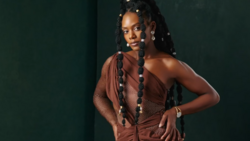
John Gress walks through a portrait session with an award-winning barber, where the plan was to photograph a model with a fresh haircut over a reflective surface. Gress had used Mylar for a similar image on an earlier shoot and expected a sheet of black plexiglass to look even better as a tabletop, but on set it didn't. Bringing the Mylar back out didn't help, and an attempt at using generative fill to fake a water look fell flat too. The bigger problem showed up once he turned on the 8x10 crop the hair competition required. Backing up far enough to fit the whole reflection shrank the haircut, and in a competition entry like this one, the haircut needs to take up a lot of the frame.
Next, Gress moved the model's face closer to the plexiglass, then leaned the sheet against a ladder beside the model, and every version still gave up too much of the subject. The barber kept bringing the conversation back to one point: the picture has to be about the hair. With the reflection idea not working, Gress started going through his bookmarks on set to find a new concept.
Format constraints like an 8x10 crop are easy to lose track of when you're composing on a 3:2 sensor, because the camera shows you more of the scene than the final crop will keep. An 8x10 is a 4:5 ratio, the same shape as several common print sizes and vertical social posts, so this comes up far outside hair competitions. Many cameras let you change the aspect ratio or display framing guides, and tethering software such as Capture One can overlay a crop mask so every frame lands on screen in its final shape. The same thinking applies to any client brief with a fixed output: magazine covers that need room for type, banner images that get cropped to a thin strip, or product shots that will sit on a square grid.
The new direction came from those bookmarks: hair competition images lit with a cluster of small light sources. Small hard lights create crisp texture and strong contrast, which suits the fine detail a barber leaves with clippers. Gress built a multi-light setup with each light assigned one job: one on the face, a fill from below, an edge light over each shoulder, a hair light, and a light on the background. Switching setups didn't fix everything at once. The hair light was spilling too far and washing out the grainy texture of the hair, so he added a grid and pulled the light farther from the model to dim it and keep it contained. He also kept the lens at f/11 so the entire haircut stayed sharp from front to back. From there, the adjustments get smaller and more specific as he chases an outline around the head and a clean gradient through the fade, and each fix tends to take something else away.
What Gress plans to do differently the next time he lights a shoot like this is in the video above.


Join the Fstoppers community for free
-
Post comments and join in the discussions
-
Browse the site ad-free
-
Share your work and get featured in the community
-
Compete in the photo contests for fun and prizes