Shooting portraits at an event means working in whatever corner the venue hands you, with a line of people who all expect to look good and very little time to fuss over each one. A single strobe can give you soft, directional light that looks like it's coming through a big window in that space, but only if you shape it with more than a bare umbrella or softbox.
The space here is small, and the job is a brand launch where about 50 creators and influencers are scheduled to sit for portraits. Jiggie Alejandrino builds the whole station around a hand-painted 7 x 9-foot backdrop from Kate Backdrop and a main light made from two Manfrotto Pro Scrim kits, one medium and one large. He takes the frame of the medium scrim, fits it with a reflective panel, and pairs it with the diffusion panel from the large kit to form a book light. The strobe fires into the reflector, the light bounces back, and then it passes through the diffusion fabric before it ever touches the subject. The source is a Profoto B10X Plus, a 500 Ws strobe with a built-in battery, so there's no separate pack sitting on the floor of an already crowded room.
Fill comes from the other half of the large scrim kit, this time with a reflective panel installed and placed opposite the main light. Alejandrino uses it only to open up the shadows. He still wants the light to read as directional, so the reflector lifts the dark side of the face without evening everything out. Placement is the harder call. Every guest has a preferred side, and one fixed light can't flatter all of them, so he positions it based on the room and his best guess about which way most people will turn. His wife, who was on the guest list, has a favorite angle, and that tipped the decision toward her side.
Book lights started out on film and video sets, where gaffers needed a large, even source that wouldn't flare into the lens or throw a hot spot across an actor's face. The idea is easy to borrow. Softness depends on how big the source is relative to the subject, and bouncing into a wide panel effectively turns a small strobe head into a much larger one. The diffusion layer in front then smooths out the uneven spread that a reflector alone leaves behind. You give up some power in the process, often a couple of stops, which is why the approach pairs so well with a wide aperture and low ISO indoors. You don't need scrim kits to try it: a sheet of foam board and a diffusion panel clipped to a stand will get you surprisingly close, and the folding frames mostly buy you portability. For event work in particular, the broad wrap of a book light is forgiving. Guests aren't professional models, and they'll drift a step forward or turn their shoulders between frames, so a source that stays flattering over a wider range of positions saves you from constant corrections.
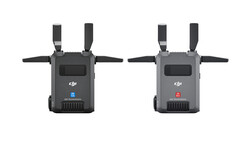
His exposure is 1/320 s, f/2, ISO 100, which kills the room's ambient light and leaves the strobe doing all the work. He shoots on a Sony a1 II with the Sony FE 50-150mm f/2 GM, a zoom that lets him go from a full-length frame to a tight crop without stepping backward into the crowd. That range comes in handy because the session doubles as product work for Audeze headphones, so close detail shots are part of the brief. An Accsoon CineView SE sends a live feed from the camera to a monitor running off a V-mount battery, so the person in front of the backdrop can see how they look while they're posing. The camera is also tethered to a laptop running Capture One and connected to a printer, which turns the station into a souvenir booth for every guest.
Alejandrino's full session under this light is in the video above.
Join the Fstoppers community for free
-
Post comments and join in the discussions
-
Browse the site ad-free
-
Share your work and get featured in the community
-
Compete in the photo contests for fun and prizes
No comments yet