
You'll always hear photographers say that you should create the work you want to be paid for. This is a practice I implemented early on but have refined over the years to help me attract new and larger clients, and that is spec shoots.
Sometimes, to help a potential client envision you working with them, they have to see what that could look like. For photographers in the commercial space, the ultimate way to do that is to have a spec shoot where essentially everybody on your team comes together to make something that looks like it was created for a particular brand. Then you would market it toward them with the hope of either having them hire you to shoot for them or potentially even licensing the photos you took, provided they're good enough. The trick with this, I've found, is really doing your research on the brand but also paying attention to how you're showcasing the product.
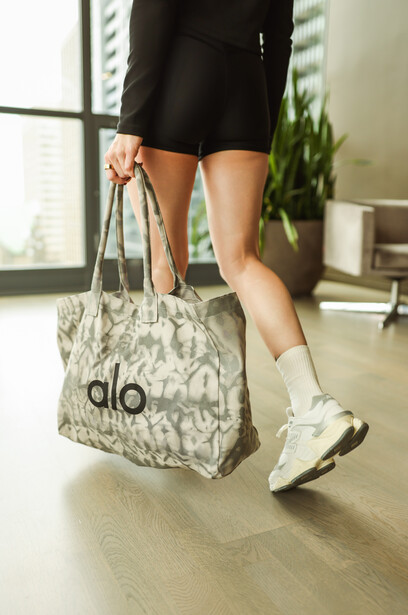
When I say this, I've seen examples of spec shoots where what was being sold got confusing and I wasn't sure exactly what the ad — the spec ad, that is — was for. Because of that, I feel like the brand wouldn't really resonate with the spec piece and then wouldn't pick it up and may not hire you to shoot for them, because it feels like there is some confusing messaging. So I do research on not only the types of shoots that a given brand does, how things are styled, how a model might be moving or posing, and how the light is. I then use that to inform the spec shoot along with my own style, so it creates something that feels like it would naturally work for the brand. During this, if there's anything where logos are being shown, labels, etc., I'm always trying to make sure that those are being showcased, because otherwise it could just be for any brand.
I like to go into these shoots in the same vein as how I would go into a client shoot — keeping what the client would care about in mind. That is to say that I put myself in the client's shoes and try to figure out what they would want out of a shoot, or what they don't even know they want. And whether or not I even know what that is, I envision myself as that client and ask: how do I want this story to be told?
What things are being showcased and what needs to be emphasized here to draw the viewer in? Because ultimately an ad is meant to entice somebody to buy something. So ultimately there are two things to keep in mind: how am I going to sell this to the audience, and what is the overall story of the spec shoot?
An example of this is a small spec shoot I did with some clothing from Alo Yoga, where I looked at some of their messaging and their photos and wanted to create something that aligned with that — something that had an elevated but natural feel and was in line with a lot of what their marketing materials show. I did this simultaneously as a camera and lens test of the Canon EOS R5 Mark II alongside the Canon RF 28-70mm F2L USM lens.
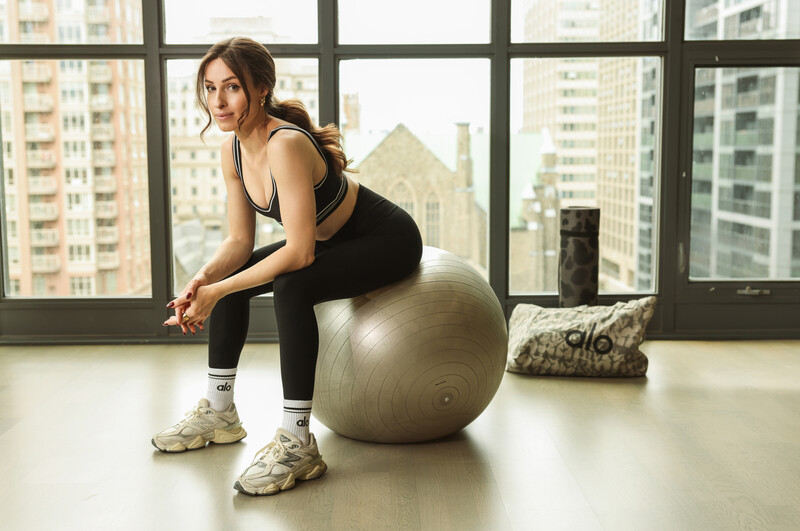
This is one of those scenarios where I will test out different cameras sometimes to see what works for me in a setting where the stakes are overall lower — where it's not on a direct client shoot. So if there are any hiccups, or I don't quite know the camera as well, I can get to know it during this time and then be able to use it with much more confidence on a client shoot down the road. So this is just a small way that I will sometimes test out different gear. But it's also a good opportunity if there are particular lighting techniques, different camera techniques, or different styles that you want to try.
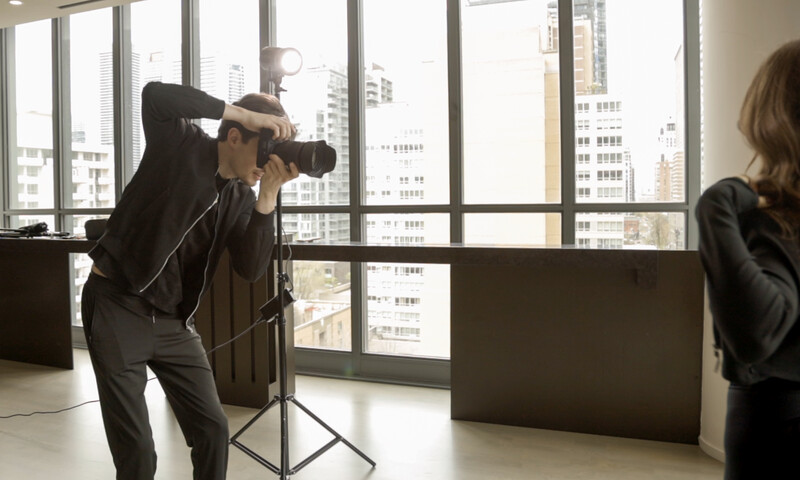
This is a great way to experiment: take inspiration from things that a brand has created and marry it with your own style. You not only create something new for your portfolio that looks like it was made for a specific company — and could even actually be for them — but you're also leveling up your skill set and broadening your comfort zone at the same time.
Personally, I try to avoid experimenting too much on client projects and like to use setups that I know I have, for the most part, already dialed in. Test shoots and spec shoots are when I might try to go out of my comfort zone more, and then I can take the techniques I've picked up from those shoots and apply them to my client work. Based on the ever-changing social media landscape and the desire by most clients for content — specifically short-form vertical video — a lot of my spec shoots have started incorporating that as well. Not just because it adds to my portfolio, but because if it is something the client would be interested in, it would ultimately sweeten the deal.
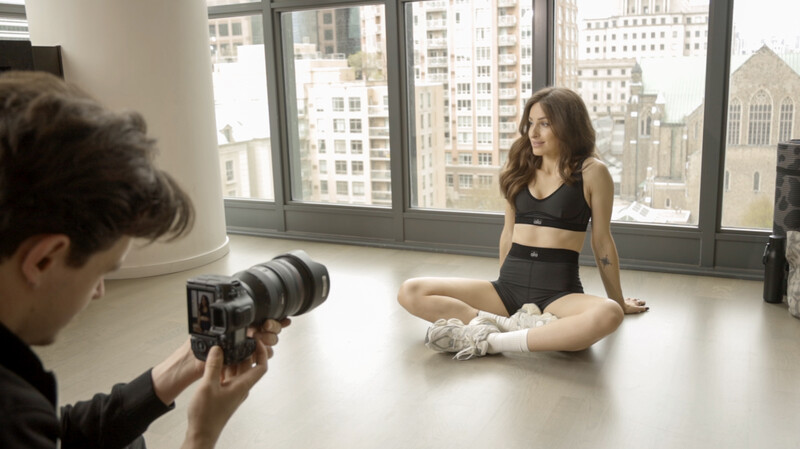
So, whether you have separate video and still setups or you use the same one like I did — I was hybrid shooting with the Canon EOS R5 Mark II — you are able to get a variety of shots that help tell the story. And that's also what I aim for with spec shoots. Sometimes you're just looking for one image, but usually I like to tell a bit more of a story or get a range of photos that can help flesh out more of a narrative, especially when working with a model or because a lot of my work is fashion-based.
Catering to that — having either different looks or different settings — can ultimately speak to the brand more. It also gives variety where if they don't like one shot, they might still like another, and it can help them see, in a larger sense beyond even just one photo, what the result of working with you would look like. Now, expectations must be set here: not every spec shoot will go anywhere. Not everyone will respond to the emails you send out. Not everyone will want to license things. Not everyone will want to hire you based on your spec work. But by doing these things, it does give you the best chance.
From there, I will try to find contacts at these companies and send them something in a way that grabs their attention — be it a formulated PDF, a pitch deck, or a different approach with a creative twist. I don't have any specific examples to call to mind at this moment, but I try to make it better than just attaching photos in an email. Then, even if these photos aren't picked up by the brand or they don't hire you, I will sometimes — if they're good enough — still consider using them in my portfolio if the work is strong enough.
But I won't add that particular brand to a client list on my website or anything like that, so it doesn't get confusing. So, ultimately, when you want to be shooting different work than you currently are, if you're in the commercial space and you're not currently doing spec shoots, this is how I approach them — and how I try to make them successful. Hopefully, they allow you to do the same.
Do you often do spec shoots? And if so, did I miss anything here that you have found valuable? Let me know, and I'll join in the discussion.
Join the Fstoppers community for free
-
Post comments and join in the discussions
-
Browse the site ad-free
-
Share your work and get featured in the community
-
Compete in the photo contests for fun and prizes
1 Comment
I've changed a lot over the years with my studio photography. Doing nature, animals you can't ask them to do a change...You take whatever they give to you. So extremely fast composition and adjustments are done compare to studio or on-site.
So I kept my skills in studio. I do test and spec shoots all the time because most of my photos have unique style and genre (mostly creative). Trying to get out of the "typical" photoshoots we are seeing everywhere. Most of my best shoots requires 2 hours of preparation for the models and sets. Lots of details need to be accounted.
In most of my photo sessions I do on average 150-200 shoots max in 2-3 hours. Taking 3 shoots and look at the results before moving to a new position. Save me tones of time in post, can adjust my gears or models positions. I use a large TV set at the studio to review each photos right after I took them. Directly connected over HDMI. No PC or Lightroom involved.