
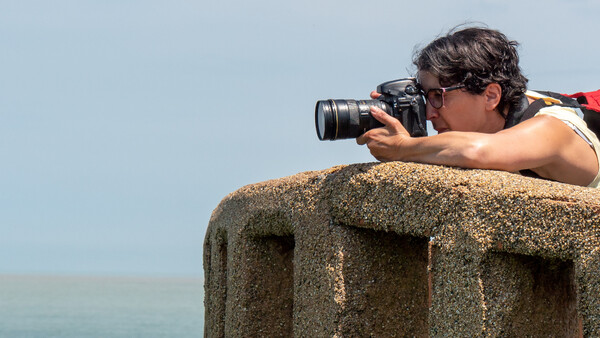
For decades, you could spot a professional photographer from across a crowded venue. That distinctive silhouette of a massive camera body with integrated grip, topped with a bazooka-sized white or black lens, wasn't just equipment. It was a declaration of intent, a badge of credibility, and often, a necessary investment to access the tools that separated professionals from everyone else. The flagship camera represented more than technical capability; it symbolized commitment to the craft and served as a visual shorthand for competence in an industry where first impressions matter.
But something fundamental has shifted in the camera industry. The technological moat that once protected flagship cameras has been drained. Today's mid-tier bodies deliver performance that would have been science fiction just five years ago, leaving flagship models as solutions searching for problems that most professionals simply don't have. The uncomfortable truth facing our industry is that for more than 98% of working photographers, that $6,000+ flagship represents a terrible return on investment. The era of the flagship camera as the default professional choice is ending, and it's time we had an honest conversation about why.
When Good Enough Became Exceptional
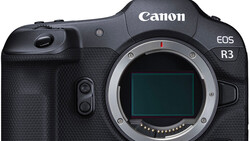
Let's start with autofocus, the feature that traditionally separated professional cameras from everything else. Compare any current flagship to its mid-tier sibling. Take the Nikon Z9 versus the Z8, the Canon R3 versus the R6 Mark II, or the Sony a1 versus the a7R V. In real-world shooting, their autofocus performance is functionally identical. Both tiers now feature AI-powered subject detection that locks onto human eyes, animal faces, and moving vehicles with uncanny precision. Both track subjects through complex scenes with confidence that would have seemed impossible just a generation ago. Yes, the flagship might acquire focus a few milliseconds faster in laboratory conditions, or maintain tracking through marginally more challenging scenarios. But when was the last time you lost a shot because your camera focused in 0.03 seconds instead of 0.02? The reality is that autofocus has become a solved problem. Whether you're shooting a bride walking down the aisle, a CEO's headshot session, or even most sporting events, today's mid-tier cameras deliver flawless performance. The flagship's theoretical advantage exists primarily in spec sheets and YouTube comparisons, not in delivered images.
Then there's speed, those headline-grabbing burst rates that manufacturers love to promote. The Sony a9 III shoots at 120 frames per second. The Canon R3 manages 30 fps with its electronic shutter. These are impressive numbers, certainly. But let's inject some pragmatism into this discussion. The Canon R6 Mark II's 40 fps electronic shutter or the Nikon Z8's 20 fps raw capability already exceeds what 95% of professionals actually need or want.
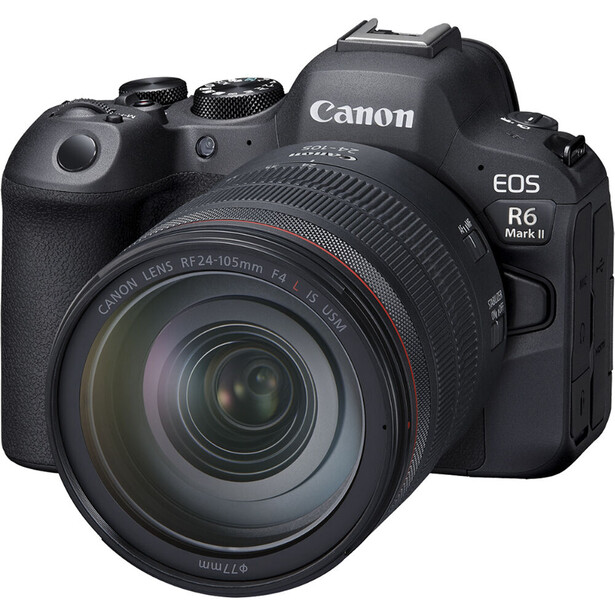
As for resolution, the sweet spot for professional work has crystallized around 24 to 45 megapixels, which is where many mid-tier bodies land, though some models push beyond to 61 megapixels. This range provides ample detail for large prints and aggressive cropping while maintaining manageable file sizes and reasonable low-light performance. Interestingly, many flagships don't even exceed this range, and when they do, the extra resolution often becomes a burden rather than a benefit for working professionals juggling storage costs and processing time. The Canon R3, for instance, uses a 24-megapixel sensor, actually lower resolution than many mid-tier options. This reveals an important truth: even manufacturers recognize that more megapixels don't automatically equal better professional tools.
The Premium That Doesn't Pay
So what exactly are you getting for that extra $3,000 to $4,000? Let's examine the features that manufacturers position as flagship exclusives and evaluate whether they justify their premium pricing.
Take 8K video, a specification that sounds impressive until you try to identify actual clients requesting it. The professional video industry has standardized around 4K delivery, and for good reason. It provides exceptional quality while remaining practical for editing, storage, and distribution. Most mid-tier bodies now produce gorgeous oversampled 4K. Unless you're delivering to IMAX theaters or creating content specifically for future-proofing archives, 8K is a feature you'll pay for but rarely use. The workflow implications are staggering as well. 8K files require massive storage arrays, powerful computers for editing, and exponentially longer render times. A single hour of 8K footage can consume over 500 GB of storage space. For the wedding photographer who might shoot video occasionally, or the hybrid shooter creating social media content, 8K isn't just overkill; it's an active impediment to efficiency.
The integrated vertical grip represents another traditional flagship advantage, and yes, it's convenient. The ergonomics are excellent, the weight distribution helps with longer lenses, and never having to attach or detach a grip saves time. But is that convenience worth thousands of dollars when a grip costs a few hundred? Modern battery technology has also evolved to the point where a single charge on a mid-tier body often lasts an entire wedding or event. The Canon R6 Mark II, for instance, is rated for over 760 shots per charge, and real-world usage often exceeds that. The ergonomic benefits of an integrated grip are real, but they're not $3,000 real.
Even build quality, once the unassailable fortress of flagship superiority, has been democratized. The Nikon Z8 features comparable weather-sealing to the Z9, though perhaps not identical in extreme durability scenarios. The Canon R6 Mark II uses magnesium alloy construction similar to higher-tier models, even if not to the exact same extent as the R3's more robust integrated grip chassis. These cameras can handle rain, dust, and the inevitable bumps of professional use with confidence. The practical difference in durability between a flagship and a quality mid-tier body has narrowed to the point where only photographers regularly working in truly extreme conditions would notice the difference. For the photographer shooting a beach wedding, a dusty music festival, or a rainy soccer match, modern mid-tier weather-sealing provides more than adequate protection.
Consider the global shutter in the Sony a9 III, which is undeniably impressive technology that eliminates rolling shutter distortion and enables flash sync at any shutter speed. Revolutionary? Absolutely. Necessary? Almost never. Professional photographers have been managing around rolling shutter limitations for years, and the scenarios where a global shutter provides a meaningful advantage are vanishingly rare outside of specific scientific or industrial applications. The ability to sync flash at 1/8,000th of a second sounds incredible until you realize that most professional work happens at sync speeds of 1/250th or slower anyway. It's a solution to a problem that most photographers solved years ago through technique and experience.
Following the Money
Here's where the conversation gets uncomfortable for flagship owners: the business math simply doesn't work. Let's examine the real numbers and opportunity costs involved in choosing a flagship over a mid-tier professional body.
Take the price difference between a Canon R3 and an R6 Mark II, roughly $2,500. Or compare the Nikon Z9 at around $5,900 to the newer Z6 III at about $2,700, a difference of approximately $3,000. That's not pocket change; it's a significant business investment that demands justification beyond "it's the best." In business terms, every dollar spent on equipment should either generate revenue or reduce costs. The flagship premium rarely accomplishes either goal effectively.
What could that money buy instead? A top-tier 70-200mm f/2.8 lens that will impact your image quality far more than a flagship body ever could. Glass has always been the more important investment, and the difference between professional and consumer lenses remains far more pronounced than the gap between flagship and mid-tier bodies. Or consider a complete professional lighting setup: two or three high-quality strobes, modifiers, stands, and wireless triggers. Lighting is what separates amateur work from professional results, yet many photographers skimp on lights to afford a flagship body they don't need.
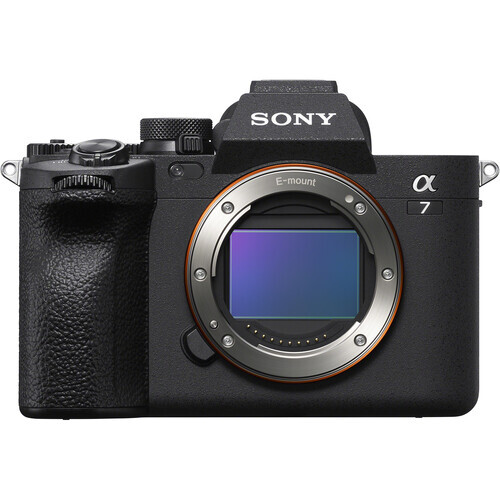
Perhaps most importantly, that $3,000 could buy a second mid-tier body for redundancy, something every true professional should prioritize over flagship bragging rights. Two R6 Mark II bodies cost less than one R3, yet provide complete backup capability, the ability to shoot with two different focal lengths simultaneously, and peace of mind that equipment failure won't end a shoot. The same math applies across all systems: two Z6 III bodies versus one Z9, two Sony a7 IV bodies versus one a1. The redundancy argument alone should end the flagship debate for most professionals.
The harsh truth is that clients can't see the difference between an image shot on a Z9 versus a Z8, an R3 versus an R6 Mark II, or an a1 versus an a7R V. They care about your vision, your reliability, and your ability to deliver. They notice when you show up late, when you miss important moments, or when your editing takes too long. They don't notice whether your camera shoots 20 fps or 30 fps. The camera is just a tool, and an increasingly commoditized one at that.
The Two Percent Exception
In the interest of intellectual honesty, let's acknowledge the photographers for whom flagships still make sense. They exist, but they're rarer than camera manufacturers would like you to believe. Understanding who actually needs flagship performance helps clarify why most photographers don't.
If you're shooting the Olympics, where the difference between 20 fps and 30 fps might mean catching or missing the gold medal moment, the flagship earns its keep. These photographers often shoot thousands of images in a single event, pushing their equipment to absolute limits in terms of buffer depth, processing speed, and durability. They need every possible advantage because their competition has it too. If you're a conflict photographer working in environments where equipment failure isn't just inconvenient but potentially life-threatening, the flagship's redundancy and tank-like construction provide peace of mind that transcends cost calculations. When you can't simply drive to the camera store for a replacement, ultimate reliability justifies any price.
Elite wildlife photographers pushing the absolute limits of autofocus tracking in challenging conditions represent another flagship-appropriate niche. When your subject is a bird in flight against a cluttered background, backlit and moving erratically, the marginal improvements in AF processing and tracking algorithms matter. Formula 1 photographers needing every technological advantage to freeze 200 mph action, or cinematographers working on productions where 8K acquisition is contractually required, these specialists represent the thin edge of the professional wedge where flagships remain essential tools.
But let's be clear about the numbers. This describes perhaps 2% of working professionals, and that's being generous. The wedding photographer, the portrait artist, the commercial shooter, the event documentarian, these photographers form the backbone of the professional photography industry. They work in controlled or semi-controlled conditions, with predictable subjects and reasonable technical demands. For them, a flagship provides virtually nothing that a mid-tier body doesn't already deliver. The local newspaper photographer covering city council meetings and high school sports doesn't need 120 fps burst rates. The portrait photographer working in a studio with controlled lighting doesn't need a global shutter. The wedding videographer, even one commanding premium prices, gains nothing meaningful from 8K video when clients are viewing their highlight reels on Instagram.
Rewriting the Rules
The definition of "professional equipment" needs updating for our current technological reality. It's no longer the camera with the highest price or the most extreme specifications. A professional camera is one that reliably produces exceptional results while making sound business sense. By that measure, today's mid-tier bodies aren't just "good enough" for professional work; they're optimal for it. They represent the sweet spot where capability, reliability, and value intersect to create tools that enhance rather than complicate a professional workflow.
This shift will force manufacturers to reconsider their strategies in fundamental ways. Flagships will likely (and have already) become even more specialized, targeting increasingly narrow niches with features that solve specific, high-value problems. We might see cameras designed specifically for sports photography with unprecedented burst rates and buffer depths, or models targeting cinematographers with raw video capabilities that current flagships can't match. Meanwhile, what we dismissively call the "prosumer" category will emerge as the true professional standard, offering the perfect balance of capability, reliability, and value. The term itself needs retiring, as these cameras are thoroughly professional tools used by working photographers to create exceptional images every day.
We're witnessing the democratization of professional imaging tools, and that's something to celebrate, not resist. When a $2,500 camera can match a $6,000 camera in every meaningful way for most professional applications, it's not the budget option that looks foolish. This democratization extends beyond just camera bodies. Lenses, lighting, and post-processing tools have all reached a point where exceptional quality is accessible at reasonable prices. The barriers to entry for professional photography have never been lower, which should push all of us to compete on creativity and business acumen rather than equipment budgets.
The question facing today's professional photographer isn't whether you can afford to buy a flagship camera. The real question is whether you can afford to ignore the smarter, more profitable path that the new generation of mid-tier bodies represents. In an industry where margins are tighter than ever and competition is fierce, choosing tools based on actual need rather than perceived prestige isn't just sensible; it's survival. Every dollar wasted on unnecessary capability is a dollar not invested in marketing, education, or business development. Every hour spent managing massive files from over-specced cameras is an hour not spent shooting, editing, or finding new clients.
The flagship era isn't ending because these cameras have gotten worse. It's ending because everything else has gotten so remarkably good that their reign no longer makes sense. The gap between flagship and mid-tier has narrowed to the point of irrelevance for most professional applications. And for the vast majority of working photographers, that's the best news the industry has delivered in years. It means more money to invest in what actually matters: lenses, lighting, marketing, and the business infrastructure that turns photography from a hobby into a sustainable career. The future belongs to photographers who recognize that professional success comes from making smart business decisions, not from owning the most expensive camera in the catalog.
Join the Fstoppers community for free
-
Post comments and join in the discussions
-
Browse the site ad-free
-
Share your work and get featured in the community
-
Compete in the photo contests for fun and prizes
28 Comments
To me if a professional has reasons to spend the money, it might not necessarily be because the results are better, but maybe because the reliability and longevity of the equipment is as superior as people imagine the technology to be. I know in my own profession I purchase $2000-$3000 computers when $1000 computers will perform at the same speed and produce the same results. The difference is in the details. The Thunderbolt port that doesn't disconnect from Thunderbolt dock cables, and speaking of ports, the years they will last vs those on consumer devices. This is true in every aspect of the machine - from the ports you plug your RAM and hard drives into, to the chipsets that control your connectivity. People think that having a machine that supports a certain generation of cpu, nvme drive or ram means it will be equal to any other computer on the market. But that is just the start. There are a dozen other lesser known components that play a big role in making sure there are no bottlenecks and no critical failures.
So in my mind this possibly true of cameras that cost $1000s more than consumer devices that produce - on paper - the same image quality. Yes there are other reasons. Global shutters, high resolution sensors, incredible frame-per-second frame captures. These come with the professional tool for the professional application. And if you can afford it as a consumer, congratulations, I wish I could and I have nothing but admiration and the hope you truly enjoy your purchase.
Today's cameras are quite remarkable! I remember the days of film. The time, the money, the wait and more or less having depending on others making the prints.
I totally agree.
There was a time Canon EOS 5 or 600 were OK for most jobs but we would buy two EOS 1 to shoot motorsport races. Same when switching back to Nikon with the F5. Nowadays using a Z7 II and a Z8 is enough.
I agree with you, and I have operated that way since film days. My repair tech always said that he would far rather have 2 matching mid level bodies than one top of the line one since you never knew when something might get dropped or decide to quit while on a job. While 120 fps is impressive it is also something that I would never use and I certainly wouldn't want to pay $3000 extra for it. It is possible that flagship cameras will wind up being something that you rent for the 1 day per year that you need it rather than buying it and rarely using its capacities.
Andrew B nailed it!
This article is full of nonsense verbal hemorrhage.
Only ten short examples showing why we use big and "expensive" professional bodies:
1. My Canon 1n still performs like new after many, many years of heavy use and never has needed any repair or service, other than regular cleaning.
2. My Canon 1Ds also works perfectly after all those years, with only battery replacements.
3. None of my other non 1 series cameras of that era is working anymore: the Rebel 300D failed after less than 3 years of (light) use, the 10D and 20D died too after 4 or 5 years of heavy use, and the 5D required major repairs after 4 years. The 630s and 650s are working great too. Of course, there are exceptions like the 5D Mark II and the Mark IV (both from early production runs) that keep going, althoughthey are newer than the 1Ds.
4. My 1Dx has taken well over 2 million photos and still looks and works like new, I brought it in their presentation date, so it was one of the first produced.
5. As Andrew B said, reliability and longevity are paramount in professional work. If you do the right math, the 1D (of any variation) cameras are the cheapest cameras to work with.
6. Another key factor is ergonomics: sometimes (perhaps often than you would think) a pro photographer has to work 4, 6, 8, or more hours with his (her) camera, with a pro body you always have the most comfortable grip and controls, either in horizontal or vertical shots, with bare hands or with gloves. Try to hold (and work) a Canon Rebel (for example) for 2 hours and your hands will kill you. Try it with a mirrorless and your eyes will be suffering even more than your tired hands.
7. Yes, there are photographs that I couldn't have taken without my 1Dx. In the Sonoran desert, with temperatures well over 110 degrees, my 1Dx was the only working camera.
8. At Patagonia, with really freezing and humid conditions, again, my 1Dx was the only working camera.
9. At another time, the same 1Dx camera received a "bath" of a sugared industrial liquid, so sticky that the main dial was stuck. After talking with a Canon service technician (I was in a remote location), I used clean, fresh water to bathe my camera and it went out perfectly.
10. I could keep going on with more and more reasons and examples about the unique advantages of using those lovely Canon 1 bodies and their corresponding companion lenses.
11. Thank you and best regards to all of you!
The author made some good points but I agree with you. There's definitely something different about a pro grade camera, I'm using one going on 10 years old at this point and there's no way I'd trade it in for a new mid-tier camera even if the mid-tier's performance kicks its butt. On the other hand I wouldn't want to pay current prices for pro level camera bodies.
I don't feel this is any different than 10 years ago. I've shot with a 7D and a 1D mark IV, and they compared nearly exactly as you describe current models above (kinda the same but not in some important diminishing return areas). At a swim meet, I wouldn't even consider a 7D after using the 1D4. Same on Safari in the Serengeti. The 7D was like a child by comparison.
I don't think weddings are demanding enough to differentiate. Shooting an event with an X-T5 is going to be fine, but birds in flight will leave you much happier with an X-H2S.
A big mistake has been made during the years: democratize Photography (capital P). If someone with an iPhone can post on Instagram a picture with more likes than mine taken with 5K camera + two 3K lenses, than there's a problem.
But hey, I know photographers that keep on calling "photograph " something made with AI
I really wouldn’t pay too much attention to likes on Instagram. You can spend a lot of time creating the perfect art with your expensive camera yet get way less likes than some throwaway snap of a cat in a funny pose that took all of a split second to take with no thought to it. Instagram isn’t for cultured art critics.
I really enjoyed this article — it’s logical and makes a strong case. But I think the perspective might be a little too simplified. Cameras are going through the same shift we’ve already seen in cars.
Fifteen years ago, prestige was measured by acceleration: 0–60 mph times. Who cares today? Almost no one. What matters now is interface convenience, integration with the home, comfort, range, and lower cost of ownership. With cameras, it’s the same story.
Specs have plateaued — all cameras today are excellent. But the interfaces? With very few exceptions (Leica, Hasselblad), they’re still terrible. Workflow is frustrating compared to what we expect from computers, tablets, and smartphones. Aesthetics and ergonomics? Weight? Still neglected.
Manufacturers are slowly shifting. Some sooner, some later. The real question now is how they turn toward the photographer and ask: what actually makes the experience better? And here we’ll see a new kind of race in the premium segment. But the values being chased will no longer be the same.
Excellent points!
Tony Northrup has been making the point for years that interchangeable lens cameras should have most of the functions that cell phones have, and be built with android operating systems. I completely agree.
Putting an android OS into a cell phone and enabling all of those features and capabilities would NOT noticeably increase the size of the camera. Why do I know this? Well, look at how tiny a cell phone is, compared to a camera. Now remove the screen and the housing from the cell phone, and see how tiny the "guts" are. These parts of the phone that actually do everything are not even one cubic inch in total! My 5D Mark 4 is not a big camera by any means, and it is roughly 30 cubic inches. So the working parts of a phone are about 3% the size of my camera. And that includes the phone battery, which would be redundant in a camera.
So I see no logical or economic reason why cameras can not be made with ALL of the capabilities that cell phones have. And doing so would not increase the size so much that one would even notice. Personally, it would be really useful to be able to download apps onto my camera, and to have a speaker so that I could play videos on my camera and hear them. And play bird calls right from my camera. And have an app that enables you to change the camera settings just by saying what you want ... "change aperture to f4.5", "warm white balance 400 degrees", "maximum burst rate". This would let us change settings so much more quickly than having to go through the layers of a menu. Like a half second instead of 3 to 5 seconds. And yes, that 3 to 5 seconds does cause us to miss shots.
I’d also add Snake or Solitaire for long-exposure waits. :-)
Thom Hogan has been saying this since about 2010...
Why on earth would you want to play videos and use apps on a ilc when you can already do that on your smartphone? Smartphones are also much more ergonomically suited to being an internet enabled device with a much larger screen. Too many compromises would have to be made to make ilc’s into internet devices, not least startup times and battery life compromises. Just better wireless integration with our smartphones is what’s really needed.
Sam Sims asked me,
"Why on earth would you want to play videos and use apps on a ilc when you can already do that on your smartphone?"
Well, I currently need to take 2 smartphones into the field with me when photographing birds. When I do bird photography, I have several apps running concurrently - iBird Pro, Merlin, and eBird. In addition to the 2 smartphones, I also have a bluetooth speaker with me, and I have to toggle that back and forth between the phone that is running Merlin and the phone that is running iBird Pro.
It is a real pain in the ass to try to manage 2 phones and a camera. Batteries run down so quickly on the phones and there is no easy way to change out phone batteries when they run down. So I have to take this battery pack power source thing and keep an eye on whichever phone is running lowest and keep that phone plugged in to the power source via a USB cable. This is a freaking pain in the ass to keep the cable plugged in to the phone and plugged in to the power bank when pushing my way through thick brush, crawling under fallen logs, wading across creeks, etc. The cable always wants to come out and I don't always notice when it comes out quickly enough, which means that several more minutes of phone battery drain away without being concurrently replentished.
With a camera, it is so easy - battery gets low, I pop it out, pull a fully charged battery out of my pocket, slip it in the camera, and I'm good for another hour or three. No messy cables to try to keep plugged in at all times.
So I could use the camera to run Merlin and iBird Pro, and have that paired with the bluetooth speaker, and then I would only need to run eBird on my smartphone. So the battery on the smartphone would last longer, and I would have the other smartphone with me, but keep it off and only use it in the event of the main smartphone dying.
I am already handling a camera anyway, so having some of the apps on the camera would be easy, because it is already there in my hands and in front of my eyes. Having the camera run two of the apps for me would mean that I would only have to manage 2 devices instead of trying to manage 3 devices.
Also keep in mind that I can not keep one of the phones in a pocket because it needs to "hear" the birds around me, so the mic on it needs to be kept in the open. If my camera could run apps, then I could keep my phone in a pocket and not have to hold it out away from my body the whole time, which would make it much easier to traverse the woods, swamps, and creeks because I would have one hand free.
Alex, a very good article.
It begins the exploration of the technical specs equivalent of the 'Emperor's new clothes'.
We have equipment that can capture more colours than the human eye can perceive, with greater dynamic range than the human eye can see and have surpassed the frame rates required to give the viewer an excellent experience.
We defend our purchases as though, with our human eyes, we can see a difference, where none is to be had.
We justify the huge number of mega pixels on a sensor and sensor size with the argument that we all print Billboard sized posters everyday, and want to stand 2 inches away from them to take in all the fine details.
When comparing different brands output, influencers conveniently forget that post processing software tools, that are outside of the camera, are sub optimised by third party suppliers toward the products that have had the most marketing success. There's no payback for those third parties if they have to invest extra monies for low volume formats or raw files.
The reliability argument is an interesting one, we're encouraged to spend more so that we can cling on to obsolete technology. The justification of our continued use of that equipment is by decrying exponents of the newer technology, whatever it is that comes along. Increased or even absurd decades of reliability plays to those of us who hate change.
You then compound this with hidden rules. A picture can't just be a picture, it has to tell a story, convey a feeling, have an effect on the viewer. Why? Photography is an artform, a craft, not a bragging rights competition. When I walk around an Art gallery, only a few exhibits really appeal to me.
Photography and photographers are an excellent example of Maslow's hierarchy of needs.
Flagship cameras are for those looking for status. So are the latest Flagship mobile phones. Supercars etc.
The Status hunters can be very antagonistic towards those who have come to the realisation that neither the camera, or the format really matters. It's the fun of what you do with it, and achieve out of it.
Then again, maybe some staus strivers and owners of Flagship products, just like saying 'I'm considerably richer than you!'
So the Flagship camera will not die. In fact it may get even more absurd, why isn’t it tens of thousands more?
I'm not so sure, but this article definitely has a point. Although thinking back you could apply similar arguments in the past just as easily. Compare perhaps a Nikon D5 to a D500. I see quite a gap between the Z6III and the Z9 and Z8, its not just price, you are getting another 20+mp for example, the sensor readout is quite a bit faster, and it gives benefits. So there is a reason the Z9 is flagship. The example is perhaps better applied when comparing Z9 to Z8 where basically the Z8 is currently better due to a more advanced firmware... I hope this is just that the Z9 firmware team are taking time to get the updates fully perfect and not some artificial holding back by Nikon waiting for a Z9II... As if it is then Nikon are not exactly supporting their flagship - and then leading to support the above.
The camera trend today is certainly toward lighter smaller camera bodies with a large sensor...and the same applies to video cameras. I have done a lot of media press photography over the last few years, and I am reminded how silly and awkward news camera crews have become. One point that always stands out is the TV news crews of the two major news outlets in Germany always show up with huge shoulder mounted bazooka looking TV cameras, while independent YT journalists are broadcasting live with 4K top notch I-phone cameras that are gimbal mounted...the point is, bigger is not always better but rather for some photographer or TV news crew, it could be seen as a ego trip needing public confirmation...
Matthias Jurisch wrote:
"The camera trend today is certainly toward lighter smaller camera bodies ..."
This has been troubling for me. The newer smaller cameras do not feel right in my hands. They are hard to use because I have to bend my fingers around more to hold them, and bending my fingers that much is uncomfortable and awkward. Also, holding them requires that the palm of my right hand bend in a way that is awkward.
That small camera size is something that makes me not look forward to moving up to mirrorless cameras. None of the mirrorless cameras that I will be able to afford are big enough to feel comfortable. The 5D Mark 4 DSLR that I use feels right in my hands, and so did the even larger 1D flagship bodies that I used to use. But the small cameras make my hands and fingers feel all cramped up.
The tiny new bodies should be damned. Damn them. Damn them!
EDIT: I should note that I am not a big guy and I do not have big hands. I have very average size hands, just 8 3/4" hand span from tip of thumb to tip of pinky, when stretched out fully.
I sometimes feel like I’m being left behind by all of this, but I do have a camera I want and some small cameras for when I’m traveling around. Since I no longer make money at photography, I should be happy with what I have already. Maybe I still have GAS, just a little bit. Thanks Alex.
Figures. Right after I bought my first "flagship" camera. Shoot. ;-)
As Andrew B says, there are many reasons that someone whose income depends on their tools working might prefer a “pro” model. When you need to get the shot to get paid, every advantage your equipment can give you can be justified. Furthermore, the dubious statistic about what “98% of photographers” might or might not need is based on what real data? I suspect none.
Finally, none of the pros I know rely on the size of their camera or lens to impress clients. It’s whether they can deliver the goods.
All great points. It is difficult to get equipment that does not tick all your use-case boxes across a wide range of prices, and very difficult to get it wrong as long as you know your use cases. So much excellent equipment from several manufacturers across a wide range of pricing. We really are in a great spot.
I have had the The FM2/Mamiya and Bronica cameras and then .the..EOS system 600/100/5/3/1 film bodies. Currently I have the 1Dmkiv/1Dxmkii/5DsR/R7/R6mkii digital bodies.
Plus EF L lenses and Art lenses and RF lenses.
When you get to hides or the gardens here in SA you always get those who have top of the line Z9 or A9 or R3/R1 and it is just their hobby. Because they can!
In reality as we all know its the photographer not the camera, that said mirroless have made it easier to capture some incredable images.
I use flagship models mainly as a confidence trick to clients. I'll often pack the flagship models along with the lighter semi pro variants simply because I get bored of the number of clients wondering why I don't use the flagship model and having to explain which wastes my time with very little upside. Every pro knows if they have an extra dollar to invest it goes on the glass and not the body.
To some extent it was ever thus.
I have for years purchased low middle ground equipment and upper end used equipment and been very happy with it. The high end equipment is way to expensive for because I am a hobby photog I have now way to make enough money to justify it's purchase.
And yet, people can't buy the new Hasselblad fast enough... The only reason I would spend more (but won't) is to upgrade my camera to be weatherproof.
An interesting article.
Nikon Z9 owner here. I went with the Z9 for a few reasons:
1. integrated vertical grip which keeps my joints fit... never had a hand, elbow or shoulder problem. Was a tip from an old guy at a roundtable years ago... all the other working photographers had experuenced some problems over their career apart from that guy. Has been true for me especially when i was pulling 8 to 12 hour days in my studio from 2010 to 2020... at that time the D700 with grip, D4s and D850 with grip were a godsend. So ergonomics.
2. here in germany I spent time watching the price development of the Z9 after the Z8 was released and I ended up with a steal of a deal as lots of photographers did/do prefer the size of the Z8 so the secondhand market pricing of the Z9 dropped faster which I used to my advantage.
3. Z9 battery lets me shoot all day.
4. i usually end up cropping ~20-30% of my images so the higher pixel count was/is useful for me.
For me the Z9 was right camera but YMMV.
And now a few negatives:
1. the Z8 and Z6iii now have features in the latest FW updates that the Z9 lacks. Nikon have set themselves up for a fall as that has been noted and discussed by Z9 owners. Nikon was religeous for years giving the flagship the newest features (HW permitting) and then doing a trickledown to other cameras in its range. Will be interesting to see how this plays out with the next set of cameras and the Z9ii.
2. Z9 EVF is low res... not a killer issue for me but should be improved on the next iteration
3. the way the back LCD moves is very fragile and should be updated... on my Zf they did a way better job with the rear LCD movement.
4. would love to see USB-C charging to the camera or direct to the battery