A 135mm prime has always been a special tool for portrait work. With its compression, subject isolation, and ability to make even a plain background look elegant, it’s a focal length that many keep in their kit. The question today is whether a nearly 30-year-old design can still hold its ground against modern glass.
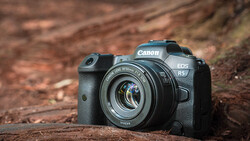
Coming to you from James Reader, this detailed video takes a close look at the Canon EF 135mm f/2L USM lens. Released in 1996, this lens quickly built a reputation for sharpness and bokeh, but time has a way of exposing flaws. Reader pairs it with the Canon R5 Mark II and compares it directly with the RF 135mm f/1.8, one of Canon’s most acclaimed modern primes. What stands out immediately is how clean, contrasty, and vibrant the EF images remain, with warm tones and flattering compression that don’t feel dated. The lens offers subject separation that’s dramatic without looking clinical, which keeps portraits soft and natural in a way that many newer lenses often lose.
The video goes beyond technical sharpness and digs into usability. Headshots with the EF 135mm f/2L look flattering even in uninspiring spaces, since the focal length trims away distractions and turns scraps of color or texture into pleasing backgrounds. That makes it a strong option when shooting in tight urban spots or plain studios. Reader does note the limitations: space is necessary, and you’ll find yourself standing far back from your subject for full-length shots, which can complicate direction during a session. Even so, the lens offers a sense of dimensionality that’s difficult to replicate, the so-called “3D pop” that has kept it relevant through the years.
Key Specs
-
Focal Length: 135mm
-
Maximum Aperture: f/2
-
Minimum Aperture: f/32
-
Lens Mount: Canon EF
-
Minimum Focus Distance: 2.95' / 90 cm
-
Maximum Magnification: 0.2x
-
Optical Design: 10 elements in 8 groups
-
Aperture Blades: 8, rounded
-
Focus Type: Autofocus
-
Image Stabilization: No
-
Filter Size: 72 mm
-
Dimensions: ø: 3.25 x L: 4.41" / ø: 82.5 x L: 112 mm
-
Weight: 1.65 lb / 750 g
Reader highlights the bokeh as a strong point. Background foliage melts into smooth washes of tone, with specular highlights rendered gently rather than with harsh outlines. The lens doesn’t over-sharpen or introduce a distracting look, instead keeping focus where it belongs: on the subject. That said, it isn’t a do-it-all prime. If you want to show off environments or switch fluidly between framing styles, the restrictions of 135mm become clear. Still, as a budget alternative, it shines. Check out the video above for the full rundown from Reader.


Join the Fstoppers community for free
-
Post comments and join in the discussions
-
Browse the site ad-free
-
Share your work and get featured in the community
-
Compete in the photo contests for fun and prizes
5 Comments
With it's age, I would be careful buying one, some are really well cared for, but others are not. I had my old Canon L 1.4 24mm USM, that I've had for years, tuned up by a professional, which of course costs money too. Having a professional look at your lens, must be weighed against what the value of the lens is worth compared to what they are charging to make sure it is still working as it should. So you also weigh the cost of an extremely old, possibly beat-up lens to that of any modern style lenses. And most cameras we use today would need the EF-Adapter, including myself.
This is a fair point but I'd argue the money savings is so high that it offsets any risk you mention. Modern glass has been marked up so high comparison due to inflation, tariffs, and just pricing creep.
For example, the Canon RF 135mm 1.8 is $2100 where as the EF lens listed above goes for about $500 on Ebay. You have to buy 4 of them before you approach the price of the new lens and I'd be willing to bet 95% of end users can't tell the different between images made with either lens. Even if you get a dud and it dies on you, you can buy a whole new lens and still be at half the investment of the RF version.
For my part, I've been loving how I've been able to get such high quality glass for so cheap because I am willing to shoot Nikon FTZ. Not very long ago, my entire lens collection was considered elite tier amazing glass but since Nikon Z arrived it has all crashed in price. Every lens in my current setup was purchases for about 50% off its retail MSRP and more like 30% of the cost of the cutting edge Nikon Z version. Its all glorious gold ring glass that can comfortably deliver wonderfully high quality images. I accept I am sacrificing a hair of autofocus performance, but considering I saved over $10,000 this way, I am comfortable with that sacrifice.
How can you review a still lens with a video. give me print and photos,I am a photographer not a videographer.
The 135/2 was added to my Canon EF line up soon after I had jumped the Nikon ship in 2003. The focal length was a bit long for my style/environment in which I photographed portraits/weddings, so it wasn't used even 10% of the time as the 85/1.2. It was used more often for personal work.
Then Canon mirrorless arrived. Several 1-Series and many lenses were sold as a couple of R5 bodies and RF lenses replaced the EF based gear. A number of the older primes were retained, including the 135/2. At the time, there was no 135/1.8 RF, but adapted the 135/2 worked well for my needs.
These days, it gets adapted to Fujifilm GFX bodies and gives an effective 106mm. It covers 100% and has the amazing look+. Did someone ask about bokeh?
Just from looking at the thumbnail I was guessing it was going to be this lens. A lot of the EF L series glass is very good. I'd put the 100mm macro up there as well. Even adapted to my Sony it's still fast and images are amazing.