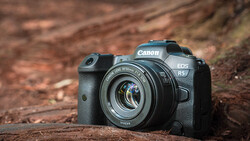
The Canon EOS R5 has quietly become one of the most beloved wildlife cameras of the past five years, delivering a combination of resolution, speed, and autofocus performance that seemed impossible just a decade ago. After half a decade of real-world use, this camera continues to prove its worth in the field, capturing images that showcase both its technical capabilities and the artistry of those behind the lens.
Coming to you from Duade Paton, this celebratory video explores why the Canon EOS R5 remains a wildlife photography powerhouse through dozens of stunning images submitted by his community. Paton recently retired his trusty R5 after five years of dedicated use, but rather than simply moving on, he chose to honor this camera by showcasing what makes it special. The video features over 100 submitted images from subscribers who have pushed the R5 to its limits across diverse environments, from Arctic conditions with grizzly bears to African savannas with lions. Paton emphasizes how the camera's 45-megapixel sensor delivers exceptional detail that holds up even under heavy cropping, a crucial advantage when photographing distant wildlife subjects.
The autofocus system receives particular praise throughout the video, with Paton highlighting how the animal eye detection feels almost magical in practice. Multiple contributors share stories of capturing challenging flight shots and action sequences that would have been nearly impossible with older camera technology. The 20 frames per second burst rate proves invaluable for freezing split-second moments, whether it's sandpipers in perfect wing synchronization or northern harriers in dramatic flight poses. Paton showcases images ranging from intimate portraits of European robins to dynamic action shots of cattle egrets, all demonstrating the camera's versatility across different wildlife scenarios.
Key Specs
- 45-megapixel full frame CMOS sensor
- 20 fps continuous shooting
- 1,053 phase-detection autofocus points
- Animal eye detection and tracking
- 8K video recording capability
- Dual card slots (CFexpress Type B and SD UHS-II)
- 5-axis in-body image stabilization
- Weather-sealed magnesium alloy construction
- Native ISO 100-51,200 (photo mode)
What makes this video particularly compelling is Paton's honest assessment of the camera's current value proposition. With used R5 bodies now available for around $1,750, he argues this represents exceptional value for a camera that still delivers professional-level results. While acknowledging that newer models offer features like pre-capture and higher frame rates, Paton maintains that the image quality and core performance of the R5 remain virtually unmatched in this price range. The video also demonstrates the camera's remarkable build quality through images captured in extreme conditions, from snowy owl photography in harsh winter conditions to jungle kingfisher shots in humid tropical environments. Check out the video above for the full rundown from Paton.



Join the Fstoppers community for free
-
Post comments and join in the discussions
-
Browse the site ad-free
-
Share your work and get featured in the community
-
Compete in the photo contests for fun and prizes
6 Comments
Great camera, regretting selling mine but might get it again. My R5 started to show up error (cannot remember the number). Either to do with shutter or the battery.
One word of warning, don't use the option for shutter to close after camera is powered down - to shield the sensor. I believe it makes the shutter more fragile and exposed to accidental damage and all sorts of vibrations and bumps during transport. I think the shutter mechanism is better protected when the shutter is opened - folded on itself.
as for reliability of latest canon cameras
Well, as for dominance in wildlife - I have switched from canon to Olympus/OM and my only regred is I did not do it sooner
At $1,700, the R5 is starting to come down to the price levels that make it possible for more people to buy.
I wanted an R5 when it came out in 2019, and practically all of my photography buddies were buying it and loving it. At that point I predicted that I would probably need to wait 5 or 6 years for it to come down to the $1,200 level where I could probably afford it. Well, it it's been 6 years and it still isn't quite there. And I am not doing anywhere near as well as I had hoped, financially, so now I wouldn't be able to afford one even if it were $1,200.
I'm kinda at the point where I could only afford about $700, so I will probably have to wait until 2030 or thereabouts until I can buy one.
Just think about that ..... back in 2019 when all my buds were buying an R5 and showing me how amazing the autofocus was, and I really wanted one, I never would have imagined that it would be 11 or 12 years before I would be able to afford a used one. I'll be well into my 60s by that time.
How in the world do y'all find the kind of income that allows you to buy this stuff, anyway?
If the R5 is the best wildlife camera, then why did National Geographic name the OM-1 II by OM System the best wildlife camera on the market earlier in 2025?
Person after person I know is dumping Canon and Nikon for the OM-1 II for wildlife photography....
For critical high end image quality the micro 4/3 cannot beat the top end FF sensors. You pay the price for that of course, with heavier setups.
If you are not living of your wildlife photography then any system will do and micro 4/3 brings in lot of great compromises. Especially the lens size.
I have enjoyed owning the Oly E-M1 mk II with Oly 75-300. But to be most competitive FF has a clear edge in image quality, not obvious if viewed on smaller screens or prints. The better the lighting conditions, the smaller the difference.