
Photography forums, YouTube comment sections, and gear review threads would have you believe that the path to better images runs through spec sheets and brand allegiances. Spend enough time in these spaces and you might start to think that your sensor size is holding you back, or that real photographers only shoot in manual mode, or that your follower count reflects the quality of your work. None of this is true, but it takes time and experience to see through it.
What Actually Matters
Light Quality and Direction
Photography is, at its most fundamental level, the recording of light. The word itself comes from the Greek for "drawing with light," and yet so much of our attention goes toward the tools we use to capture it rather than the light itself. Learning to truly see light, not just meter for it or expose it correctly, is the single most transformative skill a photographer can develop.
When we talk about light quality, we're talking about its character: whether it's hard or soft, warm or cool, diffused or direct. A portrait taken in harsh midday sun looks fundamentally different from one taken in open shade, and that difference has nothing to do with your camera body or lens. Direction matters just as much. Front lighting flattens features and reduces texture. Side lighting sculpts faces and reveals dimension. Backlighting creates separation and mood. These aren't secrets, but they're also not things you can internalize by reading about them. You have to train yourself to notice light constantly, even when you're not shooting, until reading a room or a landscape for its light becomes automatic.
Golden hour gets celebrated endlessly, and for good reason, but the real skill is understanding why that light works so well and then recognizing similar qualities at other times and in other places. Overcast days give you a giant softbox. North-facing windows provide consistent, beautiful light for hours. An alley between two buildings can create dramatic side lighting at noon. Once you start seeing light this way, you stop being dependent on perfect conditions and start finding opportunities everywhere. If you want to accelerate this process, structured learning can help; Fundamentals of Lighting offers a solid foundation for understanding how light behaves and how to shape it.
Timing and the Decisive Moment
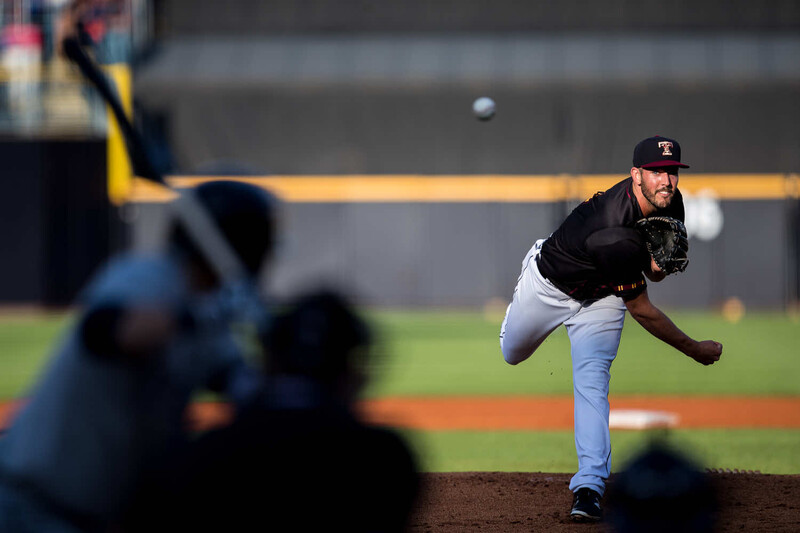
Henri Cartier-Bresson's concept of the decisive moment has been discussed so thoroughly that it risks becoming a cliché, but the underlying truth remains as relevant as ever. The difference between a photograph that works and one that almost works often comes down to a fraction of a second. An expression that peaks just before the shutter fires. A gesture that completes just after. The ball hanging at the top of its arc versus already descending. These tiny windows make enormous differences in the final image.
This isn't just about street photography or photojournalism, either. Portrait photographers wait for the moment when their subject's expression relaxes into something genuine. Landscape photographers anticipate the instant when the light breaks through clouds or when a wave crashes at just the right spot. Wildlife photographers develop an almost precognitive sense for when an animal is about to take flight or turn its head. Even in controlled studio environments, there's a moment when everything aligns, and recognizing it requires active attention.
The crucial thing about timing is that it cannot be fixed in post-processing. You can adjust exposure, crop for composition, and push colors in any direction you want, but you cannot make someone's eyes look at the camera when they were looking away, and you cannot freeze a moment that already passed. This makes timing one of the few truly irreplaceable skills in photography.
Emotional Connection and Story
A technically perfect photograph of nothing in particular is still a photograph of nothing in particular. The images that stick with us, that we return to and remember, almost always have some emotional core or narrative thread. This doesn't require drama or spectacle. A quiet portrait of an elderly person's hands tells a story. A landscape that conveys solitude or awe is doing more than documenting geography. Even a well-executed product shot is trying to make you feel something about that object.
The question worth asking before every shot is: what do I want the viewer to feel? Not what do I want to show them, but what feeling should this image evoke? The answer doesn't need to be profound. Sometimes you want the viewer to feel hungry looking at a food photograph, or to feel the cold when looking at a winter scene. But having that intention, that sense of purpose, shapes every decision you make about the image. It influences where you stand, what you include in the frame, what you leave out, and how you process the final file.
Photographers sometimes talk about the difference between documentation and photography, and while that line isn't always sharp, it has something to do with this. Documentation records what was there. Photography interprets it, filters it through a perspective, and delivers it with intent. The camera is not the artist. You are.
Patience and Persistence
The mythology of photography includes a lot of decisive moments and lucky shots, but the reality is that most compelling images come from patience and repetition. Landscape photographers return to the same locations dozens of times, waiting for conditions that may or may not materialize. Street photographers walk for hours to find minutes of opportunity. Portrait photographers shoot hundreds of frames to get a handful of keepers. The willingness to wait, to return, to try again, and to work a scene beyond the obvious first impression is essential to producing work that rises above the average.
This applies at multiple scales. Within a single shoot, patience means staying with a subject or location past the point where you think you've got the shot, because often the best frames come once you've exhausted the obvious approaches and start finding less expected angles. Across a project or body of work, patience means showing up day after day even when conditions aren't ideal and inspiration is low. And across a career, patience means accepting that skill development takes years, not weeks, and that the gap between your taste and your abilities will only close with sustained effort.
There's also something to be said for patience with yourself. Not every shoot will produce great work. Not every idea will pan out. The photographers we admire have failed far more often than their portfolios suggest, and their successes are built on those accumulated failures.
Shooting Regularly and Reviewing Your Own Work
Volume matters. You have to shoot a lot of bad photographs before you start shooting good ones consistently, and even experienced photographers produce far more misses than hits. But shooting alone isn't enough. The hours only pay off if they're accompanied by honest self-assessment. This means regularly reviewing your own work, not to admire it, but to analyze it. Where are your weaknesses? What mistakes do you keep making? What do you see other photographers doing that you can't yet pull off?
This feedback loop is how growth actually happens. Shooting generates raw material. Review generates insight. Then you go back out and shoot again with that new awareness, and the cycle continues. Without review, you risk ingraining bad habits rather than correcting them. You might shoot 10,000 frames and end up no better than you were at frame one because you never stopped to examine what was working and what wasn't.
Developing editorial judgment about your own work is uncomfortable because it means confronting the distance between what you envisioned and what you produced. But that discomfort is productive. The photographers who improve fastest are usually the ones who are hardest on themselves, not in a self-destructive way, but in an honest and analytical one. For those looking to build this foundation deliberately, Photography 101 provides a structured approach to developing both technical skills and critical judgment.
What Doesn't Matter (As Much As You Think)
Brand Loyalty and Spec Sheet Wars
Canon versus Nikon versus Sony versus Fuji versus Leica: the debates rage endlessly online, and they matter to almost no one except the people having them. Viewers of photographs do not know or care what brand of camera was used to create them. They don't look at an image and think, "this would have been better with a different sensor." They respond to the image or they don't, and the brand badge on your body has nothing to do with it.
Spec sheets create a similar trap. On paper, the differences between cameras can look significant. A few more megapixels, slightly better high-ISO performance, an extra frame per second of burst shooting. In practice, these differences rarely translate to visibly better photographs. A camera from five years ago, or even ten years ago, is more than capable of producing professional-quality work. The limiting factor is almost never the gear. It's the person holding it.
The energy that photographers pour into gear debates and brand allegiance could be spent shooting, studying, and improving. Your camera is a tool. It deserves the same loyalty you'd give to a hammer.
Shooting Manual Versus Auto Modes
Somewhere along the way, shooting in manual mode became a badge of honor in certain photography circles, as if letting the camera make any decisions for you was a form of cheating. This is nonsense. Manual mode is a tool for situations where you need precise control or where the camera's metering is likely to be fooled. It's not a moral stance.
Modern cameras are remarkably good at evaluating scenes and selecting appropriate settings. Auto-ISO is a genuine gift for changing conditions. Aperture priority lets you control depth of field while the camera handles the rest. Even fully automatic modes can produce excellent results in straightforward lighting. Knowing how to shoot manually matters because there will be times when you need it. But reaching for it reflexively, or judging other photographers for not using it, misses the point entirely.
The goal is to get the shot. How you get there is a matter of practicality, not purity.
Social Media Metrics
Followers, likes, comments, shares: these numbers feel meaningful because platforms are designed to make them feel meaningful. They trigger the same reward centers that respond to social approval and achievement. But they are not measures of photographic quality. They are measures of engagement, which is a different thing entirely.
Algorithms reward posting frequency, optimal timing, hashtag strategy, and content that generates quick reactions. They do not reward nuance, depth, or originality. A mediocre image posted at the right time with the right tags will outperform a brilliant image posted without that optimization. And because the feedback is immediate and quantified, it's dangerously easy to start optimizing for the metrics themselves, shooting images that you know will perform rather than images that represent your actual vision.
Some photographers build genuine audiences and sustainable careers through social media, and that's legitimate. But confusing your follower count with the quality of your work is a trap that leads to creative stagnation at best and creative corruption at worst.
What Other Photographers Think of Your Creative Choices
Feedback from other photographers can be valuable, but it can also be limiting. Photographers tend to evaluate images on technical criteria: sharpness, exposure accuracy, noise levels, adherence to compositional conventions. They're often less attuned to emotional impact or narrative effectiveness because they're looking at images as photographers rather than as viewers.
More importantly, other photographers are not necessarily your audience. If you're shooting portraits for clients, your clients' opinions matter far more than the opinions of people in a Facebook critique group. If you're making art, your own vision matters more than whether other photographers think you're following the rules correctly.

Permission to ignore unsolicited critique and to break from conventional wisdom is part of finding your own voice. The photographers whose work is most distinctive usually got there by disregarding what they were supposed to do in favor of what they actually wanted to do.
Technical Perfection
Pixel-peeping at 400% zoom will reveal noise, softness, and chromatic aberration in virtually any image. It will also tell you nothing about whether the image works. Nobody views photographs at 400% zoom. Nobody looks at a print from three inches away. The technical flaws that consume so much attention in online discussions are invisible in any normal viewing context.
Sharpness obsession is particularly misguided. Some of the most celebrated photographs in history are blurry, grainy, oddly framed, or technically imperfect by contemporary standards. They endure because of what they show and how they make viewers feel, not because they hold up to clinical inspection. Henri Cartier-Bresson, whose work remains influential decades after his death, reportedly had little patience for technical fetishism. "Sharpness is a bourgeois concept," he's supposed to have said. Whether or not he actually said it, the point stands.
High-ISO noise, motion blur, missed focus: these can all be problems if they undermine what you're trying to achieve. But they can also be irrelevant, or even beneficial, depending on the image. Technical perfection is a tool, not a goal.
Conclusion
Look back at the two lists and a pattern emerges. The things that matter are about vision, craft, and the patient development of skill. The things that don't matter are about gear, validation, and the performance of expertise. The first list is about the actual work of making photographs. The second list is about the culture that surrounds photography, which is often more of a distraction than a support.
If you shifted the time and energy you currently spend on the second list toward the first, what would change? More hours reading light instead of reading spec sheets. More attention to timing and less to follower counts. More patience with your own development and less worry about whether other photographers approve of your choices. The fundamentals aren't glamorous, but they're what make the difference between photographers who keep improving and photographers who stall out with all the right gear and nothing to say. If you're ready to invest in the skills that actually matter, The Well-Rounded Photographer covers eight genres with eight different instructors, offering a comprehensive way to develop real versatility behind the camera.

Join the Fstoppers community for free
-
Post comments and join in the discussions
-
Browse the site ad-free
-
Share your work and get featured in the community
-
Compete in the photo contests for fun and prizes
8 Comments
Great article. After years at this, I find all of these points true, almost without exception.
Well said.
More hours reading light instead of reading spec sheets.
OR More hours reading light instead of reading Fstoppers ;-)
Great article, once again. I particularly like the section which basically says: go out, shoot, practice. I have a couple of nice spots in my area which I go to regularly and take pics. With time, the images really get better and better :)
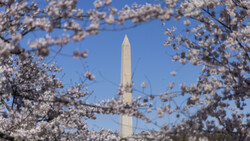
small critique: I like the images in the article, but they are starting to look very familiar because they´ve been in several articles. Because of this, I sometimes scroll and I think: I must have read this before, but I haven´t. Maybe it is time to provide other samples.
Thank you for your insightful list of what truly matters in photography, especially the focus on storytelling over technical perfection. I love how you emphasize that gear is just a tool, while vision and light define the actual impact of a frame. Your perspective motivates me to stop overthinking my settings and focus more on the emotional connection within my shots.
Met heel veel punten ben ik het zeker eens. Technische perfectie is soms een twistpunt. Perfectie is een groot woord maar op bepaalde punten vind ik dat een foto toch aan enkele eisen moet voldoen.
All the best knowledge to have forever behind camera! Remember as a photographer Pro or hobbyist you are a mad scientist of light capture and knowledge of all light day or night you will try to harness and capture all things bright and dim for the camera and lens used to capture that light of that moment will last for all to see far into time. An old film or digital camera will do the capture as well as the newest of new the trick is to know all things about the tool some you may never use but knowing gives you options!
Well said and written!! My thing is, as you wrote....every serious photographer MUST use Manual mode....what BS people trying to spread...so yes, I liked and agreed ur opinion on this matter!!