
Much of the time, we take photographs because of how something looks. We’re drawn to pretty views with nice light or color; views that look visually appealing. Let’s be clear: there’s nothing wrong with this approach to photography.
I shoot aesthetically appealing subjects all the time. After I questioned photography that is all about surface beauty, a friend of mine said fashion designers, like the recently deceased Valentino, create beautiful clothes so women can look beautiful. He was successful because we all like beauty. We like to feel beautiful, and we like to look at beautiful people, objects, and views. My friend stated, “We can use all the beauty we can get.” I agree—sometimes, beauty is enough.
But photographs created because of how something feels come from a deeper place. They’re less about what’s in front of the lens and more about what’s within us. When we’re photographing how something makes us feel, we’re responding to the scene before us emotionally, not intellectually.
We’re trying to create a visual image that captures the emotion we’re experiencing at that moment. Mood or atmosphere becomes a visual language. There’s an old adage I carry with me everywhere I take my camera: “To take a photograph about something rather than of something.”
Documentary Photography Has No Emotion, or Does It?
Why am I talking about this? Well, this past year, I’ve been photographing building fronts in local towns because I didn’t travel much. I need to get out of the house at least once a week with my camera, so I figured I needed a photography project, and I do find buildings visually interesting. I recently realized that by simply documenting a place, I’m not communicating an experience. At least, this is what I’ve been thinking about and trying to figure out.
Through documenting my surroundings, I’m showing people how something looks; I’m not showing you how I feel about what’s in front of me. But one could argue you must feel something about what you’re looking at to want to capture it. This would be true, but maybe at a superficial level. Maybe I’ve communicated how I feel already through the photos I take; I just didn’t consciously realize it. Enough of this pondering.
Creative Challenge
It’s important to note that the reason for all the pondering is that, although a documentary project is very enjoyable to do, the truth is it’s not creatively challenging. I love being out with my camera recording life, but I’ve realized in the pursuit of documentary photography these past six months that I need to create photos that communicate an idea, a story, a feeling. Great photography for me—the most rewarding photography to create—makes you feel something. (If you want structured practice across multiple genres, The Well-Rounded Photographer: 8 Instructors Teach 8 Genres of Photography is a solid framework: The Well-Rounded Photographer: 8 Instructors Teach 8 Genres of Photography.)
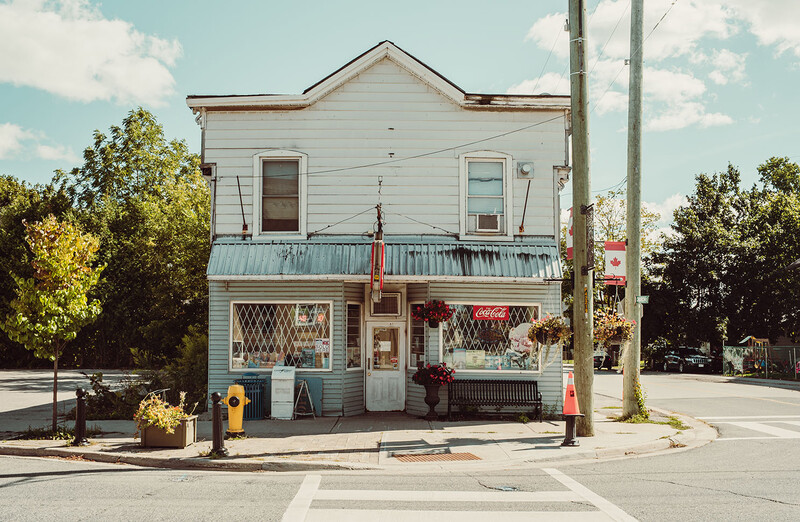
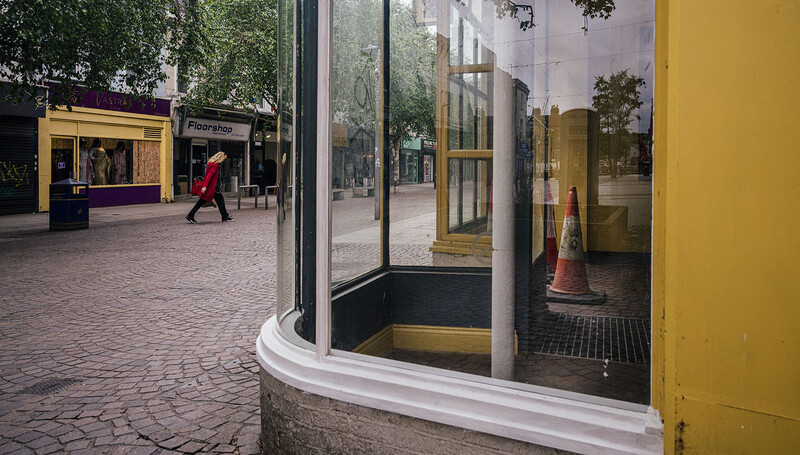
Looking through my archives over the past couple of years, this thinking is evident. Below is a photo from my small towns documentary series. It’s a lovely-looking building, and I was drawn to it because of the shapes and colors. I captured the photo because of how the scene looked. I photographed it because it was there. Whereas the next photo down was created because of how the scene made me feel. It wasn’t about beauty; it was about feelings of sadness. The shop had seen better days, and there was a story there. Stories make you feel. I captured the photo because of how it made me feel.
Capturing Feeling and Communicating Emotion
When you create from feeling, your photographs begin to carry something invisible—an honesty that people can sense even if they can’t articulate it. It resonates because it came from a truth you felt rather than a composition rule you followed.
So how do we capture and communicate what we feel?
- Slowing down enough to think about what’s in front of us and understand how we’re reacting to what we see before we click the shutter. We can ask ourselves, “What is it about this moment that stirs me?” rather than, “What would look good on Instagram?”
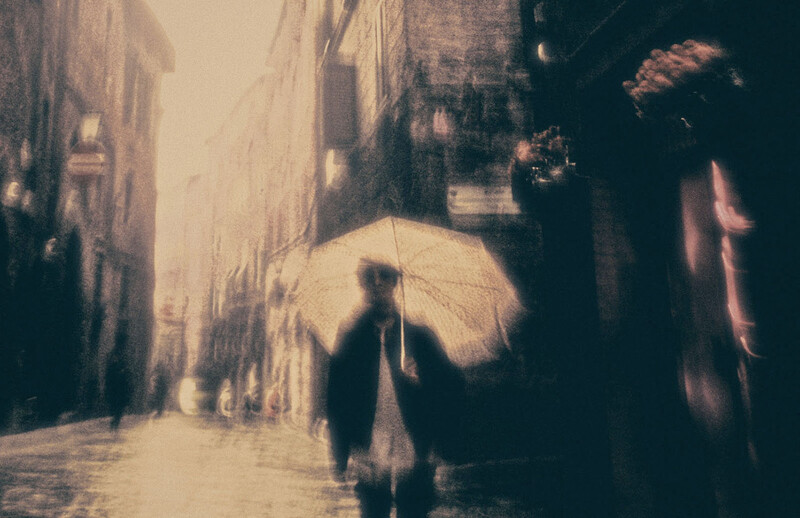
- We should maybe make a point of embracing imperfection, blur, or abstraction because sometimes it can help better convey a feeling.
What we’re talking about here is a shift from observation to interpretation.
Changing Landscapes
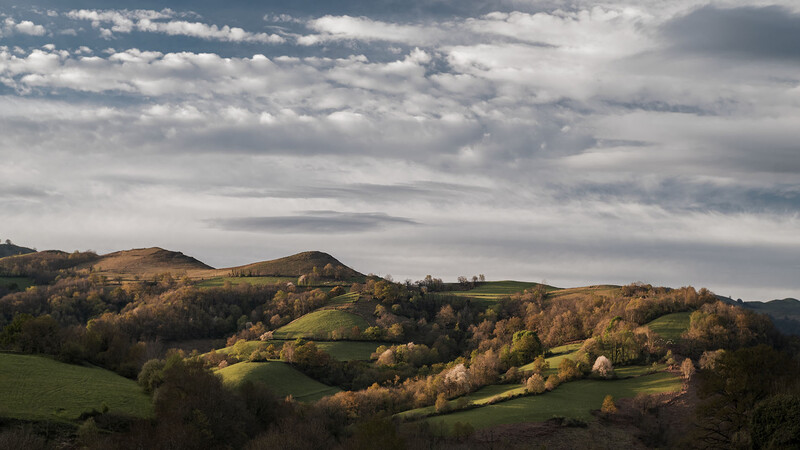
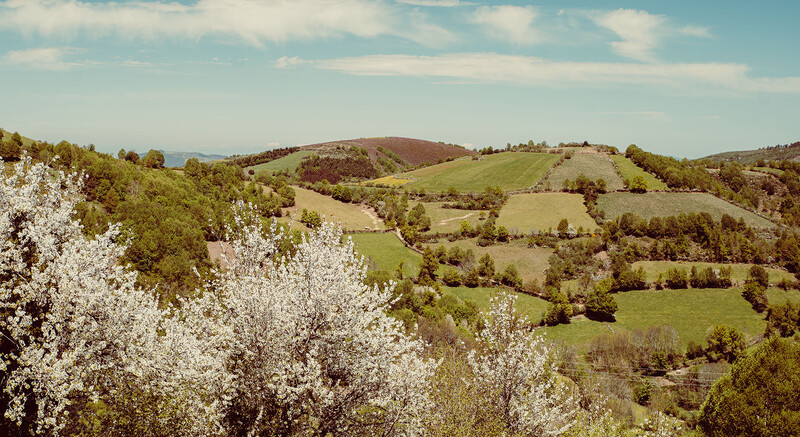
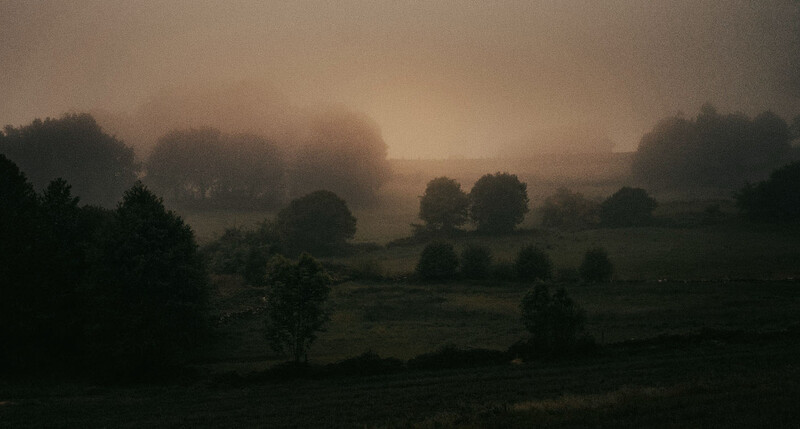
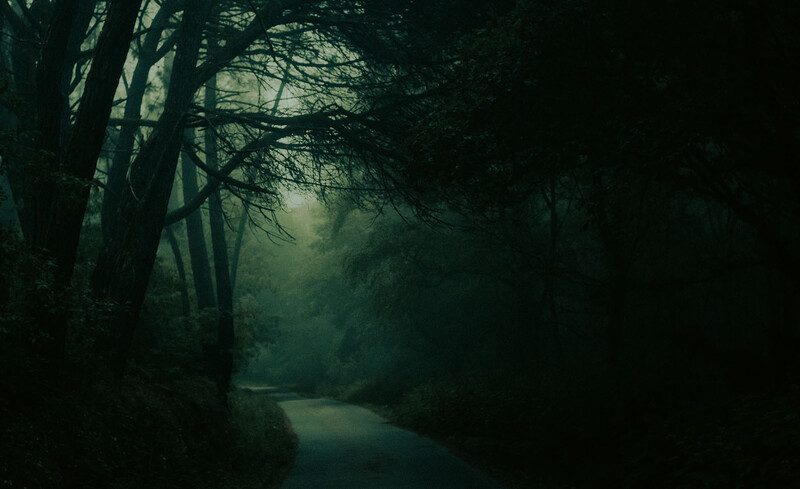
Landscape photography is one genre, in particular, where we are drawn to photograph views because they look beautiful, and often that beauty is from low light and the resulting colors. A few years ago, while walking across Spain over a four-week period, the changing landscape was breathtaking. I was shooting dozens of views each day, and I actually got to the stage where I became bored of simply pointing my camera at stunning views.
So instead of simply reacting to aesthetic beauty, I started to think about what I was looking at. I made a conscious decision to react to what I was feeling rather than what I was seeing, and the results were far more interesting.
Since then, I still shoot beautiful views if they present themselves, but if I can understand why I’m taking a photo and how it makes me feel, that’s my preference.
Closing Thoughts
So my suggestion to you—my challenge—is to try taking photos based on how you feel about something next time you’re out with your camera.
I realize this is hard for many genres of photography, like sports or wildlife. If you’re shooting a bird with an 800mm lens, you want to capture a nice, sharp, unobstructed image of it. You’re documenting something; that’s the sole purpose, and nothing more is usually required to end up with a really great bird photo.
Maybe I’ve gone too deeply down a rabbit hole with my thinking about this. Maybe I’m overthinking. Maybe the fact that I find a view beautiful means I’m actually already responding emotionally and feeling something. I said up front I often take photos of beautiful scenes without giving any thought to how I feel, and I admit it’s possible I’m responding emotionally subconsciously. Conscious thought isn’t necessary.
But I still keep coming back to that old adage about taking a photograph about something rather than of something. For me, I need to understand why I’m taking a photo; I need to feel something about it that goes beyond surface aesthetics.
This article—an opinion piece—is simply me thinking out loud, and probably rambling on and not making complete sense. I’m willing to admit I don’t have all the answers all the time, but it’s healthy to share thoughts and opinions—particularly if it can create a discussion that is helpful to others.
So, over to you, dear reader: what do you think about this?





Join the Fstoppers community for free
-
Post comments and join in the discussions
-
Browse the site ad-free
-
Share your work and get featured in the community
-
Compete in the photo contests for fun and prizes
10 Comments
Everybody looks at a scene with different eyes and different equipment, there is no right or wrong or photography would be boring. Just get out there with camera or phone.
I totally agree. It's good to think about what you're doing, and why, though. If you want to switch things up.
From the beginning of your article, Simon, I was thinking along the lines of your closing thought.... which is that aesthetic beauty is woven from the fabric of emotional feelings. We can't see something as beautiful without feelings. And feelings are at the foundation of every choice we make... a life partner, a meal, a song. A photograph. We do things or engage with people who make us feel good. You appear to experience stronger feelings from what is more scarce (fog and mystery) than what has become common and routine for you (landscapes on a sunny day). If you no longer feel the sense of awe and wonder from your landscape subjects though, or buildings downtown that you used to, look again. Sometimes we just need to remember why we love someone or some thing to reignite those feelings. Look around you with new eyes. Take more time. Look closer. Instead of moving away from them, remember why you loved landscapes in the first place. The scene itself might not change, but your emotions attached to it can. And, indeed, they do move like the tide over time.
Consider this too: You might have strong emotional feelings attached to one picture more than another, but there’s no guarantee that your viewers will respond in the same way. In the example of your small town pictures… I could sit on a bench from where you shot that picture of the store with the Coca-Cola sign in the window and watch the slow pace of a small town for hours. That image brings back strong childhood memories. The picture would be even better if an elderly couple were sitting on the bench enjoying an ice cream cone. I might even wait for someone to enter into that picture. On the other hand, the image that you prefer of the vacant store on the corner is one I would rather take a quick look and move on. I don’t want to live in that photo. The woman in the red coat is in a hurry, head down, and tension there. Bright orange traffic cones don't make me sad; they annoy the heck out of me. There’s more tension than sadness for me in that picture. Which is not to say that relaxed happy feelings are the only type worth communicating. You might experience sadness or anger and want to convey that through an image. That’s fine too. You certainly don’t need to shoot with the intention of pleasing the viewer. My point is that feelings experienced by the photographer don’t always translate in the same way to the audience.
Some good thoughts Ed, thank you.
You mention viewers a few times. For me, I shoot for me, not an audience, so I don't actually care what anyone else thinks. I believe this is important—we should never take photographs with the intention of pleasing someone else. This is a huge mistake most photographers seem to make, IMHO.
And you say you don't see sadness in my image of the empty shopfront. I took the photo based on what I feel, not what others might feel. Again, It doesn't really matter what others think about what I do. Although I must admit I find it interesting what others might see or feel—so your thoughts about the photo are very interesting and I can see your point of view.
I tend to take the same approach as William Eggleston these days. I take photos of what interests me, but I feel no need to try and explain in words the why or what. And like Eggleston, sometimes I shoot something because it's there, and have no deep reason to click the shutter beyond that. Yet others might read something incredibly meaningful or profound into a photo. Critics get into deep debates about some of his work, which I think he found quite amusing and ridiculous.
Thanks Ed.
I wonder if William Eggleston was being totally honest when he said that he was indifferent to critics of his 1976 MoMA exhibit. Having the New York Times call it "the most hated show of the year" could not have escaped his notice, nor his feelings. Arguably without that exhibit and critical recognition, he may have never become famous. So even bad reviews can be better than no reviews. Eggleston said critics "didn't bother me a bit. I laughed at them." Laughing something off in public, however, is one thing; sleeping soundly at night is another. He was supposedly an alcoholic. Life and emotional feelings get complicated at that point. William Eggleston's family was apparently wealthy enough right from the start of his life that he could afford to laugh at his critics. Most of us do not have that luxury.
Ansel Adams had to do some commercial photography to pay the bills. You and I have made a career trying to balance the act of pleasing clients with pleasing ourselves. With a mortgage payment due on the first of the month, we pleased the client. Nowadays I never make a picture with the mindset that I need to shoot a certain style to please a customer. I, too, take numerous pictures for no greater reason than because I have a camera in my hand at the time, and that's a comfortable place to be. It took almost 70 years, however, to reach that point. And to some degree, it never stops. When editing pictures at home, I often wonder whether the image might sell, or not. In other words… will anyone besides me like this? I think it's against human nature to not think about how people respond to our work. I belong to a group of about ten people who get together once a month to share prints. It matters logically not in the least whether anyone likes my photographs, except it does feel better when they do. That’s human nature. I wouldn't attend the meetings if I simply did not care what anyone else thought of my pictures.
To the point of your article, feelings abound everywhere… from the way we respond to a scene and make a decision to click the shutter, to how we respond to other people’s criticism of our work. As you said, a response can be anywhere from conscious to sub-conscious. That includes how we respond to critics, as much as the way we perceive beauty.
Thanks for this - it's the kind of discussion I look for but sadly, seldom find.
Since I am a hobbyist, and don't post pictures online, I take photos for an "audience" of one. I "work" entirely for my own excrement and hilarity. A big part of why I take photos in the first place is to remind me to open my damned eyes and look around, so every shot I take is because something resonated with me, in some way or another. My biggest issue is that I often don't know WHY something caught my eye and thus don't know what to do to capture/maximize what that "thing" is.
I'm so glad you find this kind of discussion useful, it is sad we don't talk more about these kind of topics. Opening our eyes and looking around, and photographing what resonates, is a good thing.
I often wonder why I shoot what I do, but we don't really need to analyze it either. But it can help us maximize what we're doing to show that "thing" in the best possible way.
I see something and ask myself: Is it the shapes or colours that caught my eye? Is it interesting or dramatic light? Is it a feeling? Taking a moment before clicking the shutter can certainly help. more on this topic coming soon!
To have a “real” discussion about photography, every one participating needs to understand that it’s 100% subjective and agree to disagree, where necessary. I’ve often said “I’d rather have someone tell me my picture sucks, but tell me WHY, than slap a “like” or a fire emoji on it and move on…”
Sometimes choosing aesthetics over feeling can be defined by asking yourself WHY you’re taking the picture. If a beautiful scene moves you, that’s “feeling”. If you think “wow, this will get a lot of attention and a bunch of likes!” well, that’s aesthetics…sort of. (If you’re a pro and taking what you think will sell, well, that’s a different story!)
In my case countless times, I have had something catch my eye, but I don’t know what it is. In some respects maybe spending more time and not just taking a photo and moving on, like a damned tourist, would help. That’s a bad habit I need to work on. Other times, however, I have actually taken a whole bunch of preliminary shots, gone home, thrown all kinds of edits and filters at them - just to try and tease out what “it” is - and come up empty.
I suspect that WHY something catches our eye and we decide to click the shutter might be buried somewhere in our DNA. Nobody has ever given me a good answer to that question. However, WHAT to do to capture that thing in the best way is a good subject for discussion. I know one thing... it's not as easy as it looks at first glance.
Back about a hundred years ago in college, I thought maybe I could put a textbook under my pillow and I'd learn something. I learned after getting a bunch of bad grades that it didn't work. Of course I think there are more difficult things to learn than photography... the piano for instance. I've tried numerous times by working my way through "The Older Beginner Piano Course" but stall at about page ten. Photography is simple in comparison, but nevertheless deviously difficult to excel.
One of the problems with learning photography is that there's no universal measurement or grading system for a photograph. Nobody agrees on what constitutes a great photo. But even if we are just holding ourselves to our own standards, which can still be vague, I think we "feel" better about some pictures after we improve in some, also vague, manner. Capturing the essence of the subject, a concept made famous by Edward Weston (1886-1958), was how he elevated photography above what we commonly call snapshots today.
Beyond learning basic camera settings, seeing a potentially better composition than another takes time and practice. And in my experience, I needed an outside source for critiquing my images. I can't imagine improving one's work without going through that process, any more than I could learn chemical engineering without some guidance. Granted, the internet is a rough and undisciplined place for engaging in that process, where comments tend to be harsh and shallow. But perhaps someone local could help you "see" and capture a better photograph. Getting feedback for my images from someone whose work I admired was the very best path for improving... if that is, indeed, your biggest issue.
Yeah, sadly the internet is indeed a rough place for that kind of discussion, but I’d welcome it - moreso than mere “likes”. I think it’s largely a trust thing. My wife sometimes chides me about my love of simplicity and negative space and even though she’s always wrong, I take it in the spirit intended….
I once had a discussion with someone who posted a piece about culling and had several examples of why he chose one over the other. In each case, I liked his *other* choice better - for different reasons. I told him I thought it was funny how consistently we disagreed. I wasn’t disparaging his work or his choices, just laughing about how opposite our opinions were. He didn’t get it and got defensive, so I let it go.
There have been a couple of cases where I posted some preliminary shots, and asked for help. The best I got was “yeah, there’s something intriguing about that…but I’m not sure what”. Gee, thanks. 😆