
Every January, the trend forecasts roll in. And every year for at least the last five, "authenticity" has appeared somewhere on the list, wedged between AI predictions and whatever retro aesthetic is cycling back. By now, it would be reasonable to dismiss it as an empty buzzword, the kind of thing that sounds important in a webinar and means nothing in practice.
But something changed in 2025 and into 2026 that separates this moment from the lomography craze of the mid-2000s or the VSCO filter era of the early 2010s. The demand for authentic imagery is no longer coming from photographers choosing a look. It is coming from clients writing checks. And the difference between an aesthetic preference and a purchasing decision is the difference between a trend and a market shift.
This Isn't an Aesthetic Movement
Previous rounds of "authenticity" in photography were about applying a feeling to otherwise conventional images. You shot the same way you always did, then dialed in grain, dropped the saturation, and let the blacks fade. The images looked candid. The process was anything but.
What is happening now is structural. The forces driving it have nothing to do with what looks good on Instagram and everything to do with what converts, what builds trust, and what holds up in an environment where audiences have developed a sophisticated immune response to polish.
Three things converged to make this moment different from every previous authenticity cycle.
Audiences Stopped Trusting Perfection
Gen Z now represents roughly 70 to 71 million Americans, making it one of the country's two largest generational cohorts alongside Millennials. This is not a monolithic group with a single set of preferences. That said, the broad contour of the trend coverage is consistent: many members of this generation grew up watching everyone curate, watched influencers stage "candid" moments with ring lights just out of frame, and learned to read polish as a signal that someone is trying to sell them something. Separate research on facial perception has shown that people can form trustworthiness impressions from faces in as little as 100 milliseconds, though applying that finding to how audiences evaluate brand imagery requires caution. What is less ambiguous is the survey data: a 2026 Gartner marketing survey found that 50% of U.S. consumers said they would prefer to give their business to brands that do not use generative AI in consumer-facing messages, advertising, and content. That is an attitudinal finding, not observed purchasing behavior, but it reflects a level of discomfort that brands are taking seriously.
AI Made Perfection Cheap

This made perfection harder to use as a differentiator. When low-cost or subscription-based tools can generate large volumes of competent product images in a fraction of the time a traditional shoot requires, polish stops being a signal of investment or care. It becomes background noise. Amazon Ads has expanded a suite of generative AI creative tools, including Image Generator, Creative Studio, Video Generator, and Creative Agent, that allow advertisers to create lifestyle-style ad assets directly from product inputs. Zara's parent company Inditex has turned to AI to generate fashion imagery using real-life models as a base. These are not fringe experiments. Major companies are actively building infrastructure to produce visual content at scale without traditional photography workflows, and as those tools mature, the cost of producing competent commodity imagery will continue to fall.
Then the Backlash Arrived
H&M's initiative to create AI-generated "digital twins" of models drew public and industry backlash, especially from creatives and labor advocates. The project generated enough controversy that it has been widely cited in industry discussions about the risks of replacing human talent with generative tools in consumer-facing contexts. This is not an isolated reaction. The same Gartner survey showing 50% consumer preference against GenAI-branded content, along with a Getty Images report finding that nearly all consumers want transparency about AI-generated images, suggests a growing baseline of skepticism toward synthetic visuals. Whether that skepticism translates into measurable purchasing shifts is still an open question, but the stated preferences are clear enough that they are shaping the conversation. The backlash H&M faced is one visible example of the risk calculus changing; the broader momentum behind C2PA content credentials and provenance standards points toward increasing disclosure requirements around synthetic visuals, even if adoption varies widely by industry.
Why This Actually Matters for Working Photographers
For the better part of a decade, the economic story of photography has been one of compression. Prices dropped. Clients expected more for less. The smartphone in everyone's pocket was "good enough" for an expanding range of use cases. Photographers who wanted to maintain their rates had to push further into specialization or volume to justify the cost.
The authenticity shift may begin to reverse that pressure in a specific and important way: it creates demand for something that cannot be easily automated or commodified.
A polished product photo can be generated by AI. A perfectly lit headshot against a white background can be approximated by software. But a photograph that captures a genuine moment of connection between two people, that reads the room and anticipates a reaction, that makes a viewer trust the brand behind it: that requires a human being with developed instincts, standing in the room, paying attention.
The skills this market rewards are not technical specs. They are anticipation, empathy, timing, and the ability to make subjects feel comfortable enough to stop performing. These are skills that take years to develop and cannot be replicated by a prompt. For the first time in a long time, the market is explicitly asking for something that only human photographers can deliver, and that creates at least the conditions for pricing leverage, even if the actual rates will vary by market and client type.
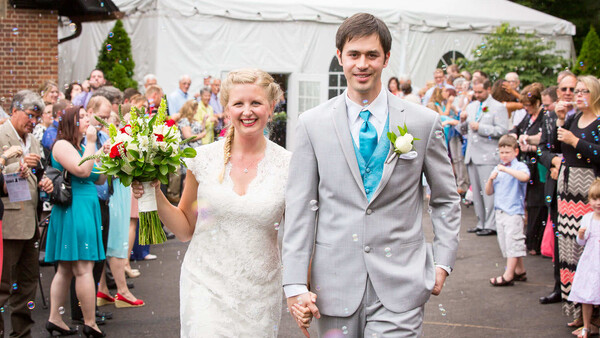
The anecdotal evidence from working photographers points in the same direction as the survey data. Wedding photographers describe a shift away from producing flawless editorial sets toward capturing the full emotional arc of a day, including the messy, awkward, and unscripted moments that couples actually want to remember. Brand and B2B photographers describe clients requesting documentary-style coverage of their teams rather than staged corporate portraiture. These are individual reports, not market-wide data, but the pattern is consistent enough to take seriously.
The Paradox You Have to Name
There is an inherent contradiction in "authenticity" as a commercial product, and the article would be dishonest if it pretended otherwise. The moment you deliberately pursue "authentic-looking" images for a client's marketing campaign, you are performing authenticity, not practicing it. A brand that hires a photographer specifically to make their team look candid and relatable is still staging a narrative. The raw, unposed lunch photo on the company's Instagram feed was probably the seventh take.
It is also worth noting that the relationship between authenticity, imperfection, human capture, and trust is not as simple as the trend coverage sometimes implies. An image can be human-made and deceptive. An AI-generated product photo can be perfectly accurate. An imperfect image can be staged. A polished image can be trustworthy. The trend is real, but the variables are not interchangeable, and photographers who treat "add grain and shoot loose" as a formula are going to produce work that feels just as manufactured as the overly polished imagery it is reacting against.
The photographers who thrive in this environment will be the ones who understand the difference between manufacturing a look and creating conditions where real moments can happen. The former is a filter. The latter is a skill set. A photographer who can walk into an office, spend four hours with a team, and come back with images that feel genuine because the moments actually were genuine is offering something fundamentally different from a photographer who poses people in "candid" arrangements and desaturates the result.
The distinction matters because clients are getting better at spotting the difference. The same audience sophistication that killed trust in overly polished imagery will eventually kill trust in fake candid imagery too. The photographers who will still be working five years from now are the ones whose "authentic" images are authentic because the photographer actually knows how to be present, unobtrusive, and responsive to what is happening in front of them.
What This Means Practically
If you are a working photographer or building toward becoming one, this shift has concrete implications for how you position yourself and what you practice.
- Stop leading with gear specs in your marketing. Clients hiring for authenticity do not care whether you shot on a $6,500 body or a $1,500 one. They care about the feel of the final images. Your portfolio should demonstrate your ability to capture genuine moments, not your ability to render 61 megapixels of detail.
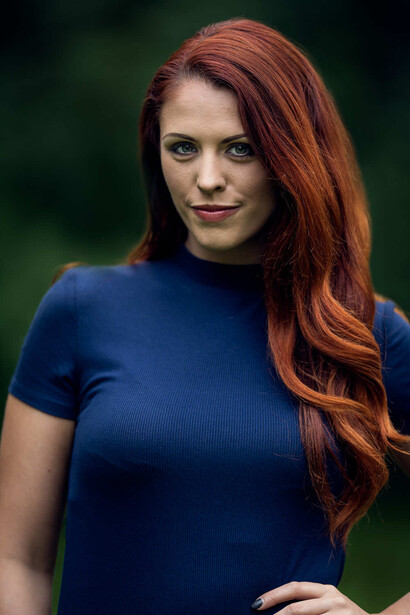
- Invest in people skills as seriously as you invest in technical skills. The ability to make a stranger comfortable in front of a camera in under five minutes is now a core professional competency, not a soft skill. It is the thing that separates a $500 headshot session from a $150 one, and clients can see the difference in the results. Peter Hurley has been teaching this for years through tutorials like Perfecting the Headshot and The Art Behind the Headshot, and his emphasis on drawing out genuine expression rather than directing poses is exactly what this market rewards.
- Learn to shoot documentary-style, even if that is not your primary genre. The ability to work a scene without directing it, to anticipate moments, to stay invisible while remaining attentive, is valuable across every genre that benefits from the authenticity shift: weddings, branding, corporate, editorial, and lifestyle. If you have only ever worked with posed subjects and controlled lighting, start practicing in environments where you cannot control anything.
- Use AI for workflow, not for output. The winning position in 2026 is not anti-AI. It is strategically AI-assisted. Use AI culling tools to get through 3,000 wedding images faster. Use AI noise reduction to clean up files shot at high ISO in available light. Use AI-assisted color correction to maintain consistency across a large set. But keep the human eye and the human judgment at the center of what you deliver. AI can handle the repetitive, mechanical parts of post-production. The creative decisions, the ones that define your look and your client's trust in you, remain yours.
- Price for the value you provide. If you believe, based on what you are seeing in your own client conversations and the consumer-attitude data above, that what you offer cannot be easily replaced by a machine, that is worth reflecting in your rates. The specifics will depend on your market, your client base, and whether you can demonstrate measurable outcomes (higher engagement, better conversion, stronger brand perception). But if the trends in consumer sentiment and AI adoption continue on their current trajectories, the conditions favor photographers who can articulate why their work is worth more than commodity imagery, and who have the portfolio to prove it.
This Is Not a Fad
The lomography trend faded because it was purely aesthetic. VSCO filters faded because everyone had access to them simultaneously, which meant they stopped signaling anything. Those movements were about a look, and looks have shelf lives.
The 2026 authenticity shift is not about a look. It is about a structural change in how audiences evaluate trust, how brands think about risk, and how AI has redefined what "commodity" means in visual content. Those forces are not going to reverse. AI-generated imagery is not going to become less prevalent. Consumer skepticism toward synthetic visuals is not going to decrease. The conditions that make human-captured, genuinely authentic work valuable are only going to strengthen.
For working photographers, this may be the strongest value proposition the market has presented in years. The thing you do that a machine cannot do is increasingly the thing clients appear to be looking for, based on the consumer-attitude data and the anecdotal reports from working photographers cited above. Whether that translates into higher rates depends on how well you can deliver on the promise, but the opportunity is real, and it has been a long time coming.
If you are still building the foundational skills that make all of this possible, the ability to see light, control exposure, and compose deliberately, Photography 101 covers that ground thoroughly. And if you want to see how documentary instincts and technical control come together across multiple genres, The Well-Rounded Photographer puts eight instructors in front of you, each working in a different discipline, each with their own approach to capturing something real.



Join the Fstoppers community for free
-
Post comments and join in the discussions
-
Browse the site ad-free
-
Share your work and get featured in the community
-
Compete in the photo contests for fun and prizes
1 Comment
The authenticity trend is a direct response to the uncanny perfection of AI, but aesthetic rawness alone isn't enough when models can now simulate film grain and organic imperfections. Real trust requires moving beyond visual style and verifying the physical sensor data that generative models still can't plausibly or affordably replicate.