
Reliable and well-engineered gear is something all landscape photographers rely on. This is especially true when we consider investing in the accessory that keeps our cameras secure and stable.
When I started with photography, I assumed one only needed a basic tripod and a standard three-way head. Over the years, I tried and tested different tripod heads, such as ball, fluid, and gimbal heads, as well as pistol grips. But nothing came close to the precision and ease of use of a geared head.
My Experience With Different Tripod Heads
Three-way heads are bulky by design. They snag on tree branches, and it takes some time and effort to get them set into a composition you like. They are great for general photography, but if you want that horizon absolutely straight, it can be a challenge to shift the head exactly level. Unlike three-way heads, ball heads are quicker to operate and far less bulky. If you’re planning on traveling light, they are an excellent choice for your kit bag. The downside, just like with the three-way head, is again precision. Ball heads are great for on-the-fly adjustments, but if you’re looking to fine-tune a composition or get that horizon looking perfectly straight, it can be a struggle.
The Geared Solution
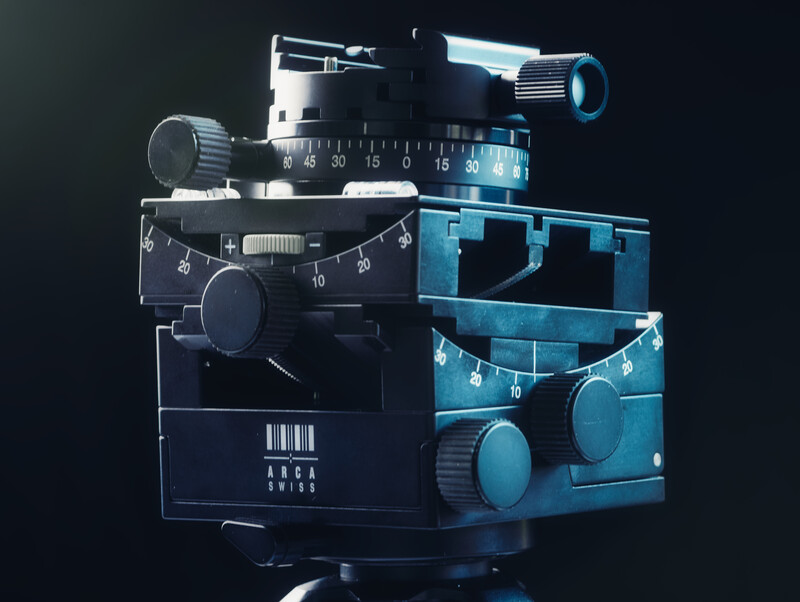
Enter the Arca-Swiss C1 Cube GP. A tripod head forged straight in the pits of Mount Doom and as robust as it is heavy. But as Boris the Blade said in the movie Snatch: “Heavy is good. Heavy is reliable. If it doesn’t work, you can always hit him with it.” The latter part of the quote we’ll ignore for the sake of avoiding any trouble with the law. But the former part of the quote rings true. This geared head is the ultimate tripod head if you’re after a robust, versatile, and accurate head. Weight aside, this is truly a magnificent piece of engineering. The gears are well built and do not slip. Two tubular levels are available on the Cube to give you absolute peace of mind. It features friction controls, so if you’re mounting a large lens and tilting up or down, you can increase the friction on the gears, and it’s guaranteed not to slip.
Specifications
- Type: Geared tripod head
- Weight: 2.4 lb / 1,105 g
- Dimensions: 118 × 110 × 110 mm
- Load Capacity: 88 lb / 40 kg
- Base Diameter: 60 mm
- Base Mount: 3/8"-16 threaded socket
- Panning at Base: Yes, 360° manual
- Panning at Top: Yes, 360° geared or manual
- Horizontal Tilt: +/- 30°
- Vertical Tilt: 60° manual + 30° geared, -30° geared
- Levels: 2 tubular levels on top platform
- Friction Control: Yes, in both X and Y axes
- Compatible Camera Plates: Classic or monoball®Fix
- Feature: Self-locking, finely geared controls
First Impressions
In my quest to find the best tripod head for the job, I reached out to Arca-Swiss to see if I could review the Cube and determine whether it fits my needs as a landscape photographer. They kindly agreed and promptly sent a unit out the very next day. I couldn’t wait to test it out in the field.
Before setting off, I quickly attached the tripod head with the QuickLink set Arca-Swiss provided with the Cube. The QuickLink is a quick release for your tripod head that attaches to the base of your tripod legs, allowing the Cube to slot into it and lock in place. To remove the Cube from the legs, rotate the QuickLink lock and remove the Cube for storage. It takes seconds. Quite handy if you use more than one tripod head in the field. All these beautifully engineered controls come at a price, however. $1,994 is not a small price to pay for just another tripod head. But if you’re in the market for “just” another tripod head, this isn’t it. This is so much more.
The Field Test
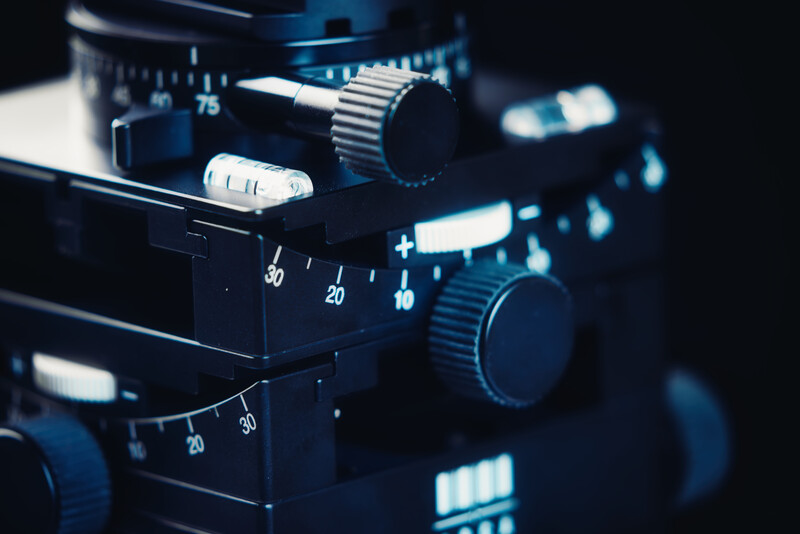
I decided to test it out in my local forest at first. Using my Canon EOS R5 C’s cage with an Arca-Swiss-compatible plate, I could easily mount the camera to the Cube. Interestingly enough, it has two interconnected knobs to adjust the tilt, which is especially handy if you’ve got a heavier camera mounted, allowing you to use both hands to tilt the camera up and down. I was able to fine-tune my composition with ease. I was apprehensive about tilting the camera down to its maximum of 30° to get some detailed shots of the forest floor, but the gears never slipped. The Cube was fixed in the position I chose, and it never faltered even when I attached my heavy 100-400 lens. This is all thanks to the tension control dials. Turn them all the way to the positive side, and the Cube will not move unless adjusted. It’s a relief knowing the weight limit is 88 lb. This thing can take some serious weight!
The Cube’s controls may look intimidating at first, but it’s actually quite simple once you understand how it works. At the top of the Cube, you can use the knob to pan the camera or loosen the gears to pan effortlessly by hand. Furthermore, it has an additional two knobs to adjust the camera's leveling, one knob per axis, allowing you to fine-tune your camera's level with ease.
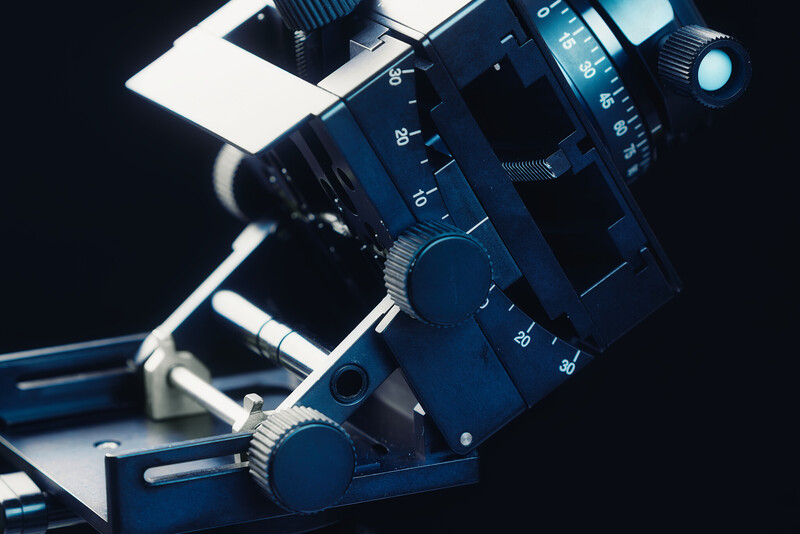
Lastly, there’s one more knob at the bottom of the Cube that lets you switch the Cube to vertical mode. You can then use the level and tilt knobs to adjust the camera's level and tilt. With the ability to pan the camera in vertical mode and use precise degree measurements, taking panoramas becomes an absolute breeze, and the camera is securely locked with no play in the gears. The only downside to this specific tripod head may be the weight. Some may find it far too heavy to lug up a mountain or on a multi-day hike. But everything in life has a trade-off. I can live with the extra weight.
What I Liked About It
The Arca-Swiss C1 Cube GP is a polished, incredibly well-built, and sturdy tripod head that feels like it can take all the punches I give it. The micro-metric gear-driven knobs turn easily and don’t require much rotation to get where I need them. The switch between horizontal and vertical modes is smooth and effortless. The dual panning mechanisms are incredibly handy for positioning the camera and for precise 360-degree panning. The added feature of switching between geared and loose panning by hand is an absolute winner, in my opinion. It gives you the option of precision or speed. The movements are also all arc-shaped. So, your depth of field and distance to your subject never change if you make adjustments. This is the absolute best choice if you’re a landscape, architectural, or studio photographer.
What I Didn’t Like About It
I really had to think about this because it’s not often that I get the opportunity to use equipment this well-made. It is absolute photography royalty we’re dealing with here, and that, unfortunately, means you will be paying a premium for this level of quality. At $1,994, and another $180 if you want the QuickLink accessory, it’s a rather steep price to pay for a tripod head.
Conclusion
But then again, this is no ordinary tripod head. Once you get to use it, you understand why Arca-Swiss charges this much for a solid block of aluminum and steel handmade by a team of incredibly talented individuals. One thing to note is that this tripod head has exposed gears and parts. Therefore, it’s important to ensure the gears are cleaned and well maintained. It’s not that I dislike that about the Cube; it’s more of a disclaimer. Treat it well, and it will serve you for decades; if you get it dirty, clean and maintain it straight away. It is anti-corrosive, so a small amount of seawater, rain, and snow won’t matter. But be careful it doesn’t fall in the mud.
The Arca-Swiss C1 Cube GP has been out for a while now. And while it’s nothing new, it’s refreshing to see something built with such precision and care. It forces you to slow down. To think. To plan. To be meticulous. As a landscape photographer, I shoot for exactly this reason. It reminds me of camera equipment built in the 1950s and later, where everything was molded from steel and aluminum. It just won’t break. The fine controls work incredibly well. I feel I can trust it to keep my camera attached at all times. And it won’t slip gears or have any play if I decide to add more weight to it. Chances are, our great-grandkids will still be using one of these if it's well looked after. If you want to see the tripod head in action, watch the video linked at the top of the article for a full breakdown and how I use it.
Landscape photographers looking to develop the same deliberate approach to composition and fieldwork may also find Photographing the World: Landscape Photography and Post-Processing useful.
If you're in the US, you can buy the Arca-Swiss C1 Cube GP from B&H, or if you're in the UK, you can buy it from Robert White Photographic.



Join the Fstoppers community for free
-
Post comments and join in the discussions
-
Browse the site ad-free
-
Share your work and get featured in the community
-
Compete in the photo contests for fun and prizes
11 Comments
At that price, I don't think anyone would ever buy one. I can understand a lens reaching a price like that given the precision and the difficulty with working with larger glass elements, but a tripod head and precision metal components are not at that level of difficulty.
It's a specialty item that's really designed for precision perspective control and focal plane placement using tech cameras and large format film cameras. The tightly controlled geared movements work perfectly in conjunction with Arca Swiss cameras but are usually unnecessary for cameras that don't have rise/fall/tilt/shift types of movements.
Never underestimate the willingness of someone with more money than sense to swipe a credit card. I have a friend who owns one of these. He is the sort of photographer who hardly ever shoots, barely knows photography, but when buying gear be only buys the best possible option, even if it makes zero sense.
Why did he buy one? Because he is interested in doing advanced landscape photography? Nope, he hardly ever shoots on tripod and is largely a street shooter but mostly uses his camera to take snapshots of family. He bought it because he decided he needed a tripod and googled: "What is the best tripod head?" I'd be willing to guess it hasn't been used more than 3 times.
Companies survive off of this sort of buyer. Leica's whole business model revolves around it. But really I think most of the big camera companies depend on it. There are so many photographers who like the "idea" of the fancy big lens or whatnot so they buy it only for it to collect dust for the next decade.
There's a lot of people in photography that share your thoughts and they often start to look down on people that have more expensive items because they believe that it is conspicuous consumption. From my experience, your thoughts are usually a sign that "a little bit of knowledge is a dangerous thing." You know just enough about photography to have an opinion but not enough to be aware of all of the situations you haven't yet experienced. I used the same cheap Manfrotto 3-way pan/tilt head for twenty years that was originally purchased when I was student in art school. It worked fine until I started shooting in new situations where the the Arca Cube became the only head that would really bring the precise movements into place that I needed in conjunction with the camera. I actually can't use anything else to get the same level of sharpness in my images but that's just my experience. Most people would never need anything as nice as the Arca. You are not wrong that many consumers buy gear just to show it off but that doesn't necessarily mean that the only purpose for the gear is showing off. Truthfully, most photographers take pictures that could have been done just as well with a cell-phone camera.
Let's say you make a million per year, of which there are many people . You buy this stuff just because it's cool
You would be surprised how many people basically have infinite money. If I had some more money, there would be a good chance I would buy one just to admire the workmanship. I am sure I am not alone.
Great article I have the same same and its worth the carry nothing beats its precision...when using the head for pano"s a nodal rail with marking is what I prefer to use. The rail is not adding much weight to your kit but with the correct markings for each lens provides a no-parallax point and yields perfect pano's.
When the C1 Cube GP is opened/folded to 90° for vertical shooting, the entire camera platform moves to the side. If you then make the panorama using the Cube’s bottom pan, the camera—and therefore the lens entrance pupil/no-parallax point—is offset from the vertical rotation axis. That can create parallax with nearby subjects.
Also, the GP’s top pan axis tilts sideways with the platform, so it is no longer the vertical panorama axis in that configuration.
For a proper portrait-orientation panorama:
- Keep the Cube’s top platform horizontal and level.
- Use an L-bracket or vertical panorama rail to turn the camera into portrait orientation.
- Center the lens laterally over the top pan axis.
- Add a fore–aft nodal slide to place the lens’s entrance pupil over that axis.
An ordinary L-bracket may get the camera close, but a dedicated vertical rail with lateral adjustment is needed for exact centering. The C1 Cube GP supplies precise leveling and panning, but by itself it is not a complete nodal panorama head. ARCA-SWISS likewise describes its separate Macro-Table rail as the accessory used to set the lens’s nodal position over the top pan mechanism.
In other words The Cube is opened to the side, carrying the camera platform away from the tripod’s vertical centerline. In this position:
*The bottom pan still rotates around the tripod’s vertical axis.
*The camera and lens are laterally offset from that axis.
*The GP top-pan mechanism is tilted with the platform, so its rotation axis is no longer vertical.
Therefore, rotating the bottom pan produces an orbit around the tripod axis rather than rotation through the lens’s no-parallax point. The problem will be most noticeable with nearby foreground objects.
This “vertical mode” is useful for composing a single portrait-oriented photograph without an L-bracket, but it is not the correct configuration for a precision portrait panorama. For that, leave the Cube level and closed, then use an L-bracket/vertical panorama rail plus a fore–aft nodal slide. Ideally, the vertical rail should also allow lateral adjustment so the lens, not merely the camera body is centered over the pan axis.
Arca's cube really is one of the best pieces of photo equipment ever made and is the kind of investment that should last a lifetime
I read Barry Cash's info on doing panoramas with this head and is great info also. The one thing missing on all heads is a degree stepper where you can select the degree separation between captures all images to merge in software according to lens MM. A reason is many panoramas are doon at night and those little numbers on the bottom where the turning is shown are like impossible to see at night as well as having to relight your head lamp at every move. OK, most of us use the rule of thirds on the display to go from one point to the next in a 200 degree pan at night.
In the past a pano rig cost $800 to $1K but today or for a few years one has been available for most just $100 with that degree clicker at the bottom where it attaches to the a head of sorts mostly ball heads.
When I stated the MW pano's some years ago I did the rule of thirds but I was going on a trip out west and bought a pano rig but my camera at the time was a A7R2 and had a pano selection on the top dial that took some time to work it but did good for the Grand Canyon some. Yes I still have the expensive rig.
Today I have that $100 rig mainly it has it's own carry bag and fits in my Photo Vest pocket when assembled. But still there is that problem with a big heavy lens on a ball type head, speaking about the Sony FE 12-24mm f/2.8 GM and f/4 G mainly for the 12mm portrait view for a one pass pano. But a lot of tightening to get a 200+ degree level. And using a heaver tripod with a solid adjustable head vs a ball head is yes the best, I modified my old L190 aluminum tripod for for panoramas using a half ball mount. But still had to use the rule of thirds display on the camera LCD screen.
Yes over the years a lot can be spent getting a platform for steadiness. Maybe worth it at $2,300 on B&H in the short of time. But for pano's $100 rig on a solid tripod with a screw adjustable tripod mount that is only $100 to $200.
One important thing not shown on his tripod is a hanging bag/weight from its center point under and a possible remote trigger device and the delayed 2 sec or so shutter release to make a perfect steady capture.
Also a look at your camera where today with IBIS and most all telephoto lenses have OSS/IS making for faster SS and the ability to capture hand held for just one capture in even a blue hour but even bracketing 5 at +/- 2 EV in a blue hour time.
Just saying look at your gear first, sometimes things come a little late to the game at too much $$$'s
1. using a 10mm lens to get a panorama like image in one capture and today there is a 10mm f/2.8
2. a hand held 5 at 2EV with a A7RV and a FE 24-240mm OSS lens
3. Panorama capture with the (old now) A7RM2 with the Sony FE 24-240mm F3.5-6.3 OSS at 24mm
4. panorama with FE 12-24mm f/2.8 GM at 12mm in portrait view atop L190 tripod with $100 panorama rig with adjustable 3-Way Geared Tripod Head.($670 today) at base need the pin point stars above the arch a one pass capture.
If pure function is your only metric then this is not for you. There are plenty of less expensive offerings out there that can give you precise framing control and reliable sharpness.
Having said that, there is a genuine pleasure in using a finely crafted tool that goes way beyond just function. That is sometimes the only reason you need to buy something like this - it's extremely enjoyable and satisfying to use. Photography is both process and result - both can be enjoyed equally.