
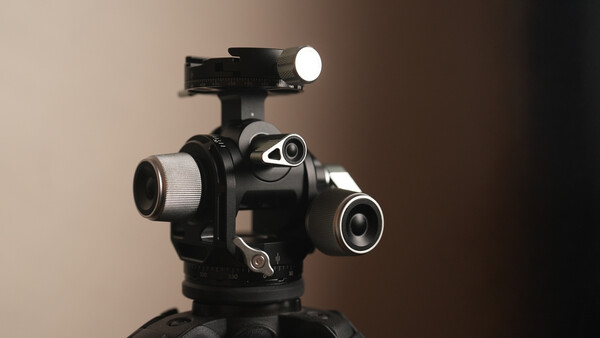
The head of the tripod that you use can greatly affect your efficiency in shooting, which can indirectly affect your creative output. Geared heads often seem too complicated and cumbersome, but this one from Leofoto might be worth a try.
Geared heads are probably some of the least common tripod heads on the market because they are generally more complicated and slower to use—at least for someone who is not familiar with their controls. However, when one does know how to use them, they provide unmatched precision and accurate adjustments that can save the user a lot of time, especially for kinds of photography that require meticulous framing down to the single millimeter. A major pain point for most geared heads is that they are often bulky, heavy, and come with huge knobs and handles, which can make them less desirable to bring around on location—especially if they aren’t 100% necessary. The Leofoto G4 Geared Tripod Head just might be the one that offers to address these imperfections.
The Leofoto G4 Geared Precision Head
With this tripod head, it is precisely the build and design that makes all the difference. The Leofoto G4 comes in a 108 x 60 mm form that resembles a ball head more than it does other geared heads. While it weighs 760 grams—which is close to other heads like the Manfrotto MHXPRO-3WG and the Benro GD3WH—its size is only about 60% to 75% of their size and bulk. Add to that: this 760-gram head can hold up to 20 kilograms of camera gear, which not all geared heads can support. It is, however, important to note that the tripod used in combination with this head should also have a payload rating similar to, or even higher than, the head.
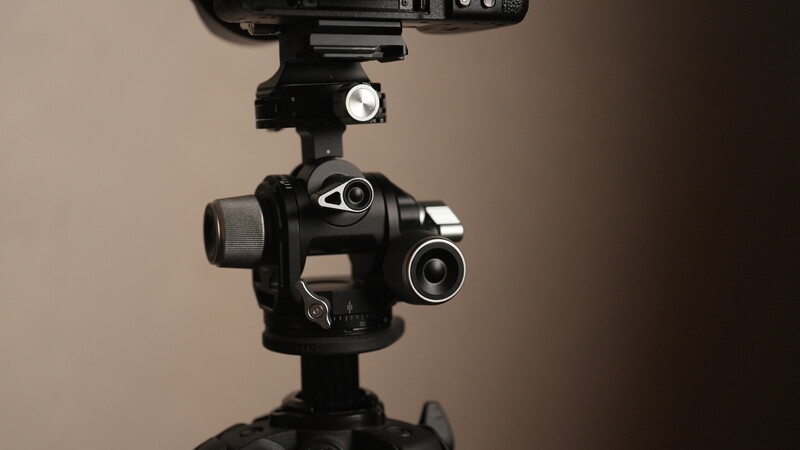
At the very bottom is a 3/8" standard screw thread that makes the head compatible with most tripods that have interchangeable head options. It connects to a very thin base that makes up the main 360-degree panning axis, which is controlled by a small knob. This is the motion of this head that is limited to loose movement and does not have gear-controlled motion.
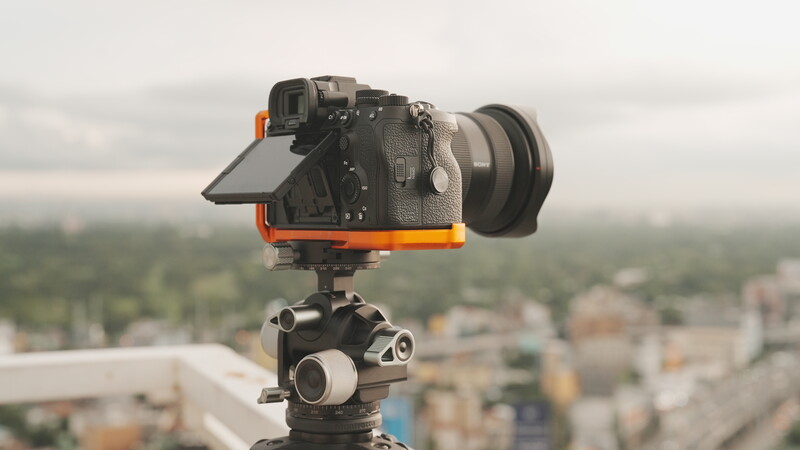
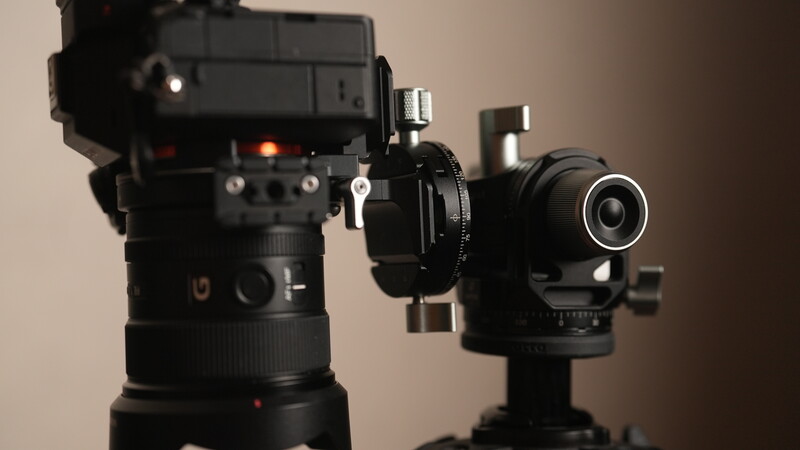
Above the panning base is the first of two main knobs that controls the side-to-side tilt (when the lens is pointed away from this knob) in a precise manner. The main knobs are oriented to control the motion that is perpendicular to the direction of how they turn. Also perpendicular to the main knob (and to its right) is a larger lever lock that releases the friction of the joint, which allows the user to make bigger loose movements instead of having to turn the knob all the way to the other side. This action of the head has a range of ±45 degrees to either side.
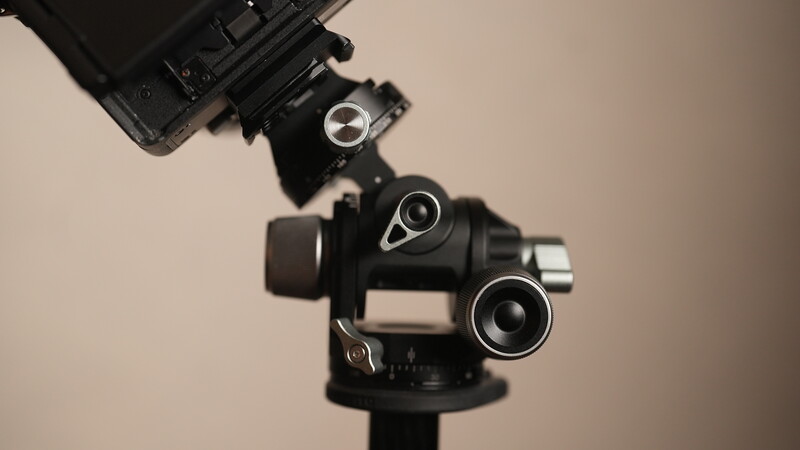
The second main knob is positioned to the left of the first and is also oriented perpendicular to it. This second (higher) main knob controls the forward and backward tilt of the camera and can go 50 degrees backward (because it is impeded by the first knob) and beyond 90 degrees forward, allowing you to shoot straight down if necessary.
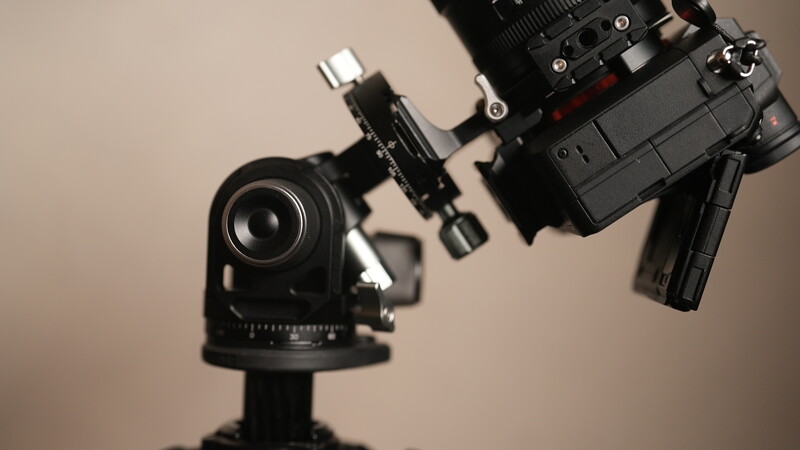
However, these movements of the camera are technically not limited to the adjustments stated above, because at the very top of the head is a secondary panning axis controlled by a small lever lock. This 360-degree pan allows the user to basically switch the actions of the knobs relative to the camera by simply turning it 90 degrees. At the same time, it allows for leveled panorama shooting regardless of the level of the entire head. The second panning axis rotates the Arca-Swiss-type quick release clamp that is paired with a knob for mounting.
Application
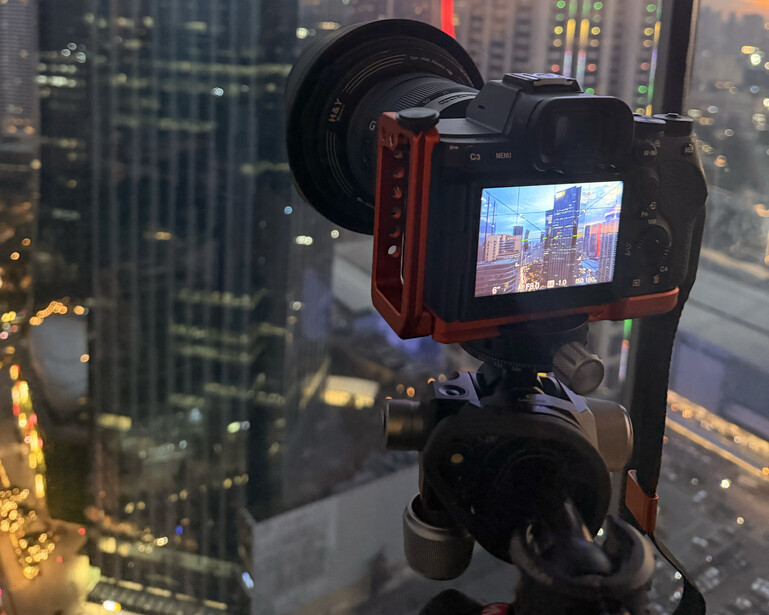
Just like most camera gear and accessories, while some are best suited for certain genres and workflows, something like a tripod head can be used for any genre that the user wishes. However, it has been said over and over that geared heads are best for workflows that require specific framing and composition, especially when the camera has to be held in place for multiple exposures.
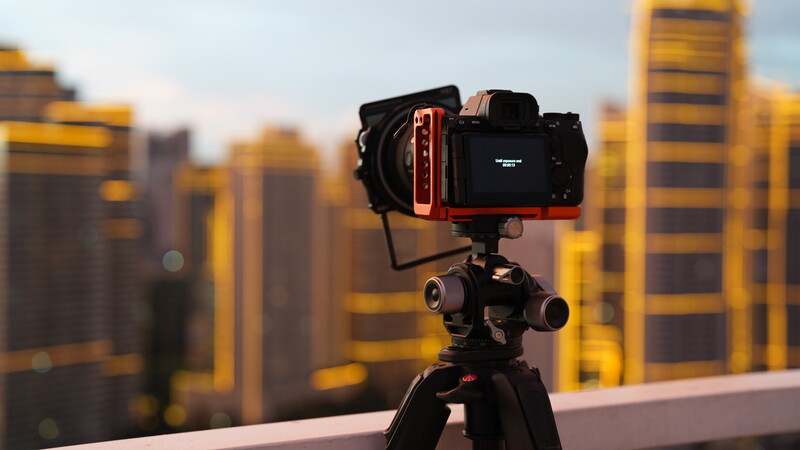
The most obvious use case would be for photographing architecture, real estate, and interiors. Geared precision heads make it easier to nail the framing by making precise movements instead of having to go back and forth, especially with a ball head that has a bit of give when being locked. Architectural photography heavily relies on avoiding distortion and tilt, and maintaining the perspectives of the structure or space being photographed. The precise adjustments of the two main knobs allow for perfecting the framing much more easily and can work best in combination with a shift or tilt/shift lens when doing wide perspectives.
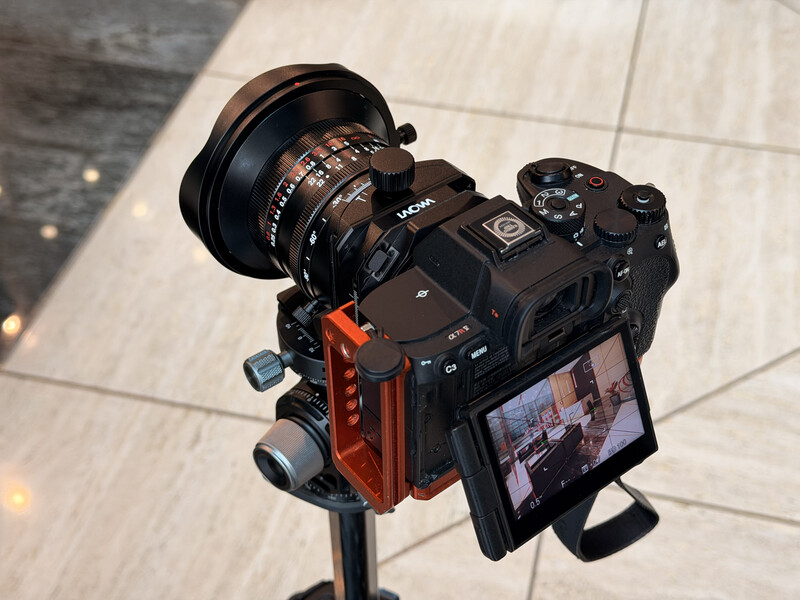
Another kind of photography that would benefit greatly from precise camera adjustments would be shooting products, food, and still life—especially when multiple subjects are involved in the shot. Just like what was said in the first use case, the geared head can be used to easily perfect the framing, especially when perspective and spacing will make or break the beauty of the photograph. Photographing multiple products often requires a good notion of order, which is why getting the right angle is crucial.
A geared head can also be very beneficial for photographing small details up close with macro lenses. Shooting with macro lenses is way more sensitive to even the smallest adjustments of the camera’s position because it can greatly affect focusing, especially when maximizing the lens’ magnification. Instead of making loose adjustments or even moving the camera, the geared adjustments can be the one to compensate.
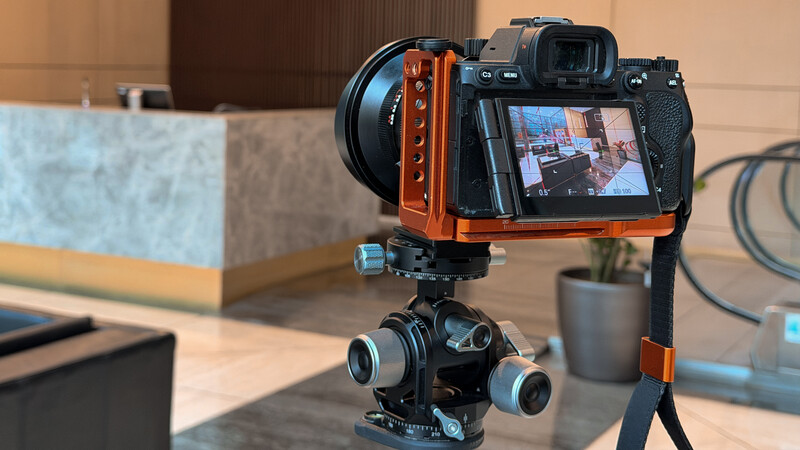
Because of the Leofoto G4’s more compact form, one might consider using it even in shooting scenarios that require a lot of traveling and logistics. In the past, large and bulky geared heads would be reserved for more controlled environments, but having something this compact can definitely offer a wider range of functionality. Personally, I’ve drawn a line where my geared head is for architectural photography work, and a ball head would be for anything that requires travel. The Leofoto G4, however, can be a head that I’d use for any workflow that requires the use of a tripod.
What I Liked:
-
Compact design
-
Intuitive and straightforward controls
-
20 kg payload
What Can Be Improved:
- Possibly a geared knob for panning



Join the Fstoppers community for free
-
Post comments and join in the discussions
-
Browse the site ad-free
-
Share your work and get featured in the community
-
Compete in the photo contests for fun and prizes
2 Comments
Unfortunately, your review overlooks what I consider the most critical factors with this head: vibration control and positional slippage.
While many heads are compact and lightweight, they typically rely on a square shaft between the panning plate (supporting the camera and lens) and the body of the head. In practice, this design is inherently prone to vibration. In my experience, the commonly cited 2–3 seconds for vibration to settle is unrealistic; it often takes 6–8 seconds, and in even moderate wind conditions the head rarely becomes fully vibration-free.
Equally important is adjustment accuracy. The control knobs on many of these heads lack true precision and tend to exhibit micro-slip when tensioning. The result is that the camera settles almost where intended, rather than exactly where placed. This looseness not only compromises framing accuracy but also further contributes to vibration.
These two issues—vibration persistence and positional slippage—are fundamental limitations that deserve more attention when evaluating this type of head.
For over a year now, I have used the Leofoto G4 head exclusively to support my Sony A7RIVA cameras for landscape work with lenses from 24 to 500. It replaced the RRS BH55 which I used for the previous 15+ years and Arca-Swiss Monoball before that. I'll never go back to ball heads. I have never experienced any issues with vibration despite extensive use of long exposures. The precision and accuracy of adjustment are consistently reliable and lack of any sort of droop and creep so common with ballheads. It was quite a revelation just how much time I had been wasting trying to coax to ballhead to hold the exact framing I needed. With the G4 adjustments are fast, easy and they just stay where you set them.
The G4 is also offered with a geared Pano platform.