

The Sony a7R VI arrived this month with 66.8 megapixels, a fully stacked sensor, 30 frames per second, and 8.5 stops of stabilization. The spec sheet is extraordinary. But the feature that will matter most to photographers who use their cameras after dark is one that does not appear in any resolution or burst-speed comparison: the rear buttons glow.
Small LEDs embedded in the a7R VI's rear controls illuminate the buttons in low light, making it possible to find the AF-ON button, the joystick, the menu button, and the playback controls without a headlamp, a phone flashlight, or the memorized muscle memory that every night photographer has developed out of necessity. It is a small, inexpensive, thoughtful detail, and the photography press has rightly praised it.
What the photography press has not mentioned is that Pentax solved this problem more comprehensively a decade ago, and nobody copied them.
The Pentax K-1 Did It Better Than Anyone
Illuminated buttons on cameras were not new when the Pentax K-1 launched in 2016. Nikon's D4, released in 2012, had backlit rear buttons on its professional DSLR. But no camera before or since has matched what Pentax did with its Operation Assist Lights: a comprehensive system of strategically placed white LEDs designed to make the entire camera usable in darkness. Not just the buttons. The entire camera.
An LED mounted beneath the pentaprism housing illuminates the lens mount, casting enough light on the bayonet that you can change lenses in pitch darkness without fumbling for the alignment dot. LEDs behind the LCD monitor illuminate the rear controls when the screen is tilted away from the body, turning the back of the camera into a softly lit control panel. An LED at the memory card slot lights up the card door so you can swap cards without a flashlight. Another LED at the cable release terminal illuminates the remote socket so you can plug in a cable release by feel and by sight rather than by trial and error.
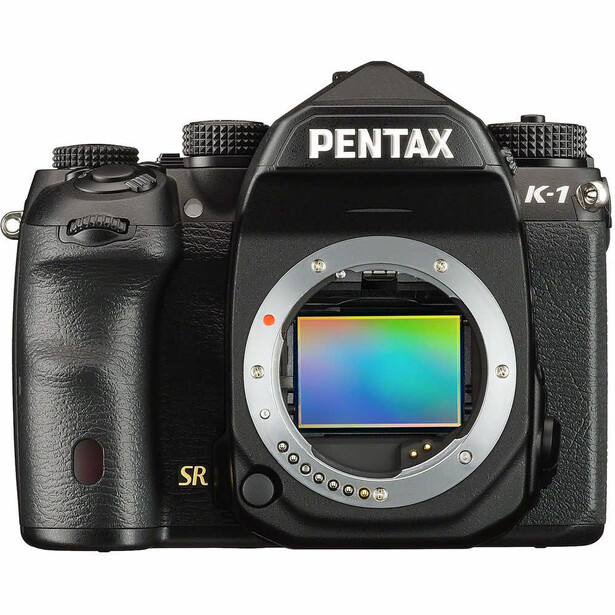
A dedicated illumination button on the top plate activates the system with a single press, and the lights can be configured in groups (the card slot and cable terminal share one setting, while the lens mount and rear panel lights can be controlled separately). The lens mount light works even when the camera is powered off, which means you can change lenses in the dark without turning the camera on and draining the battery. The K-1 Mark II carried the same system forward unchanged.
For astrophotographers, landscape shooters working before dawn or after dusk, wedding photographers in dim reception halls, and anyone who has ever fumbled with a memory card in a camera bag at night, the Operation Assist Lights were one of those features that made you wonder why every camera did not have them. The Luminous Landscape review at the time said it plainly: "Why hasn't camera lighting been done before!"
That was 2016. In the decade since, the major manufacturers have released numerous camera bodies across every price tier, and none of them included illuminated lens mounts, illuminated card slots, or illuminated cable release ports. Sony's a7R VI illuminated buttons are a welcome step, but they cover one of the four areas Pentax addressed ten years ago. The lens mount, the card slot, and the cable port remain dark on every Sony, Canon, Nikon, and Fujifilm body on the market.
This Is Not About Pentax or Sony. It Is About a Pattern.
The illumination story is a specific example of a broader pattern in camera design: manufacturers invest enormous engineering resources into headline specs (sensor resolution, burst speed, video codecs, autofocus algorithms) and consistently underinvest in the small design details that determine whether a camera is pleasant to use in the field.
Consider the number of times you have done each of the following in darkness or dim light: changed a lens, swapped a memory card, plugged in a cable release, looked for a specific button on the back of the camera, tried to read the markings on a mode dial, or searched for the card slot door. Now consider the number of times you have needed 66.8 megapixels. For most photographers, the first list describes situations they encounter on a weekly or daily basis. The second describes a capability they may never need.
This is not an argument that resolution does not matter. It does. But the cost of adding four LEDs to a camera body is measured in cents. The engineering is trivial. The components are off-the-shelf. The power draw is negligible. And the impact on the user experience in low-light conditions is disproportionately large relative to the cost of implementation. The fact that a $4,500 Sony a7R VI includes illuminated rear buttons but not an illuminated lens mount or card slot, while a camera from 2016 had all four, suggests that the design priority is not "what would make this camera better to use" but "what will appear on the spec sheet and in the press release."
The Small Things That Expensive Cameras Still Get Wrong
Illumination is the most vivid example, but it is not the only one. Several small design conveniences remain absent from cameras that cost $2,000, $3,000, and more, even though the engineering is solved, the cost is minimal, and at least one manufacturer has proven each feature works.
- A locking mode dial that does not require a button press. Some cameras have mode dials that rotate freely and get knocked to the wrong setting inside a bag. Others have mode dials with a lock button that must be held while rotating. Pentax's approach (a dedicated lock switch that can be toggled without holding a button) and Fujifilm's approach (physical shutter speed and ISO dials that do not need a mode dial at all) are both better than a mode dial that shifts from manual to auto because the camera brushed against a bag strap.
- Tactile differentiation of critical buttons. The AF-ON button, the shutter button, the joystick, and the record button should all feel different under the thumb and finger, so the photographer can find them without looking. Some cameras do this well (raised dots, concave vs. convex surfaces, textured rings around the shutter button). Others have rear panels where every button is the same size, the same shape, and the same height, indistinguishable by touch.
- A viewfinder eyecup that stays on. Photographers lose rubber eyecups constantly because the friction-fit design that most manufacturers use allows the eyecup to slide off when the camera brushes against a strap, a bag, or a coat. A locking eyecup mechanism (a bayonet twist, a threaded ring, or a snap detent) would cost nothing and save photographers the recurring expense and annoyance of replacing a part that should stay attached to the camera.
These are only a few off the top of my head. I'm sure you have some inconvenience that drives you nuts at the front of your mind right now.
Why This Keeps Happening
The economics of the camera industry explain the pattern without excusing it. Camera launches are reviewed, covered, and promoted based on headline specifications. Resolution, burst rate, video capability, and autofocus performance drive the press coverage that drives consumer awareness that drives sales. A camera with 66.8 megapixels gets a news cycle. A camera with an illuminated card slot does not.
This creates a rational but frustrating incentive structure: every dollar of R&D budget that goes toward a feature visible on a spec sheet has a measurable return in press coverage and marketing material. Every dollar that goes toward a feature that makes the camera nicer to use but does not photograph well in a press release has a return that is real but invisible. Photographers who use the camera in the field notice and appreciate these details. Those comparing spec sheets do not mention them. The manufacturer optimizes for what gets measured, and the small things do not get measured.
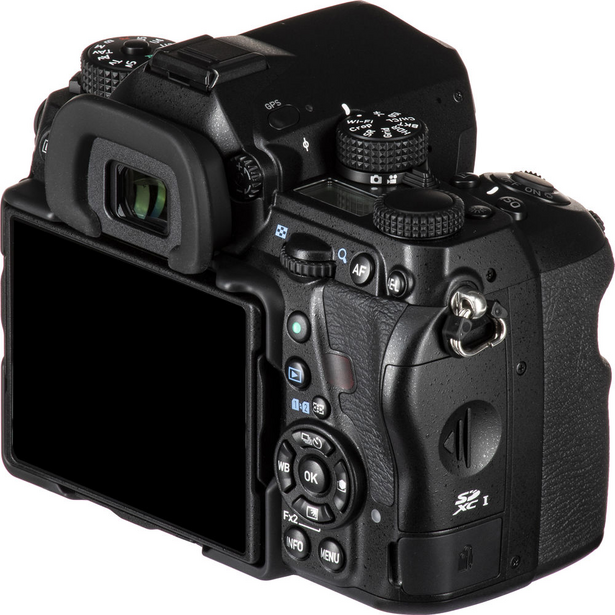
The Pentax K-1 is the proof that this does not have to be the case. Pentax, working with a smaller R&D budget than Canon, Nikon, or Sony, found the engineering resources to add LEDs, a dedicated illumination button, grouped light configuration, and a power-off lens mount light to a camera that also delivered class-competitive resolution, stabilization, and weather-sealing. The K-1 had its own headline-spec weaknesses (slow continuous shooting meant sports and action photographers looked elsewhere), but it proved that a manufacturer could deliver thoughtful usability details alongside competitive core specifications without one coming at the expense of the other. The lights did not replace any headline spec. They sat alongside them.
Ten years later, Sony put glowing buttons on its newest flagship and the industry treated it as innovation. Nikon has continued to include backlit buttons on subsequent bodies including the Nikon D850, Nikon Z8, and Nikon Z9. But no manufacturer has matched the breadth of the K-1's approach: the lens mount, the card slot, and the cable port are still waiting.
If you are building your camera skills and want to understand how the fundamentals of exposure, composition, and light work regardless of whether your camera's buttons glow, the Fstoppers Photography 101 tutorial covers those foundations in depth.





Join the Fstoppers community for free
-
Post comments and join in the discussions
-
Browse the site ad-free
-
Share your work and get featured in the community
-
Compete in the photo contests for fun and prizes
4 Comments
Good points well made.
Unlike camera reviewers it takes me about a month to learn the buttons on my new camera which means lights on the buttons don't mean anything to me for the following 10 years at which point I might upgrade again.
I understand how they might be appreciated by reviewers and gear heads who constantly change camera bodies but honestly lights on buttons just sound like something else to break. Maybe I am just an outlier in that familiarity with my existing camera means a lot more to me than having the latest hyped features of the newest camera.
"Consider the number of times you have done each of the following in darkness or dim light: changed a lens, swapped a memory card, plugged in a cable release, looked for a specific button on the back of the camera, tried to read the markings on a mode dial, or searched for the card slot door."
I have done all of these countless times with no lights. For lens changes and card changes I don't even look at the camera when there is light. The mode is shown in the viewfinder/back screen when the mode is changed so I don't even look at the mode dial when in a well lit room.
On my list of things that are missing on new cameras... lights for dials and buttons doesn't even make the list.
Hi, an other way for having no problem finding the right button is the one found by Leica on the SL3. Just take a look and you will easily understand the point !
Nikon has it for years in it's pro line...but suddenly Sony brings it for the first time and it's the biggest thing on earth!