For photographers who lean into video, this is the small-body, big-sensor combo that lets you cover stills, landscape, portrait, and anamorphic work without switching systems.
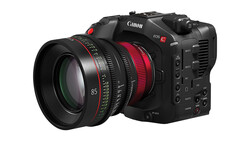
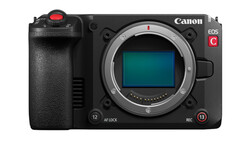
Coming to you from CVP, this thorough video puts the Canon EOS C50 cinema camera through controlled tests and real scenes so you can judge latitude, noise, and readout instead of guessing. You see 7K 3:2 open gate for dual deliverables, plus oversampled 4K from the full frame area when you want smaller files without giving away texture. Readout hovers around the sub-20 ms range in full frame modes, which keeps skew manageable on normal moves. Autofocus uses Dual Pixel CMOS AF II with subject tracking that stays locked even on fast action. The included top handle matters because it adds XLR audio, start/stop, and a zoom rocker in the spot your left hand actually lives during low angles.
The comparisons land where you’d expect: highlight rolloff stays clean until about four stops over where skin starts to go, while underexposure shows chroma noise around minus three but holds color well at matching offsets. You also get color pipeline options that make quick work of mixed lighting, with Canon Log 2 and Log 3 when you want grading headroom and a practical YDR profile when the delivery clock is ticking. Digital stabilization helps in compressed codecs, but it’s unavailable in raw, so lens IS and a bit of rig mass remain the simple fix for handheld walk-and-talks. Open gate is the headline because a single 7K master lets you punch clean 9:16 frames for socials without reshoots or weird reframes.
Key Specs
-
Canon RF mount with Cooke /i communication
-
Full frame CMOS, effective 34.2 MP (7,144 x 4,790)
-
Dual base ISO 800 / 6,400 in Log/RAW; 400 / 3,200 in 709
-
Internal 12-bit Cinema RAW Light up to 7K 30p in 3:2; 7K 16:9 up to 60p; 5K Super 35 up to 60p; 2.5K Super 16 up to 150p
-
XF-AVC and XF-HEVC options in 10-bit 4:2:2 and 8-bit 4:2:0 across 4K/2K/HD
-
CFexpress Type B plus SD UHS-II with proxy, sub, crop, chunk, relay, and double-slot modes
-
Full-size HDMI, DIN timecode, USB-C power/UVC, Wi-Fi, Ethernet via USB-C adapter
-
Articulating 3" touchscreen, fan-assisted cooling, LP-E6/LP-E6NH power
Noise testing makes the base switch do real work. At 6,400 on the high base, chroma cleans up in a way you won’t get by pushing the low base in post, and 5,000 looks balanced when you need a touch more shutter speed at night. In raw, plan to run temporal NR in your NLE, especially in cropped high-speed modes, while the XF profiles apply more in-camera reduction that favors fast-turnaround edits. The breathing correction crop steadies focus pulls with RF glass so framing doesn’t drift when you rack between foreground and midground at f/1.4.
Recording choices cover both heavy and lean workflows. Cinema RAW Light in LT, ST, and HQ handles narrative or VFX plates when you need robust color transforms, while XF-HEVC S hits a sweet spot for file size and modern NLE support. The “crop” secondary recording gives you a simultaneous 9:16 cut in 1080p for social deliverables, which reduces duplicate takes on day-one content. The “chunk” option slices a parallel file into timed segments so producers can share selects without scrubbing a 45-minute master.
Ergonomics land in a smart hybrid space. Fourteen reassignable buttons, a responsive joystick, dials where your fingers rest, and tally in multiple positions keep the body friendly for solo work. No internal NDs means planning for drop-in or front VNDs, but the RF mount’s adapter ecosystem gets you there without fighting balance. Battery life on LP-E6/LP-E6NH is workable with spares or a PD-rated USB-C source, and the UI split between stills and Cinema EOS modes keeps muscle memory intact when you hop between photos and video. Check out the video above for the full rundown.


Join the Fstoppers community for free
-
Post comments and join in the discussions
-
Browse the site ad-free
-
Share your work and get featured in the community
-
Compete in the photo contests for fun and prizes
1 Comment
The hybrid narrative is bs... It makes little to no sense to flop your video camera over to stills rather than have a dedicated stills camera ready to do its job (or vice versa). What is the deal with the continued argument for a "Swiss army knife"? It's kludgy & leads to bad practices on set.
The argument for a lightweight dedicated gimbal camera has already been made & is an established, effective toolset in the industry. I'm sure cannon shooters are as happy to see this camera as Sony shooters were to see the FX3. Can't we just let the C50 be good because it does its job well?