Car photography often comes down to balance: placing a strong subject in a compelling setting. A lens that can handle both the environment and the vehicle in front of it can save you from swapping glass constantly and missing the shot.
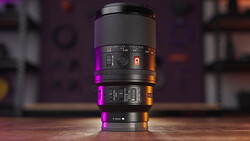
Coming to you from Peter Fritz, this detailed video takes a close look at the new Hasselblad XCD 35-100mm f/2.8-4 E lens. Fritz explains why the zoom range is so well-suited to cars, landscapes, and even portraits. He points out that 35mm is as wide as he likes to go for cars, and 100mm feels like the sweet spot for details and full views. The flexibility to shoot everything in between keeps you from needing multiple primes in the field. Fritz has experience with Hasselblad’s primes and says this lens can easily keep up in sharpness, which is significant for anyone who has been hesitant to move away from primes.
The lens offers more than just convenience. Fritz compares it to the earlier 35-75mm and explains why the extra reach matters. For landscapes, the ability to compress distant hills with longer focal lengths creates depth and character. For cars, the 100mm end brings out form and detail without distortion. He notes that this lens alone could handle 95% of his car photography and around 90% of his landscapes. That practicality is what makes it stand out. He also mentions that for certain situations, such as interiors or extreme environmental compositions, a wider lens like the XCD 21mm still has its place.
Key Specs
-
Focal Length: 36 to 97mm (35mm Equivalent: 28 to 76mm)
-
Aperture: Maximum f/2.8 to 4, Minimum f/32
-
Lens Mount: Hasselblad X
-
Format Coverage: Medium Format
-
Minimum Focus Distance: 1.3' (Wide) to 1.6' (Tele)
-
Magnification: 0.25x, 1:4 ratio
-
Optical Design: 16 elements in 13 groups
-
Autofocus: Yes
-
Image Stabilization: No
-
Filter Size: 86mm
-
Dimensions: 90 x 138 mm
-
Weight: 894 g
Fritz also touches on Hasselblad’s “holy trinity” of zooms, with this lens and the 20-35mm being the first two. The missing piece will likely be a telephoto zoom, perhaps in the 100-250mm range, which would round out a complete kit. He suggests that for most people, the 35-100mm could cover nearly everything without the need to carry multiple primes or extra weight. Cost is always part of the equation, but compared to buying a set of primes to match, it may end up being the simpler option. Check out the video above for the full rundown from Fritz.



Join the Fstoppers community for free
-
Post comments and join in the discussions
-
Browse the site ad-free
-
Share your work and get featured in the community
-
Compete in the photo contests for fun and prizes
1 Comment
As they say "to each their own". If I told my dear wife we were going to spend $12,000 USD for a camera and lens to take pictures of a car, I would most like have to move into that car. That said, I would love to have this gear. Someday.....