The Sigma 17-40mm f/1.8 DC Art lens is a rare kind of zoom. It covers popular focal lengths like 24mm and 35mm, both staples in everyday shooting, while offering a wide maximum aperture that replaces several primes at once. Having this kind of flexibility in a single compact lens can change how you carry your kit and how you approach different types of work.
Coming to you from Jason Vong, this detailed video highlights why the Sigma 17-40mm f/1.8 DC Art lens is worth serious attention. Instead of packing a 16mm, 23mm, and 30mm prime, you can travel lighter with this one lens while keeping that fast f/1.8 aperture. For APS-C shooters, the 1.5x crop means the field of view is equivalent to 25.5 to 60mm, putting it close to the workhorse 24-70mm zoom many full frame users rely on. What makes this different is the constant f/1.8 aperture, something you won’t find in other zooms. For low light or shallow depth of field, that opens creative options you normally give up when using a zoom.
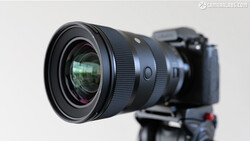
The lens also steps up its handling. You’ll find physical controls like an aperture ring, autofocus/manual focus toggle, and a focus hold button. Vong points out that this makes a big difference when shooting with Fujifilm, where physical aperture rings are standard, but it’s also practical on other systems. Autofocus uses a high-response linear actuator, giving you smoother, more reliable transitions than older Sigma primes, which is especially useful for video. On top of that, the lens is weather-sealed, weighs only 535 g, and balances well for gimbal use since it uses an internal zoom.
Key Specs
-
Focal Length: 17 to 40mm (35mm Equivalent: 25.5 to 60mm)
-
Aperture: Maximum f/1.8, Minimum f/16
-
Lens Mounts: Canon RF, Leica L, Sony E, Fujifilm X
-
Lens Format Coverage: APS-C
-
Minimum Focus Distance: 11" / 28 cm
-
Magnification: 0.21x
-
Optical Design: 17 Elements in 11 Groups
-
Aperture Blades: 11, Rounded
-
Focus Type: Autofocus
-
Image Stabilization: No
-
Filter Size: 67 mm
-
Dimensions: 2.9 x 4.6" / 72.9 x 115.9 mm
-
Weight: 18.9 oz / 535 g
Wide open, sharpness in the center is strong, with some softness and vignetting at 17mm in the corners, which improves as you move toward 40mm. Compared to primes like the Sigma 16mm and 30mm f/1.4, you give up only about 2/3 of a stop of light, which is usually worth the trade for the versatility of zooming.
Video shooters stand to gain even more. On APS-C cameras like the Sony a6700 or FX30, the lens keeps up with 4K 60p and 4K 120p thanks to its fast focusing. Because it doesn’t extend when zooming, balance on gimbals is stable. Full frame users aren’t left out either, since Sony bodies can switch into Super 35 mode for APS-C crops, letting you use the lens without vignetting and still take advantage of the f/1.8 aperture for slow motion and low light.
There are trade-offs. At a little under $1,000, it isn’t cheap, though still less than buying three comparable primes. It lacks optical stabilization, so pairing it with a body that has in-body stabilization matters. The zoom range ends at 40mm, which may feel limiting, but history suggests Sigma could release a matching 50-100mm f/1.8, just as they did with their DSLR lineup. Check out the video above for the full rundown from Vong.



Join the Fstoppers community for free
-
Post comments and join in the discussions
-
Browse the site ad-free
-
Share your work and get featured in the community
-
Compete in the photo contests for fun and prizes
3 Comments
Any hopes of this lens coming out for Nikon Z mount cameras?
Any hopes of this lens coming out for Nikon Z mount cameras?
Unfortunately, it's Usless for a full frame camera