A 12mm f/2.8 full frame lens opens the door to images that feel bigger than life. You can pull entire cathedrals, sprawling streets, or the curve of a canyon into a single shot. It’s also easy to go wrong with focal lengths this wide, which is why learning how to control perspective distortion is key. If you don’t, you’ll end up with scenes that look stretched and unnatural instead of immersive.
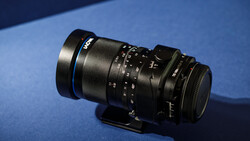
Coming to you from Mark Wiemels, this thorough video breaks down the Venus Optics Laowa 12mm f/2.8 Lite Zero-D AF lens. The discussion starts with perspective distortion, which is how objects closer to the lens can balloon in size compared to those in the distance. Wiemels explains how this can be used creatively or minimized by keeping subjects at similar distances. He also points out that 12mm isn’t an easy focal length to start with. It’s better suited to you if you’ve worked with something like 20mm first and understand how wide angles behave. The lens shines in settings where you want the scene to wrap around the viewer, such as busy city streets, architectural interiors, or landscapes with striking foregrounds.
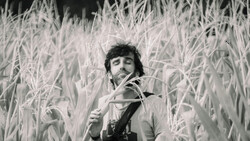
Wiemels notes that for extreme wraparound shots, you won’t find many zooms that hit 12mm on full frame, meaning you’ll probably need a prime like this. He also covers how vloggers might use the lens to capture both themselves and their surroundings, while warning about exaggerated facial distortion if framed poorly. Beyond vlogging and travel, this lens has strong potential for tight spaces like caves, forests, or narrow streets. But it’s not just about field of view. Build quality is high, with a metal body, weather-sealing gasket, and a distinctive finish that stands out from other lenses.
Key Specs
-
Focal Length: 12mm
-
Aperture: Maximum: f/2.8, Minimum: f/22
-
Lens Mount: Sony E, Canon RF, Leica L, Nikon Z
-
Lens Format Coverage: Full frame
-
Minimum Focus Distance: 5.5" / 14 cm
-
Optical Design: 16 elements in 9 groups
-
Aperture/Iris Blades: 5 or 14
-
Focus Type: Manual focus, expect with 5-blade Nikon and Sony versions
-
Image Stabilization: No
-
Filter Size: 72 mm (front)
-
Dimensions: ø: 3 x L: 3.1" / ø: 77.2 x L: 78.6 mm
-
Weight: 0.8 lb / 377 g
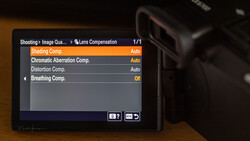
The video also covers variations in aperture blade count: 5-blade versions for Sony and Nikon with autofocus, and 14-blade versions for all mounts in manual focus. Wiemels notes a bit of aperture chatter on the autofocus model, which is normal. Image quality shows minimal barrel distortion, heavy vignetting at all apertures, and excellent chromatic aberration control. The heaviest drawback is flare, which can be severe when shooting into bright light, though it can often be managed in the field. Close-up image quality is strong, especially at f/4 or f/5.6.
Sharpness is high across the frame even wide open, with only slight corner improvement when stopped down. Bokeh is smooth for such a wide lens when shooting close, offering pleasing background blur without harsh outlines. Check out the video above for the full rundown from Wiemels.

Join the Fstoppers community for free
-
Post comments and join in the discussions
-
Browse the site ad-free
-
Share your work and get featured in the community
-
Compete in the photo contests for fun and prizes
1 Comment
Most have never seen a Fisheye lens but early in digital times they were very popular to get it all in BUT you needed Fisheye software. This lens at 12 and its brother the 10mm have their history from those.
Ok, I have been using many lenses of this range some chipped some not, meaning if not the info in not in the metadata, lucky these are chipped.
First you should view this video several times to get your "Photo EYE" some info on what to look for. Next Learn to aim a capture basically stay level and what not to have in the frame of a capture.
Indoors to ceiling fans or celling light figures or on the sides. Indoors the perfect mm is 16-35mm for wider things on the far side will be too far looking. If you do use the 12mm indoors with a square room aim for the corners.
For outside and doing a landscape and the far area is far away details will be more far away that your eye sees. What happens is you will get a panorama look but filling the frame. it will be panorama like but with the top and bottoms which will make the far away even more faraway.
The key is to have both a near story and a far story. Like a night with a subject close and say the milky way above. Doing a milky way landscape the trail in the stars will be straight across horizontally only when you do a panorama in portrait view will you get a milky way arch, and the reason for a 10mm or 12mm is to get more height of sky so when merging all images the end result will also look like a 3x2 image with no elongated stars (going left to right) so you can crop down some and have space above.
For landscapes do not us a circular polarizer for the rule of thumb of where the sun is you have to be aware of for you will get a blue downward hump!!!!
Who will be the main buyers will me the video selfies wanting more of the background but be careful and look at this video at what happens.
A positive on this lens, it is small and a filter threads up front where as the Sony 12-24mm F4 and F2.8 are monsters big and heavy and need external filter holders and big filters. In 2015 I used the APS-C E 10-18mm (15-27mm in 35mm) in Full Frame mode at 12mm getting two stores in one capture.
1. testing new Voigtlander 12mm f/5.6 see the light figures turning upwards on the side
2. using the Voigtlander 12mm f/5.6
3. using the Voigtlander 10mm f/5.6 for Sony FE mount getting a multi level panorama in one capture more in a frame that any before in one capture
4. using the Voigtlander 10mm f/5.6 for Sony FE mount getting a multi level panorama in one capture