Wide angle zooms are tricky. You want width without warping faces, speed without bulk, and autofocus that doesn’t miss when your subject moves. That’s why a 16–30mm f/2.8 that stays sharp, balances on a gimbal, and holds focus in tough light matters if you like working close, shooting environmental portraits, city scenes, or video where you walk and talk.
Coming to you from Julia Trotti, this thorough video looks at the Tamron 16-30mm f/2.8 Di III VXD G2. You see it used for a portrait shoot on an a7 IV and for video on an a9 III, with 100% crops shown before edits. The big takeaway is reliable autofocus with a high in-focus ratio, even while letting the camera handle tracking on a wide area with human detection. You also get a sense of rendering: neutral color, punchy contrast, and sharpness that’s solid if not the absolute best, which matters when you’re shooting at 16mm and want edges that don’t smear.
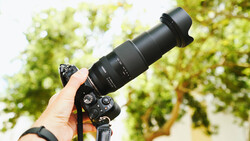
The internal zoom keeps balance fixed, which is rare at this price, and it makes gimbal work practical when you need to punch in from 16mm to 30mm mid-shot. Distortion and vignetting at 16mm stay reasonable, so you can compose with straight lines near the frame edge and not spend your edit wrestling corrections. It also resists chromatic aberration well, with only small hints in hard backlight.
Bokeh is another plus. At 30mm, you can separate your subject more than you might expect from a wide zoom, thanks to the 9-blade rounded aperture. It isn’t creamy like an 85mm, but the specular highlights stay round across the zoom range with a touch of texture on close inspection. Flare is stronger at 16mm, so if you shoot into the sun, expect visible artifacts; throughout the rest of the range, the flare looks standard and not overly distracting.
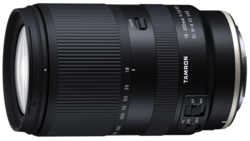
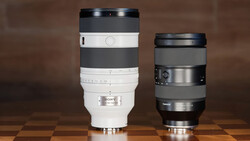
Compared to alternatives, the tradeoffs are clear. Sony’s FE 16–25mm f/2.8 G is lighter but loses that extra 5mm on the long end, which you feel when framing portraits or talking-head video. If you’re on Nikon Z, choices are thinner, and Tamron’s Nikon Z mount version makes this focal range and speed far more accessible. Weight and size make a difference in real use: at about 1 lb, it feels at home on compact bodies, and the internal zoom means no front extension to throw off balance or invite dust in windy conditions.
Key Specs
- Focal Length: 16 to 30mm
- Aperture: Maximum f/2.8; Minimum f/16
- Lens Mount: Nikon Z, Sony E
- Lens Format Coverage: Full frame
- Minimum Focus Distance: 7.5 in (wide) / 19 cm; 11.8 in (long) / 30 cm
- Magnification: 1:5.4 macro reproduction; 0.14–0.19x
- Optical Design: 16 elements in 12 groups
- Aperture Blades: 9, rounded
- Focus Type: Autofocus
- Image Stabilization: No
- Filter Size: 67 mm (front)
- Dimensions: 2.9 x 4.1 in / 74.8 x 103.9 mm
- Weight: 1 lb / 450 g
For video, you see focus tests with fast AF transition settings that keep up at close range where many lenses wobble or pulse. The internal zoom and stable center of gravity let you zoom from 16mm to 30mm on a gimbal without rebalancing, which saves time on shoots. Sharp footage with smooth rendering at f/2.8 makes it a clean option for travel, walk-and-talk clips, and establishing shots where you want width plus detail. In a side-by-side vlog segment against the Sony 16–35mm f/2.8 GM II, which costs well over $1,000 more, you can judge framing, sharpness, and flare behavior for yourself.
If you shoot environmental portraits, the 16mm end lets you place your subject in context while keeping lines under control. At 30mm, you get a natural perspective closer to 35mm, which helps when you want a tighter frame without switching lenses. Check out the video above for the full rundown from Trotti.

Join the Fstoppers community for free
-
Post comments and join in the discussions
-
Browse the site ad-free
-
Share your work and get featured in the community
-
Compete in the photo contests for fun and prizes
2 Comments
Thanks, it looks good (I have the older version, which I alternate with the Sony 16-35 for landscapes). BTW, you made me very nervous, use a strap!! Are you trying to break your camera? You WILL drop it, you know, especially getting up off the floor.
I use this Op-Tech Wrist Strap: https://www.amazon.com/dp/B00137NMMW?ref_=ppx_hzsearch_conn_dt_b_fed_as…