
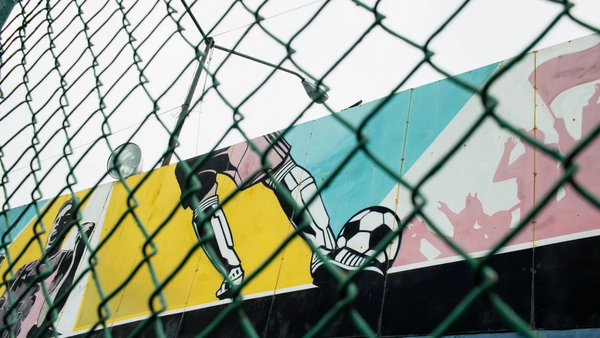
You feel it, or you don't. There's no middle ground.
I didn't become a football photographer by chasing the perfect action shot. I became one by putting myself where things are unstable, emotional, unpredictable—where football stops being a sport and turns into something else entirely. Something human. Something where the emotions are the real goal for a photographer like me.
Had to Get Close. Really Close.
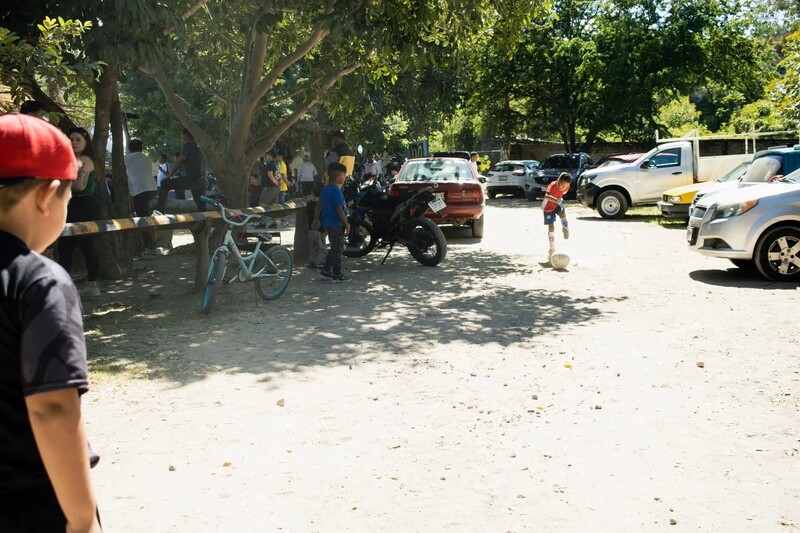
I never came from long lenses. I was never interested in that position, and more importantly, I was never asked to be that kind of photographer. When I was hired, it wasn't to document the match in the traditional sense. No one needed another photographer isolating action from the sidelines with a telephoto. What they were looking for was something else entirely: the story of a day of football—everything that happens around the game.
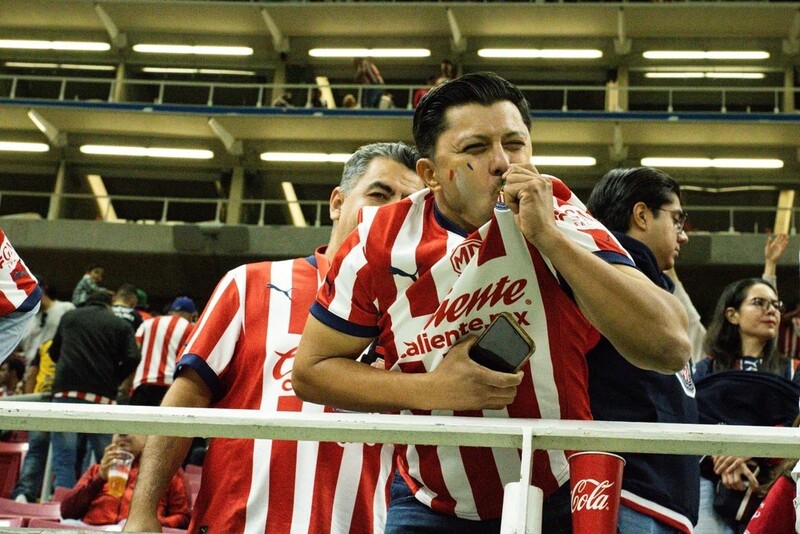
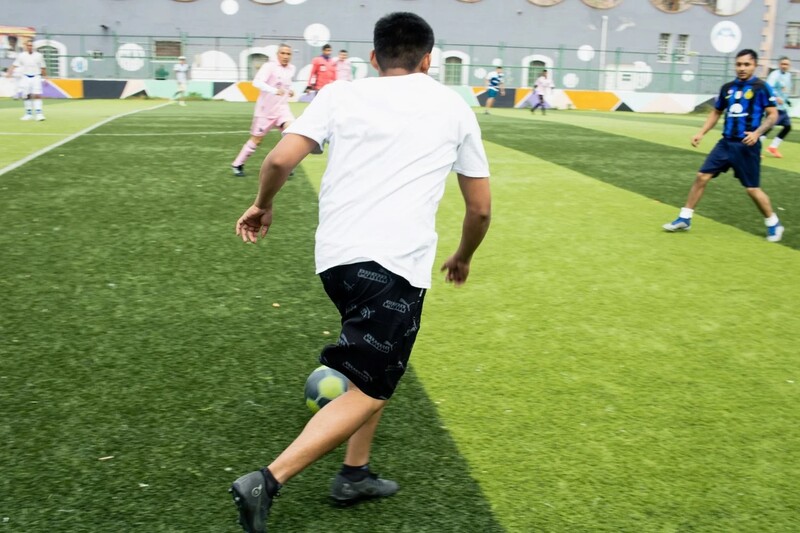
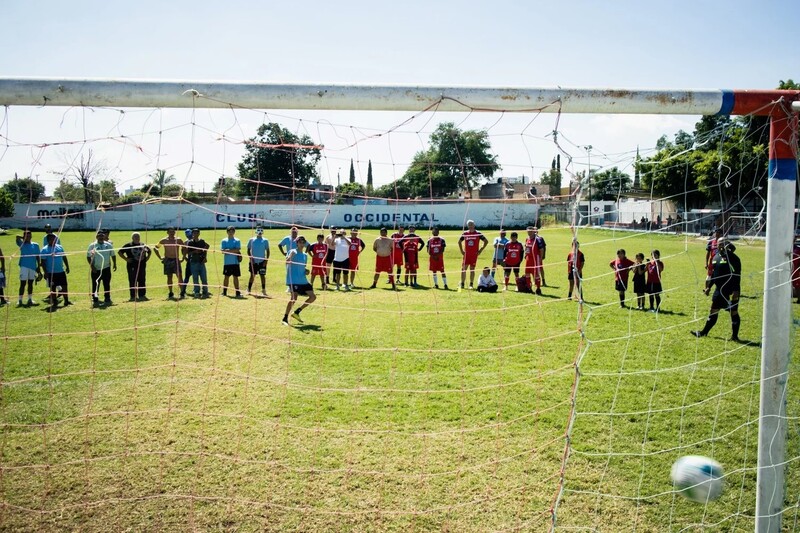
So my focus naturally moved elsewhere. Into small pitches where the lines are barely visible and the game blends into the street. Into communities where football is not entertainment, but identity. Into stadiums where the real energy doesn't come from the pitch, but rises from the stands. Into the middle of the curva. And once you're there, everything shifts. You're no longer documenting football. You're inside it.
The Crowd Is Not a Background
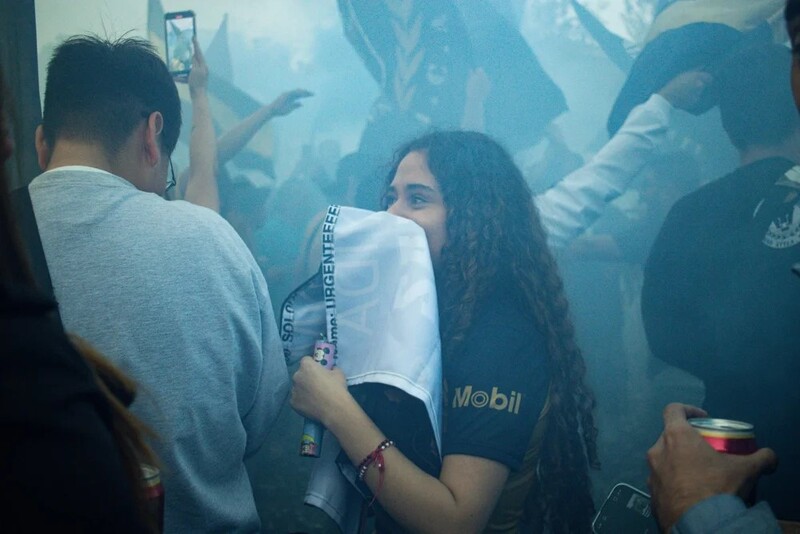
When you're inside a mass of bodies, pressed together, surrounded by noise, smoke, and tension, you quickly realize one thing: you're not in control anymore. And that's exactly where the work begins. You don't lift the camera casually. You don't "take" images. You negotiate every frame with your presence. People feel you. They read you. They decide, consciously or not, if you belong there. That decision happens in seconds, and it has nothing to do with your gear. It has to do with empathy. And then it's all about the ability to document the emotion.
Empathy Is Not Optional
This is the part nobody talks about enough. You can't fake your way into these environments. If you don't care, it shows. If you're there just to extract images, it shows even more. And the response is immediate: distance, resistance, sometimes rejection. But if you're genuinely involved, something shifts. Not in a dramatic, romantic way. It's subtle: a look that lasts a bit longer, a body that doesn't turn away, a moment that doesn't close itself off. That's access. And access, in this kind of work, is everything.
Where It All Started
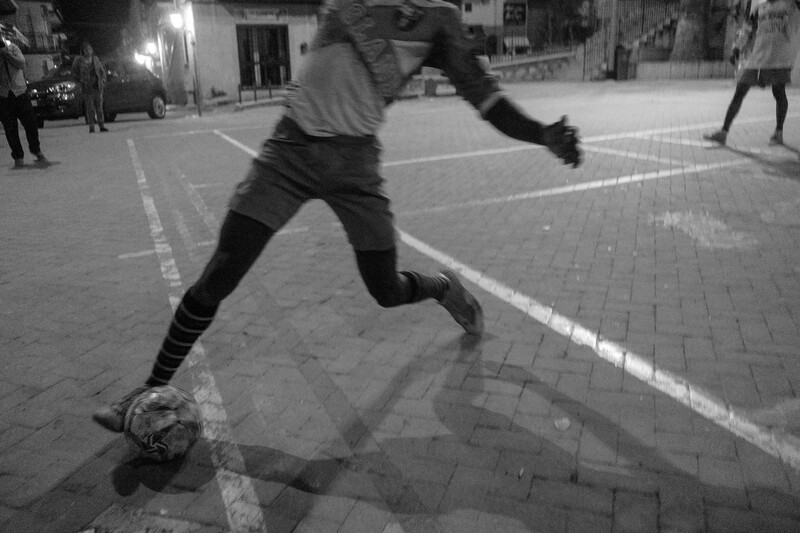
Before any stadium, before any publication, there was a project in Sicily—Un Calcio alla Mafia—in Bolognetta, just outside Palermo. That wasn't about football in the conventional sense. It was about what football carries inside it when it intersects with reality. Boys playing not just for fun, but for something that feels like resistance. A community trying to redefine itself through the simplest possible gesture: a ball, a game, a shared space, even at night. That work didn't teach me how to photograph football. It taught me why. And once you understand the "why," the "how" becomes almost secondary.

The Way I See
You already know now that I don't use long lenses. I work with 35mm and 50mm. Not because it's unconventional, but because it's necessary for my kind of photography. Those focal lengths force you into the situation. They eliminate the illusion of separation. They make you part of the scene, whether you like it or not. You don't wait for something to happen; you're already inside it when it does. That comes with risk. You miss things. You get it wrong. You get too close, or not close enough. But when it works, it doesn't feel like observation anymore. It feels like presence.
Football Beyond the Match
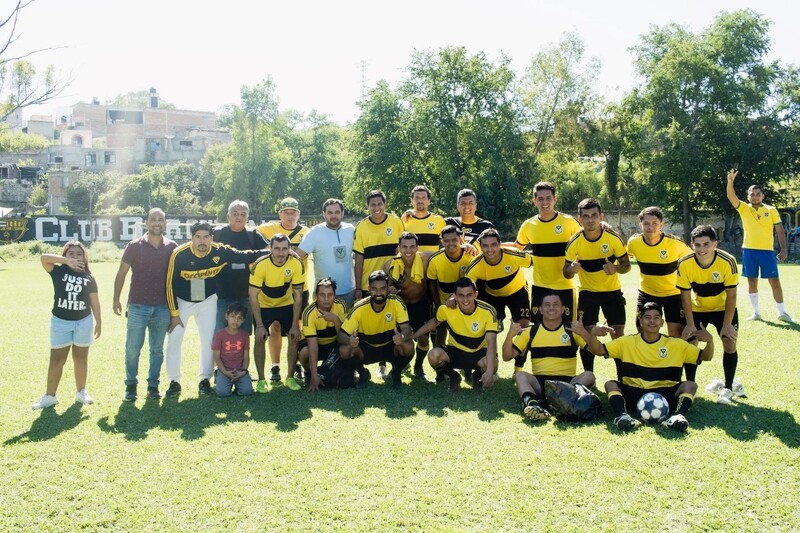
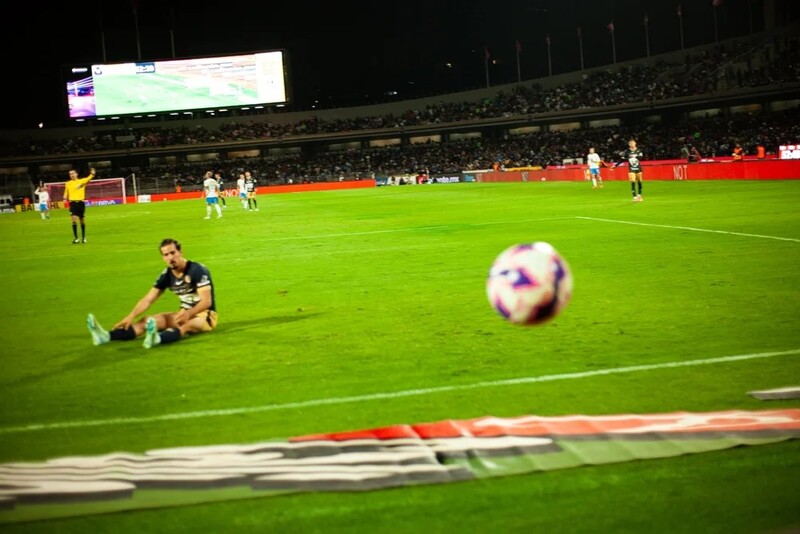
The game is just one layer. Most of what matters happens before and after, or completely outside the ninety minutes. A gesture. A reaction. A silence. A neighborhood where the pitch is just an extension of the street. A group of players posing together not as athletes, but as a collective identity. A solitary figure in the middle of a stadium, suddenly disconnected from everything around him. These are not side notes. They are the real narrative. I still think that football is a popular sport and should belong to the pueblo.
Being Found
I never built my work to fit into the traditional idea of football photography, and I never tried to force my way into that system. The project in Sicily was personal. Focused. Probably too specific, if you look at it from a market perspective. But it was honest, and that honesty travels. At some point, it reached the right place. I didn't have a broad football portfolio. I didn't have years of match coverage. I had a point of view, and that was enough for someone to contact me.
FIFA 2026 Is Coming
We're moving toward one of the biggest moments football can offer. The buildup is already there: more coverage, more images, more access than ever. But also more noise. The question is not how much we will see. The question is how much we will actually feel. Because if everything looks perfect, fast, and technically flawless, but nothing stays with you, then something is missing. That is why I thought of something different for this FIFA 2026. I will certainly be there, but in my own way.
Final Thought
Football is not just played on the pitch. It lives in people. If you want to photograph it, you have to go where it's uncomfortable, where you don't fully belong, where you have to earn every frame. Not with technique, but with presence. And if you're willing to do that, even for a moment, you'll understand that the strongest images are not the ones that describe the game — they're the ones that reveal everything around it.



Join the Fstoppers community for free
-
Post comments and join in the discussions
-
Browse the site ad-free
-
Share your work and get featured in the community
-
Compete in the photo contests for fun and prizes
No comments yet