
Discover how to navigate the challenges of rejection in street photography while transforming setbacks into opportunities for growth. What are the secrets to building confidence and fostering meaningful connections with your subjects?
In street photography, you will encounter situations when people refuse a request to be photographed, give you a disapproving look, or even outright curse you. One moment, you're capturing a great candid shot, and the next, you face rejection. If you've felt hurt when people don't want their photo taken, you're not alone. Every street photographer faces this.
But people saying “No!” doesn't have to end your photo expedition. Learning how to handle rejection well allows these experiences to become opportunities for growth, meeting new people, and taking better photos.
Why Rejection Hurts
In street photography, your subject has not asked to be photographed. Most of the time, they are unaware of your presence. When someone says no to your camera, it feels like a personal rebuff. It’s worse when it happens loudly in public; when someone tells you off on a busy street, it feels like everyone is watching and can be quite embarrassing unless you have a thick hide. You may lose confidence, making your camera feel really heavy.
All of this is normal, but it shouldn't alter your agenda for the day.
It's Not About You
Most of the time, when people say no, it has nothing to do with you. When people don't want to be photographed, they're usually preoccupied with their own concerns, wanting privacy, or having religious or cultural reservations. Their “no” is about themselves, less about judging you as a photographer. It’s well worth making a conscious effort to remember this and to respect the autonomy and right of each person to make their own decision.
Instead of taking the refusal personally, view it as helpful information about the limits of others and being respectful; both are essential in ethical street photography.
Simple Ways To Bounce Back
The 30-Second Break
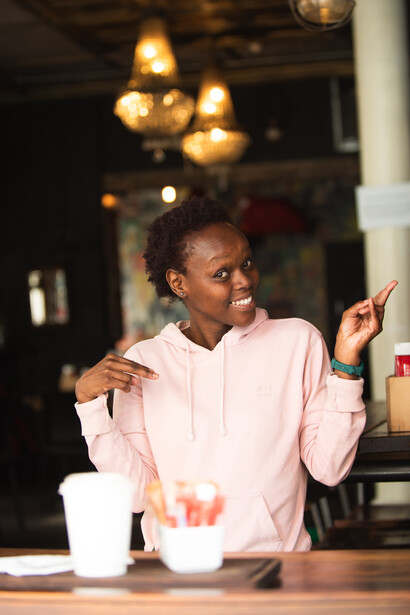
When someone says no, give yourself exactly 30 seconds to feel bad, angry, embarrassed, or upset. Let yourself feel it, then refocus on something else. Take a deep breath, look for your next photo opportunity, and remember that each “no” gets you closer to a “yes.”
Keep Walking
Really. Standing around after someone has turned you down just makes things more awkward and keeps you feeling bad. Walk somewhere else, even if it's just across the street. Moving your body helps reset your mind and shows you new photo opportunities.
Practice What To Say
Always thank people who say no: “Thanks for telling me,” or “I understand, thanks.” This shows you respect their choice.
Here’s the important thing: if you were already talking to someone before asking to photograph them, don't suddenly end the conversation if they say no. This makes it seem as if you only engaged with them to use them for a photo and did not respect them as a person. Continue talking normally, and explain your interest in them or their activities, or why you're taking pictures in that area.
For example: “Sure, I totally understand. Thanks for being nice about it. You said you’ve lived here for twenty years; what changes have you seen?” This shows you have an interest in them as a person, and this often leads to more meaningful interactions.
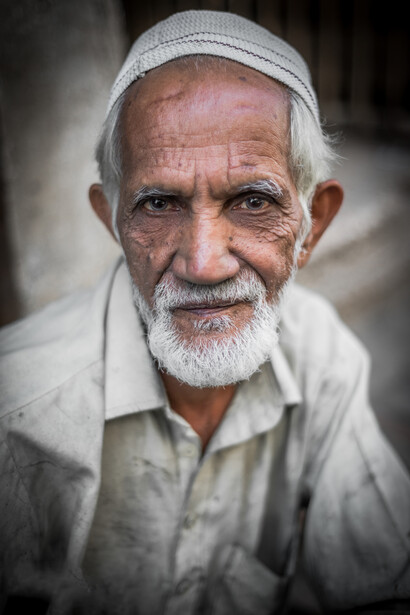
Sometimes people even change their minds about being photographed. This gentleman, for example, initially refused to be photographed but offered to be photographed after I continued chatting with him and shared more about myself.
Understanding Different Cultures
In various cultures, refusal to be photographed often stems from religious beliefs rather than personal choice. For instance, during my time in Pakistan, I observed that many women avoid being photographed due to cultural values, and men may take offense if they feel their wives or sisters are being photographed. This attitude is common in many Middle Eastern, South Asian, and traditional communities, where photographing women and families can be seen as disrespectful. It’s crucial to be culturally aware, observe body language, and inquire about local customs before taking photos in new places.
Building Confidence
Start Easy
Begin in friendly settings, such as local markets, festivals, or community events, or where people expect to be photographed.
Know Your Camera
Nothing builds confidence like knowing your camera really well. Practice until you can take photos quickly and quietly without fumbling with buttons. When you know your equipment well, you can focus on people instead of camera settings.
Learn To Blend In
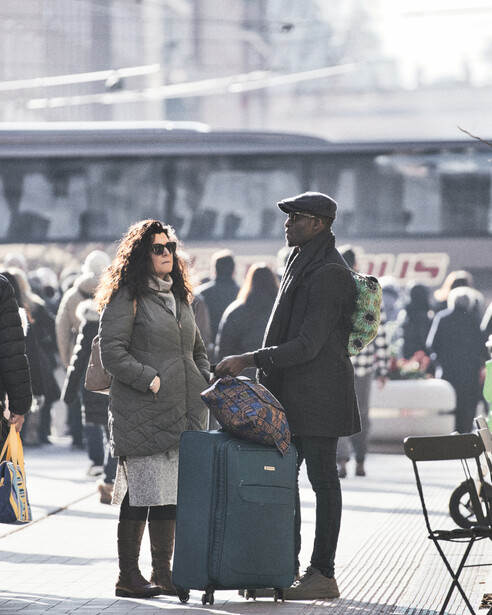
The best street photographers often go unnoticed. Learn to blend in with your surroundings, use zoom lenses when necessary—like a mid-range or a telephoto lens—and dress so as not to be conspicuous among the locals.
Conclusion
Learning to handle rejection well isn't about never feeling hurt when someone says no. It's about developing the ability to persevere despite setbacks.
Every great street photographer has rejection stories to share. They’ll tell you these experiences didn’t kill their passion; they made it stronger. Rejection taught them respect, patience, and how to read people better. It made them better photographers and better people.
Next time someone waves you away, remember you’re in good company. Take your 30 seconds, reset, and keep exploring. The streets are full of stories waiting to be told, and your unique perspective is needed to tell them. The streets and their stories are waiting for you.
Join the Fstoppers community for free
-
Post comments and join in the discussions
-
Browse the site ad-free
-
Share your work and get featured in the community
-
Compete in the photo contests for fun and prizes
4 Comments
Street Photography is a real tricky subject and as you mentioned, there are many ways to approach it...and in my opinion, it is a cultural thing. Some ethnic groups claim that if you take their picture, then you are taking their soul away,...respect to that though I disagree, yet the most difficult people ever that I tried to photoraph were mormons at a wedding I did in Nevada a few years ago. Even though I was hired, there were many members at their church that became very agressive when I pointed my camera at them during the reception...it took a lot of convincing from the bride and groom that I was hired, and those that do not want to be photogaphed, simply say so and get out of the way. My favorite country for street photography was South Korea and Japan...very friendly smiling people and very willing to be photographed...and I wonder if Henri Cartier Bresson ever asked for permission while walking the streets to get those classic photographs ?...
I enjoyed a bit of street photography in Japan as well, and I regret not doing more of it. I was more focused on videography there at that time for a project. Yes, I know a friend who has also been to ethnic groups in South America where taking a photo is like taking their souls away. In Pakistan, due to religious beliefs, some folks asked me not to take their photos or not to photograph people.
Sorry but I've never understood why people recommend zooms for street photography, especially something like a 70-200. Maybe it worked for you but I would certainly stand out and attract more attention walking around with such a large zoom, any zoom really. Also I personally don't like the perspective you get on a zoom vs a traditional street photography prime. It gives the photos a creepy paparazzi look thanks to the shallower depth of field and compression which is impossible to avoid.
I'd say best to stick to small primes, maybe even a small camera too and if it has it, definitely use the silent shutter. The silent shutter alone has been one of the best tools in helping me minimise confrontation, especially as you can just pretend you are waiting for moving subjects to get out of the way. Standing subjects is trickier but getting a quick shot and moving on can help. Of course there are endless situations that can arise that are tricky to navigate but nothing beats a lot of time and practice.
Hi Sam,
I respect your opinions and views, and I largely agree with them. However, the choice of lens is quite personal and varies from photographer to photographer. I believe that in the end, we strive to achieve what we feel is best for our creativity. I also use prime lenses and enjoy them quite a lot.