
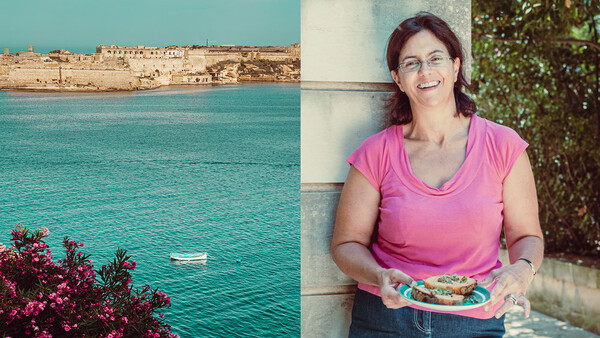
One of the most enjoyable genres of photography is travel photography. Who doesn’t love to travel to interesting and exotic foreign destinations and wander around with a camera? It’s great to return home with a collection of images that capture your adventure—images you can show people that give them an idea of where you visited and what you experienced.
There is, however, a mistake that most travel photography enthusiasts make. They focus on the landmarks and the popular Instagrammable spots. But in doing so, they fail to really capture the true essence of a place. They fail to capture the culture.
When you look at the very best travel photography—images that truly transport you somewhere—you’ll notice the most meaningful photos are not of buildings, monuments, or landscapes. They’re of people.
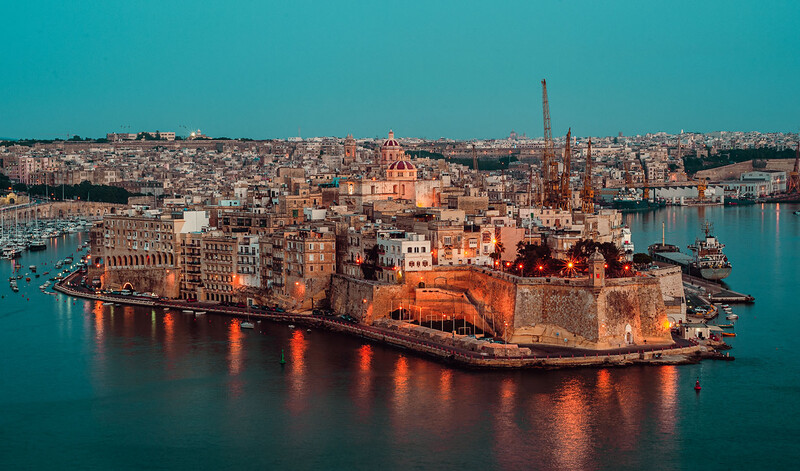
Landmarks Show You Where You Are, People Show You What the Place Is About
When I was starting out pursuing my love of travel and photography, I failed to realize this at first. I returned from a trip with a wonderful set of images. Many of the photos were of the classic views, shot in low light and looking gorgeous. But when I looked at travel photography stock image libraries, I realized all my lovely images looked the same as thousands of other lovely images that had already been shot many times over. There’s nothing wrong with that, of course, unless you want your images to stand out and maybe sell them to brands and publications. Which I did. So what could I do to achieve this? How could I create a set of unique photos? I didn’t have an answer.
I love watching travel series like Michael Palin’s Around the World in 80 Days and Rick Stein’s Long Weekends.Amazon+1 One day I was watching a Rick Stein episode, and I had a eureka moment. He was always seeking out locals wherever he visited and interviewing them: a baker who makes a local delicacy, an artist using traditional techniques, a chef working with local food suppliers—everything was written around a few people from that destination and told their stories. That’s what made these shows interesting: the people and their stories.
How could I have overlooked the most important element of any destination—the locals? The people who live there, work there, make things there, and carry the traditions forward. They are the heartbeat of a place. And without them, your visual story is incomplete.
Most travelers return home with the same collection of images: a cathedral, a skyline, a famous viewpoint. It’s nice to shoot your own version of these popular views—but the truth is they are interchangeable with thousands of nearly identical photos taken by millions of others.
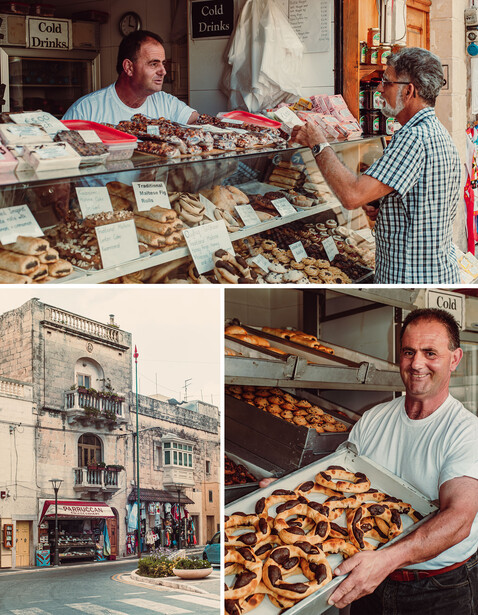
As soon as you add a street vendor, a baker making traditional food, a group of elderly men playing dominoes under a tree—then the place comes alive and has meaning. Culture isn’t found in the architecture; that’s just the backdrop providing the supporting role to what’s really important: the people.
Here I was, returning home from fabulous trips, without photos of the people. I captured the scenery just like everyone else does, but missed the story.
My Approach To Photographing People
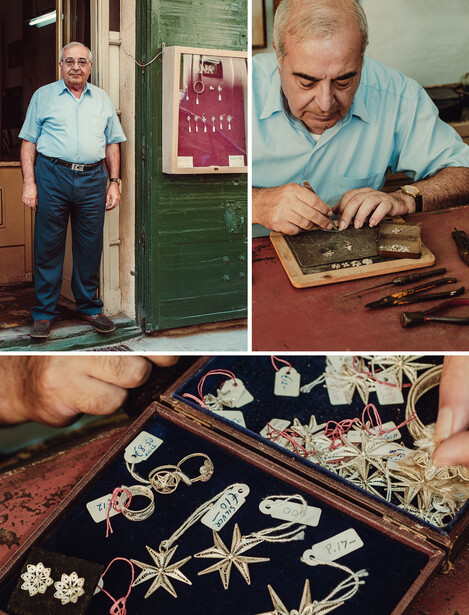
When I started working for publications, I was sent to a destination with a shot list, which of course included the typical classic views, buildings, architectural details, and local food and crafts. But there were always three or four people whom I needed to meet and photograph. Some of these people had already been identified and contacted before I traveled to book a meeting. Others I had to seek out while I was there. Either way, my brief was to tell their story through a series of images. And this is something I do to this day, even if I’m shooting for myself, as a personal project.
The shoot goes something like this:
-
A photo of that person working
-
A detail of what they’re making or doing
-
An environmental portrait of them to show where they work and provide context
-
An external photo if they work from a store or studio
The idea is to shoot a series of images to tell a story, because it’s far more effective than shooting just one photo. However, if I can only shoot one photo of someone, the preference is always an environmental portrait to show context.
Human stories add depth and emotion to a destination, something landscape and architectural photos cannot do.
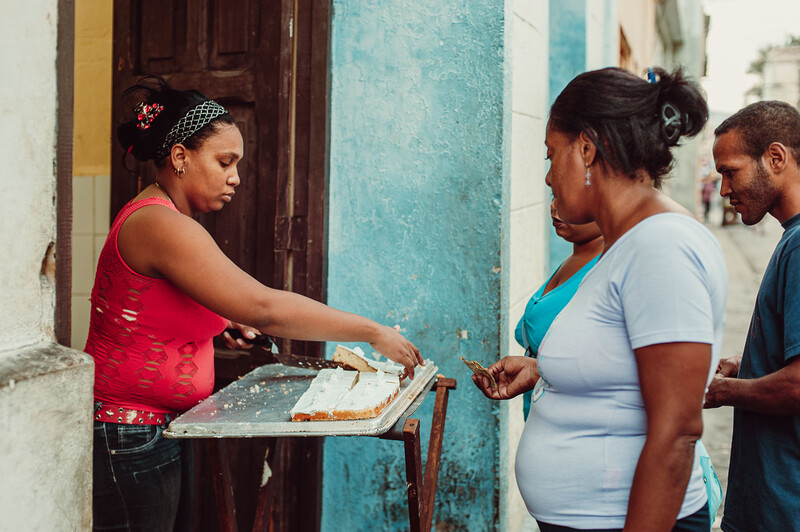
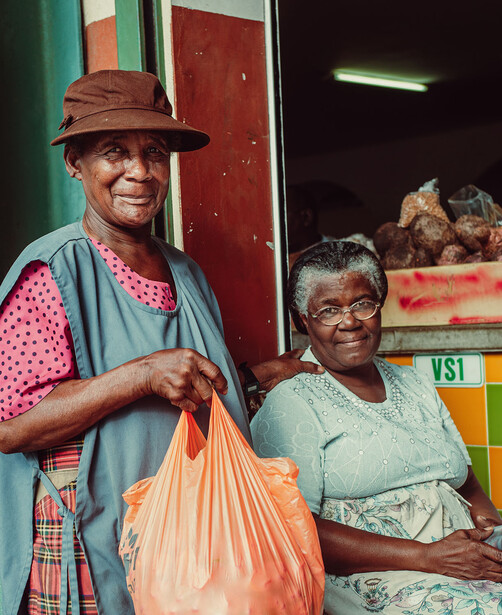
How to Photograph Locals Respectfully
You don’t need to stage anything. You don’t need elaborate setups. Just simple, human interaction.
The most important thing is to be genuinely interested in what someone is doing, and show it. Ask questions. If they don’t speak your language, a smile and gestures go a long way.
If you’re connecting with a street vendor, buy a piece of their fruit. In a small bakery, buy their baked goods. Compliment them.
Be patient; don’t make it all about you and your photos. Let the moments genuinely unfold.
The absolute worst thing you can do is stick a camera in someone’s face without asking. It’s rude, and without a genuine connection, the photo won’t be nearly as good as it would if you’d only made some effort and shown kindness.
The Final Piece of the Puzzle
Think of travel photography as a jigsaw puzzle. The landscapes, buildings, and monuments are the border pieces—they frame the story. But the people are the central pieces that complete the picture.
If you truly want to capture the essence of a destination—not just what it looks like, but what it feels like—you must photograph the locals. They are the culture. They are the history. They are the living, breathing essence of the place you’re so excited to explore.
Great travel photography isn’t just about where you go; it’s about who you meet along the way.
I made a video where I share more details and photos, if this is something that interests you.



Join the Fstoppers community for free
-
Post comments and join in the discussions
-
Browse the site ad-free
-
Share your work and get featured in the community
-
Compete in the photo contests for fun and prizes
41 Comments
Silly post, how do you know what I am missing. Keep an eye on the light and look for a subject,,,,,anything at all is my advice,
Simon Burn wrote:
"One of the most enjoyable genres of photography is travel photography. Who doesn’t love to travel to interesting and exotic foreign destinations and wander around with a camera? It’s great to return home with a collection of images that capture your adventure—images you can show people that give them an idea of where you visited and what you experienced"
For many years, I have wanted a clear definition about exactly what "travel photography" is. And the definition could also explain what it isn't.
Would you say that what you wrote, that I quoted, can serve as an accurate definition of what travel photography is?
If not, then how would you define the genre? I mean a complete definition, that nails it down precisely so that there is not much left for subjectivity.
Coincidently I had drafted out a script for a video about this. Travel photography for me encompasses a lot. It includes street, food, environmental portraiture, and landscape photography. Anywhere you travel and photograph to capture a sense of place is travel photography.
Even if you visit your local and very familiar town and create a series of images that show the place, that's travel photography. This, of course, is MY definition, not THE definition.
Well I like that definition because it includes just about all serious landscape photography. I mean all landscape photography except what the photographer does close to home.
I once entered a photo of mine in a thing for travel photography, and was told that it wasn't really a travel photo. I was confused, because I traveled quite a bit, both by car and by boat, to get to the location. And the photo definitely captured the "sense of place" that you mention. So I was left feeling confused about what a travel photo is.
I hate that people have to define and pigeon-hole photography. Street photography "rules" that some people follow are the most annoying. We have to included people, no posing etc. All nonsense. If i'm on a street with my camera, Ill shoot what I want, how I want.
I guess it could be down to the individual(s) what defines travel photography as they are the one(s) who have done the travelling.
The whole thing is rather confusing and frustrating, because whether or not an image is a travel photograph is in part determined by who took the photo and where it was taken.
I mean a photo of someone's patio is a travel photograph if the photographer traveled to the property where the patio is and then took the photo, and if the photo captures the essence of the patio (a.k.a. "sense of place").
But the exact same photo would not be a travel photograph it it was taken by someone who lived two blocks away from the property with the patio.
So when I travel hundreds of miles by car and then 5 miles by boat and then hike to the top of the mountain, and take a photo that captures the essence of that place, it confuses me when Tony Northrup says "it isn't really a travel photograph".
If you travelled somewhere to take a photo that shows what that place looks like, it's a travel photo.
I would take anything a YouTuber says with a pinch of salt.
To be honest, I'm beginning to take anything Tom Reichner says with a pinch of salt. He seems to go out of his way to be some sort of disrupter.
"Who doesn’t love to travel to interesting and exotic foreign destinations and wander around with a camera?"
Well... since you asked. Sitting like we're crammed into a sardine can for ten hours, with the guy in front of me reclining his seat to within a few inches of my face, the seven year-old kid behind me doing a tap dance on the back of my seat, delays, cancelled flights, near collisions, bad or no food... flying simply lost its glitter a long time ago. Add dirty hotels and overpriced restaurants to the mix, and I would say I come up well short of loving travel. I suppose if I could fly first-class and stay in five-star hotels, I'd enjoy it, but short of winning the lottery, that's not gonna happen.
So I'm happy "traveling" to nearby destinations. Having lived in Colorado for over 50 years, there's not much that's totally new. But I still enjoy it more, and traveling locally is so much more relaxing than international travel. I let my passport expire about ten years ago, and I don't miss getting on an international flight one tiny bit.
Ed wrote:
"Sitting like we're crammed into a sardine can for ten hours, with the guy in front of me reclining his seat to within a few inches of my face, the seven year-old kid behind me doing a tap dance on the back of my seat, delays, cancelled flights, near collisions, bad or no food... flying simply lost its glitter a long time ago."
Oh yeah there is absolutely no need to get on planes and fly overseas just to do great travel photography.
"..... traveling locally is so much more relaxing than international travel. I let my passport expire about ten years ago, and I don't miss getting on an international flight one tiny bit."
Yeah, that's more like it!
I travel more that just about anyone I know personally, and yet I have only been on an airplane for one trip in the last dozen years. Here in the United States, we have so many diverse habitats, spanning the continent from the Pacific Ocean to the Atlantic Ocean, so we can see so much just by driving our cars around.
It is strange to me how some people automatically think of airplanes when they think of "travel". It should not be that way. How limiting it is if you are stuck traveling by airplane, and only able to take a bit of gear with you, and then needing to rent a vehicle in order to range far and wide when you get to wherever you go. Public transportation only takes you to known places. Uber or taxi drivers are too expensive to pay to sit for hours and hours waiting for you in a remote national forest all day as you shoot from sunrise to sunset. So yeah you pretty much do need to rent a car if you are going to make the most of photographing nature in the remote wild areas of a region and still get back to a comfy bed each night.
Ed, where you are located, in northwestern Colorado, is really a great centralized location for many road trips within the contiguous 48 states. There isn't really anywhere you can't get to within a 3 day's drive. And they can be 3 easy days; you don't even need to push yourself because you are located in such a way as to not be very far from anywhere. I have often thought that if I could afford to relocate to anywhere I wanted, it would be to Colorado, because of the centralized location, with ease getting to both the east coast and the west coast.
I think of airplanes when I think of exotic foreign destinations, which was how the article was introduced. We can't drive to Nepal or New Zealand. However, I agree with you that there's much to see and do traveling within car driving distance... for me that's about 300 miles. I would argue though that 700 miles per day or so for three days to get to the East Coast is not an "easy" drive. You might feel that way given your frequent trips to Pennsylvania, but I'm bored and exhausted from driving by the time we'd reach Iowa.
I travel by bike and train and went to very interesting places. It needs physical fitness but traveling like that ist extremely rewarding
Traveling by bicycle and train would be a gazillion times more interesting than traveling by airplane. And that causes me to have the thought that traveling is not just about a destination. It is about, well, the travel itself. In fact, one could argue that there can be lots of great travel that doesn't even have a destination.
I drove to Rochester New York once. That was an exotic foreign destination. It's interesting that some people here are getting wrapped up in trying to define what travel photography is. Why do photographers feel the need to label and pigeon hole everything?
Simon Burn asked:
"It's interesting that some people here are getting wrapped up in trying to define what travel photography is. Why do photographers feel the need to label and pigeon hole everything?"
I think a lot of that is because we are so often asked or required to put our images into categories. Examples of this:
Here on Fstoppers when we post a photo to our profile, we are asked to put it into a prescribed category.
When we place our images with stock agencies for licensing, we are required to put each image into a prescribed category. Some agencies ask us to put each image into a primary category and a secondary category.
Online photography discussion forums are broken down into categories. If you want to talk about travel photography, you click on the Travel Photography sub-forum and join the conversation there. If you want to talk about street photography, you to go the Street Photography sub-forum and join the discussions there. If you want to talk about macro photography, you to go the Macro Photography sub-forum and join the discussions there. Etc., etc., etc.
Photography has many contests. Even this site has a monthly contest. Most contests are for certain genres of photography, so when we enter an image into a contest, we need to make sure that it fits the genre that the contest is for, or the image will not be accepted into the competition.
Many photographers may not feel the need within themselves to categorize and pigeon hole their images, but when we interact with many other photographers, such categorization is the norm. And I guess to some extent it has to be, or we would have to wade through an overwhelming amount of content just to find the content that is about the type of photography we are interested in. I mean if I want to engage in content about bird photography, and I go to an online discussion's Bird Photography sub-forum, and there are umpteen images and conversations about architecture photography, glamour photography, landscape photography, etc., then it would be frustrating to me because it would make it so hard to find the specific stuff that I am interested in. Hence, the need to categorize actually meets a practical need.
I understand this, but it does get a little silly. A good example is travel photography. To me, landscape, food, architecture and street photography come under that "genre". When I started out I was simply a "photographer" and my work spoke for itself.
Unfortunately we do have to play the game and categorizing everything, I do it myself. But I'm considering creating a rebellion against this. I've already started on Linkedin. My "title" Is "Guy with ideas and a camera". 😊
One reason I want a hard, firm definition of "travel photography" is because I am still bothered by Tony Northrup saying that my photo was not a travel photo. If a hard, firm, universally accepted definition of travel photography would exist, then I am sure that that image would fit the definition, and then I would feel vindicated against Tony's judgement.
I do not care about whether a travel photograph seems like a travel photograph, or feels like a travel photograph. All I care about is whether it actually IS a travel photograph or not. And if I have a absolute definition, and my photograph fits that definition, then I can prove that it was in fact a travel photograph and no one who agrees and accepts the definition can say anything to the contrary.
Out of interest, I asked AI:
"Travel photography documents a place, its people, culture, and landscapes to tell a story about a location, aiming to evoke a "sense of place" and inspire others to visit".
I've been a professional travel photographer for many years, and have been sent all over North America and Europe for travel publications, brands and tourism organisations. I agree with this definition.
You seem very concerned about what someone with a YouTube channel thinks. I don't know who this guy is, but his opinion means nothing in the overall scheme of things.
I like that AI definition. I think of travel photography as less about the content of one picture or whether it fits the category of travel, and more about the story told of a place from a collection of images. I enjoy reading travel magazines as a way of traveling vicariously through their words and pictures. I've come across a few that spoke of my area of Colorado, one in particular of my town of Grand Junction. How can that be a travel story when it's right outside my front door? But that's missing the point.
We have a large wine producing industry in our valley which features heavily in travel magazines, as well as all sorts of outdoor recreational activities. In fact, biking, hiking, skiing, camping, fishing, boating, and other things to do outdoors are the reason most people move here. I decided to move here in the 1970s because of the town's proximity to world-class skiing. What could be better than a day on the slopes or biking through wide open spaces of public land, followed by a great meal and glass of wine afterwards. People, restaurants, schools and health care all factor into the story of that which describes our community, but outdoor recreation is what distinguishes my community from places like Chicago. It's those sort of travel stories which have driven our population to over 160,000; three times what it was when I moved here. In fact that's one of the hazards of travel stories and the publicity they generate. Much like Edward Abbey and others warned... publicity, development, roads and cars in our public lands could lead to its ruin from traveling tourists and overdevelopment. So to me, it's the broader ideas and discussion about a place which travel photography inspires, more than the substance of one picture, that's the important focal point. A good travel story and collection of images provide the essence of a place, and you can't accomplish that with one picture.
"Travel photography documents a place, its people, culture, and landscapes to tell a story about a location, aiming to evoke a "sense of place" and inspire others to visit".
Oh well if that is the definition then the image in question is definitely not a travel photograph.
I travel a lot, but have zero interest in photographing people or human cultures. In fact, I intentionally try to find destinations that are rather devoid of Homo sapiens, as I prefer other species for my photography. There are many large mammals other than us sapiens, and they are far more beautiful and majestic than our own species is.
I would have thought that "travel photography" would be the combination of the definition of the word "travel" and the word "photography" and putting them together to arrive at "travel photography". Neither the definition of "travel" or "photography" has humans involved. So therefore I did not think that combining these two words would necessitate the presence of humans and human culture. Yet AI seems to think it does. And apparently, so does Tony Northrup.
I wonder how people back up this definition. I mean what absolute source do they refer to to show that humans must be involved for it to be a travel photo?
A landscape photo can be a travel photo. No people required.
Post the photo in question Tom.
Simon Burn asked me to:
"Post the photo in question Tom."
According to the framework I laid out earlier, I would say this may or may not be a travel photo, depending upon the context in which it is presented. As part of a travel magazine's article about British Columbia (just a guess), it could very well be included along with pictures of other landscape and wildlife for which that province is known... and would potentially draw people to come and visit that place.
A travel photo reflects the main features of a place, not an oddity or something for which the place is not known. Costa Rica... think birds. Grand Cayman... think scuba diving. Your single picture here might be included as part of a collection to tell the bigger story of a place; in that case it serves as a travel photo, but by itself without any context is primarily a wildlife photo since that is the main subject. Doesn't matter whether you travel 10,000 miles or 100 feet. It's not defined by distance. And that's the trouble with attempting to put a picture into a multifaceted category such as travel... it doesn't work.
Ed is correct about context. This photo could easily be one of a series of images that show what a destination is like, and what to expect.
It's very rare to have just one photo that communicates a sense of place. Any travel guide or article typically has a series of images. This image of yours would fit nicely into a series. It shows us there are vast mountains, it's on the coast, and there are mountain sheep to be found. Perfect, I want to go there now! 👍
Some things defy narrow definitions and nice neat little boxes to hold them. Can you define love or hate with one simple sentence? Maybe there's no such thing as a singular travel photograph. Virtually any picture could fall into the category of travel photography, limited only by the context in which it was created and shown, rather than solely its content. More about that in my comment above.
Ed, I suspect that you are right, but I am far too left-brained to ever accept anything that can not be articulated in absolute terms. If we can not define the words "love" or "hate" with absolute literal definitions, then perhaps we should not use those words. At least that is the way my brain thinks and deals with life.
You may have faired better in ancient Greece, where as many as seven different words for love were used. But you don't throw the whole concept down the drain because of our limitations of language. If one word is insufficient, we learn to communicate by articulating a combination of words in order to express a thought.
'If we can not define the words "love" or "hate" with absolute literal definitions, then perhaps we should not use those words.'
What a shame to live in such a black and white world. I prefer nuanced definitions; greys as well as light and dark. How awful it must be - where everything has to be so literally and precisely defined. It leaves no room for interpretation. And, of course, the ability to interpret is what makes life so richly textured and worth living.
The City of Grand Junction publishes a visitor guide, showing what life is like in our area of Colorado. Almost every resort or economic development organization creates something like this. It features heavily the landscape because that's what Colorado is known for, and I have landscape photos to offer them in abundance. But they're mostly not interested in my work. Why? Because my photos do not have people in them. They don't show what people can actually do here in western Colorado. Of course they might buy the occasional landscape or wildlife image to fill a small space, but the huge majority are action shots involving people. That is how a visitor from Kansas sees himself traveling to Grand Junction. "Hey, there's a family with little kids in that picture. That looks like something we can do for our vacation." I've got hundreds of photos like these but without the people, so while my pictures grace the walls of numerous homes and businesses around town, I can't sell squat to the City for inclusion in their visitor guides.
I've got hundreds of pictures taken from this exact same location as shown in the cover shot above. It's only about a 15 minute drive from home. I've got pictures standing here in all four seasons, with rainbows, storm clouds, snow, lightning, Milky Way stars, and all sorts of dramatic weather. However, not a single picture has people in it.
A travel publication is looking for landscapes like yours with people in for a cover image, lead image, or a. But for a spread, they do use images like yours without people. Those images are two a penny. On the other hand, getting an image with people requires planning and effort... and a signed release. A lot scarcer.
Ed, in my opinion, your photos are much easier on the eyes than the versions with people in them. I totally understand why many publishers and advertisers want people, but if a photo is simply to be admired for its beauty, putting a human in it just ruins the aesthetic altogether. I guess that comes from my overarching feelings about nature; if there are other people there, then I want to be somewhere else. Seeing humans in a landscape makes me feel like I would not enjoy being there, because of the presence of other humans. But seeing photos like yours, with no humans and no manmade structures, makes me think, "Wow - I would love to spend time there!"
Thanks, Tom. The good thing (for me at least) is that my kind of landscape pictures will hopefully have a far longer life on someone's wall than in a magazine. Exposure can be good in a magazine, but I can count the times on one hand that someone has called me interested in a print because of having seen a picture of mine in a magazine or calendar.
That's an interesting way of thinking, Ed.
I guess without realizing it, I have always thought the other way. That the main goal, the end goal, is to license images for publication. Like if I had a print on a wall in a public area, my secret hope would be that a magazine editor or advertising exec would see it and want to use it in an ad or in a magazine. The satisfaction I get from having a large print of my work in a home or public place is like a 6 out of 10 but the satisfaction I get from seeing my work on product packaging or in an ad or in a magazine is like an 8 out of 10 and the satisfaction I get from seeing my work on the cover of a nationally circulated magazine is a 10 out of 10.
Happy New Year... Yes, I can appreciate your point of view. It's gratifying to see our work being used and viewed by others, no matter where it's at. I don't have very many published images in magazines under my belt. A few, and some calendars too, but I don't actively solicit that type of work. Colorado Life magazine used one of my photos for their cover a few years ago and mistakenly gave the photo credit to someone else. It's a forgotten event, and I'm not sure if I even have a copy of the magazine still around, but the images that I print and place on the walls of homes and businesses remain in my mind, and hopefully appreciated by the customer (and their customers), for many years. I really enjoy going into a business around town and seeing what I made on their wall. I'm especially fond of the prints on paper that I made myself. Well... I hope 2026 brings you some of those photos that you really really like.
Thanks, Ed .... I hope your new year is wonderful, too!
No, I think you'll find your headline over-generalises.
I refuse to let any definition of a photographic genre clip my creative wings, when I travel to far flung places after some minor research I keep my mind open to subject matter ... However ... I am mostly interested in documentary photography whether here in the UK or 1000s of kilometres away as a result my images will reflect my passion.
Right!
I think that how we classify a photo - what genre we consider it to be a part of - is something that is/should be done after the photos are taken. It should not be something we have in mind when we are out shooting; that way, as you say, we can be free to shoot things in the way that speaks to us most strongly whilst afield in the midst of our potential subjects.
They missed the most important aspect of travel photography, maintaining a primary focus on any cute wildlife.
For example, if someone travels to USA, then some effort should be made to have photos of some cute lynxes and mountain lions, and maybe even sharing a nice meal together.
Then if someone travels to Brazil, then a goal should be to hang out with and pet some of the cute Jaguars as well as taking cute pictures of them (think of them as extra cute and fluffy house cats, but more wholesome :) )
If the trip takes you to parts of Africa, then ideally it would be good to pet and hand out with some of the lions.