





























How Photographs Helped Create Yellowstone, the World's First National Park
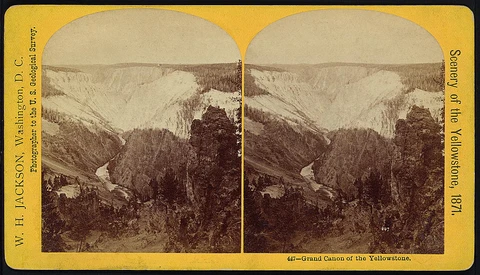
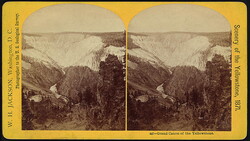
The 1872 law that created Yellowstone runs only a few hundred words and never mentions a photograph. By the time President Ulysses S. Grant signed it on March 1, prints of the region and a painter's field watercolors had reached Washington and were being used to sell the idea. The pictures entered the campaign before the vote, then left almost no trace in the formal legislative record.
Why Your Rushed Photos Are More Than Just Snapshots
We’ve all been there. You’re out somewhere, with a camera in tow, but the purpose isn’t photography. Maybe you’re walking with family or friends. Maybe you’re running to an appointment. You don’t have the luxury of setting up a tripod or spending fifteen minutes working a composition. You take some extra frames from varying angles or perspectives, just to be safe. But when you get home, you may find you have an editorial problem you didn't plan for.
Latest Gear Reviews

Active Contests
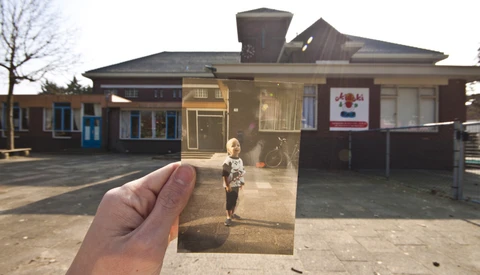
Show us the work YOU wanted to do
Welcome to the September installment of the Critique the Community! This month's critique theme is going to be "Passion Project," and we want to see your best photographs that come from a personal project.
The Habits That Separate Working Photographers From the Rest
Talent gets discussed constantly, but the photographers who keep landing work tend to share a set of habits that have nothing to do with raw skill. The difference shows up in how they practice, prepare, and handle the people around them.
Fstoppers Exclusives


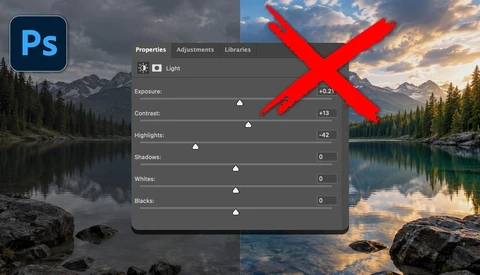
Photoshop's Light Layer Looks Like Lightroom. It Doesn't Act Like It.
Adobe quietly slipped a Light adjustment layer into the main Photoshop interface, and it looks almost identical to the tone and exposure controls you already know from Lightroom and Camera Raw. That resemblance is the whole problem, because now people can't tell where they should actually be making these edits.
Nine Simple Controls That Change How Photos Feel
Better photos rarely come from a more interesting subject. They come from motion, perspective, camera height, and depth, the controls sitting in front of you that decide how an image feels before anyone thinks about what's in it.
The Words That Stopped One Photographer for Years
A respected photographer once told a teenager she wasn't good enough to make it, and that single sentence kept her from picking up a camera for decades. Those words carry a weight far heavier than the person who said them ever intended, and most creative people have heard some version of them, either out loud or in their own head.
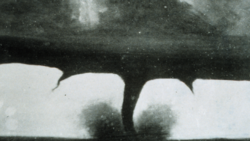
The First Photograph of a Tornado Was Taken in 1884 by a Kansas Fruit Grower
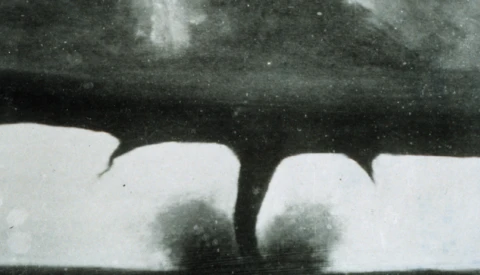
The tornado photograph you have probably seen, the dramatic one with a thick central funnel and two thinner vortices trailing off its side, was probably retouched, its more interesting cloud base likely painted in or combined from another negative. The image that actually came first is far less cinematic: a faint gray thread against a washed-out sky, made on April 26, 1884, by a Kansas fruit grower who happened to still own a camera. It is the oldest surviving photograph of a tornado, and its photographer got it by keeping a heavy camera dead still while a funnel crossed the plains.
The Rolls-Royce of Tripod Heads: Fstoppers Review the Arca-Swiss C1 Cube GP
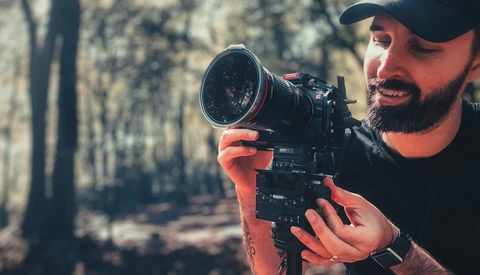
Reliable and well-engineered gear is something all landscape photographers rely on. This is especially true when we consider investing in the accessory that keeps our cameras secure and stable.
Why Technically Perfect Photos Often Feel Dead
Technical perfection can drain the life out of a photograph. Chasing sharpness, clean detail, and flawless contrast in every frame often strips away the exact quality that made an image feel real in the first place.
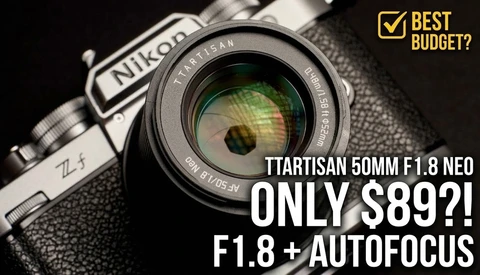
The Cheapest 50mm f/1.8 for Nikon Z, Tested in the Real World
An autofocus 50mm f/1.8 for the Nikon Z system runs $89, and the images coming off it look nothing like the price tag suggests. A fast prime at that number changes what a beginner can afford as a first step past the kit lens.
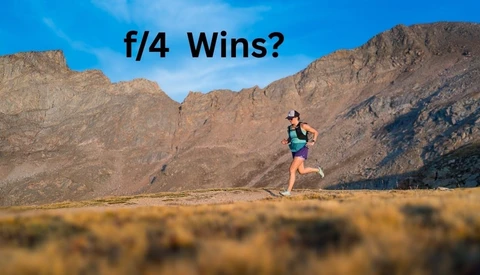
There's More to Background Blur Than Aperture
You can shoot at f/1.4 and get almost no background blur, or shoot at f/4 and get plenty of it. That single fact upends how most people spend money on lenses, and it explains why some expensive glass never delivers the creamy backgrounds you paid for.
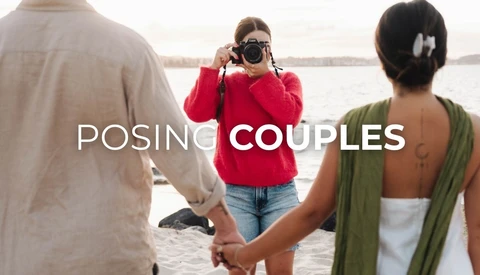
The 3-to-5 Pose System That Carries an Entire Wedding Day
Your mind goes blank the second the couple stands in front of you, every Pinterest board you studied the night before suddenly gone. That blank moment is the difference between a wedding day that flows and one that stalls while two nervous people wait for direction.

Autofocus Turns 50 in 2027, and the Camera That Started It Was a Konica
Japan observes a Camera Day on November 30, and the date comes from 1977, when Konishiroku Photo Industry put the Konica C35 AF on sale. It was the first mass-produced camera that focused itself, and the part doing the focusing was built by a Minneapolis company whose main businesses were thermostats, industrial controls, and defense electronics. Autofocus turns 50 in November 2027, and the anniversary belongs to a brand most photographers have quietly filed under "used bin."

The ColorChecker Turns 50: The 24 Squares That Outlived Almost Everything Around Them
A small card of 24 painted squares turns 50 this year. It is still made, still sold, and still sitting in the front pocket of a lot of camera bags, because it answers a question that cameras have never learned to answer on their own: what color is this, actually?

Why You Aren’t Getting Useful Feedback on Your Photography
I recently wrote about why we should stop accepting standard "constructive criticism" on our photos. Instead, solicit feedback that actually helps you grow as a photographer. But most of us don’t know how to ask for anything better. We never learned how to ask. So how do you get more meaningful input on your work? Ask for a critique.

Seven Harsh Truths About Photography Nobody Warns You About
Everything creative takes longer than you plan, your photos will get worse before they get better, and you will miss shots that were never yours to keep. These are the uncomfortable facts most people skip when they hand out photography advice, and accepting them early saves years of frustration.

Sigma's 85mm f/1.2 Undercuts Sony's G Master by a Wide Margin
Sony sells a 50mm f/1.2 but has held off on an 85mm f/1.2 for its full frame mirrorless system, and now a third party has stepped in with autofocus and a price that undercuts Sony's own 85mm f/1.4 G Master II. The Sigma 85mm f/1.2 DG DN Art lands as the first autofocus 85mm f/1.2 for Sony E and the first 85mm f/1.2 ever for L-mount.

Plan Your Next Landscape Trip in Minutes, Not Days
Autumn brings shorter crowds, softer light, and sunrise times you can actually reach without setting three alarms. The hard part is knowing where to point the camera in the first place, especially when time is short.

Why the Expensive Film Shot Still Wins, Against All Logic
A single medium format film shot cost about 470 times what the same scene cost on a digital camera. That kind of math should end the film-versus-digital debate outright, and yet the photos taken on film still mean more to the person who shot them. This is the tension every hybrid shooter runs into once digital quality stops being the question.

The First Photographs on Every Continent: Europe, the Americas, Asia, Africa, Australia, and Antarctica
The earliest surviving camera photograph of any continent is a grainy rooftop view that Nicéphore Niépce recorded in the Burgundy countryside in 1826 or 1827, and burning it onto a sheet of pewter took at least many hours of daylight and possibly several days. Every other landmass had to wait. As the daguerreotype spread out of Paris after 1839, cameras reached North America within weeks, then Africa, Asia, and South America, then Australia, and finally, roughly sixty years later, the ice of Antarctica.
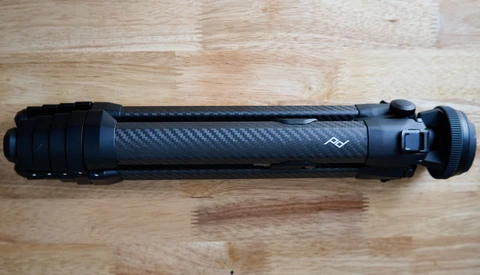
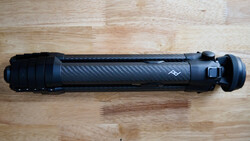
Reviewing The Peak Design Travel Tripod
Today, I wanted to take a break from discussing the cameras that capture our images and look at one of the tools used to make those images better. Let’s have a look at the Peak Design Travel Tripod.
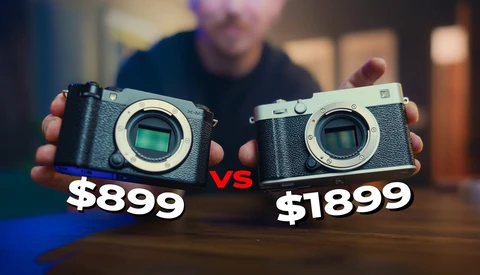
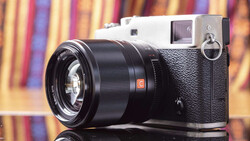
Open Gate or 40 Megapixels: Picking Between the X-M5 and X-E5
The Fujifilm X-M5 and X-E5 look like siblings, but the price gap between them runs about $1,000 and the experience of shooting each one splits along lines you might not expect. Deciding between an $800 body and one that often sells closer to $1,800 forces a question every buyer eventually faces: how much are premium build and resolution actually worth to you?
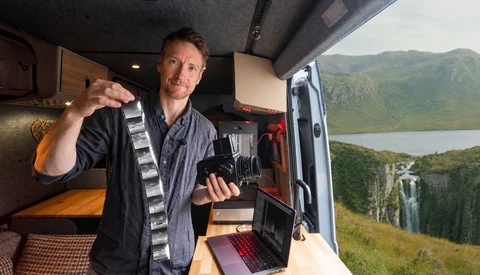
Shooting and Processing Black-and-White Film Off-Grid in Scotland
Shooting film is one thing. Developing and scanning it yourself, hundreds of miles from home, inside a van with blackout blinds and a couple of red lights, is a different level of commitment.
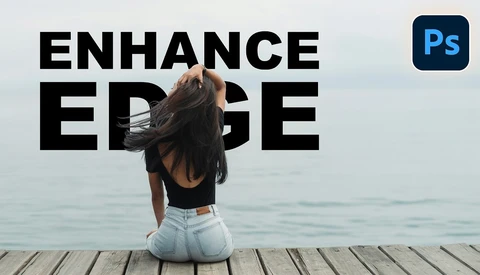
Photoshop's New Edge Tool Costs 20 Credits Every Time You Click It
Photoshop's beta build now includes a Refine Edge feature that cleans up the messy fringing left behind when you cut a subject out of one background and drop them onto another. Every click costs 20 generative credits, so the value depends on whether the result beats what you can do by hand.
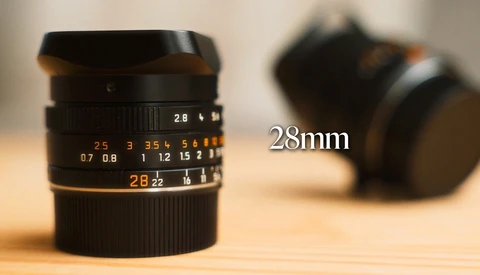
Why 28mm Beats 35mm for Honest Street Photography
Forced to sell every camera and lens and shoot a single focal length forever, plenty of street shooters would reach for 35mm because it handles almost anything. There's a strong case that the wider 28mm produces more interesting pictures, and the reasoning has less to do with sharpness and more to do with truth.