You can shoot at f/1.4 and get almost no background blur, or shoot at f/4 and get plenty of it. That single fact upends how most people spend money on lenses, and it explains why some expensive glass never delivers the creamy backgrounds you paid for.
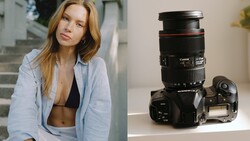
Brenda Bergreen breaks down the four ingredients that actually create background blur, and only one of them is aperture. She starts with camera-to-subject distance, keeping her subject, background, lens, and aperture fixed at f/4 while she simply steps closer. The blur grows as she moves in. If you want more separation before you buy a faster lens, close the gap between you and your subject. Bergreen learned this the slow way, starting out convinced that the answer to professional-looking backgrounds was always the next lens.
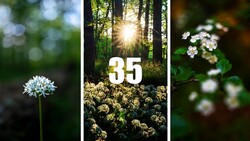
The second ingredient is subject-to-background distance, and Bergreen calls it the sleeper. Holding aperture constant, she moves her subject away from a tree in the background, and the separation increases without touching a single setting on the camera. Changing that distance often produces more blur than changing aperture would. Her third variable is focal length: shooting the same scene at 35mm, 55mm, and 85mm, she shows how longer focal lengths pull the subject off the background and pile up the blur. That's the reason portrait shooters gravitate toward the longer end. Aperture comes last, tested across the full-stop values from f/1.4 through f/16, and it does move the needle, but a wide aperture won't rescue bad positioning.
Understanding these four levers is a form of independence from your gear. The lens market runs on the promise that background blur is something you purchase, and companies like Viltrox have built a following selling fast, affordable primes to people chasing that look. Those lenses are genuinely useful. The principle here works in the other direction too. A wildlife shooter with a long telephoto gets heavy blur partly because the focal length is doing the work, not just the aperture. A wedding photographer standing close to a couple in an open field is stacking three ingredients at once before aperture even enters the equation. Once you see blur as a system with four inputs, you can hit the same result from several different starting points, which is exactly what you need when the field conditions don't cooperate.
Bergreen spends real time on those field conditions. She lays out two recipes: camera close, subject far from the background, long lens, wide aperture for maximum separation, then the reverse for keeping nearly everything sharp. Then she gets practical about compromise. If you don't own a fast lens, lean on the other three ingredients and your aperture matters far less. If you want to shoot a wide 35mm frame for storytelling and still hold some blur, open that lens up, step in close, and push the background back. She's clear that more blur isn't the goal in itself, since the story an image tells depends on far more than how soft the background looks.
Watch the video above to see each ingredient tested side by side and both blur recipes in action.



Join the Fstoppers community for free
-
Post comments and join in the discussions
-
Browse the site ad-free
-
Share your work and get featured in the community
-
Compete in the photo contests for fun and prizes
1 Comment
Try and keep all this info in mind while thinking about what to do before the shutter button is pressed, all good to know!
One thing also to know is at night most all are not what you think! What you say? For night captures and that 1.4, 1.8 or 2.8 lens you will find that wide open and focused on infinity (the stars) you will find sharpness nearest to the lens as well as the stars you are focused on and everything in between even lights on the horizon will be sharp with no star effect.
But like the point a long lens focused on a subject the foreground and background even at its lowest aperture of 6.3.
Or yes you can have like eye focus on and be close and the nose and ears will be out of focus, just be aware of the things you want in focus when close like with macro captures a reason for f/22 not f/2.8.