Autumn brings shorter crowds, softer light, and sunrise times you can actually reach without setting three alarms. The hard part is knowing where to point the camera in the first place, especially when time is short.
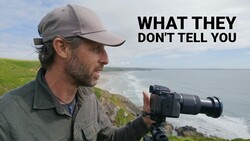
Ian Worth spends this episode walking a stretch of Pembrokeshire coast and testing a scouting app called Location Scout that he says solved a problem he'd wrestled with for years. He shoots with the OM System OM-1 Mark II and the Olympus 12-40mm f/2.8, reaching a cove full of rock formations with the tide out and moody weather rolling overhead. Before he can settle in, he finds seal tracks leading into caves at the top of the beach, where seals return each year to give birth. He packs up and leaves rather than disturb them, planning to return in spring. That decision sets the tone for the whole trip.
The app itself gets a proper walkthrough. Open it and you land on photos from around the world, each tagged with weather, parking, the angle of light, sunrise and sunset positions, and nearby spots supplied by the Location Scout community. Worth focuses on two features he keeps coming back to. Around Me uses your current position to show photographic locations nearby, filtered by type, so you can ask for waterfalls, castles, viewpoints, or drone spots instead of scrolling through everything. Along Route maps spots between where you start and where you're headed, then tells you how far each sits off your path so you can judge a detour on the spot.
The instinct that runs underneath this video is one worth carrying into your own shooting. Landscape photography has leaned hard on shared location data over the past decade, from geotagged Instagram posts to dedicated spot apps, and the flood of pins has real consequences for fragile places. Worth's choice to walk away from the seals is the counterweight to all that easy access. The same tools that put a cove on your map put it on everyone else's, so the responsibility for reading a scene, spotting nesting wildlife, and knowing when to leave falls on you. Treat any pin as a starting point, then let what you find on the ground decide whether you press the shutter. That combination of fast planning and slow, careful presence is where the good work happens.
At the cavern he finds later, the conditions fight him the whole way. The sky is flat and textureless, so he crops it out entirely and concentrates on the cave mouth, the water rushing through, and the texture of the cliff faces. He runs a half-second exposure with a five-stop live ND to blur the water, then plans a six-shot panorama stitched three across the top and three along the bottom, timing it to catch a passing walker on the far side. It's a clean lesson in salvaging a shoot when the light refuses to cooperate.
Watch the video above to see the cavern shots come together and how Worth reads a location the moment he arrives.


Join the Fstoppers community for free
-
Post comments and join in the discussions
-
Browse the site ad-free
-
Share your work and get featured in the community
-
Compete in the photo contests for fun and prizes
1 Comment
Thanks for the cool video and informative explanation it spiked my interest so much so that I checked it out. I would like to suggest that Location Scout tries to merge with other communities that would bring a much larger colllection of geographical activity. Location Scout advertises more than 233,000 entries and 166,000 photography and travel enthusiasts worldwide. That is a healthy specialist community, although much smaller than general platforms such as Google Maps, Instagram or Flickr. The platform is also reportedly developed and maintained primarily by one person, which is worth knowing when considering a long-term subscription. Its current Premium pricing is €9.99 monthly or an advertised €4.99 per month when billed annually.
I checked several places I plan to visit next month and the app seems to have plenty of spots and images. however one surprise is Venice with only 52 spots (47 Principal tagged spots) and 299 photos this is useful but somewhat repetitive. On the other hand when checking Scotland I found apps 1,093 spots which I determine to be excellent coverage.