A single lens that sees 190 degrees, wide enough to catch what sits slightly behind you, now exists for Canon's full frame mirrorless bodies. At $1,900, the RF 7-14mm f/2.8-3.5 L Fisheye STM sits firmly in specialist territory, and whether you can justify it comes down to how often you'd actually reach for a fisheye.
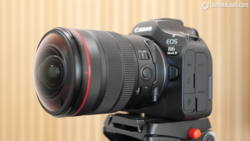
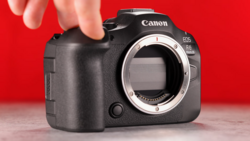
The full walkthrough comes from Christopher Frost, who tested the Canon RF 7-14mm f/2.8-3.5 L Fisheye STM on a Canon EOS R5 alongside an R6 Mark III. At 7mm on a full frame sensor, the lens produces a circular fisheye image spanning 190 degrees, and you can zoom to 14mm for a full-frame diagonal fisheye that fills the whole sensor. The maximum aperture of f/2.8 at the wide end opens the door to astrophotography and dim interiors. A minimum focus distance of just 15 cm lets you press right up against a subject for exaggerated, close perspectives.
Build quality lands where you'd expect from a Canon L lens. The body is plastic but feels solid, sits on a metal mount, and carries heavy weather-sealing, including a rear gasket. At 476 g, it stays light for a lens this wide. Frost points to the rear drop-in filter slot as a genuine bonus, along with an auto-manual focus switch, a customizable focus limiter button, and a smooth rubberized zoom ring. That zoom ring has its own limiter that either locks you to 7mm or restricts the range to 9-14mm for APS-C shooters who only want full-coverage fisheye. The STM autofocus motor moves fast, silent, and accurate in his testing.
Image quality holds up across the frame. At 7mm and f/2.8, the center is razor sharp with strong contrast, and the corners look excellent right away, tightening further at f/4 before diffraction softens things around f/11. Zoomed to 14mm at f/3.5, the center is already as sharp as it gets, with corners staying impressive down to f/8. Flaring stays minimal, coma is nearly absent at 7mm, and sun stars grow strong once you close down to f/16 and f/22. One practical note from Frost: turn off in-body image stabilization with this lens, especially for video, or you'll see a strange wobble creep into the frame.
Fisheye lenses have quietly shifted from novelty toward tools with real creative range, and this one leans into that. The 15 cm minimum focus distance turns a fisheye into a close-up storytelling lens, where a subject inches from the glass distorts against a sweeping background. That works for skateboarding, real estate walkthroughs, band photography in tight venues, and interior work where you need to swallow an entire room in one frame. The open gate video option on higher-end Canon bodies matters here too, since it preserves the full image circle instead of cropping the top and bottom the way 16:9 does. If you shoot vertical content or want to reframe in post, that full circle gives you room to work. This is a lens that rewards deliberate composition rather than casual grab shots, and pairing it with the rear drop-in filter system means you can control exposure and reflections even on an optic whose bulbous front element can't take a standard screw-in filter.
The comparison worth weighing is the Laowa 8-15mm f/2.8, also available in Canon RF mount at a far lower price and with a brighter aperture when zoomed in. The Canon answers with autofocus, rear filter support, a smaller and lighter body, higher sharpness, lower flaring, more weather-sealing, a closer minimum focus distance, and a slightly wider angle. Frost calls the price the only real downside, and his recommendation carries a condition attached: buy it if you'll use it enough to earn back the cost.
Watch the review above to see the full sharpness tests, the sun star behavior, and how the close-up shots hold together at f/5.6.


Join the Fstoppers community for free
-
Post comments and join in the discussions
-
Browse the site ad-free
-
Share your work and get featured in the community
-
Compete in the photo contests for fun and prizes
1 Comment
There's a rumor that Sony is working on a similar lens. I'm kind of hopeful, but until then...Laowa.