Landscape photographers ask more of a lens than almost anyone else. The subject is motionless, the aperture is usually between f/8 and f/11, and the shot is made from a tripod, which means the excuses run out fast. What is left is the optics: how clean the extreme corners look at 14mm, how the sun renders when it sits on the edge of the frame, how much purple fringing you paint out along a ridgeline, and whether you can screw a polarizer onto the front at all. That last one sinks more ultra-wide purchases than anything else.
Three decisions drive this purchase. The first is zoom versus prime: a 16-35mm covers most of what a landscape photographer shoots and lets you stop composing with your feet on a cliff edge, while a fast prime buys extra stops that only matter under the Milky Way. The second is filters, because an ultra-wide with a bulbous front element forces you into a 150mm holder that costs as much as the lens. The third is mount, and the best glass here is distributed unevenly: Sony and L-Mount shooters get the third-party bounty, Canon RF shooters still mostly buy Canon, and Nikon Z sits in between.
Every pick below lists the mounts it actually ships in, so you can skip anything your camera cannot take. We have not tested all of these in-house, and we say so in the entries where that applies.
At a Glance
- Best Overall: Sony FE 16-35mm f/2.8 GM II
- Best Ultra-Wide Zoom: Nikon NIKKOR Z 14-24mm f/2.8 S
- Best Value Ultra-Wide Zoom: Tamron 16-30mm f/2.8 Di III VXD G2
- Best Wide Prime: Canon RF 24mm f/1.4 L VCM
- Best for Astro and Night: Sigma 20mm f/1.4 DG DN Art
- Best Budget: Viltrox AF 16mm f/1.8
- Best Shift Lens: Laowa 15mm f/4.5 Zero-D Shift
- Best APS-C: Sigma 10-18mm f/2.8 DC DN Contemporary
- Best for Travel and Hiking: Canon RF 14-35mm f/4L IS USM
Best Overall: Sony FE 16-35mm f/2.8 GM II
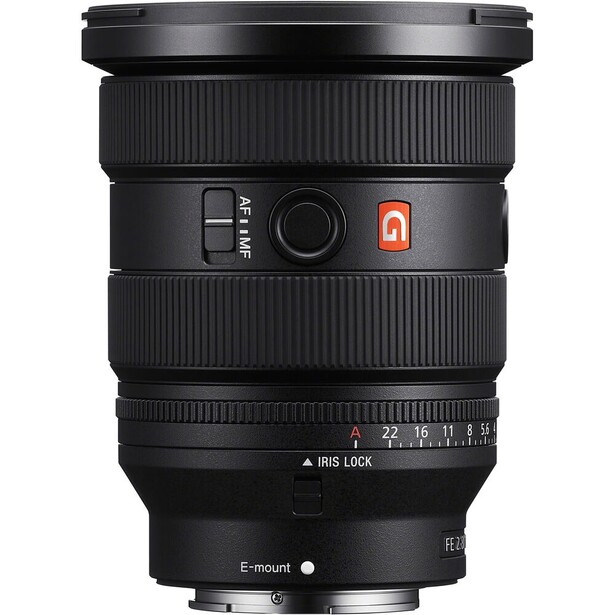
- Mounts: Sony E (full frame)
- Focal length and aperture: 16-35mm, f/2.8 to f/22
- Optical design: 15 elements in 12 groups
- Diaphragm blades: 11, rounded
- Minimum focus: 0.22 m, 0.32x maximum magnification
- Filter thread: 82mm
- Dimensions: 87.8 x 111.5 mm
- Weight: 547 g
- Price: $2,598 (B&H)
Sony rebuilt this lens in 2023 and the headline number is the one that matters most on a mountain: the FE 16-35mm f/2.8 GM II weighs 547 g, which is 133 g less than the original and roughly 100 g less than Nikon's f/2.8 ultra-wide. You typically carry a lens like this for eight hours to make three exposures, so shaving a third of a pound while keeping a flat 82mm front thread is genuinely useful. Its stack of XA and aspherical elements holds corner performance together at 16mm wide open, the specific place cheaper wides fall apart.
The range is the real argument, though. The difference between 16mm and 24mm on the same composition is the difference between a foreground rock that anchors the frame and one that disappears into a smear of texture, and a zoom lets you make that call from where you are standing rather than from where the tripod can safely go. At the long end it doubles as an environmental portrait and interiors lens, and 0.32x magnification at 0.22 m is close enough to a pseudo-macro that you can shoot a frost-covered leaf with a mountain behind it.
The honest limitation is the price and an aperture you will rarely use. Most landscape work happens at f/8 to f/11, where a much cheaper f/4 zoom is optically indistinguishable, so if you never shoot the night sky you are paying a premium for f/2.8 and a stack of XA elements. There is no optical stabilization either. Sony may eventually add a 16-28mm f/2 GM above this lens rather than replacing it, which is worth knowing before you spend at this tier.
Buy this if you shoot landscapes seriously on Sony, want one wide lens rather than three, and expect to point it at the Milky Way a few times a year. If your tripod habit is absolute and you never shoot past f/5.6, look at the Tamron below and put the savings into a filter system. Check the current price of the Sony FE 16-35mm f/2.8 GM II at B&H.
Read our full review of the Sony FE 16-35mm f/2.8 GM II.
What We Like
- Only 547 g for a constant f/2.8 ultra-wide zoom
- Conventional 82mm front thread takes normal filters
- Strong corner performance wide open at 16mm
- 0.32x magnification makes it a credible close-focus lens
What Could Be Better
- Expensive for an aperture most landscape work never uses
- No optical stabilization
- Sony E-mount only, with no adapted path to other systems
Best Ultra-Wide Zoom: Nikon NIKKOR Z 14-24mm f/2.8 S
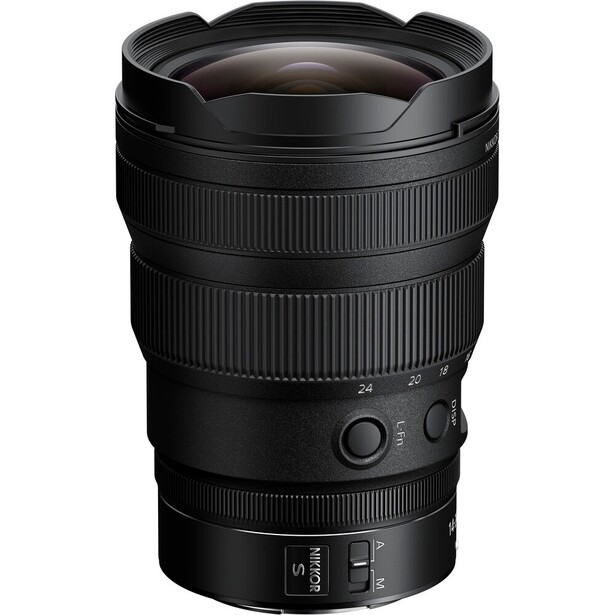
- Mounts: Nikon Z (full frame)
- Focal length and aperture: 14-24mm, f/2.8 to f/22
- Optical design: 16 elements in 11 groups, 4 ED and 3 aspherical
- Diaphragm blades: 9, rounded
- Minimum focus: 0.28 m, 0.13x maximum magnification
- Filter thread: 112mm via the included HB-97 hood, plus a rear gel slot
- Dimensions: 88.5 x 124.5 mm
- Weight: 650 g
- Price: $2,396.95 (B&H)
Fourteen millimeters is a different tool from 16mm, and the gap is bigger than the numbers suggest. Two millimeters at the wide end buys you an extra 7 degrees of diagonal coverage (114 degrees at 14mm against 107 degrees at 16mm) and turns a tight canyon or a small interior into a shot you can actually make. The NIKKOR Z 14-24mm f/2.8 S is the successor to the F-mount lens that defined this category for a decade, and Nikon's redesign for the Z mount fixed the two things people complained about: it is lighter at 650 g, and it takes filters.
That last point is the whole reason this lens beats the classic bulbous 14-24mm design. The front element is flat enough that the bundled HB-97 hood carries a 112mm thread, so you screw a polarizer or a 10-stop neutral density filter directly onto the hood, and a rear slot at the mount takes trimmed gel sheets. That is not free (112mm filters are large and expensive), but it means a two-minute exposure of moving water at 14mm without carrying a 150mm holder and a padded case for it. Our filters guide covers the systems worth buying.
Optically it is the sharpest ultra-wide zoom most Nikon shooters will ever mount. Corner detail at 14mm is where the S-line engineering shows, and Nano Crystal and ARNEO coatings keep flare under control with the sun in the frame, the situation this lens gets used in constantly.
What it is not is small, cheap, or subtle. At 650 g and 124.5 mm long, it eats space in a bag, the 112mm filters are a real cost line, 24mm at the long end means you will still want a 24-70mm to complete the kit, and there is no stabilization. For a Nikon shooter who wants the widest rectilinear coverage available without going manual focus, nothing else in the system is close. Check the current price of the Nikon NIKKOR Z 14-24mm f/2.8 S at B&H.
Also consider the Sigma 14-24mm f/2.8 DG DN Art if you shoot Sony E or L-Mount and want this focal range for less money.
What We Like
- True 14mm coverage with excellent corner sharpness
- Takes 112mm screw-in filters through the included hood
- Rear gel slot for trimmed filter sheets
- Coatings hold up with the sun in the frame
What Could Be Better
- Large, heavy, and expensive
- 112mm filters cost real money
- No stabilization, and 24mm is a short long end
Best Value Ultra-Wide Zoom: Tamron 16-30mm f/2.8 Di III VXD G2

- Mounts: Sony E, Nikon Z (full frame)
- Focal length and aperture: 16-30mm, f/2.8 to f/16
- Optical design: 16 elements in 12 groups
- Diaphragm blades: 9, circular
- Minimum focus: 0.19 m wide, 0.3 m tele, 1:5.4 maximum magnification at the wide end
- Filter thread: 67mm
- Dimensions: 74.8 x 101.8 mm (Sony E)
- Weight: 440 g (Sony E), 450 g (Nikon Z)
- Price: $879 (B&H)
Here is the pick most working landscape photographers should actually buy. The 16-30mm f/2.8 Di III VXD G2 replaced Tamron's earlier 17-28mm and fixed its two real weaknesses: it goes a millimeter wider, and it goes 2mm longer at the top, which turns a lens you used only for grand vistas into one you can leave mounted. It weighs 440 g on Sony E. That is 107 g less than the Sony GM II and 210 g less than the Nikon, in a lens with the same maximum aperture.
The 67mm filter thread is the sleeper feature. Tamron standardized its full frame zooms around 67mm years ago, so one circular polarizer and one neutral density filter serve this lens, the 28-75mm f/2.8, and the 70-180mm f/2.8. Building a three-lens kit from scratch, that saves several hundred dollars in filters and removes the step-up rings that always end up cross-threaded in the dark.
We have not tested this one in-house, so what follows rests on its optical design and specifications. The compromises land where you would expect at this price: distortion at 16mm is significant enough that it relies on the profile correction baked into raw processing, and corner sharpness wide open trails the Sony and Nikon f/2.8 zooms by a visible margin. Stopped down to f/8, where landscape work lives, the gap narrows to something you would need a test chart to find.
This is the lens for the photographer who wants professional coverage without a professional budget, and for the traveler who counts grams. It is not the lens for someone shooting astro wide open every weekend, where the corner coma of a fast prime matters. Check the current price of the Tamron 16-30mm f/2.8 Di III VXD G2 at B&H.
What We Like
- 440 g for a constant f/2.8 zoom
- 67mm filters shared across Tamron's full frame trinity
- 30mm long end makes it a genuine walk-around lens
- Available in both Sony E and Nikon Z
What Could Be Better
- Heavy distortion at 16mm that depends on software correction
- Corners wide open trail the first-party f/2.8 zooms
- No stabilization, no L-Mount or Canon RF version
Best Wide Prime: Canon RF 24mm f/1.4 L VCM
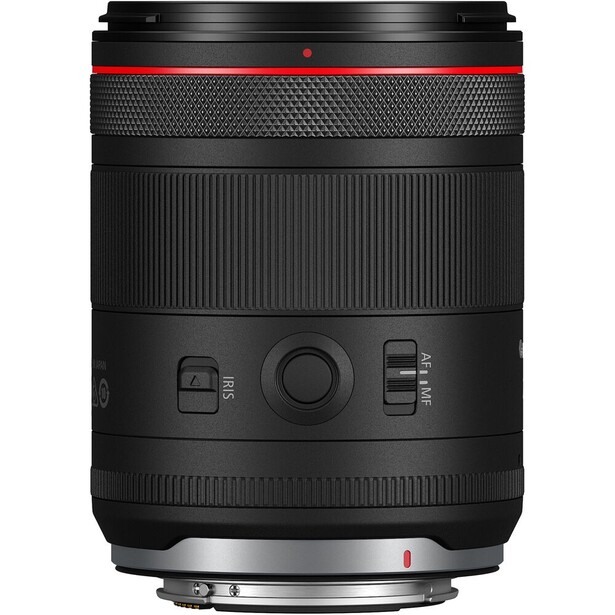
- Mounts: Canon RF (full frame)
- Focal length and aperture: 24mm, f/1.4 to f/16
- Optical design: 15 elements in 11 groups, 2 UD and 1 aspherical
- Diaphragm blades: 11, circular
- Minimum focus: 0.24 m, 0.17x maximum magnification
- Filter thread: 67mm
- Dimensions: 76.5 x 99.3 mm
- Weight: 515 g
- Price: $1,449 (B&H)
Twenty-four millimeters is the most useful single wide focal length there is, and the RF 24mm f/1.4 L VCM is the best modern expression of it. Wide enough to take in a whole valley, tight enough that a person or a tree still reads as a subject rather than a speck, and fast enough at f/1.4 that it doubles as a night lens without any of the compromises of a specialist astro prime. Canon built it around a voice coil motor with rear-group focusing, which produces near-zero focus breathing and fast, silent autofocus.
The number that makes it a landscape lens rather than a video lens is 515 g with a 67mm front thread, which is remarkable for an f/1.4 L prime and matches the filter size of Canon's 35mm and 50mm VCM primes, so one polarizer covers the set. Canon also gave it an 11-blade aperture, which renders clean, well-defined sunstars when you stop down to f/11 and tuck the sun behind a rock. This is a lens you can hike with.
Its weakness is real for the specific job of astrophotography. At 24mm you have to keep exposures short to avoid star trailing, and coma at f/1.4 is present in the extreme corners, so serious nightscape shooters will still want something wider and cleaner. It is also Canon RF only, and Canon's restrictions on third-party full frame autofocus lenses mean RF shooters have fewer alternatives to compare against than Sony owners do.
One more thing to know before you spend here, and it is the reason this pick carries an asterisk: Canon's own US store now lists the RF 24mm f/1.4 L VCM as discontinued, while dealers continue to stock it. No successor has been announced. Read that as a lens late in its retail life rather than one about to be replaced, check stock before you commit, and treat any deep discount as the clearance it probably is.
Get this if you shoot Canon, want one prime that handles landscapes, environmental portraits, and the occasional astro frame, and value a lens you can carry all day. If you already own the 14-35mm f/4 below, the 24mm is a luxury rather than a necessity until you start shooting in the dark. Check the current price of the Canon RF 24mm f/1.4 L VCM at B&H.
What We Like
- 515 g and a 67mm thread for an f/1.4 L prime
- Shares filters with Canon's other VCM primes
- Eleven blades give clean sunstars at small apertures
- Near-zero focus breathing and fast, quiet autofocus
What Could Be Better
- Coma at f/1.4 limits it for serious nightscape work
- 24mm is not wide enough for tight canyons or interiors
- Canon RF only, with almost no third-party competition
- Canon's own store lists it as discontinued, so stock is dealer-dependent
Best for Astro and Night: Sigma 20mm f/1.4 DG DN Art
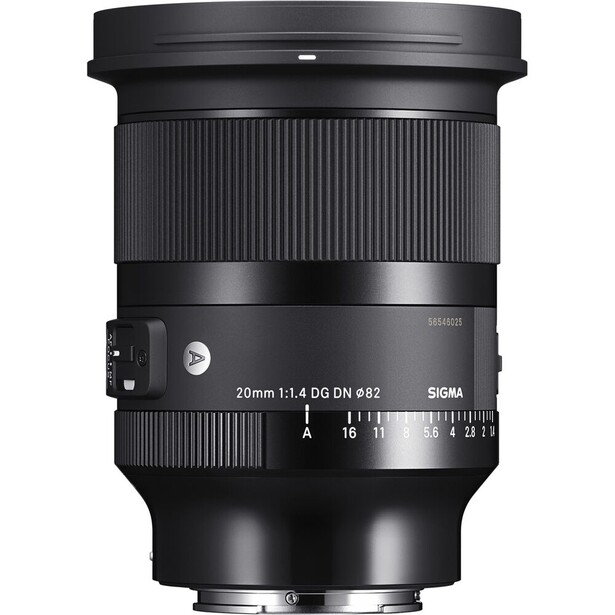
- Mounts: Sony E, L-Mount (full frame)
- Focal length and aperture: 20mm, f/1.4 to f/16
- Optical design: 17 elements in 15 groups, 2 SLD and 3 aspherical
- Diaphragm blades: 11, rounded
- Minimum focus: 0.23 m, 1:6.1 maximum magnification
- Filter thread: 82mm front, plus a rear sheet-filter holder
- Dimensions: 87.8 x 113.2 mm (Sony E)
- Weight: 630 g (Sony E), 635 g (L-Mount)
- Price: $989 (B&H)
Astro lenses are judged on one thing that never appears on a spec sheet: sagittal coma flare, the smear that turns corner stars into tiny seagulls at wide apertures. The 20mm f/1.4 DG DN Art was designed around that problem, and its two SLD and three aspherical elements render near-pinpoint stars into the corners at f/1.4, which is not something you can say about most fast wides.
What makes it the pick instead of a merely sharp lens is the hardware Sigma bolted on for people who work in the dark. A manual focus lock switch means that once you set infinity focus at 2 a.m., you cannot bump it out of position while fumbling for an intervalometer. A lens heater retainer, a small raised lip at the front, stops a dew heater strap from creeping forward over the front element and vignetting the frame. There is a rear sheet-filter holder with a guide plate for cutting your own light-pollution filters, plus a removable Arca-Swiss compatible tripod foot.
It doubles as a strong daytime landscape lens, taking normal 82mm screw-in filters, with 11 blades for tidy sunstars. Twenty millimeters is an awkward focal length in daylight, though, wide enough to demand a strong foreground and not wide enough to feel dramatic on its own, which is why it sits in the astro slot rather than the general one. At 630 g it is also heavy for a prime.
One piece of context matters more than usual. Sigma's 14mm f/1.4 DG DN Art, the lens that owned this category, has been discontinued and replaced by a rebranded 14mm f/1.4 DG Art sold through limited special-order windows, so it is no longer something we can point a reader at with confidence. That leaves the 20mm as the best astro lens you can reliably walk into a store and buy, provided you shoot Sony E or L-Mount. Nikon Z shooters should look at the Nikon NIKKOR Z 20mm f/1.8 S instead. Check the current price of the Sigma 20mm f/1.4 DG DN Art at B&H.
What We Like
- Exceptional coma control for pinpoint corner stars at f/1.4
- Manual focus lock and lens heater retainer built for night work
- Rear sheet-filter holder plus a normal 82mm front thread
- Removable Arca-Swiss tripod foot included
What Could Be Better
- 630 g is heavy for a single prime
- 20mm is an awkward focal length in daylight
- No Canon RF or Nikon Z version
Best Budget: Viltrox AF 16mm f/1.8
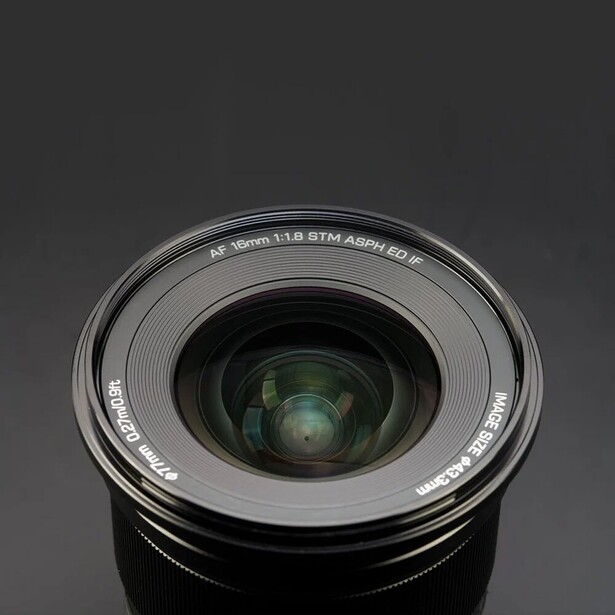
- Mounts: Sony E, Nikon Z, L-Mount (full frame)
- Focal length and aperture: 16mm, f/1.8 to f/22
- Optical design: 15 elements in 12 groups, 4 ED and 3 aspherical
- Diaphragm blades: 9
- Minimum focus: 0.27 m, 0.1x maximum magnification
- Filter thread: 77mm
- Dimensions: 85.2 x 103 mm
- Weight: 550 g
- Price: $580 (B&H)
A few years ago, a 16mm f/1.8 autofocus prime with a 77mm filter thread would have been a lens with a red or gold ring and a four-figure price. The Viltrox AF 16mm f/1.8 costs a fraction of that, and it is the reason so many landscape photographers now own a fast ultra-wide at all. Metal build, brass mount, a clickable and declickable aperture ring, and a small color LCD on the barrel showing focus distance and aperture, which sounds like a gimmick until you are setting hyperfocal distance by headlamp.
The optics are the surprise. When we reviewed it, center sharpness was excellent wide open at f/1.8, and the frame was at its strongest between f/5.6 and f/7.1, holding up until diffraction starts to bite around f/11. That is exactly the range landscape work lives in. The edges do trail the center at the fastest apertures, so this is not the lens you shoot wide open and expect a crisp horizon, but at 16mm you can run 15 to 20 second exposures before stars trail, a meaningfully longer window than the 24mm above gives you, and the 77mm front thread means your existing filters probably fit.
The compromises are real, but they are not the ones the price would lead you to expect. Our reviewer found the stepping-motor autofocus fast and quiet, with little focus breathing, and distortion better controlled than the spec sheet suggests, at roughly 1.1% barrel. The genuine complaint is flare: put a light source in or near the frame and you get reddish, magenta ghosting, so the hood stays on. The barrel LCD is genuinely useful in the dark, though it runs bright with no way to dim it, and the focus ring is focus-by-wire with no hard stops and a long throw. Firmware updates run over a USB-C port on the lens itself, so check you are current before trusting it on a new body. At 550 g it is no lighter than lenses costing three times as much.
This is the pick for someone building a first serious landscape kit, and for the Sony or Nikon shooter who wants a fast wide without spending zoom money. Pair it with a solid set of legs from our tripods guide and you have most of a night-photography kit. Check the current price of the Viltrox AF 16mm f/1.8 at B&H.
Read our full review: We Review Viltrox’s First L-Mount: AF 16mm F/1.8 L, a Large Aperture Full-Frame Ultra-Wide Angle Lens
What We Like
- f/1.8 at 16mm for a small fraction of first-party prices
- Excellent center sharpness wide open, and strongest across the frame at f/5.6 to f/7.1
- Fast, quiet autofocus with low focus breathing
- 77mm front thread takes ordinary filters
- Metal build, weather sealing, aperture ring, and a genuinely useful barrel LCD
- Sold in Sony E, Nikon Z, and L-Mount
What Could Be Better
- Edges trail the center at the fastest apertures
- Flare control is only decent, with magenta ghosting when a light source is in the frame
- The barrel LCD is bright and cannot be dimmed
- Focus-by-wire ring has no hard stops and a long throw
- No lighter than lenses costing three times as much
Best Shift Lens: Laowa 15mm f/4.5 Zero-D Shift
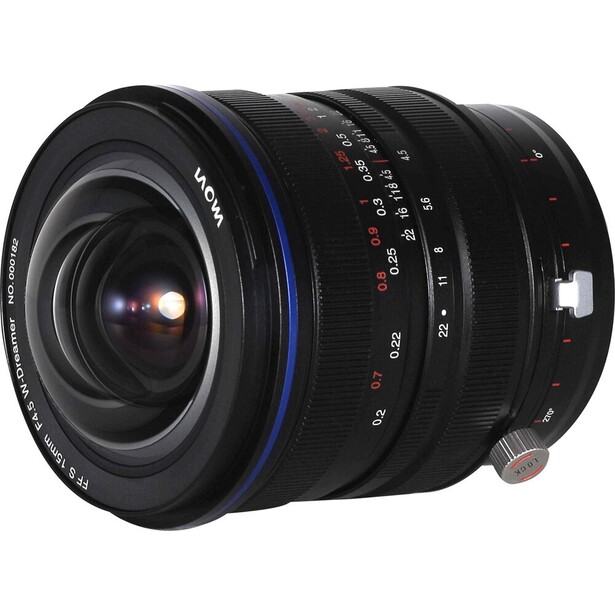
- Mounts: Canon EF and RF, Nikon F and Z, Sony E, L-Mount, Pentax K, Fujifilm G, Hasselblad XCD
- Focal length and aperture: 15mm, f/4.5 to f/22, manual focus and manual aperture
- Optical design: 17 elements in 11 groups
- Diaphragm blades: 5 (14 on the f/4.5R variant)
- Minimum focus: 0.2 m
- Filter thread: none, dedicated 100mm holder required
- Dimensions: 79 x 103 mm
- Weight: 597 g
- Price: $1,199 (B&H)
Shift lenses are usually filed under architecture, and that is a mistake. Shift a lens up rather than tilting the camera up and your verticals stay vertical, which matters for redwoods and canyon walls as much as for skyscrapers. Shift sideways in two or three steps and you can stitch a perfectly aligned panorama with no parallax error, which is how a lot of very large landscape prints are made. The Laowa 15mm f/4.5 Zero-D Shift does all of that at 15mm, with ±11mm of shift and a 65mm image circle big enough to cover medium format.
The "Zero-D" in the name refers to Laowa's near-zero distortion design, and it is why this lens belongs in a landscape guide rather than only a technical one. Straight lines at the frame edge stay straight without a correction profile, which is what you need if you plan to shift and stitch, because software distortion correction and shifted frames fight each other. The mount list is also the widest of any pick here, covering Canon EF and RF, Nikon F and Z, Sony E, L-Mount, Pentax K, and even Fujifilm G and Hasselblad XCD.
You give up a great deal of convenience for that. There is no autofocus, no electronic aperture, and on most bodies no EXIF data, so you are focusing manually with magnified live view and metering by trial. Maximum aperture is f/4.5, which rules out astro entirely. There is no front filter thread, so any filtration means a dedicated 100mm holder, and shifting with a holder attached invites vignetting if you are careless.
If you have ever tried to correct converging verticals in Lightroom and watched the top of your composition disappear into the crop, this is the fix. Elia Locardi's Photographing the World 4: Advanced Landscapes covers the stitched, shifted workflow this lens is built for. Check the current price of the Laowa 15mm f/4.5 Zero-D Shift at B&H.
Read our full review of the Laowa 15mm f/4.5 Zero-D Shift.
What We Like
- ±11mm of shift for stitched panoramas and corrected verticals
- Near-zero distortion without software correction
- Available in more mounts than anything else here, including medium format
- Compact and light for a shift lens at 597 g
What Could Be Better
- Manual focus, manual aperture, and usually no EXIF data
- f/4.5 maximum aperture rules out night work
- Requires an expensive 100mm filter holder for any filtration
Best APS-C: Sigma 10-18mm f/2.8 DC DN Contemporary
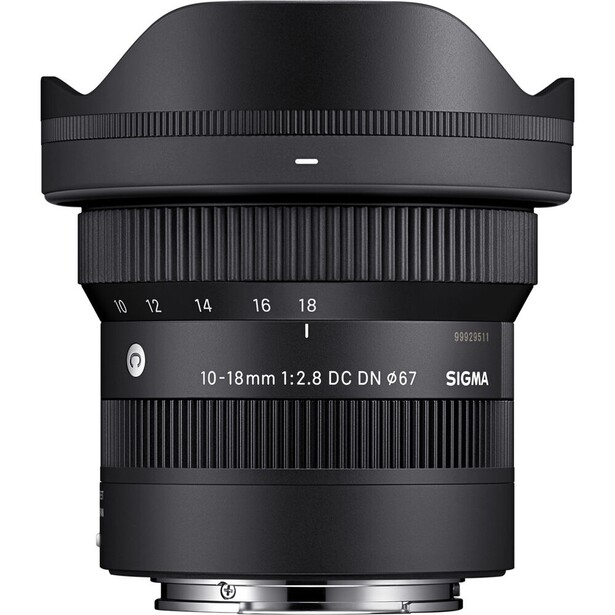
- Mounts: Sony E, L-Mount, Fujifilm X, Canon RF (APS-C)
- Focal length and aperture: 10-18mm, f/2.8 to f/22 (15-27mm equivalent on Sony and Fujifilm)
- Optical design: 13 elements in 10 groups, 3 FLD, 1 SLD, and 4 aspherical
- Diaphragm blades: 7, rounded
- Minimum focus: 11.6 cm at the wide end, 1:4 maximum magnification
- Filter thread: 67mm
- Dimensions: 72.2 x 62.0 mm (L-Mount)
- Weight: 260 g (L-Mount)
- Price: $729 (B&H)
Crop-sensor shooters have been handed a lot of slow, plastic, variable-aperture wides over the years. Sigma's answer weighs 260 g, is 62 mm long, holds f/2.8 across the range, and is small enough to disappear into a jacket pocket. The 10-18mm f/2.8 DC DN Contemporary gives an APS-C body roughly the same field of view a 15-27mm would give full frame, in a package that weighs about half what the full frame f/2.8 zooms in this guide do.
The specification that surprises people is close focus: 11.6 cm from the sensor at the wide end, which is close enough that the front of the lens is nearly touching your foreground. Push an ultra-wide that close to a rock, a wildflower, or a piece of driftwood and the perspective exaggeration does something a 24mm cannot, throwing the foreground forward while the mountain stays small and distant behind it. That single trick is worth more to a landscape photographer than any amount of extra corner resolution.
It is also the rare APS-C ultra-wide sold across four mounts, so Fujifilm X and Canon RF crop shooters, otherwise very short of options, get the same lens Sony and L-Mount owners do, and the 67mm thread means normal, cheap filters. Weather resistance is limited to a mount gasket and a water-repellent front coating rather than full sealing, so treat it as splash-resistant, not stormproof.
The catches are honest ones. Seven aperture blades produce 14-point sunstars that are less crisp than the 11-blade primes here, distortion at 10mm is heavy and correction-dependent, and there is no stabilization, which stings on Fujifilm and Canon crop bodies that lack in-body stabilization. If you want the fastest APS-C wide instead, the newer Sigma 15mm f/1.4 DC Contemporary, which shipped in March 2026 at 220 g, is a better astro tool. Check the current price of the Sigma 10-18mm f/2.8 DC DN Contemporary at B&H.
Read our full review of the Sigma 10-18mm f/2.8 DC DN Contemporary.
What We Like
- 260 g and 62 mm long with a constant f/2.8 aperture
- 11.6 cm close focus for dramatic foreground work
- Sold in Sony E, L-Mount, Fujifilm X, and Canon RF
- Ordinary, inexpensive 67mm filters
What Could Be Better
- Seven blades give softer sunstars than the primes here
- Heavy distortion at 10mm
- Splash-resistant rather than fully weather-sealed
Best for Travel and Hiking: Canon RF 14-35mm f/4L IS USM
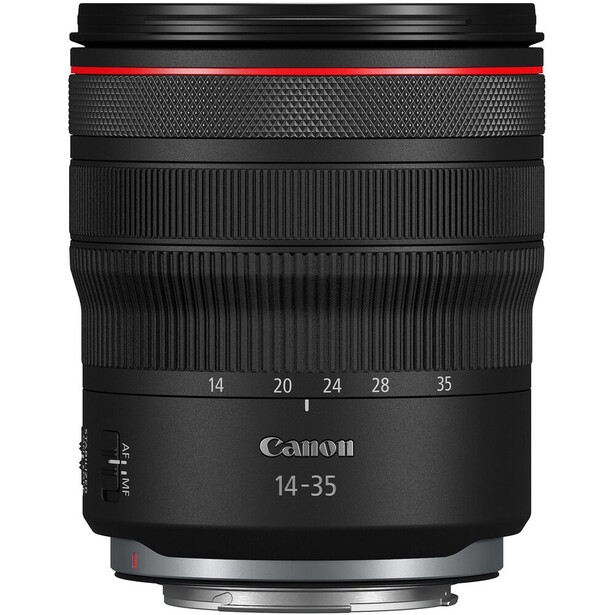
- Mounts: Canon RF (full frame)
- Focal length and aperture: 14-35mm, f/4 to f/22
- Optical design: 16 elements in 12 groups, 3 aspherical and 3 UD
- Diaphragm blades: 9, rounded
- Minimum focus: 0.2 m, 0.38x maximum magnification
- Filter thread: 77mm
- Dimensions: 84.1 x 99.8 mm
- Weight: 540 g
- Price: $1,399 (B&H)
Nothing else in this guide packs a 2.5x zoom range starting at 14mm into 540 g with a normal 77mm filter thread. The RF 14-35mm f/4L IS USM is the single most efficient landscape lens per gram in the Canon system, and the reason is the tradeoff Canon accepted: it corrects a great deal of barrel distortion at 14mm in software, which lets the optical design stay small. Purists object. Anyone who has hiked 12 miles with a camera bag tends not to.
The stabilization separates it from the f/2.8 zooms. Canon rates the optical image stabilizer at 5.5 stops, rising to 7 stops of coordinated correction on a body with in-body stabilization. On an ultra-wide, that means handheld frames at a half-second in blue-hour light, which is what you fall back on when the tripod is strapped to the pack and the light is only doing something for the next 40 seconds. Its 0.38x maximum magnification at 0.2 m is the highest figure in this guide, ahead of the 0.32x the Sony GM II manages, making it a capable close-focus lens for foreground detail.
The compromise you accept is f/4. That is one stop slower than the Sony and Tamron zooms, which for tripod landscape work is irrelevant and for astrophotography is disqualifying. There is visible corner softness wide open at 14mm, and the correction profile means the true field of view is slightly narrower than a purely optical 14mm would give. The 77mm thread, though, keeps your polarizer, your neutral density filters, and your caps entirely normal.
Buy it if you shoot Canon and your photography happens at the end of a trail. Skip it if the night sky is your subject, and read our beginner camera guide first if you are still choosing a system to build around. Check the current price of the Canon RF 14-35mm f/4L IS USM at B&H.
What We Like
- 14mm coverage and a 2.5x range in only 540 g
- 5.5 stops of stabilization, up to 7 stops with a stabilized body
- Best close-focus performance here at 0.38x
- Ordinary 77mm filters
What Could Be Better
- f/4 rules it out for astrophotography
- Relies heavily on distortion correction at 14mm
- Soft corners wide open at the wide end
How to Choose a Landscape or Wide Angle Lens
Start with the filter question, because it is the one most people discover after they have spent the money. A lens with a flat front and a normal thread (67mm, 77mm, 82mm) lets you use a circular polarizer, the one filter that cannot be replicated in post and the one that makes wet rock, autumn leaves, and blue sky look the way you remember them. A bulbous front element and a built-in petal hood force you into a 150mm square holder, which adds cost, bulk, and a real risk of vignetting at the widest setting. The Nikon 14-24mm f/2.8 S threads the needle by putting a 112mm thread on its hood, and every other pick here except the Laowa takes ordinary filters.
Then decide whether you are buying a landscape lens or an astro lens, because they are not the same purchase. Daytime landscape work happens at f/8 to f/11 on a tripod, where an f/4 zoom and an f/1.4 prime resolve almost identically, and what separates lenses is flare control with the sun in the frame, corner-to-corner uniformity, and sunstar quality (a function of blade count). For astrophotography, everything inverts. You shoot wide open, and the only specs that matter are maximum aperture and sagittal coma, the corner smearing that turns stars into commas. A lens can be excellent at one job and mediocre at the other.
Focal length deserves more thought than most buyers give it. Going wider is not the same as fitting more in, because an ultra-wide shrinks everything in the distance and puts enormous weight on whatever is closest to the lens. If your foregrounds are weak, 14mm will expose that instantly, and 24mm will flatter you. The other spec that matters more than people think is close focus: a lens that focuses to 0.2 m lets you plant the front element inches from a rock and build the near-far compositions ultra-wides are actually good for. The spec that matters less than people think is maximum aperture, unless you shoot at night.
Be realistic about weight, too. The gap between a 440 g zoom and a 650 g zoom is the gap between the lens that comes on the hike and the lens that stays in the car. Then pair whatever you buy with a tripod that can hold it steady in wind, because at f/11 and two seconds a wobbly center column costs you more sharpness than any optical difference between these lenses.
What We're Looking For
We weigh corner-to-corner sharpness at the apertures landscape photographers actually use, flare resistance with the sun in the frame, distortion (and how much of it is hidden by software), coma performance for night work, filter compatibility, weather-sealing, and weight, since the last one determines how often a lens gets used. Every specification here was verified against the manufacturer's current spec page at the time of writing, and we checked each pick's retail status rather than assuming it, which is why Sigma's excellent 14mm f/1.4 does not appear (it has been discontinued and folded into a special-order program) and why the Canon 24mm entry says plainly where it sits in its product cycle. Most picks in our guides come from gear our writers have used and reviewed hands-on. Where we have not tested a lens ourselves, we say so in the entry and write from verified specifications and the lens's documented optical design.
Frequently Asked Questions
What Focal Length Is Best for Landscape Photography?
Between 16mm and 35mm on full frame covers the large majority of landscape work, which is why 16-35mm zooms are the category's default. Wider than 16mm is a specialist tool for tight spaces, strong near-far compositions, and the night sky. Many of the best landscape images are made at 50mm or longer, so do not assume wider is better.
Do I Need an f/2.8 Lens for Landscapes?
No, not for daytime work. Landscape photography happens at f/8 to f/11 on a tripod, where an f/4 lens performs the same as an f/2.8 lens and costs and weighs considerably less. You need a fast aperture only for astrophotography and handheld low-light shooting, where f/2.8 or faster is the difference between usable and noisy.
Can I Use Filters on an Ultra-Wide Lens?
Usually, but check the front element first. Lenses with flat fronts and normal filter threads take ordinary screw-in polarizers and neutral density filters. Lenses with bulbous front elements need a large square filter holder, typically 150mm, which costs several hundred dollars. Polarizers also darken the sky unevenly at very wide angles, so use them carefully below about 20mm.
Is a Third-Party Lens Good Enough for Serious Landscape Work?
Yes. Sigma, Tamron, and Viltrox now make wide lenses that resolve more detail than most sensors can record, and their weaknesses (heavier distortion, slower autofocus) barely register in tripod-based landscape work. The main constraint is availability: Canon still restricts third-party autofocus lenses on full frame RF bodies, so Canon shooters have fewer options.
What Is Coma, and Why Does It Matter for Astrophotography?
Coma, or more precisely sagittal coma flare, is an optical aberration that stretches point sources of light near the frame edges into wings or comma shapes. It is invisible in daylight and glaring in a star field shot wide open. Stopping down reduces it, but astro shooting requires wide apertures, so a lens with strong native coma control (like the Sigma 20mm f/1.4) is the only real fix.
Fstoppers may earn a commission from purchases made through links in this article. Our picks are made independently by our editorial team.