
As AI image-making continues to transform the way we work, a number of new issues have arisen. But as fast as the technology is developing, the legal framework around AI remains an evolving landscape.
Whether you are an early adopter of AI or determined to put the genie back in the bottle, there is no way you could have totally avoided hearing at least a story or two about it in recent months. Most likely you’ve heard a story or two about it every hour on the hour. Love it or hate it, AI simply is going to have a monumental effect on society, media, and the definition of work. But whether that net effect will be positive or negative is far from a settled question. In fact, the very basis on which the technology is formed, the mass scraping of intellectual property without the express consent of copyright holders, is ethically dubious at best. But, is it legal? And, since the progress of generative AI in image-making shows no signs of slowing down any time soon, what does all this mean for artists who will use the technology in the future? Who owns what in a world where the basis of the technology is in question? And how do you establish authorship and authenticity in a world where all outputs are a questionable combination of ones and zeros that may or may not have been concocted wholly inside of a computer?
To discuss some of these questions, I sat down to chat with Lisa A. Callif, a founding partner of one of the premier entertainment law firms in Hollywood, Donaldson Callif Perez. One of the best in her field, she has received accolades from groups such as The Hollywood Reporter, The Daily Journal, Thomson Reuters, and Variety. Past clients have included the likes of filmmaker Richard Linklater, the Safdie Brothers’ Elara, and the documentary division of Matt Damon and Ben Affleck’s company Artists’ Equity just to name a few.
I wanted to sit down with Lisa and discuss two sides of the generative AI legal coin: both the effect it has on existing copyright holders whose work was ingested (with or without permission) to form the model, as well as the legality around how artists will be able to legally monetize the work they’ve made with AI in the future.
Personally, I come at the issue from both sides. Ever since my first article on the subject, The Coming Menace Of AI, I’ve dived deep into the issue. While the recent release of models like Sora 2 and AI-related issues during the SAG and WGA strikes have started getting more of the public’s attention, I’d say still photographers became aware of what AI could do about 18 months before Hollywood. Stills are easier to produce with AI than video. So, it came for photographers first, so to speak.
As someone who owns a number of copyrights, which have no doubt been used to train AI models without my consent, I have spent a great deal of time in discussion to find a way to equitably compensate copyright holders for their original work. I am also, however, a realist. All one needs to do is spend a day with generative AI to realize this is a technology that is not going away. When you widen your lens and realize that generative AI with regard to media is only a tiny fraction of the trillion-dollar investment going into AI overall (including other segments outside of the arts), you realize that this is not a train that’s going to stop. There’s too much money already involved. So, the question stops being “how do we stop it?” and becomes “how do you work with the coming technology to ensure you are still able to produce personal art and potential income?” once the new world order has been established.
It is an incredibly complicated time to be an artist, so let’s get to some of my wide-ranging conversation with Lisa to discuss the issue from a legal perspective.
From a Copyright Holder’s Perspective
I wanted to start first with the perspective of artists who currently hold intellectual property rights and whose work has been used as the basis for training the LLMs. A number of lawsuits across areas of media have been initiated since the dawn of AI with mixed results. A large issue has always been the very process undertaken to both train the models and the process then used to create AI outputs.
It’s no secret that the vast majority of models were trained on existing work scraped from the internet without the artists’ consent. LLMs run on data. They need masses of it to function. In the simplest example, the LLMs have scraped up billions of images of cats to learn the combination of digital ones and zeros that usually represent a cat in mathematical form. Then, when a user asks Midjourney or Gemini to give them a picture of a cat, the LLM is mining the data of what combination of ones and zeros represent a cat, then using that formula to create what mathematically should represent a cat. That’s how you get to the AI image. It’s essentially predicting how digital digits should be arranged to get to the requested result.
What that means is twofold. First, the LLM needs to ingest massive quantities of data in order to function. And second, when it creates an output, it’s not technically a one-to-one recreation of a specific image and is more or less a mathematical average of millions/billions of images tagged with the same data points.
Let’s take the first part of that equation first, the massive scraping of data to feed the model. I was recently in a meeting about AI with a major tech company which I won’t name. One of the employees, when asked about the legality of AI using imagery without explicit consent, said, “well, everything on the Internet is free.” As you can imagine, my head nearly exploded, and it took all my restraint to keep my calm. As someone who has spent decades creating my art and is forced to post it publicly to market my product, I absolutely am not consenting to giving my work away for free just because it’s online. But, let’s get Lisa’s opinion. So, I started with a simple question. If something is posted on the internet, does that mean it is free?
Lisa: Yeah, absolutely not. You know, I guess what I would say to that is just because it is accessible doesn’t mean that it loses its copyright protection.
But when it comes to whether or not a company can legally train its LLM on your copyrighted material without your consent, the legality is more in question. Here’s what she said.
Lisa: The guidance we’ve received from the courts thus far does make sense to me. Basically, the courts have been saying that using copyrighted information to train your AI model is okay – it’s a fair use. I see this as very similar to how someone would research a topic by reading a bunch of books and studying whatever topic they’re studying, and then using all of that information to create something new. AI platforms can do the same thing, albeit in a much more exact manner and on a bigger scale, but it’s still gathering information to create something new. And as long as what the technology is spitting out isn’t infringing on what the platform has used for research, the courts are saying, that’s okay. To determine whether there has been copyright infringement, we need to look at what the final outputs are in relation to the inputs.
Me: Essentially, the courts seem to be determining that the action of training the LLM based on copyrighted material isn’t necessarily an infringement on its own. But, if someone takes that trained data and creates an output that infringes on an existing copyright, then that’s where the infringement would occur. So, for example, if the LLM trains on an image of SpongeBob to learn what SpongeBob looks like, that, in itself, is not infringement. But, if someone were to then make a SpongeBob movie using the AI model without licensing the character from the copyright holder, that would be copyright infringement.
Lisa: Yes. Courts seem to appreciate when platforms put parameters around what the output looks like. One gen-AI platform, I forget which one, puts parameters saying the output can’t use more than 50 words or something from any one work. So, that helps to prevent any output from infringing on another copyrighted work.
Although someone can prompt ChatGPT to “write a script in the style of David Lynch,” the result would very likely be determined to be an infringement. So, that output wouldn’t be legally sound. And I think that not permitting those types of things, from a legal perspective, is really important. We’re taking everything off the internet, but what’s important from a legal perspective is that the output is something that’s completely different from the original. I do think that makes sense. I think that that’s the way it should probably be.
Me: I think one new wrinkle that comes in the age of AI is that such widespread accessibility tests some of our established traditions around usage. Someone who works in Hollywood or professionally as an artist is going to have a certain intellectual property alarm bell fixed in the back of their mind. They may be inspired by someone else’s work, but the goal is always to create something completely new, both for artistic and legal reasons. What I’m not so sure about is how someone outside of the traditional system, with less knowledge of intellectual property rights, is going to use AI. Seems to me that most non-professionals are simply going to write a prompt, “give me a photo in the style of Annie Leibovitz” and leave it there as opposed to taking inspiration and learning from her lighting, composition, etc. to create a wholly new style by John Doe.
Lisa: Well, interestingly, I do think that somebody can do that and the gen-AI platform will create the work you asked for. As of now, the original artist really wouldn’t be protected until there was litigation about it; until the original artist sent a cease-and-desist letter that said, “hey, this is very similar to my work. This is infringing on my copyright.” And that, you know, that would either be settled or it would go to litigation. But it’s kind of like anything else in the world. If somebody writes a script that’s infringing on somebody else’s script, no one’s going to know or care until there’s some sort of utilization of that material. So really, I don’t think we’re going to have answers to those questions until somebody makes us think about it. Someone tries to sell a script and they go, “wow, it’s really, it’s just like a John Hughes script from the 80s. It’s exactly like The Breakfast Club.” And no one will buy it because it’s just an infringement on an existing work. Just a copy. So I think that those kinds of issues will settle because, hopefully, people will do the right thing and there won’t be any commerciality that will be available to that person who’s infringing someone else’s copyright.
Me: So one more question on that side before we go into the creative. With the recent release of Sora 2, people have been rushing to create photorealistic videos containing often copyrighted material and the likenesses of famous people. I’m thinking specifically of one I saw where someone had turned Martin Luther King into an EDM DJ. I’m sure they thought that was hilarious. I’m not so sure that the descendants of Dr. King or the estate that owns his likeness rights were as amused. How do those people who do represent recognizable figures protect the image rights over the years of their loved ones or their clients? What rights do they have?
Lisa: Yeah. I mean, listen, there are already laws in place to protect that kind of misappropriation. People have a right of publicity and a right of privacy, and if someone’s exploiting someone’s name, image, or likeness without their consent in a way that violates existing publicity laws, that person already has legal protection. Now there are new laws that are specifically aimed to address deepfakes and other technology, but it’s really the same premise. You can’t do that. You couldn’t do it before and you can’t do it with AI. Again, you can’t necessarily prevent people from doing the wrong thing, but you do have a legal remedy to address the wrongdoing.
Me: Of course that brings up the issue of liability. In a previous webinar I hosted with an IP lawyer, he was mentioning how social media platforms have made a point in recent years of altering their user agreements in ways that subtly or explicitly shift the liability for what’s on their platforms to end users. So if, for example, a 14-year-old kid did use an AI tool to publish an infringement on social media, the only financially liable entity in that equation would be the 14-year-old kid. And you could sue the kid, but, if his finances are anything like mine at 14, he’s probably only got 15 bucks in the bank to even try and claim, whereas the million/billion dollar companies behind the tech see very little exposure.
Lisa: These companies and various social media platforms have done a very good job of shielding themselves from liability, so it really would be the individual who would be liable. I think with these AI platforms that are newer, and are actually creating new types of technology and new types of ways to engage in this type of behavior, it could be a liability for them. But right now, you’re looking at the user, because the platform is typically going to insulate themselves from liability and say “we didn’t do it. And, by the way, we told the user that sort of thing wasn’t okay, so not our problem.”
From an AI Creator’s Standpoint
So, love it or hate it, there is one main fact that I have personally come to accept with regard to AI. It is going absolutely nowhere. Placing guardrails is important. Ensuring legal protections and compensation for copyright holders is important. But, to those who are waiting for the genie to go back into the bottle, you’ll be waiting a very, very long time.
With that in mind, while advocating for the rights of copyright holders, I have also spent a great deal of time learning about every AI platform, what it can do and can’t do, and staying prepared for the world ahead. But as I am learning to utilize AI tools as part of my workflow, even more questions arose on the opposite side of the earlier discussion. So let’s talk to Lisa about how artists who are using AI can ensure they aren’t trampling on the property rights of others, as well as can establish and retain legal ownership over the new art they create using AI tools.
Lisa: Well, I think that the best way right now (to protect yourself) is to use platforms that are “clean.” Platforms that are training their models on licensed materials and that have the documentation that they have the right to use everything that their model is trained on. It’s become very important to look at the terms and conditions on these websites because they’re very telling. A lot of times, they’ll say things like “you can’t use your output for commercial purposes.” So you really need to understand those terms and conditions and know what you’re getting yourself into.
So much of it goes back to just being a good person. Like, yeah, we have tools to be lazy and copy other people’s works, but let’s not do that. If you’re a writer and you write scripts, you have probably seen a lot of movies, you probably have certain writers that are your favorite writers and if you write something in the style of one of your favorites, you’re going to know if your output infringes on their copyright. Don’t do that. Create your own stories, do the work, and be a good person.
This is the point at which during the interview the jaded version of Christopher starts to doubt whether those beyond professionals with a vested interest in intellectual property rights will have the same standard for differentiating their work from others, especially when almost anyone can pretty surgically recreate another artist’s style via AI. But she quickly reassures me…
Lisa: I think most people think the way you do. Sure, there will be some who will try to take advantage of the situation. But I do have faith in people and in humanity and that most people want to create original things that have their signatures and represent their style and what they want to do. I do have faith that people won’t just be wholeheartedly copying things. And, if they do, hopefully they won’t have any opportunity to exploit those types of work.
Me: One interesting wrinkle I’ve found when creating AI work is that, just like traditional work, I find certain avatars/synthetic performers that I like and I’ll want to recast in multiple projects. But, the other day, I noticed something curious happening. Let’s say, just for example, I prompt AI to give me an image of a “handsome 25-year-old blonde man with a beard.” Just as an oversimplified example. Quite often the AI will generate pretty much the same face. It appears to think that a 25-year-old handsome blonde man with a beard looks a certain way. And, because of how AI works, this means that, more than likely, millions of users are getting a similar result when using that (intentionally) generic prompt. But since the AI systems have been trained on existing material, that means that it’s highly likely that someone somewhere in the real world, probably a lot of people, look a lot like that AI avatar. Now, obviously, if I were to feed it a picture of Taylor Swift and tell it to create an avatar that looks like that, I am clearly infringing on Taylor Swift’s likeness rights. But, in my blonde man example, the details of the man were really in the hands of Midjourney, or Kling, or Veo. I don’t personally have any knowledge of a man who looks exactly like that. But, because the system spit out a representation that likely looks like a real human being, would I be liable for infringing on that real person’s privacy rights? Or, if I put the avatar in a scene that the real-life person finds objectionable, is that a problem legally? How do you as the filmmaker make sure that you’re protecting yourself from someone who just happens to look like that coming back and saying, “hey, you made this based on me,” even though you’ve never seen this person in your life.
Lisa: I think that’s actually a great question. That is something we struggle with because we work on so much nonfiction content and a lot of times, if we are trying to protect a subject’s identity, our clients will blur the person’s face. With AI, you can now replace that person’s face with another one entirely. That would protect your subject, but what if that AI-generated face just looks exactly like another real person that exists in the world? This becomes especially concerning if it’s very controversial content. Maybe your subject was a predator and the doc is about how they are trying to rehabilitate themselves. The subject wants to be anonymous so the filmmaker puts a fake face on them, but that fake face looks like somebody else. Yikes. I think the chances are slim that it would happen, but we actually don’t have any guidance on that one yet. We really don’t know until something like that comes up.
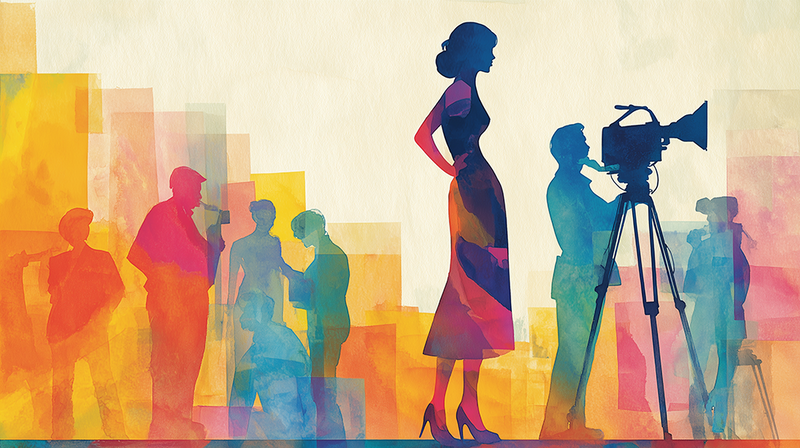
Me: That also ties into one of the most buzzy stories of late, the whole backlash over Tilly Norwood. This is the stunt/story/issue that broke out a couple weeks ago when someone announced that all of the major Hollywood talent agencies were battling to sign a fictional AI actress named Tilly Norwood (which the agencies quickly denied). I think it was more a personal experiment that got picked up by the news and turned into a massive thing beyond the current capabilities of practical application. Again, knowing how AI video is created, I wasn’t 100% sure it would even be possible to monetize an AI created avatar in that way when it could so easily be replicated by anyone around the globe and very hard to keep siloed as an exclusive thing. How would you even protect that likeness in terms of licensing it to be in a film? How do you have exclusivity? This gets into the very issue of having copyright on something that was created using AI.
Lisa: It’s a tricky question because if you follow the legal guidance that exists right now, Tilly, as an AI generated character, would not be protected. However, to the extent Tilly’s character traits, language, actions are created by humans, all of that would be protected. The idea that the output is not copyrightable is another natural disincentive for people to heavily rely on AI because they're not going to be able to own the output.
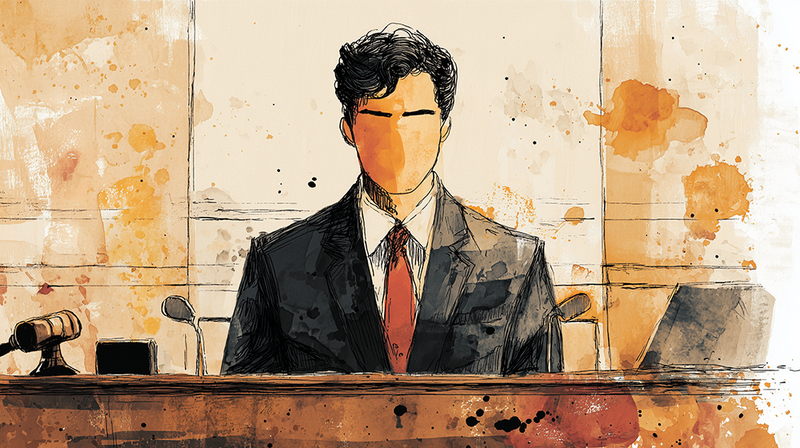
Me: That actually feeds perfectly into one of the last areas I want to explore. Using AI in a commercial advertising context. Let’s say you are Coca-Cola, right? You and your agencies have put a great deal of man hours into devising and executing a campaign for your project and have utilized AI in its creation. While there are AI assets, you can still copyright the final campaign because there was a great deal of human creativity involved, developing the concept, using multiple AI platforms to create the product as opposed to just a simple prompt, putting in work in post-production, etc. Is that correct? How does the law differentiate between what’s AI and what’s not? And what part does human authorship play in the equation?
Lisa: That’s correct. The way I look at it is the same way I look at archival or music that’s incorporated into a motion picture. The producer doesn’t own that pre-existing material, but they do own the original elements of the film. Same goes with AI – no ownership in the AI outputs, but that doesn’t impact the elements that are created by humans.
Me: So, on behalf of myself and my readers, I’d really like to thank you for taking the time to discuss this evolving issue. This is all so new, it’s tough for artists to navigate, so I really appreciate you making time on your schedule. I know we’ve barely scratched the surface. Is there anything I’ve missed that you want to highlight before I let you go?
Lisa: Listen, of course, there are a million things to talk about and a million ideas to explore. But, I think right now our main takeaway is that the direction the courts are going in terms of guidance and laws on how to regulate AI are sound and respectful of copyright owners. So far, it’s been reasonable and very much in line with the laws we already have. And yeah, you know, we’ve just got to keep on keeping on. It’ll be interesting to see how this shakes out as the world continues to change. AI is going to take over a lot of menial and tedious tasks, but I am optimistic that real creation, creativity and writing and directing and painting and all of the art we love to consume and enjoy will continue to be made by humans because, ultimately, that’s what people want.





Join the Fstoppers community for free
-
Post comments and join in the discussions
-
Browse the site ad-free
-
Share your work and get featured in the community
-
Compete in the photo contests for fun and prizes
4 Comments
Thanks Christopher for this article!
Well, everything on the internet is free. That statement alone raises blood pressure. Dear AI companies, courts should simply decide: EVERYTHING generated by AI must be made available FREE OF CHARGE. This nonsense would end quickly.
I'm still aggrieved that Christopher lied to us in the article he wrote here on April 12, 2023, so I will not honor this article by commenting on it. He never even offered an apology, or acknowledgement of wrongdoing, when I called him out for lying. He just ignored my comment. Sheesh!
This was a really well written and well thought out interview. I think it covered most aspects of this tricky area. I am not so optimistic as the writer or the legal expert on the success of the legal protections. For instance you can already see people generating music in the style of their favourite band and then publishing it, and it happens a lot. Copyright law isn't currently really having an effect, I hope this changes. Similar principles exist with all art forms, and I think that AI will be used to generate art cheaply in the style of an artist to save on cost, and that is a concern. Then most artists don't have their own legal copyright budgets set aside to be able to defend their own works, which is a concern for me as a painter and photographer. Incidentally I like the artwork in the article, and wonder if it was AI generated, or who the artist was? ;)
The images with the article were done with AI to prove the point discussed in the article. Yes, I absolutely agree with the points you've made. It's such a legal Wild West at the moment. This is a topic I've kept revisiting for the last couple of years and feel as though it will need revisiting several more times in the years to come.