
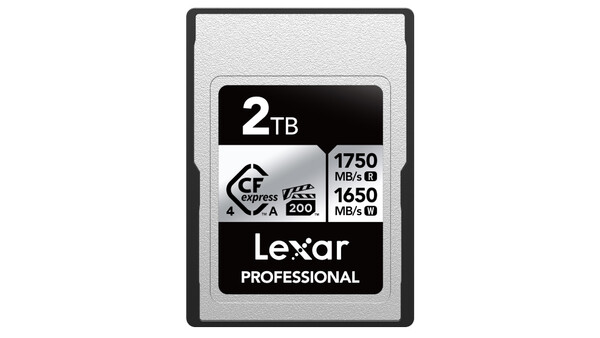
Modern cameras are data monsters. High resolutions and fast frame rates create a storage bottleneck for professionals. Lexar Professional SILVER 2TB CFexpress 4.0 Type A card aims to solve that problem for Sony shooters at a surprisingly reasonable price point. Does it succeed?
The march of technology is relentless. With sensors pushing past 60 megapixels and burst rates hitting an incredible 120 frames per second, the demands on storage media have never been higher. Add high-bitrate 8K video to the mix, and it becomes clear your old memory cards can struggle to keep up. For Sony users, the compact CFexpress Type A format has been a fantastic, albeit sometimes capacity-limited and cost-constrained, option.
I’ve been testing the new capacity of the Lexar Professional SILVER 2TB CFexpress 4.0 Type A card, and it represents a great new option for anyone who generates massive amounts of image or video data with Sony cameras.
Performance in the Real World
On paper, the specifications are impressive. The card leverages the new PCIe 4.0 interface to deliver maximum read speeds of 1,750 MB/s and write speeds of 1,650 MB/s. For videographers, the key number is the sustained write speed of 1,300 MB/s on the 2 TB model, which is VPG200 certified. This ensures stable, drop-free recording in the most demanding video formats.
In my use, these numbers mean tangible performance gains. A perfect example came while shooting a series of macro focus stacks. Each stack required capturing dozens of 60-megapixel raw files in quick succession. On lesser cards, this could mean a long wait for the buffer to clear before I could even start on the next shot. With the Lexar card, the buffer was empty by the time I was ready to shoot again.

The same benefits would hold for anyone shooting gigabytes a second: sports shooters with Sony’s high frame rate cameras, photojournalists who can’t miss the shot or risk swapping media in the field, or video shooters using Sony’s FX line cameras who don’t want to risk running out of space mid-take.
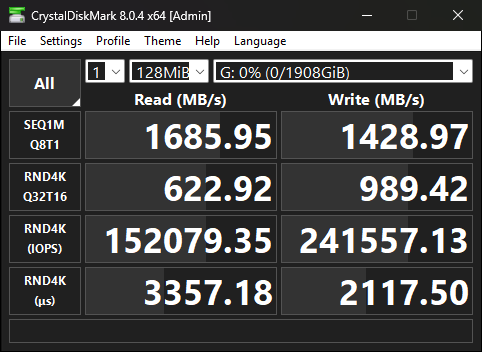
That macro-stacking workflow generates a ton of data; a single stack can easily exceed a gigabyte. Back at my computer, the benefits of the card’s speed continued. When paired with a compatible CFexpress 4.0 reader (I tested with Lexar’s excellent WF730), offloading these massive sets was incredibly fast, letting me get to the editing process quickly.
2 TB Advantages
Beyond the raw speed, the sheer capacity of this card changes how you can approach a shoot. Having 2 terabytes in a single, tiny card is a game-changer. You could be recording an entire day’s worth of 4K or 8K footage without ever needing to swap cards, eliminating a potential point of failure or a missed shot during a critical moment.
The 2 TB card also comes with significantly faster sustained writes compared to the 256 GB and 512 GB versions of this line, which cap out at 600 MB/s and 900 MB/s, respectively, relative to the 1,300 MB/s on this card.
The Lexar Professional SILVER 2TB CFexpress 4.0 Type A card is a specialized tool for demanding users, and it performs its job exceptionally well. It combines staggering capacity with top-tier speed, effectively removing the storage bottleneck for high-volume Sony shooters. Furthermore, it pushes the limits of the CFexpress Type A form factor, as I have only seen one other company fit 2 TB into these cards, and that product’s MSRP is significantly higher.
While it’s an investment, for the working professional whose workflow depends on speed, capacity, and reliability, the value is undeniable. It allows the camera to perform at its peak





Join the Fstoppers community for free
-
Post comments and join in the discussions
-
Browse the site ad-free
-
Share your work and get featured in the community
-
Compete in the photo contests for fun and prizes
No comments yet