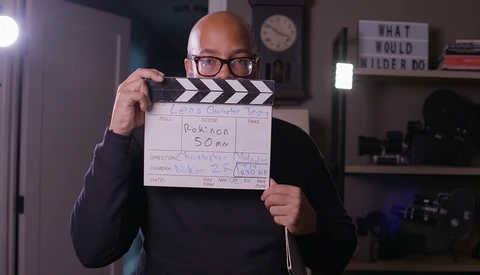
If You're Serious About Filmmaking, This Is One Test You Must Do
Allow me, for a moment, to try and entertain you with the story of one of the most boring days of my life.
Allow me, for a moment, to try and entertain you with the story of one of the most boring days of my life.

You keep hearing that you need a sharper, faster, more expensive lens. This video argues most modern lenses are already beyond what you actually need, and chasing specs can quietly make your photography worse, not better.
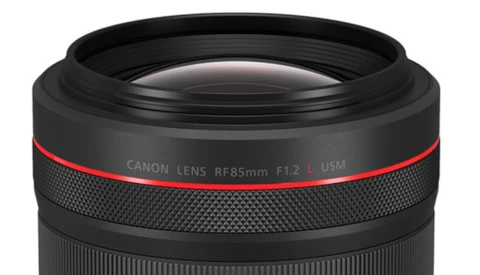
Canon's lens ecosystem is one of the most extensive in photography, spanning decades of innovation and multiple camera systems. For photographers entering the Canon world in 2026, understanding how all these lenses work together (or don't) can feel like deciphering ancient hieroglyphics.
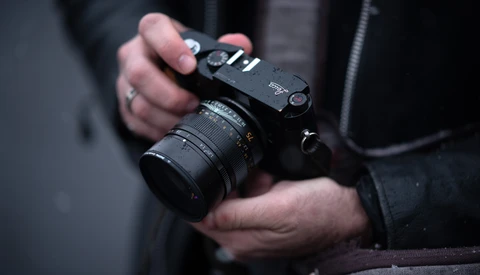
I've been struggling with how to describe my experience with the newly released 7Artisans 75mm f/1.25 II lens. Really, I've had two different experiences, both wildly in friction with one another.

The Wacom MovinkPad 11 represents an interesting pivot for a company known primarily for professional-grade tethered displays. By moving into the standalone Android space, Wacom is targeting the "on-the-go" artist who wants the legendary Wacom pen feel without being chained to a desk.

Can the new NIKKOR Z 70-200mm f/2.8 VR S II truly redefine your portrait workflow, or are the gains marginal? Let's see how a professional photographer puts the new lens to the test in real-world conditions to find out if it is worth the investment.
Mounting a vintage 85mm lens on a modern medium format body sounds like a recipe for compromise. Pair it with the Hasselblad X2D 100C, and you start asking harder questions about sharpness, rendering, and whether old glass can really handle 100 megapixels.
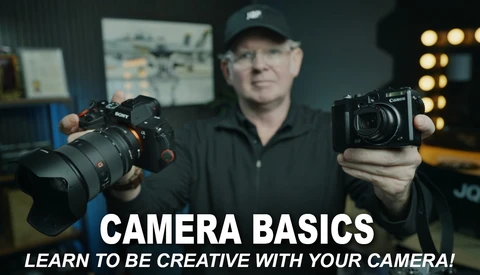
Learning aperture, shutter speed, and ISO changes how you use your camera. Once you understand how these three settings shape light, motion, and focus, you stop guessing and start making deliberate choices.

Real estate photography has long been one of the most consistent forms of paid work for photographers. Add video, floor plans, and immersive drone-style marketing content, and you quickly become that one trusted professional who can handle everything with reliable, high-quality results.
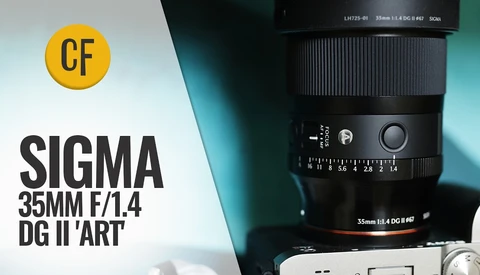
The Sigma 35mm f/1.4 DG DN Art Mark II updates one of the most popular focal lengths you can mount on a full frame camera. A 35mm lens at f/1.4 earns its place fast, whether you shoot events, portraits, street, or video.
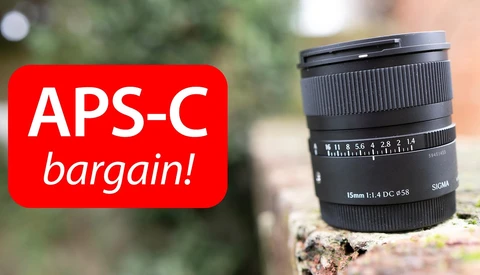
The Sigma 15mm f/1.4 DC DN Contemporary takes over from the long-running 16mm f/1.4 and tightens the formula in ways that affect how you shoot. If you use an APS-C body and want a bright wide angle that balances well and handles video, this one shifts the conversation.
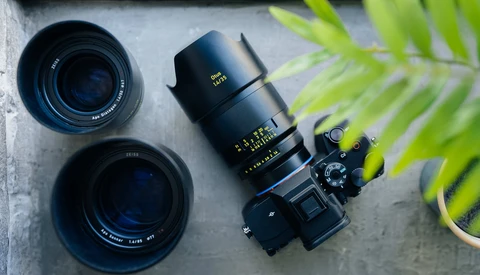
ZEISS has announced the ZEISS Otus ML 35mm f/1.4, the third lens in the company's Otus ML series designed for modern mirrorless camera systems. The new 35mm joins the existing ZEISS Otus ML 50mm f/1.4 and ZEISS Otus ML 85mm f/1.4, completing a three-lens set of manual focus f/1.4 primes available in Sony E, Canon RF, and Nikon Z mounts.

Most night photographers use ultra-wide angle lenses when night falls. And for good reason. If they are photographing the Milky Way, it arcs over a wide expanse of sky. But night photographers shouldn’t sleep on these three lens categories, which can crank up your creativity.
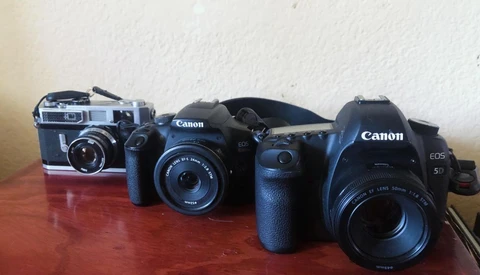
I was an early mirrorless adopter. Not in the “influencer early” sense, but back when using mirrorless for professional work still meant explaining yourself. Other photographers said I was crazy, that I was just betting on a passing technology.

There's a quiet rebellion happening in photography right now. After a decade of manufacturers racing to produce the sharpest, most clinically corrected glass ever made, a growing number of photographers are deliberately reaching for something else. They want glow. They want swirl. They want the kind of optical rendering that looks like it was pulled from a dream sequence in a 1970s art film.

Sigma has announced a new fast prime for APS-C shooters, the Sigma 15mm f/1.4 DC | Contemporary. The lens joins the company’s growing set of bright-aperture Contemporary primes and continues Sigma’s recent push toward compact, lightweight designs aimed at hybrid creators and will be offered for Sony E-mount, Fujifilm X Mount, and Canon RF Mount at a retail price of $579.
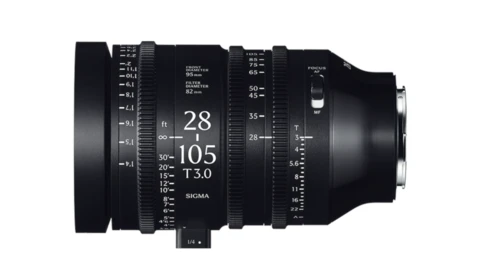
Sigma has announced the Sigma AF Cine 28-105mm T3 FF, the second lens in its autofocus-compatible cinema series. The lens is scheduled for release on April 16, 2026, and will be offered in L-Mount and Sony E-mount.

Sigma has announced the Sigma 35mm F1.4 DG II | Art, a redesigned version of its established 35mm f/1.4 Art prime. Positioned as the Type II successor to the Sigma 35mm F1.4 DG DN | Art, the new lens focuses on reducing physical size and weight while introducing a revised optical formula and updated autofocus system. The lens will be available for L-Mount and Sony E-mount cameras.

A next generation workhorse arrives today with Nikon’s announcement of its new NIKKOR Z 70-200mm f/2.8 VR S II.

If you’re shooting fast-moving sports or wildlife, or you’re a videographer shooting long takes in a raw format and high resolution, the most essential piece of gear you need is a fast reliable memory card. Choosing one, however, can be a nightmare. So what do you do? I would guess you buy one from a reputable brand, right?

These days, it’s becoming easier and more affordable to photograph our night sky. The introduction of smart telescopes has opened the door for keen amateurs and hobbyists to get started in astrophotography at a fraction of the cost of a high-end professional setup. The ZWO Seestar S30 Pro is making the growing smart telescope space even better.
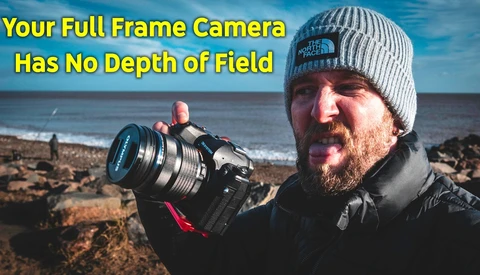
You keep hearing that a 50mm f/1.8 on full frame gives a look that smaller sensors cannot match. That might be true, but it misses the point when your goal is depth, not blur.

The Canon R8 is not new, and the Canon RF 45mm f/1.2 arrived with mixed reactions. Yet this pairing keeps showing up as a favorite for travel and portraits when size and weight actually matter.
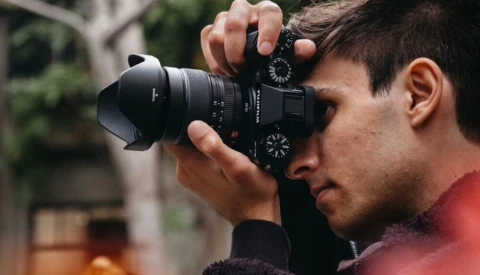
Fujifilm occupies a unique position in the camera market. While Canon, Nikon, and Sony battle for full frame dominance, Fujifilm has charted its own course: a mature APS-C system beloved by enthusiasts and professionals alike, plus a medium format lineup that brings large sensor photography to a broader audience than ever before.

The Canon EOS R6 Mark III steps into a crowded full frame market with a 32-megapixel sensor and internal 7K open gate recording. If you shoot both stills and video, this body lands right where detail, file size, and real-world handling collide.

Choosing between the Tamron 35-100mm f/2.8 Di III VXD and the Nikon NIKKOR Z 24-120mm f/4 S comes down to tradeoffs that show up the moment you start shooting. The differences in reach, aperture, and handling shape how you work in travel, portraits, and day-to-day carry.

Photography is usually described as a visual medium, but a lot of the work around it happens in sound. Learning, editing, and reviewing work all benefit from being able to control what you hear — or don't hear — while you're working. That's where a good pair of headphones becomes less of a convenience and more of a practical tool.

The Canon EF 70-200mm f/2.8L IS III USM sits at the end of Canon’s DSLR era, and it still tempts anyone who wants reach, speed, and flexibility in one lens. If you use a Canon body, especially mirrorless, the question is simple: should you adapt this classic and save money, or move to RF and carry less weight?

The Sony 16-35mm f/2.8 GM II promises better sharpness, lighter weight, and faster autofocus than the original. When a lens costs $2,300, those claims need to show up in real use, not just on a spec sheet.

Light stands are rarely the most exciting part of a gear bag, but MagMod is clearly looking to change that. I've been putting a pre-production unit through its paces, and it's a refreshing departure from the "knob-twisting" workflow we've all grown accustomed to. If you've used MagMod modifiers, you know their philosophy is all about speed and modularity.

If you’re a photographer, admit it: there was something about variable ND filters that most of us hated. This new filter line from H&Y aims to fix exactly that.
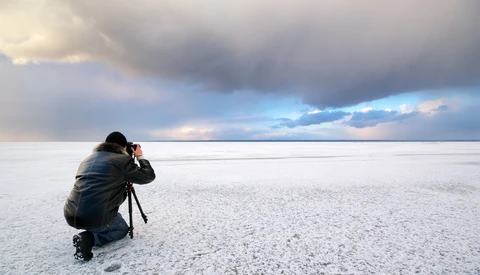
Modern cameras are extraordinary machines. They meter light with near-perfect accuracy, track subjects across the frame in real time, and recover detail from shadows that would have been pure black a decade ago.

Nikon shooters face a unique challenge that Canon and Sony users simply don't encounter: a lens ecosystem so sprawling and historically layered that even longtime Nikon photographers routinely get confused about what works with what. Here's everything you need to know.
The 24-70mm lens is one of the most used focal ranges in photography, yet it often feels flat and uninspiring. That frustration usually has less to do with the lens and more to do with how you’re standing when you use it.
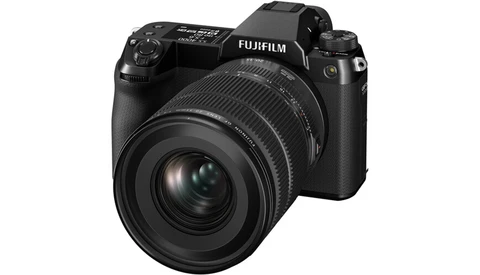
So you’re wondering if high megapixel counts actually matter or whether the hype is blown out of proportion. Well, here are three simple scenarios when it may be worth the extra investment.

You don’t need a shelf full of cameras to make strong images, yet it’s easy to end up with one. The real question isn’t which model is best, but why you own what you own.

A 200mm f/2 lens is not subtle. It is big, bright, and built for reach, speed, and real subject separation when light drops or backgrounds get busy.
“Gear doesn’t matter” is usually spoken from a place where most decisions are already behind the speaker. It sounds supportive, even generous. The trouble begins when this sense of closure appears precisely where attention to differences, limits, and concrete choices is still required.

The Tamron 35-100mm f/2.8 steps into a space that many overlook, covering a range that makes sense for portraits, events, and travel without the bulk of longer zooms. If you carry gear for hours or move fast on location, weight and balance stop being small details and start shaping how you shoot.

Most photographers approach lens purchases with a familiar mental checklist. They identify a problem, usually something technical, and then shop for a solution. The logic seems airtight: if the images aren't sharp enough, buy a sharper lens. If the background blur isn't creamy enough, buy something with a wider aperture.

Canon’s RF 28-70mm f/2.8 IS STM fills a gap that many ignore until they need it. If you’ve ever avoided a standard zoom because of weight, this lens quietly challenges that decision.

The idea that 12 megapixels is not enough has been repeated so often that you might accept it without testing it yourself. The Sony ZV-E1 challenges that assumption in a way that forces you to rethink how much resolution you actually need.

Tamron has announced the 35-100mm f/2.8 Di III VXD, a constant-aperture standard zoom lens for full frame Sony E-mount and Nikon Z-mount mirrorless cameras. The lens will be available on March 26, 2026, priced at $899 for the Sony E-mount version and $929 for the Nikon Z-mount version ($1,249 CAD and $1,299 CAD, respectively).

The WANDRD PRVKE 21 L has been a popular camera bag, typically nailing its Kickstarter campaign goals just minutes after launching. V4 of this bag has just been released. This is a review of the 21 L Zip, with this model dispensing with the roll-top. I'll go over what I like and what I didn't like.

Memory cards are the most overlooked purchase decision in photography. We agonize over camera bodies for months, research lenses obsessively, and then grab whatever SD card is on sale at checkout.
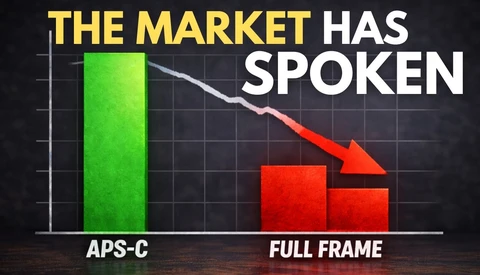
Full frame cameras dominate headlines, but APS-C models are quietly outselling them by a wide margin. Shipments in 2025 show a gap that challenges the idea that bigger sensors are the obvious end goal.

I've been looking for a bag that meets my needs for a long time. I've always been a traveling photographer, taking my gear to some of the hottest, coldest, wettest, and driest places on the planet. A bag has to do a lot to make the grade. Escalating my needs, over the last few years I've also been working as a photography guide in Canada's sub-Arctic, the high Arctic, and Antarctica.
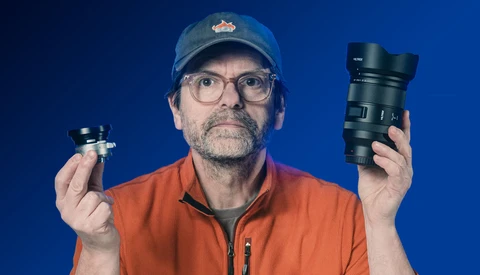
There are so many fabulous prime lenses that have been launched these past 12 months—and continue to be launched—it’s hard to know which direction to go if you’re looking to buy a new one. The choice can be overwhelming and confusing.

The Nikon ZR promises cinema-level features in a body that overlaps heavily with the Nikon Z8, and that overlap raises a real question about what you’re actually gaining. If you shoot both photo and video, the choice affects how you work day to day, not just how your footage looks.
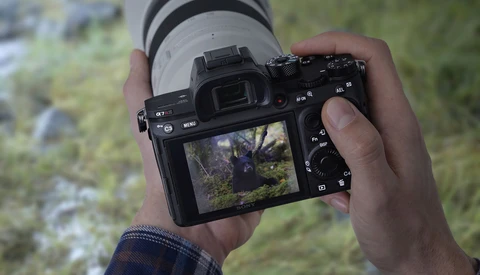
These aren't compromised relics from a forgotten era. They're the same tools that shot magazine covers, documented weddings, and produced professional video content when they retailed for two or three times what they cost today. The sensor inside a five-year-old camera hasn't degraded. The engineering hasn't gotten worse.