
AI image generation has been incredible for the last year, but it was still extremely difficult to generate realistic images with specific subjects, people, or products. Google's new AI model can finally do it, marking the end of the commercial photography industry.
As artists, we like to pretend that companies respect our work; that they are willing to pay a premium for our photos because of some intrinsic artistic value, but in reality, it's simply a business expense. Photography, or imagery in general, is a small line item on the marketing budget. Companies do not care who took the picture, if it was shot on film, if it required complex lighting, if it was Photoshopped, or if it was generated by AI, because their customers don't care. The pictures simply need to catch a potential customer's attention and convince them to buy.
The stock photography market was already decimated years ago by microstock websites that charged less than $1 for royalty-free images, but why pay a dollar for a photo that has been used hundreds of times when you can generate a better-looking custom image with AI?
Midjourney, my favorite AI image generator, costs $30/month, but why spend that when every large LLM like Chat GPT, Grok, or Gemini will also generate images completely for free? Stock photography was already almost worthless, but now it's completely worthless. Anyone on earth can now generate what would have been a world-class photo, instantly, and for free.
Until now, commercial photographers could still compete with AI because companies needed imagery of specific people, places, or things. AI models could create a generic image of "headphones," but they couldn't create "our headphones." AI could generate a photo of a "girl wearing a dress," but they couldn't make her wear "this dress." That is until now.
Last week, Google released its new AI image generation model, Nano Banana AKA Gemini 2.5 Flash. As far as I can tell, this model is completely free. If you use it for hours like I did, you'll run out of "tokens," and they will lock you out for a day, but if you switch your Google account, you can keep generating.
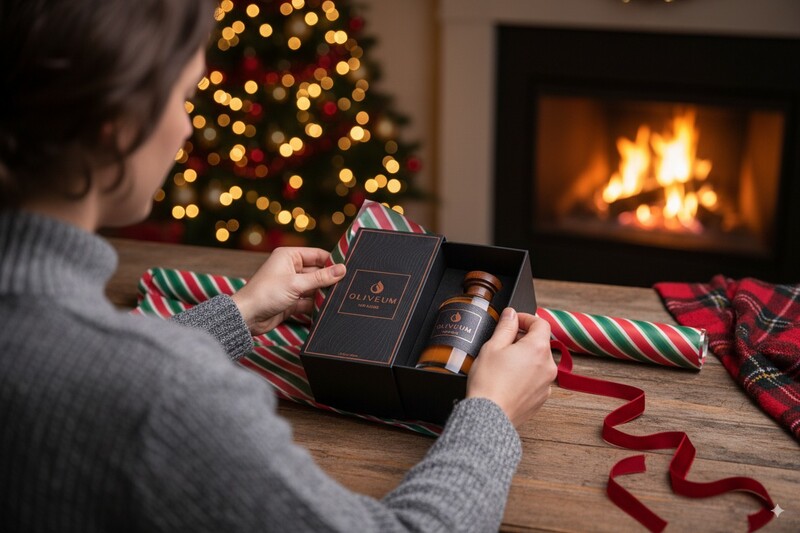
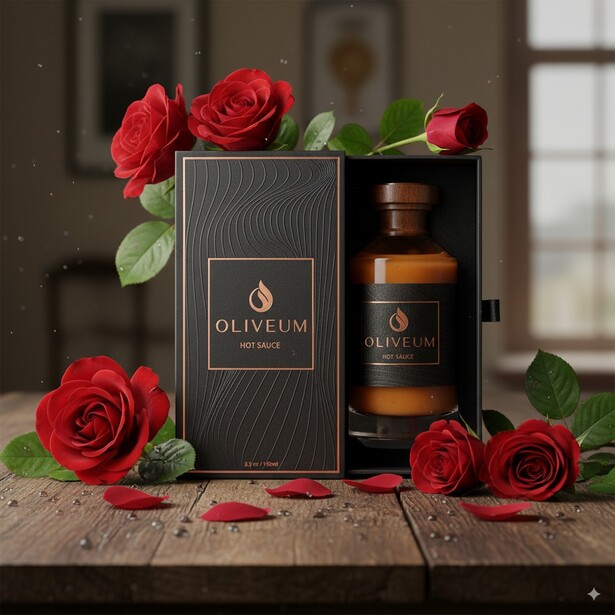
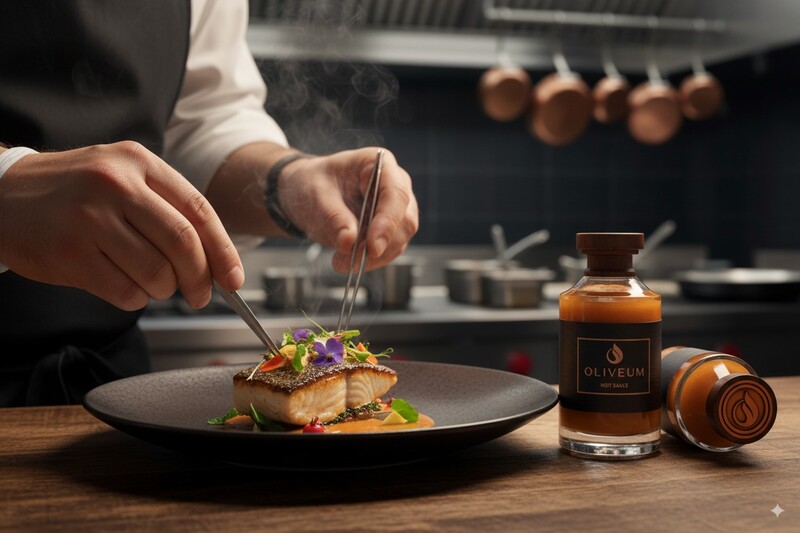
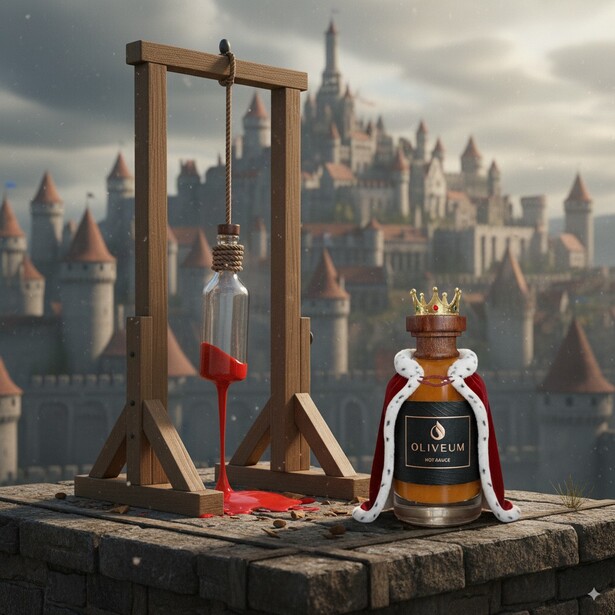
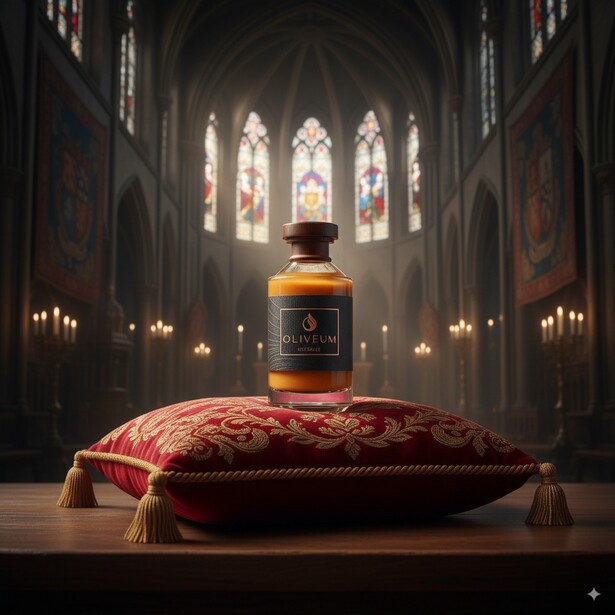
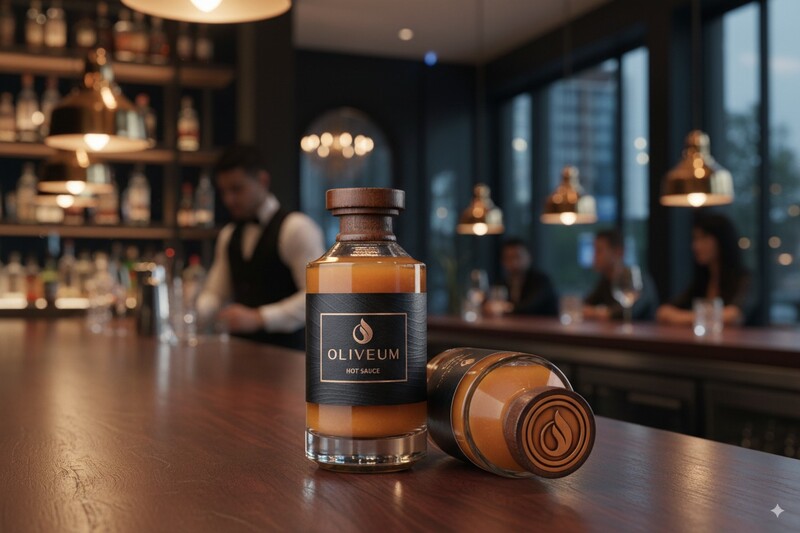
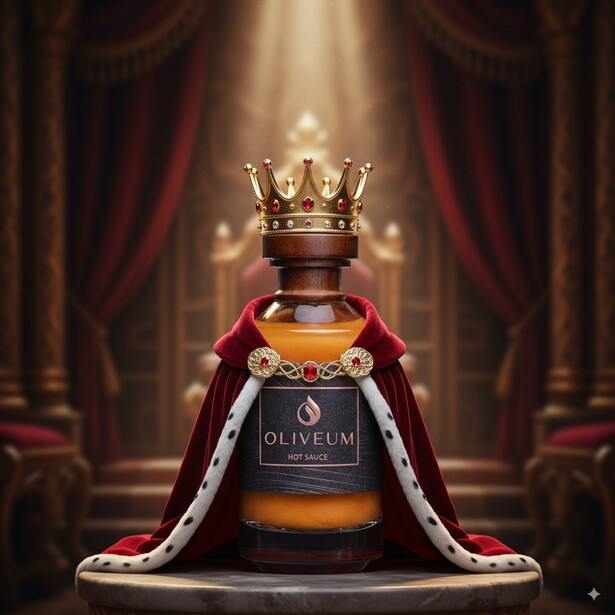
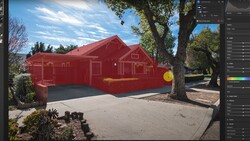
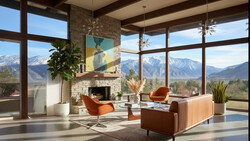
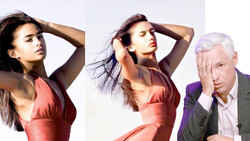
This new model can finally do what we have all been afraid of; it can keep subjects consistent image to image. You can generate a person, place, or thing from scratch and then make small changes to the image without changing the subject, or you can upload your own images, and Gemini will create new photorealistic images using a real subject. This sounds too good to be true, but I've been playing with it for days, and it's incredible. Gemini generated all of these images of my hot sauce brand, Oliveum, in about 15 seconds after I uploaded a real image of the bottle and box.
Literally the only downside is that these files appear to be locked at 2MP, which is fine for social media but not quite enough for print. Midjourney can currently create 4MP images, and I've run those files through AI upscaling software, and I can get those files to look good enough for print. In a few months, Google will certainly unlock a higher resolution option.
With this model's release, AI has made almost all commercial photography obsolete, and it will only get better from here. It's depressing to have spent my entire adult life working on a craft that appears to have become worthless overnight, but there is no point in complaining or attempting to fight against this; it's already happened.
I'm going to do a follow-up video about this and my predictions for the future, but right now I'd like to hear your thoughts in the comments below.
Join the Fstoppers community for free
-
Post comments and join in the discussions
-
Browse the site ad-free
-
Share your work and get featured in the community
-
Compete in the photo contests for fun and prizes
39 Comments
Iv been trying to shine a light on this for months now. People are convinced the “human touch”
will keep some value but I just don’t see it for 99% of work.
I work with AI a lot and the cutting edge tools are already better than humans in their areas of specialization and this is the worst they will be.
Within the next half decade, humans are going to become obsolete. Especially as robotics catch up.
Yeah and I suppose the robots will be programmed by AI to create the other robots and I suppose we humans will have to fight them robots for survival one day.
No, there will be no fight, if it comes to that we will just lose.
The advertisers don't care. If they can get the image they want at a lower cost that's all they care about.
Of course, and I don't blame them for that. I also want the best product for the lowest price and AI is creating better photos for $0. Can't beat that.
That's nothing new, I can't remember how many jobs I lost due to a lower priced photographer
The same people who use, need, push AI to edit photos are crying about AI. You can't make this stuff up LOL
Using tools vs the tools doing 100% of the work are different things. It's like a truck driver who uses cruise control waking up to find that all trucks on earth now drive themselves, and everyone has access to them, and they are free to use. But in both cases, there is no reason to complain about it, or fight against it. It's coming, or it's already here.
I don’t fight it, I don’t need it, and I definitely don’t cry about AI, that’s the benefit of having skills. Real skill means control; with AI, you are/were never in the driver’s seat to begin with. And honestly, your truck driver analogy? Not exactly the best comparison.
Went to leave a comment but… what’s there to say?
They got your bread.
Only possible path forward is to come up with ideas the AI hasn’t consumed yet. It can’t regurgitate what it hasn’t consumed.
Let's say you came up with something super unique that AI has never seen before. You can just upload it into Gemini and it will instantly copy it.
Yeah, it sucks. There might be one or two creative geniuses that could pump out groundbreaking ideas for each campaign they work on, but those hypothetical ideas would be disposable. You’d get one opportunity to sell them.
Not good odds, I’m afraid that part of the industry’s cooked.
Only other carve-out I can see is for in-demand celebrities or models with iron clad contracts protecting their likenesses. That situation would still require photography.
The generative stuff has become so accessible that I’ve seen people on FB marketplace using it to generate fake models to sell their used junk.
We’re cooked. Cooked cooked cooked cooked
At some point, the people who actually do things, like Carpenters & Plumbers, will be making the money.
Full circle.
Learn to code. Oh wait, AI can do that too…
The very low resolution photos that nano banana produces are good only for social media - they are absolutely worthless for print.
Today, for that one free public tool. But the NYC subways are currently filled with huge AI-generated Sketchers prints.
Print? What’s that?
Got three print jobs going to press this week alone. Where do you think brochures and programmes come from?
When nearly all ad work is BTL digital, print quality makes no difference. Resolution hasn't really been a conversation for ad work since the 5D Mark II came out. So many huge ad prints are done at shockingly low DPI's. Even magazine print isn't all that high res.
The only people who care about print quality are people making their own prints.
We produce brochures and programmes among other print material and have regularly had to resubmit images tendered by clients for being poor quality. Maybe you're just happy to put up with shite work.
Take that low res image and feed it to a tool like Topaz Giga AI and suddenly its huge.
Yea - huge and every crappy imperfection, interference pattern and glitch magnified. There's a reason you denoise before upscaling because otherwise you're just enlarging shit.
No, you clearly have not used modern cutting edge enlargement models, you have settings to creativily reimagine details as it enlarges. There might be some work after the enlargement to fix a few minor issues but for the most part it does a great job. Its not perfect yet, but neither are cameras, its not like your gfx is making flawless images either without some effort in post.
I have been regularly working with 100 megapixel enlargements regularly now and once you learn to work with the models you can get sensational output.
But heres the kicker and its already good, thats just publically available models I can run on my laptop. Its the worst it will ever be and models already exist that can kick its ass.
Scaling up the resolution is not an issue for this kind of tech.
This is the free teaser, as I'm sure you know.
At least for the moment, the high level resorts where I work, as well as weddings and family photography, appear to be relatively safe waters to sail. I assume wedding and family photography are still going to be fields for human photographers for a while still. I wouldn't want an AI generated photo of my wedding.
Exactly.
They can't AI the wedding, real people have to do real things that actually happened.
The paradox of AI crap is, if it really proliferates, the value of it will approach zero. Meanwhile, as images and videos are all suspect, real experience and actions will have more value.
All kinds of ways will evolve to attest to "real things" as opposed to AI Crap - People will learn to see AI as crap, for sure.
In the end, it will probably turn out totally different than anyone is expecting, like always happens.
Hollywood beware ,a lot of jobs will change and be eliminated.Many industries will change.Is there a true welfare state coming soon?
Overtime all jobs will be replaced by AI. The GP doctors will be replaced, then specialist, surgery procedures etc.. Doing so will take time but it will happen. Same goes for every industry, field and general labor. I worry about my grandchildren.
Even repairing broken robots will be done by robots.
Doesn't AI still need source photos? AI may do very well for advertisers and those who know exactly what they want as a final image. We photographers will still be the only ones to capture "real" and candid imagery on location.
I don't feel threatened by AI; it is another art form. Photography has evolved from wet plates to SLRs, DSLRs to Mirrorless, manual focus to auto focus, etc., each step likely causing concern among some photographers.
Two things will always set human photographers apart from AI: the creativity that can only come from the human mind and the imperfections and quirks that make our art form of photography uniquely human.
AI already has all the images it will ever need. There may be small niche opportunities for the rare few who are cutting edge at the very pinnacle of the industry but 99% of commercial work is not trying to reinvent some creative wheel, its just doing the same polished work that companies need for marketing material. AI can do that better, cheaper and faster than any human alive. (And anytime an elite creative comes up with some new revolutionary style, the AI will learn it instantly)
AI is not the same as say moving from wet plate to film to digital. AI isn’t an evolution of a tool, its a replacement for the user of the tool.
A better analog would be how the car replaced the horse. And we are the next horse. Sure horses still exist and people still love them, but horses went from the global primary form of transportation to a “hobby” very quickly. The global demand for horse “labour” crashed and won’t ever recover.
Completely agree. I've read so many comments along the lines of AI.is just another art form/ tool etc which it really isn't. To be honest I've gone from playing around and being somewhat impressed with Midjourney, Sora etc to despising it pretty quickly. I'm going to dust off my old large format Swiss Arca and go back to playing with light.
I guess those who should worry the most are the camera and lens manufacturers, giants like Arri, Panaflex, then Fujifilm, Canon, Sony, Nikon, etc... if in the future being a photographer is no longer profitable, then demand will decrease considerably, not only will current photographers buy less equipment, but new photographers will not be able to justify the huge expense of investing in something that software can do well, the end of the world is near, Jesus Christ LOVES YOU
Following a decades-long career as a professional photographer and travel writer, I now do stock photography as a semi-retirement activity that makes my continuing trips more meaningful to me.
In post-processing I use minimal AI imaging tools to slightly enhance basic reality with my personal P.O.V. for clients who want that. AI goes beyond this as photo illustration which it can already do better than our imagination. This will indeed eliminate the need for most commercial photography.
After graduating college in 1976, and two rounds of haircuts to satisfy my employment agency, I got a sales job with a large national commercial printing company. It wasn't a week before I was hearing conversation about the "paperless office" and how it threatened extinction of the industry. It was a time of rapid technological innovation. Paper's days were numbered, or so I was told. The one thing that I'd tell myself if I were doing it all over again is to listen less to those who made vast generalizations and predictions of the future, and more to my own instincts. I'm the only one who has an honest gut feeling for what I'm good at doing. I failed to listen to myself on more than one occasion, and changed course too many times in nearly 50 years in response to the hysteria of an industry expected to collapse. Granted... AI may indeed end the world as we know it. But then everybody else will be in the same boat and there's not much we're gonna do about it. So I prefer to focus my energy on what I can do and ignore the hype. It's amazing the variety of opinions that you'll hear when you call and talk to the clients who actually buy your products and services. I sell most of my photography as decorative art to interior designers. You'd think that everything that falls into the category of stock photography is being purchased for a dollar at iStock Photo. But that's not true. Commercial art buyers and designers will often tell you that they become frustrated and disillusioned with trying to find something that suits their needs in an online marketplace full of ordinary snapshots. Eventually the supply of snapshots all look the same. Maybe there's a parallel with AI generated images? And a lot of small independent designers (even the younger ones) are in the same spot we are... they're fearful of technology taking over their jobs, or they simply hate technology, so they much prefer working with a human who spends time listening and understanding their needs.
Instead of abandoning 20 years of experience, put it to better use by having the conversation with your clients instead of fellow photographers. Chances are that business clients still need someone to help them with asking the right questions. After all, AI only produces the right output if you give it the right input. Not every small business focused on manufacturing or distribution is capable of doing that. Commercial product photography clients may not even fully understand what types of images they're needing to create. When Microsoft Publisher came out, small business owners tasked employees with creating marketing collateral, only to find out that office managers aren't very good at design. Are we order takers selling our stuff to price shoppers, or problem solvers integrating ourselves with the folks who form strategies? The former may very well see themselves replaced by cheaper technology. The latter might always find a place for their services. That's the same question I had to deal with in 1976. Nothing changes. If you think 20 years is a major investment in your career, wait until you've hit 50. Don't ever give up.
I’d love to know what kind of prompts people are using to get the kinds of results that would render commercial photography obsolete. I’ve been experimenting with Midjourney, Firefly/Adobe Express and now Gemini and would not claim any of those results are anything I created. All seems kinda garbage… and tips for better prompt writing would appreciated
I read out my exact prompts in the video.
The images are creative and making them without AI would be way more difficult, even a Photoworks photo montage would be much more time consuming. Can't blame the advertisers for wanting to get the result for a lower price, but I'm also sure the "actual photography" market would still stay relevant.These images look AI and it's clear, and to some consumers it would be off-putting. We had "organic" plastered all over the products and people bought it happily, now we'll have "organic photography".
The end.