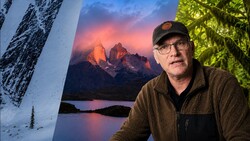
If you've ever felt stuck repeating the same techniques, Adam Gibbs is working through exactly that in his latest video, shot across the Canadian Rockies and Waterton National Park. He's been leaning into multiple exposure photography with a deliberate, controlled method that produces something closer to a painted landscape than a straight photograph.
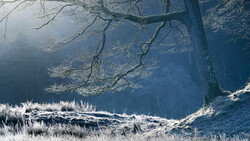
Coming to you from Adam Gibbs, this visually striking video follows Gibbs as he experiments with a technique he picked up after spending time with photographers at the Pincher Creek Light Chasers Conference. Instead of randomly moving the camera like traditional intentional camera movement, he's making precise micro-adjustments using a geared head, taking multiple exposures and letting the overlapping branches build up like brushstrokes. The results, especially against darker mountain backgrounds, have a quality that straight landscape photography rarely produces. He's shooting with the Fujifilm GFX100S, which allows up to eight exposures within a single frame in camera.
There are some real technical trade-offs worth knowing about. When using the in-camera multiple exposure feature on the GFX100S, the final combined image is saved as a JPEG, not a raw file. The individual frames are saved as raw files separately, which means you could stack them manually in Photoshop later, though Gibbs acknowledges that's a tedious workaround. The camera also offers several blending modes, including additive, comparative light, comparative dark, and average. Gibbs found himself returning to the average mode most often during this trip, and the difference between modes is significant enough that the same set of exposures can look like completely different images depending on what you choose.
The subject matter he's working with adds another layer to why this technique clicks here. Waterton, like Jasper, has been heavily affected by wildfire, and the burnt trees left behind create strong graphic patterns and repetition that suit multiple exposure work particularly well. He's drawn to the way sunlit trees against shadowed mountain backgrounds give clean separation, and to bleached white trunks set against open blue sky. The conditions that would normally frustrate a landscape shooter, harsh midday light, no clouds, no dramatic color, become workable because the technique doesn't depend on perfect light. It's a genuinely different way of approaching a location, and the portfolio of images Gibbs walks through in the video makes a solid case that the approach has real creative range. Check out the video above for the full breakdown of the technique and blending modes from Gibbs.



Join the Fstoppers community for free
-
Post comments and join in the discussions
-
Browse the site ad-free
-
Share your work and get featured in the community
-
Compete in the photo contests for fun and prizes
1 Comment
What's the point of writing an article without photo?