
Inspiration and influence—these are things I’ve been thinking about lately. Why? Because it’s clear to me that so many new photographers are getting their influence from other photographers on social media. This isn’t always a good thing.
The biggest problem I have with learning photography from social media is that just because a certain influencer is popular doesn’t mean they’re actually a great photographer. So if this is your only source of inspiration, you’re learning how not to be a great photographer!
Actually, many of those doing the influencing aren’t really photographers, in my opinion—they’re content creators who have built up a huge following and get paid by brands to influence you to buy certain products—hardware and software—to create a specific “look.”
“Be Yourself, Everyone Else Is Taken”
Poor Oscar Wilde is probably turning in his grave at what’s going on. Why on earth anyone would want to jump on a trend bandwagon and create images that look like someone else’s would be beyond his comprehension. It’s certainly beyond mine. Scrolling through some social media feeds, so many images look similar—similar color grading, similar focal lengths with shallow depth of field, similar selfie poses at honeypot locations. There’s a large number of uncreative sheep mindlessly following a flock out there.
Showing an interest in specific looks and understanding how they are created is a good thing. You can then go off and create your own interpretation. You can be influenced by it, and other looks and techniques, to curate your own way of approaching your photography. But so many people don’t. They just copy.
Where I Get My Inspiration and Influence
I say “get” rather than “got,” because after many decades of being a photographer, I still get inspired. Despite the popular saying, you can teach an old dog new tricks.
I had the benefit of going to art school to study photography. A huge amount of time was spent studying art history, which, as it turns out, really sharpens our visual literacy. It helps us develop taste, which can lead to developing our own style or preference for a certain visual aesthetic.
Lighting
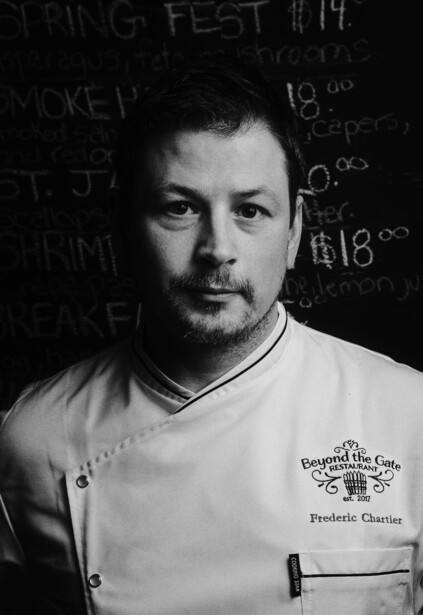
For me, great photography is all about using impactful lighting to help tell a story. Lighting should be the first place to start when learning photography. And the best place to learn, in my opinion, is to study master painters from the past.
When you look at painters from the Dutch Golden Age, like Rembrandt and Johannes Vermeer, or Renaissance painters such as Caravaggio, you can see how they used light to create visual impact and direct the viewer’s eye to emphasize certain subjects and help tell a story. The quality of light used and the resulting colors helped create emotional impact. Great light creates emotive scenes. That was a huge lesson for 19-year-old me.
Composition
After light, the next most important consideration is composition—finding balance and harmony.
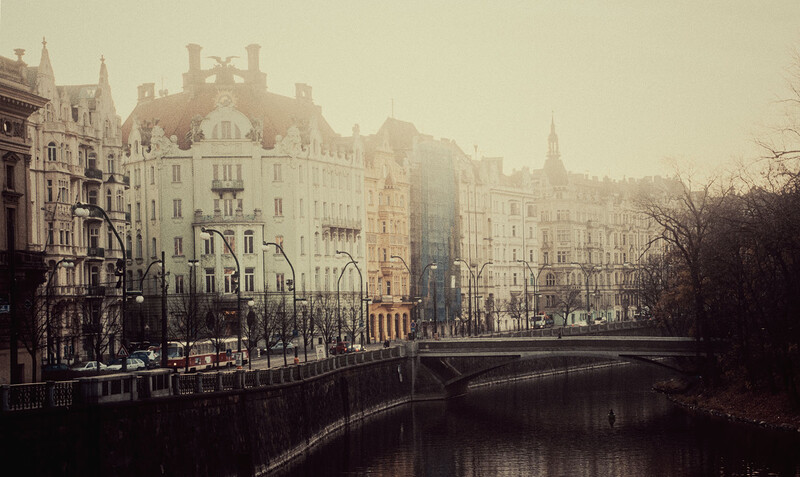
One style of art and design that really caught my imagination was the Bauhaus movement, founded in the early 1900s. The idea with Bauhaus was to strip away ornamentation and focus on function over form. It was about minimalism—straight lines and geometric shapes, often using blocks of primary colors. This modernist aesthetic unified art, crafts, and technology.
Since I studied this movement and pioneering photographers like László Moholy-Nagy, I can’t help but notice uninteresting objects and the shapes they create, and how they work with other objects to create well-balanced compositions, even in mundane everyday scenes. Moholy-Nagy was the first photographer to embrace the medium as an art form rather than just a tool to document reality. That’s a big deal.
I talk about this in more detail and share many examples in this video below.
Photographers
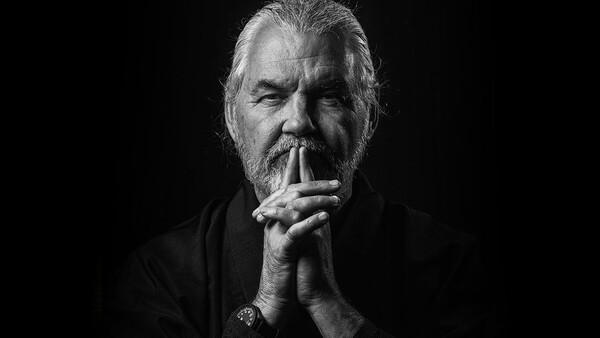
I’ve studied some of the photography greats to see how they used the techniques first employed by classic painters. The likes of Yousuf Karsh, Jane Bown, and David Bailey inspired my portraiture—particularly Bailey, with his high-contrast approach to portraiture that was part of the new wave of photography in the 1970s and 1980s, tied in with the very creative and diverse music and fashion scene.
I have very little interest in photographers active on social media and YouTube, although from time to time someone catches my eye. This past year, I discovered the work of Manchester-based Simon Ogden. His street photography is the best out there right now. I can’t think of anyone as creative, experimental, and prolific. He doesn’t have a huge following—at the time of writing this article, he has 1,245 followers on Instagram. It just goes to show that popularity has nothing to do with ability. You can check out his work here.
Punk and a Rebellious Culture
The biggest influence for me has been the culture I was raised in. The late 1970s and early 1980s were an incredible time for a young lad in England. It was tough, it was gritty, but the music scene was incredible. We had punk and a cultural shift toward being anti-establishment and rebellious, which was actually rather fabulous. We had new types of music emerge, with artists experimenting with electronic synthesizers and inventing new genres.
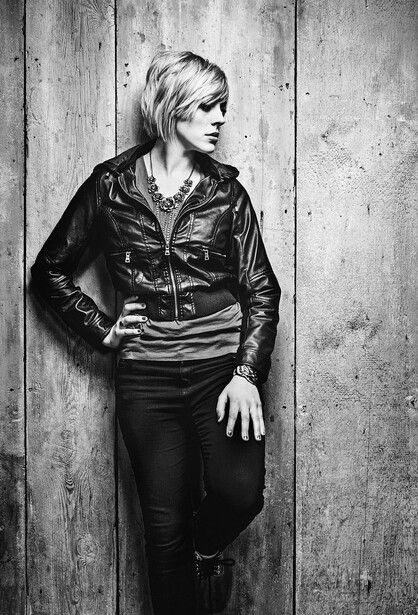
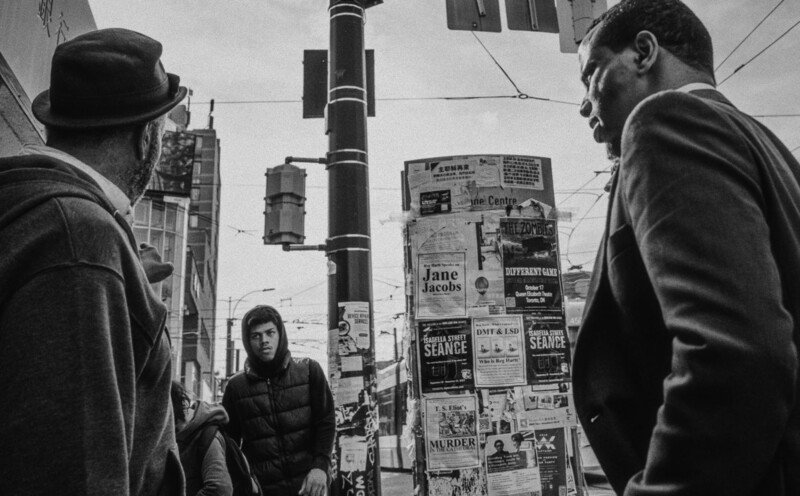
The entire attitude instilled in a young, impressionable lad was “forget the system and how things have been done.” Do what you want to, try things, fail, try again, and have fun doing it. This was the era Richard Branson began building his Virgin empire with a “Screw it, let’s do it!” attitude. That gritty, rough, homemade edge—innovation, experimentation, and self-expression—has been a huge influence, particularly on my black-and-white photography, which tends to have a gritty, contrasty edge to it, most certainly influenced by a lot of music photography from bands like The Sex Pistols, The Clash, and The Stranglers.
Because of this influence, when I see a certain trend—from a location that’s popular to shoot or a certain style of shooting and editing—my first instinct is to rebel against it rather than jump on a bandwagon like a sheep.
Travel
Visiting different countries and seeing how artists there approach their work has been a huge influence. Cultural diversity has most certainly played a huge role in shaping my visual literacy—in particular, European art and design. Spain, Italy, the Czech Republic, and Germany all have so much to offer in terms of creative ideas and influence.
Some Thoughts For Seeking Inspiration and Influence
I’ve had many conversations about this, so here’s a list of things I tell people when asked:
-
Visit galleries and museums—this is where great art and photography are curated, typically by people who know what they’re doing.
-
Study classic painters—the best place to learn about composition and lighting.
-
Study design and art movements—learn how pioneers broke the norm and experimented with new ways to communicate.
-
Travel to places and embrace different cultures—this opens up entirely new ways of approaching visual communication.
-
Seek out books by highly acclaimed photographers—great masters like Saul Leiter, Martin Parr, Vivian Maier, Elliott Erwitt, and Alex Webb, to name but a few.
Sure, look at what other photographers are doing on social media—you can find ideas and inspiration there. But because most people get their inspiration this way—because it’s the easiest way—you’re not necessarily going to develop a look and approach to your photography that will stand out and be different.
Maybe you don’t want to be different. That’s fine, so long as you enjoy your photography. Me though, I like to rebel a little if I can. Everybody doing the same thing is boring to me. John Lydon once said, “Sometimes the most positive thing you can be in a boring society is absolutely negative.” I couldn’t agree more.


Join the Fstoppers community for free
-
Post comments and join in the discussions
-
Browse the site ad-free
-
Share your work and get featured in the community
-
Compete in the photo contests for fun and prizes
13 Comments
Your last quote keeps bouncing around in my mind. I doubt that you wanted to take it beyond the context of art and photography, but generally speaking, the world could do with a lot more "boring" and much less "negative" right now. The political climate is a huge mess of chaos and negativity. Hyper inflated exaggeration, lies and deceptions.
Is there a parallel to photography? Maybe it depends on what's perceived as boring. Is a simple honest picture condemned to be boring? Must we set our hair on fire to make a different portrait photo? I can't imagine that the world is literally producing images that all look the same, but then I admit to having never followed much of social media. My experience here on Fstoppers though is that photos are pretty diverse. If there are trends, I'm not familiar with them. I would be interested to know what sort of images, or characteristics of images, you find driven by social media influences.
In the context of photography, a boring photo is the kind of photo everyone takes. The classic pretty views we see over and over. The red huts on Lofoten Island is a good example. A photo of what many might deem a boring subject, on the other hand, is just what I want to see.
Setting hair on fire to make a portrait that's different is a great idea. I'll see if I can find a model to try that with.
This might sound odd, but I never really tried to copy anyone else. I just walked to the beat of my own drum and try to create stuff that's unique to me. I use a mindfulness space approach. I prefer not to be looking at a lot of other images and other photography styles. I was an explorer before I was a photographer so I'm probably just capturing what I see with my own slant on it.
"I'm probably just capturing what I see with my own slant on it." Same here most of the time, it's the best way.
Peter Gowland.
Not my cup of tea, although I would wager Bailey got some influence from him, with those contrasty BW portraits with white background.
I think he did the most to teach me the use of an outdoor flash or strobe light. Basically how to balance it properly and to not be afraid to use it.
I took boring photos. I was paid well for that consistency. That was in the film era.
What a great article, Simon!
This topic is one of the few which truly matter, and I am glad to see you writing about it.
You asked:
"Where Do You Get Your Photography Inspiration and Influence From?"
Almost all of my inspiration comes from my subjects themselves. From the wild animals and birds that I photograph.
For instance .....
For the past week and a half, and continuing for another week and a half, I am working in the Pocono Mountains of northeastern Pennsylvania. I have opportunities each morning, before I start working, to spend a couple hours in nature with my camera. I have seen a bunch of White-breasted Nuthatches, which are small birds that have a lively personality and what I find to be a quite gorgeous plumage. As I watch them, I see them strike poses that look so freaking cool! They will often position themselves sideways, and sometimes even upside down. And when they are in these dramatic, acrobatic positions, they will somehow manage to keep their heads level and plumb. They look so cool when they do that! So of course after observing these poses and these behaviors that are so unexpected and dramatic and cool looking, I want to get photos of them at the very moment when they are at the very apex of the most dramatic of poses
It is not only this way with these tiny little birds, but also with deer, turtles, snakes, toads, ducks, rabbits, moose, lizards, herons, bears, etc., etc., etc.
So you see that the things that inspires me are the subjects themselves; they show me things that are so captivating and unexpected and beautiful, and then, after seeing those aspects of the animals, that is what I set out to capture with my camera.
Nature itself is my inspiration, and I am far from the first to get my inspiration from her.
A wonderful comment Tom! The passion you have for wildlife photography shows.
I failed to mention that we can find inspiration from the subjects we photograph, but this is an important one, as you clearly illustrate above. Wonderful comment.
As a maternity and newborn photographer, I found this article really meaningful and timely. I appreciate its sharp warning: becoming too dependent on social-media “influencers” for creative inspiration can limit our growth, especially when those influencers care more about engagement metrics than photographic integrity.
In my own journey, many of my most powerful visual ideas have come not from scrolling feeds, but from studying classical art, painting, and the masters of light and composition — the way shadow and softness interact in a painting can teach as much about mood and storytelling as any trendy portrait on Instagram. That history, that grounding in light, shape and emotional subtlety, is what helps me create images for expectant mothers and newborns that feel timeless and deeply personal rather than trendy.
I also often find inspiration not in “pictures to copy,” but in feeling: the emotion of a mother holding her baby, the quiet textures of new skin, the soft light of a window at golden hour. These moments don’t belong to any “look” or “trend” — they belong to that specific family. And when I approach photography this way, I feel I’m not following a pattern; I’m telling a story.
I believe the photographers who truly stand out are those courageous enough to absorb influences widely — from art, design, travel, life — then distill them through their own sensitivity, rather than simply mimic what others already do.
That is a difficult area of photography. I admire what you do. I am a retired photographer from the film era.
Thanks a lot for your kind comment