
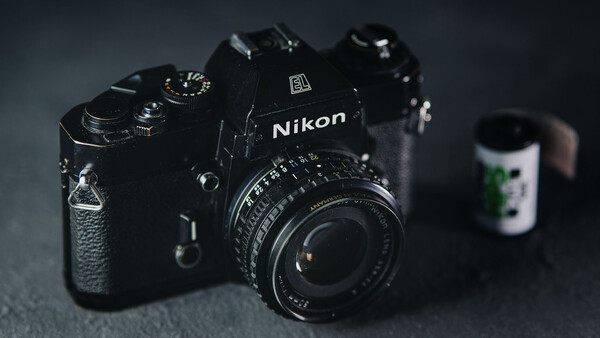
I visited my local camera store in Canada recently and chatted with the guy working there about film photography. He confirmed what I was already experiencing from spending too much time on YouTube, telling me how popular it’s become and how the popularity continues to grow. He said it’s mostly younger people getting into film photography, and they can’t keep a used film camera in the display case for more than a few days; they get snapped up. Why is that?
Disbelief
I told Camera Store Guy I was considering getting back into film photography after a 20-year break and inquired about developing.
He said it takes 4-6 weeks to develop a roll of film and get the scans emailed back. What?
He said they send the film to the U.S. What?
So I said, “Wait, get scans back? I just want the film developed; I don’t want scans. Is it quicker with no scans?”
He said, “They don’t send you the negatives, only digital scans.” Whaaat?
“They keep your negatives?”
“Yes.”
I asked what’s the point of that. The purpose of film photography—for me at least—is to take your negative and make large prints of your photos, or keep the negative so you can get a high-resolution scan made if desired.
He said the youngsters who are into film photography don’t want the negatives; they just want digital scans. They want instant results. They only want to share their photos online without a fuss. Wtf!
“So why on earth don’t they just use a frikkin’ digital camera, in that case?” I replied.
Camera Store Guy shook his head in agreement. We both shrugged. Stupid kids.
I walked out of the store in total disbelief. I had made up my mind that I wanted to get back into film photography and have the ability to make my own high-quality prints. I’d already figured out my process. I would take my negs and place them on my light box, and set up my 48 MP digital camera with a 100mm macro lens to shoot a high-quality raw file. This would be far superior to the volume-scanned little JPG images a lab would provide.
As it turns out, after some research on the interweb, I found a couple of pro labs in Toronto that would just develop my film and give me the negatives. Good.
So Why Am I Going Back to Film Photography?
I’m tired of technology. Technology is useful for client shoots to improve workflow, but for my personal projects I don’t want it—or need it. I want a pure photography experience again, where I’m in complete control of the process. I’m pretty close to that with my Leica Q2 Monochrome, but I want to take that further. I loved using a basic mechanical camera back in the day, so it’s finally time to revisit that experience and dust off the old Nikon EL2.
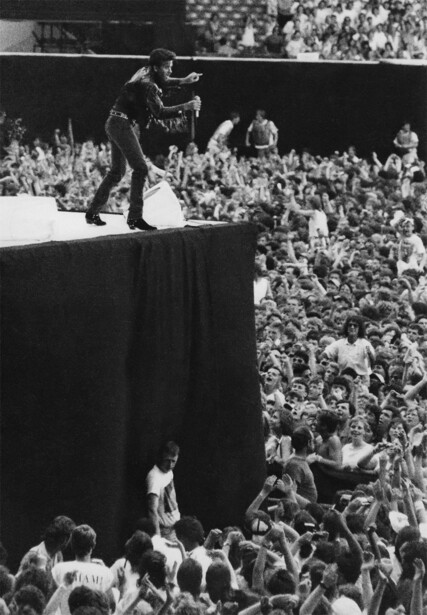
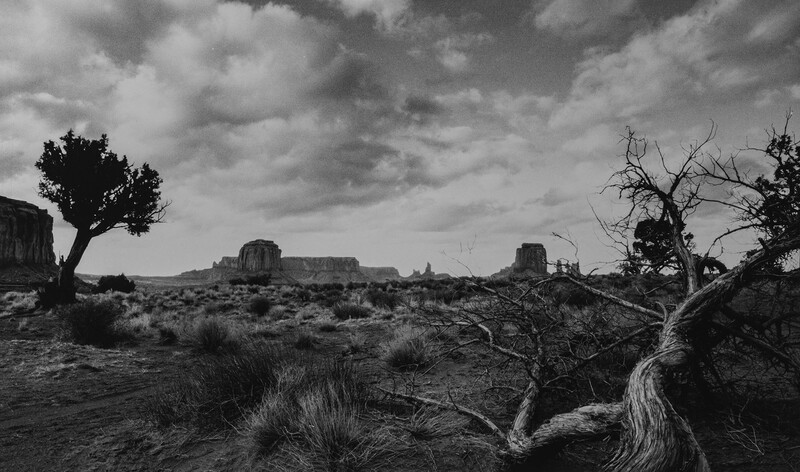
Some Pros and Cons of Film Photography
You can pick up an old, yet very well-built mechanical film camera from the 1970s for less than $100, often with a 50mm lens attached. That’s all you need to start your film-photography journey; that’s all I had for many years as I learned photography back in the eighties.
On the other hand, the cost of a roll of film and developing needs to be considered. There are fewer labs around than there used to be, and costs have risen to meet the increased demand. As already mentioned, you can turn your photos into high-quality digital files at home with the right gear. Actually, you can develop your film at home, too. I’m considering that.
Another thing to consider is that old cameras wear out and break, and there aren’t as many people who can service or fix a camera as there used to be. Having a CLA is expensive. A mint-condition film camera has become a collector’s item now, and prices have shot up. I’ve seen some camera models quadruple in price in just a couple of years.
Of course, because of this, if you can find a vintage camera in really great condition for a reasonable price, a year or so down the road—if you want to upgrade or decide film photography isn’t for you—you’ll get your money back and potentially could even make a few dollars. Nikon and Leica are two brands I know well, and this is certainly the case with both of them.
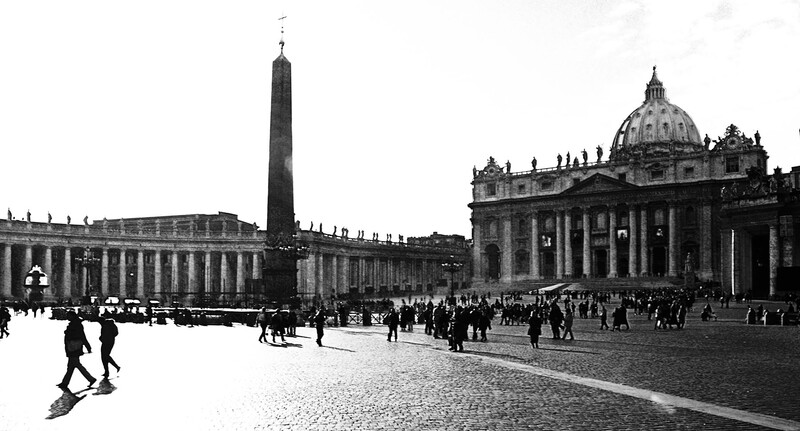
Slow Down and Improve Your Craft
Film photography allows you to slow down, be more intentional, and really focus on the craft of photography without any distractions from technology.
What I love about film photography is that, because every shot costs money, you learn not to take the “spray and prey” approach that many use with a digital camera. This means you think more about your subject, composition, and timing. This builds strong, intentional visual skills.
A simple mechanical film camera is the best way to learn photography. You learn the fundamentals and quickly understand aperture, shutter speed, and how to focus without the distraction of LCD screens and technology that wants to do the work for you. You become a more thoughtful and technically capable photographer, which will help you no end when you pick up a modern tech- and AI-packed digital camera—if, in fact, you would even want to.
So it’s worth repeating: a simple mechanical film camera is the best way to learn photography. Quite the statement, I know, but I stand by that.
Many film photographers swear the unique qualities of film stocks—with their grain, halation, color characteristics, and imperfections—all contribute to a distinctive final image. Some say there’s more feeling in a film photo.
On the other hand, with a digital camera and some skill in an editing app like Photoshop, it’s fairly easy to create images with a vintage film-stock look. But hey, that’s an easy thing to say. I have to be honest: I’m on the fence about this. I know I can create photos with a digital camera that look like they were shot on film, particularly in black and white, which I prefer over color most of the time. I can create the same look and feel—the same vibe. But is film photography about the final result, the aesthetic? No, it’s more about the process, in my opinion. I think if I did capture something special on film, I would get more pleasure from making a large film print than I would a digital print. A completely mechanical and analog experience is, well, an experience. It’s satisfying and rewarding. Okay, maybe now I’m just romanticizing about the past. I could change my mind about this in six months.
There’s another argument for film that I don’t hear discussed much. Digital images don’t last forever. If you store a digital photo, the drive you store it on isn’t built to last forever; it has a shelf life and will eventually fail. So you need to have multiple copies and potentially update your storage solution every few years.
Negatives and transparencies, on the other hand, can last forever—certainly a lifetime. Even prints do. I have negatives and prints that are now over 40 years old, and they are as good as the day they were developed. Ideally, I want a high-resolution digital backup, too, and that’s a goal over the coming years: to copy my best work to digital solid-state drives.
Should You Start Film Photography in 2025?
If you want a pure photography experience, enjoy the process, and aren’t in a rush, then yes.
But don’t get blinded by any romanticized visions of being a true artist. You can still be a true artist going the digital route. Many younger photographers are all about the feels and put too much attention on things like film-stock looks in lieu of making a good photo with a point to it. A pointless photo is still a pointless photo, whether shot on film or digital. It’s just that, with film, that pointless photo cost you a lot more money!
Nostalgia is part of the analog experience, but more important is the tactility of handling a mechanical tool. There’s a challenge involved, because you need to understand the principles of photography, understand light, and know how to use your camera. This is incredibly rewarding, knowing that what you make doesn’t rely on technology to do any of the work for you. It’s the ultimate way to express one’s creativity, in my humble opinion.
Another bonus of film photography is the community that has grown in recent years. There are plenty of meetups and forums where you can share and learn.
I’m Documenting My Film Photography Journey
After a couple of years of procrastination, I’m committed to going back to film photography after a 21-year break. I’m going to write a series of articles about my thoughts, experiences, gear, and creativity.
There will also be a series of videos on my YouTube channel, so do make sure to pop over to subscribe!
Have you taken up—or returned to—film photography recently? If so, out of interest, what camera are you using, and why?

Join the Fstoppers community for free
-
Post comments and join in the discussions
-
Browse the site ad-free
-
Share your work and get featured in the community
-
Compete in the photo contests for fun and prizes
47 Comments
Sorry Simon, but: No, I will definitely not return to analogue photography with negative or slide film. Whether 35 mm, medium or large format. In the past, I developed thousands of them myself and made paper prints or slides from them. And that's exactly the point. The charm and flair of analogue photography is lost as soon as digital technology comes into play. How perverse is that: exposing silver halide and then scanning it? No. Analogue photography thrives on the fact that the entire process up to the finished image is analogue – in my opinion.
If you install an electric motor in a 1970 VW Beetle... is it the same feeling as with the old boxer engine? Good luck – I've got still my Nikon FM with Nikkor 50/1.8 ready to go
I agree, to a point. We need to have images converted to digital if we are to show them to the world, because that's where people's attention is.
in the early 2000's I taught wet photography at a secondary school and the students loved it...even back then they hadn't known the thrill of seeing an image come to life in the trays as they were in the early stages of the digital revolution of image making...the school I was teaching at was a private school, well funded and had a 14 bay darkroom with all the bells and whistles but only had 4 point and shoot digital cameras. Today, even though most young analogue shooters are probably having their negs scanned and digitally developing them, I think for them the notion of making the initial capture on film has a certain attraction...then of course there's the attraction fuelled by the avalanche of YouTube videos, articles on sites like this one that about "the film look"
Having just shot and developed my first roll of film in 20 years, this past week, I must confess the act of working a manual tool and the tactile experience of the process was incredibly rewarding. How lovely to have worked in a private school with the funding for such a wonderful photography department!
teaching there was a good experience indeed. Last year I bought a vintage Zeiss Ikon Nettar 515/2 folding camera - fully manual...no exposure meters, no focus guide other than the lens markings, no auto wind on (leads to a number of double exposures). I bought it from an op shop for AUD$20 as a prop for my video interview setup but decided to try it out as it was in good condition...found it very frustrating at first as it was the first time I'd shot film for 14 years or so and first time with a fully manual camera ever...I've put 6 rolls through now and like the experience, and some results...definitely slows you down and makes you think more about how you shoot and what you shoot...120 film only has 8 exposures!
This looks great, I'd love to see some photos, so do share your Instagram etc. I just bought an old camera from 1956 myself, with no light meter. Can't wait to run film through it.
I do have Instagram account (@newielad27)but don't have a lot of my Zeiss images up on it...I have a public Facebook business (I no longer do any paid work due to health issues) page that has an album with photos from all 6 shoots here: https://www.facebook.com/media/set/?set=a.1013183494171275&type=3
This is an image from the last roll I put through...taken in Sydney
Fabulous images from such an old camera, thanks for sharing John!
I'm not tired of technology. I'm tired of continuous updates and upgrades to technology, virtually all of which are useless to me. However, I can't imagine waiting weeks or even days for the return of negatives or digital files from a film camera. That really does seem ridiculous. If I could develop my own film, it might make sense, as I do feel like there's a pull toward analog stuff. Records are the same way. I sort of wish I had kept my vinyl collection. I definitely prefer paper to ebooks. There's just too much advantage though in digital photography to go back to film. But I'm happy, as I've said many times before, with my 12 year-old Nikon D800.
I shot my first roll of film last week Ed, and an almost two week wait was indeed ridiculous. And expensive. I'm considering developing my own film, should I decide to shoot the odd roll or two of film moving forward.
As for technology, I agree with you, the continual updates are useless to me also. Digital technology reached its pinnacle when the Nikon D700 was launched in 2028, IMHO. I must confess though, the extra pixels the D800 has would come in handy from time to time. It does everything I want it to do, and does it well. I'm dusting that camera off and starting to use it again.
Paper, yes. How anyone can read an e-book is beyond me.
Cheers.
The word pinnacle is perfect, although the pinnacle for me was 2013. I traded all of my early Olympus digital cameras and lenses, and switched to the D800 that year. If this one died now, I'd probably buy a used one on MPB for about $400. How many things, that old, would you say you'd buy again today? Not many, I suppose.
I totally agree about all the endless updates. I'm perfectly happy with 24mp but it seems even a lot of the lower tier ILC's are now moving towards 40mp - the rumours have it that the new A7V could very well be 44mp. I am contemplating an A7CII as a second camera to my A7III but even that is 33mp and has super duper AI focusing I don't need (I'm a manual lens shooter).
More power to you. I've done the trip: film --> digital --> film and now heartfelt photography is on film and convenience photography (i.e. digital) on my smartphone. Have a full darkroom setup and rely on my own skills and creativity without digital crutches. Mechanical camera without electronics or light meter (don't need a meter as I know light). Solo exhibition of my (film) work in a good gallery confirmed for 2026...
Heartfelt photography on film, convenience photography on digital — I like that!
I wouldn't call digital a crutch, we need to create digital versions of our film work if we are to share and promote it, as everyone is online. It seems ridiculous, but it's necessary.
Congrats on your exhibition. Why not complete your profile and share some of your work?
Home development of B&W film is straightforward and I love the process. I feel so much more involved than if the roll were sent away. The capital outlay for equipment is not too high. Another point is the wealth of film/developer combinations that can produce different end results in an image, chosen to match the mood of that image. Experimenting with this is facilitated so much more easily with home developing.
I agree, I've been looking at a home dev kit. It will save so much time and money on the long run.
I have no idea where you were "in Canada" at a camera store asking about developing film. But,I can't think of one store out of the dozen or more I know of, that send film to the US were it takes 4 to 6 weeks for development. And all of them will give you the negatives back if you want. Even the mail order development labs in Canada will beat that timeline easily. And give you your negatives back if you want. Plus, you can get development without scanning too.
I was in Henrys, and all their stores offer the same service that I outlined. it's ridiculous. I have since found a number of labs in Toronto who do develop just the negs or trannies and send them back. But it still takes a couple of weeks by the time I send the film in, they process, and send back.
No disrespect to Henrys', but it isn't a store known for film development. Try Graination.
Graination is who I have been using. Good film stick pricing, and the processing service has proven efficient. And they make really good espressos too!
Where I live we have a place that will deliver scans in a couple days and you can keep the negatives. They are having to expand the operation. When I do photo walks with local groups, I would say the digital to film ratio is at least 50/50. The old school shoot digital and the new school shoot film.
There are places like this in the city, but I don't live nearby, so mailing film is my only option unless I want to develop my own.
That's interesting that the film / digital split is about 50-50 on your walks. it's similar among the street photographers I meet in Toronto, the younger folks are shooting film, and the older experienced photographers prefer digital. It seems it's a case of "Been there, done that, digital is more convenient and not a waste of money".
I grew up shooting film and for me the discipline of deliberate photography carried over to digital. I think that's also why I prefer digital cameras with analog controls and manual focus prime lenses. I still shoot film on occasion and enjoy the nostalgic experience. Sometimes I develop at home, but I prefer printing digital photos (or scans) over printing in the darkroom.
There is a community college nearby with a fully equipped darkroom with a dozen or so enlargers. Since I had never developed my own film before, I decided to take a few classes. It was a great experience and I certainly enjoyed learning the full analog process. However, in the end, spending hours in the darkroom (re)making test strips and (re)developing prints (which maybe resulted in 1 or 2 decent photos) got a bit tiresome for me. This was true for both 35mm and large format 4x5 film. The experience certainly gave me an appreciation of the entire process, but what it made me appreciate most were the sliders in Lightroom and Photoshop!
I really see no advantages of shooting with film over digital (especially 35mm), but I think it is good that younger folks are discovering film photography. Hopefully it will instill discipline which will carry over to their digital photography and help make them better and more deliberate photographers.
Film in 135 has been surpassed in both ease of use and quality by digital.
Now I've kept my 4x5 setup because you can still get tonality and rendering that I can't find matched in digital.
I have recently got back into black-and-white photography. I’m especially interested in doing black-and-white action film photography, which could definitely be expensive… but I’m trying to find my niche. I also develop and scan all my own negatives. The only thing I sent out is if I shoot color, but I have seen as I tell people when they’re hiring me they seem very interested. Also several galleries are interested in doing shows that are strictly film and old school
Hi David, thanks for the contribution. It does appear home developing of black and white is on the rise. It makes total sense from a cost and time perspective.
That's really interesting to hear galleries are looking for film only old school art. I'll need to investigate that. If you would share any of the galleries you know if, that would be very much appreciated! DM me if you wish. Cheers!
I have taught photo classes at the local community college for almost 25 years, and our beginning course is still film based. We loan out Pentax K 1000 cameras with 50 mm f/2 lenses to students who don't have cameras (almost all of them at this point) and they learn exposure, focus, film developing and darkroom printing over the course of the semester. What is interesting is how much most of them enjoy actually doing something with their hands other than typing at a keyboard, which too many of us spend too much time at. I think it is a good way to teach the fundamentals of photography since the print darkroom is far less forgiving than Photoshop when mistakes have been made in the camera.
For me personally, I got back into film again after a hiatus about 12 years ago. The first serious camera I bought was a used Contax III which died within the warrant period. So I now have Contax cameras from the 1930's and 1950's and an assortment of Zeiss and Nikon RF lenses that I use for myself. Professional work is all digital as it has been for 20+ years. I like my Pentax DSLRs well enough, but there is something about the feel of those old mechanical cameras that is satisfying in a different way. I have always developed my own B&W film and continue to do so after one bad experience many years ago with a lab managing to make visible grain on 3x5 prints from Kodak Panatomic X (ASA 32, and virtually grainless with normal development). I encourage anyone to develop their own B&W--the hardest art is probably learning to load film on the reels, and the chemistry isn't that expensive or complicated.
Contax cameras from the 1930s and 50s, such fun! Yes, the feel of those old cameras as you operate them is very satisfying. Home developing of black and white is my next step. Appreciate the great input Andrew, thanks!
Thanks for contributing Mike! Yes, I agree a hybrid approach works best for me too. Shooting analogue is a joy, but then to have a high res scan of the negative on a computer to clean up and add some final touches in preparation for a large print, makes complete sense.
I need to comment of my own article. I said "I would get more pleasure from making a large film print than I would a digital print".
I wrote this a while back and have since been shooting film. I've changed my mind.
The film-to-digital workflow works better for me. More on this in a future article. Cheers!
I enjoyed the article, and the writers enthusiasm.
I am on film. I takes me a week to get the TMAX 100 or Acros II developed. It takes another to get a drum scan from whatever keeper I select. Film still is as magical as one could hope.
I should mention that I pioneered digital monochrome photography back in 2002 with the nearly one of a kind Kodak DCS 760m. Leica saw my portfolio of work from that camera at the 2007 PMA show. I was a beta tester of the original Monochrom.
And so here I am on film. There are reasons.
Two tough issues with digital to this day: First, the Bayer matrix creates tremendous artifacts on the edges of tree tops to sky. Second, EVFs have less then sRGB color space, are 8-bits per color plane, and basically have no fidelity. The industry has gone to them because buyers want video capability out of their still camera. There is little or no professional photography market left to support a still-only camera. Even worse, no interest in an optical dSLR viewfinder.
You can say what you want, but in high contrast shooting in the American West, the EVF is pretty much worthless.
Film is exposed from the low zones, upward. Digital is exposed from the high zones, downward. Specular reflections are part of scenes. How you handle them (and not just ignore them) is part of professional photography. A lot easier with film.
What a fabulous comment, thanks so much! Some food for thought there.
I've always hated the edge artifacts around mountain tops and trees etc. and the highlight roll-off in general. I use a mist filter and have my own process in photoshop to help eliminate this, but film certainly still rules in this regard.
How interesting being a beta tester for the first Monochrom. The Q2M and M11M and earlier models are by far the best digital cameras on the market, nothing comes close.
Keeping your negative is wild. Never heard of that ever happening. Also I believe “spray and prey” should be "spray and pray".
Ah, a typo, i'm sure this won't be the last time it happens! Thanks for pointing it out. 😔
I shoot film once in a while, both for "nostalgic reason", as I started out using film in the 90's, but also for the experience of having to slow down, and give more attention to each single shot :)
I really do loathe all the rhetoric about film photography slowing you down and making you a better photographer (so much of it all over social media). With digital you can discipline yourself to slow down, shoot with intention, not chimp the rear screen, shoot in manual and learn how to properly expose. The fact digital has so many automated features doesn't mean you can't purposely shoot in a more simplified and disciplined way. It's the assumption that people will always take less care and consideration with digital and film is somehow more real that gets tedious after hearing it for the thousandth time. Of course digital is not the exact same experience but it is possible to at least not use every automated feature going and just snap away without any thought to what you are doing.
Yes, I can't argue with that. You slow you down, not a camera.
I was developing and printing B/W in my basement at 12 or 13 in 1969, shot on the Leica IIIc that my dad got during The War. Then in 1977 got my first Nikon - and that's primarily my brand since. I switched to digital in 2006 with a D70s and am not going back. As a commercial photographer, digital is the obvious answer - the client needs it NOW. As a sports photographer (wrestling boxing, soccer), digital is the obvious answer. As the documentarian of my family, digital is the easy answer. As an artist... Oh... Wait... Artist? Me? I'm no artist... Hahahahaha! Never mind.
Oh boy. I'm with Steve McCurry on this one. He was glad the hassle of film for a Nat Geo photographer was over when digital arrived. He said in an interview he has no notions on ever going back and neither do I. I agree on the part that I hate the continued change and innovation of modern cameras and as soon as you buy the latest model it's soon out of date. I got off that train and run my business and personal photography on two older Nikon Z bodies. I love the process I love the images I love using my gear. My customers and I are all very happy. I closed the door on film 18 years ago and wouldn't return if you paid me
I agree with McCurry from a commercial perspective. Film was a hassle and slowed things down. I shot for publications and embraced digital for the same reasons. But I am pursuing photography now from a passion perspective, as an art form, and it's fun to experience a little analogue nostalgia. How long this last remains to be seen! Appreciate your input.
I decided to return to 35mm shooting just over a year ago. I too learned the basics of photography (1970s) using a bog standard Zenith and that now legendary Helios prime lens, along with a hand held light meter.
In 2025, however, I'm using a choice of 35mm film cameras, a Canon eos 50e, a Minolta Dynax 5 and a Canon eos 300X. The Canon 50e, with eye focus (that works) is my go-to camera. Yes, they are all auto focus, but all three have really good auto focussing.
Digital for me has become a little sterile. I don't use a top tier editor either. I'd rather spend time behind the camera than sat in front of a monitor.
Of course this is all subjective, for some it's about spending thousands on a modern mirrorless digital system, and then spending hours of their lives changing everything with expensive photo editing software.
Each to their own I guess.
Nice
This reminds me of the movie Civil War. Two photojournalists making their way to Washington DC. One shooting digital, the other shooting film. She'd shoot it, develop in the field, and then scan the film for image transmission. Right. Why? I spent enough time smelling stop bath. Never again.
I saw that film, I rather enjoyed it. I've also spent time in a darkroom back in the day, it's not something I want to repeat again. But I do enjoy shooting on film. Trying to figure out the best workflow. It may be a mix of analogue and digital. That's another article I think!
I started this year shooting film again. Also for clients and they love it! I develop all my self, bw, color and slide. It is very easy and cheap to do it. I don't agree the fact it is useless to scan film. The look is still different compared to digital, it is not so clinical. Als there is more chance for coincidence while shooting like motion blur etc. While shooting film I don’t care about the “perfect” quality anymore but I focus more on the moment and my subject. It’s just different, I use mainly digital for client work and film for personal work. I really dig the authenticity of film, it’s something you van feel and not just bits and bites.
Great input, thanks for sharing Nick! Totally agree about the les clinical look of film. I'm really enjoying this aspect.
Nah, I've been shooting film since the 1970's and digital since i bought a Fuji MX-500 around 1997.
I don't see the point in shooting film and then scanning the neg. That defeats the whole concept.
It also means you fiddle with the scan in some editing app, which means you may as well be shooting digital and editing all along.
Film means printing optically with an enlarger, which of course adds another layer of exposures and developing in order to correctly display the image on paper.
Without that, the unique aesthetic of film is missing - the true colours and grain are missing. When you scan a neg, the scanner internally does many corrections even before it exports a TIFF, often turning grain or dye clouds into computer noise/artefacts which folks often confuse with the true film grain.
It just gives folks the feeling of a filmic process with only half baked output.
I still shoot film, but I expose and process the print in the darkroom too.
It's a long and painful traditional process with many opportunities to muck up along the away - but that is what the analog process is all about.
If you want to then show the output - scan the print or take a photo of it and then show it on insta.