
Today's photographers face a challenging reality: modern lens prices have skyrocketed, with single RF lenses often exceeding $2,500. Yet there exists a treasure trove of professional-grade optics hiding in plain sight: classic lenses that continue producing exceptional imagery at a fraction of contemporary prices.
Since its 1987 debut, Canon's EF mount established an electronic communication standard that remains fully functional today. This visionary design choice means classic lenses from almost 40 years ago work flawlessly on current Canon systems, requiring only Canon's official adapter for mirrorless bodies. The result? Access to decades of optical innovation without compatibility compromises at incredible affordable prices.
Note: the quoted prices are on the used market, though some of these lenses are still available new through B&H Photo and Video.
1. The Groundbreaking Canon EF 400mm f/2.8L IS Mark I
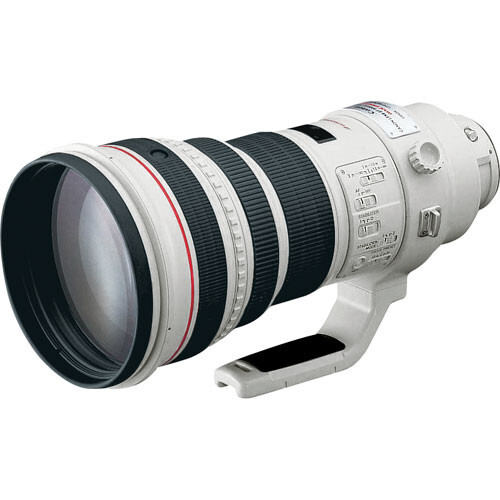
Expect to Pay: Approximately $3,000-4,000
Canon shocked the photography world in 1999 by introducing stabilization technology to super-telephoto design. This 400mm f/2.8L IS Mark I wasn't just an incremental improvement; it fundamentally transformed how photographers approached wildlife and sports imaging. The engineering achievement cannot be overstated. Stabilizing a massive f/2.8 telephoto element required breakthrough innovations that competitors deemed physically impossible. Canon's solution delivered about two stops of shake reduction, suddenly making handheld super-telephoto photography practical for dynamic situations.
Optically, this lens incorporates fluorite and ultra-low dispersion elements that control aberrations beautifully. The resulting image quality matches contemporary designs costing twice or even three times as much. Yes, it weighs 5.4 kilograms, but consider this: it replaced tripod-dependent systems often exceeding 8-10 kg total. The ergonomic design actually makes extended handheld use surprisingly manageable.

2. The Portraitist's Dream: Canon EF 135mm f/2L USM
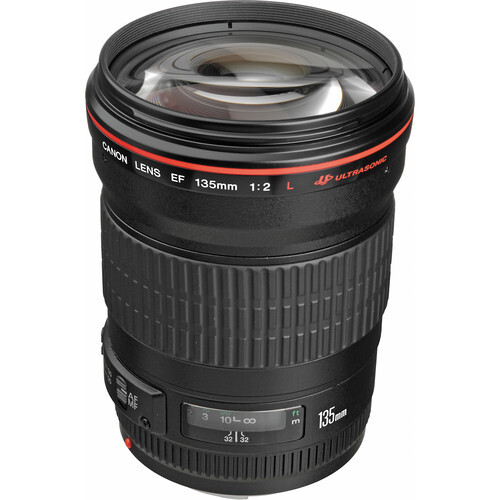
Expect to Pay: $400-500
Just buy it. Trust me. Among portrait photographers, few lenses achieve legendary status. The Canon EF 135mm f/2L USM earned this distinction through an ideal combination of focal length, aperture, and rendering quality that creates consistently flattering results.
The 135mm perspective provides optimal subject-to-background separation while maintaining comfortable shooting distances. This focal length naturally compresses features without the distortion wider lenses introduce, creating the flattering look clients love. Combined with the bright f/2 aperture, photographers gain exceptional creative control over depth and mood.

Construction quality reflects professional priorities from the 1990s. All-metal barrels, precise focusing mechanisms, and lightning-fast USM motors create tools that perform reliably for decades. Modern RF alternatives cost over $2,000, making this classic an extraordinary bargain for portrait specialists. I'll never give mine up.
3. The Accessible Excellence: Canon EF 85mm f/1.8 USM
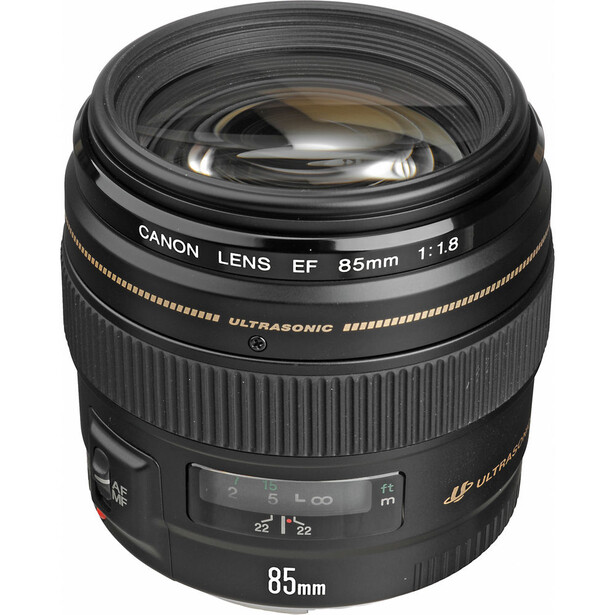
Expect to Pay: $250
Sometimes the best tools aren't the most expensive. Canon's EF 85mm f/1.8 USM proves this principle, delivering near-flagship performance at working photographer prices.
This lens embodies intelligent engineering compromises. Rather than chasing the ultimate f/1.4 aperture, Canon optimized for practical f/1.8 performance that covers 95% of real-world needs. The result? A lens delivering professional results at a fraction of the L-series price.
Performance surprises those expecting budget limitations. Wide-open sharpness rivals expensive alternatives, while stopping down slightly produces results close to Canon's flagship 85mm options. The eight-blade aperture creates an attractive background rendering that enhances rather than distracts from subjects.
Construction balances durability with affordability intelligently. High-grade polymers replace metal where appropriate, reducing weight without sacrificing longevity. The ring-type USM motor matches L-series focusing speed, crucial for dynamic shooting situations. Wedding and portrait photographers often carry this, valuing reliability and performance over prestige.
4. The Macro-Portrait Hybrid: Canon EF 100mm f/2.8 Macro IS USM
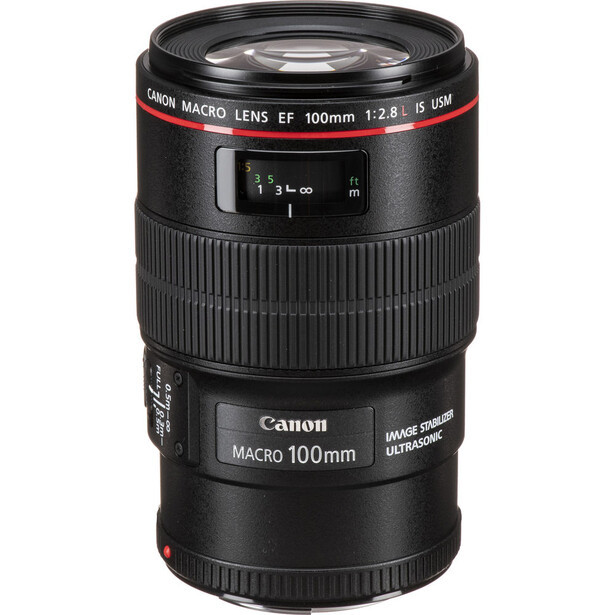
Expect to Pay: $500
Canon's EF 100mm f/2.8 Macro USM exemplifies excellence in versatile lens engineering. This optic effortlessly shifts from capturing minute details to producing captivating portraits, demonstrating that specialized lenses need not have limited uses.
The technology behind true 1:1 reproduction ratios requires extraordinary precision. Canon addressed this through an internal focusing system ensuring consistent optical quality whether working at close-up distances or infinity. At 100mm, photographers benefit from comfortable shooting distances, ideal for both utilizing natural light and maintaining appropriate distance from skittish insects or delicate subjects.

Build quality adheres to professional standards, including mechanical precision critical for accurate macro focusing. Add in fantastic image stabilization, and you have a real winner. Contemporary equivalents cost threefold but offer minimal practical improvements.
5. The IS Trailblazer: Canon EF 28-135mm f/3.5-5.6 IS USM
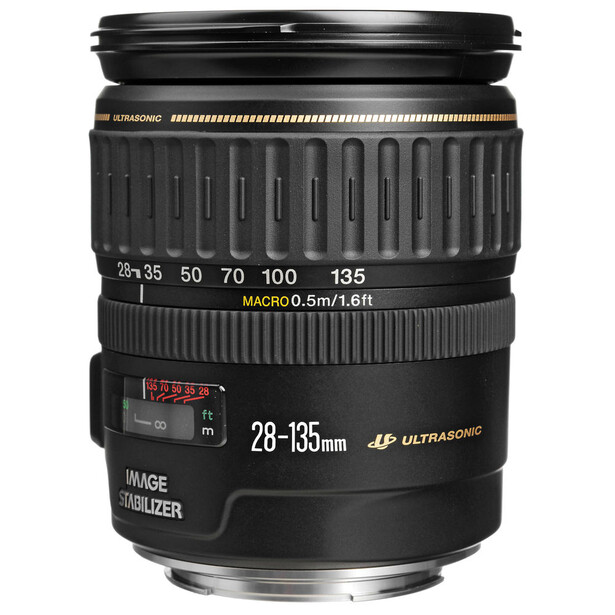
Expect to Pay: $100-150
Canon's EF 28-135mm IS USM represented a pivotal advancement by introducing image stabilization technology from exclusive high-priced telephotos into everyday zoom lenses. This groundbreaking optic reshaped expectations for handheld photography throughout the market. Debuting in 1998, this zoom democratized stabilization technology, previously limited to wildlife and sports photographers. Though its two-stop IS performance appears modest by today's standards, it transformed photography for travelers and documentary shooters who could now operate handheld under conditions previously requiring tripods.
Its versatile 5x zoom range covers everything from expansive establishing shots to moderate telephoto perspectives. These focal lengths align closely with the most commonly used by photographers, creating a desirable single-lens travel option. The variable aperture keeps dimensions compact while maintaining commendable image quality across the zoom range.
Optical quality exceeds typical expectations of consumer-grade zoom lenses. Canon's design prioritized practical excellence rather than theoretical perfection, yielding attractive colors and natural contrast suitable for diverse scenes. Impressively, the original IS mechanisms continue to function reliably in most used units, underscoring durability. Photographers seeking affordable stabilized zoom capability find exceptional value.
6. The Game-Changer: Sigma 35mm f/1.4 DG HSM Art
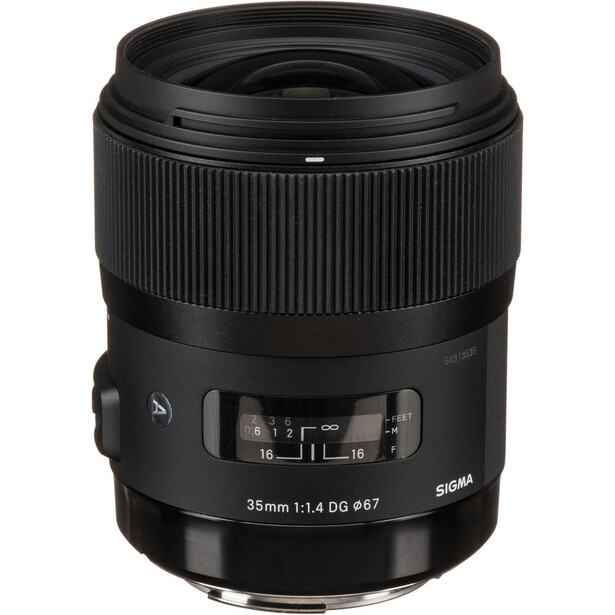
Expect to Pay: $300-400
Sigma's 2012 release of the 35mm f/1.4 DG HSM Art was a historic moment. It was not merely competitive with Canon’s premium lenses—it significantly surpassed many of them while being notably less expensive while establishing the now highly respected Art series. This lens represented a major shift within the industry. Third-party manufacturers demonstrated their capability to exceed original equipment makers through rigorous pursuit of optical perfection. The sophisticated design employs various exotic glass types, highlighting Sigma’s dedication to quality over simpler production methods.
Practical results confirm this complex design’s merits. Wide-open aperture performance is excellent, delivering outstanding sharpness across the entire frame. Professional photographers quickly recognized this superiority, choosing Sigma lenses for tasks requiring superior image quality. Construction matches Canon’s esteemed L-series standards, with smooth mechanical functionality and reliable HSM autofocus. Event photographers favor this focal length for its versatility, and the bright f/1.4 aperture excels in low-light environments.
7. The Impossible Achievement: Sigma 18-35mm f/1.8 DC HSM Art
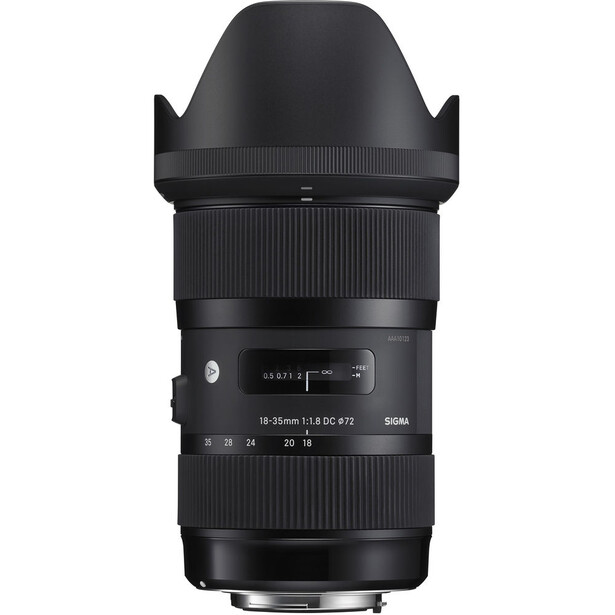
Expect to Pay: About $400
Maintaining an f/1.8 aperture throughout an ultra-wide zoom once seemed physically impossible. Sigma’s engineers challenged that assumption with their pioneering 18-35mm f/1.8 DC HSM Art designed specifically for APS-C sensor cameras. Creating this lens required an entirely new approach to zoom lens construction. Incorporating multiple large aspherical elements and advanced glass types enabled Sigma to achieve specifications previously considered unattainable. The consistent f/1.8 aperture redefines APS-C photography, offering prime-lens capabilities in exposure and depth of field.
Possibilities expand dramatically with this lens. Wide environmental portraits show exceptional background isolation, indoor architectural shoots become achievable without extra lighting, and low-light event photography becomes practical where typical zooms fall short. Video shooters especially appreciate the consistent exposure throughout zoom movements.
Manufacturing standards remain exceptional despite the complexity of the optical design. Precise zoom and focus operations handle extensive professional use, making it a great option for a range of uses.
8. The Macro Alternative: Tamron SP 90mm f/2.8 Di Macro
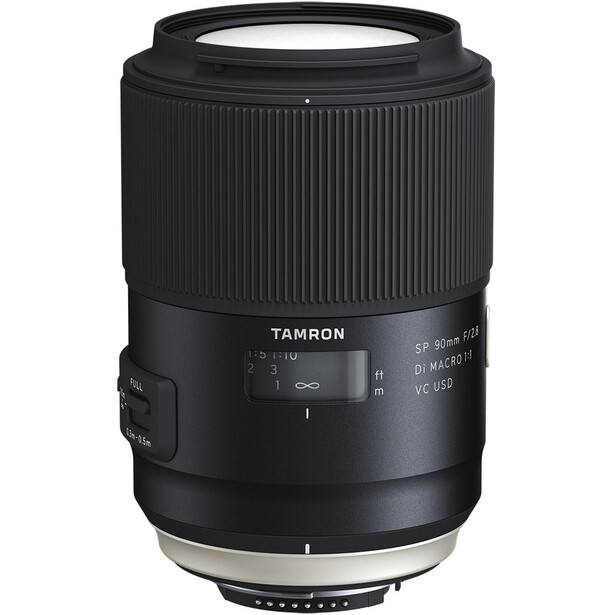
Expect to Pay: Approximately $300
Tamron's SP series represents some of their finest optical achievements. The 90mm f/2.8 Di Macro exemplifies this commitment, delivering macro excellence with portrait versatility that challenges first-party dominance. The design maintains exceptional quality from infinity to life-size reproduction, with minimal aberrations and consistent performance. The 90mm focal length balances working distance with magnification practically, enabling comfortable macro photography of living subjects.
Portrait applications benefit from macro-level sharpness that captures finest details beautifully. Carefully controlled aberrations and a circular aperture design create smooth, attractive backgrounds that complement rather than compete with subjects. Many photographers prefer this rendering to Canon's own macro options.
Professional construction ensures reliability during critical work. Internal focusing maintains balance throughout the range, essential for precise handheld positioning. Smooth focusing action enables exact adjustments macro photography demands. Value proposition remains exceptional, delivering first-party quality at third-party pricing.
Make sure you're getting the white ring version, not the gold ring version.
9. The Entry L-Series: Canon EF 17-40mm f/4L USM
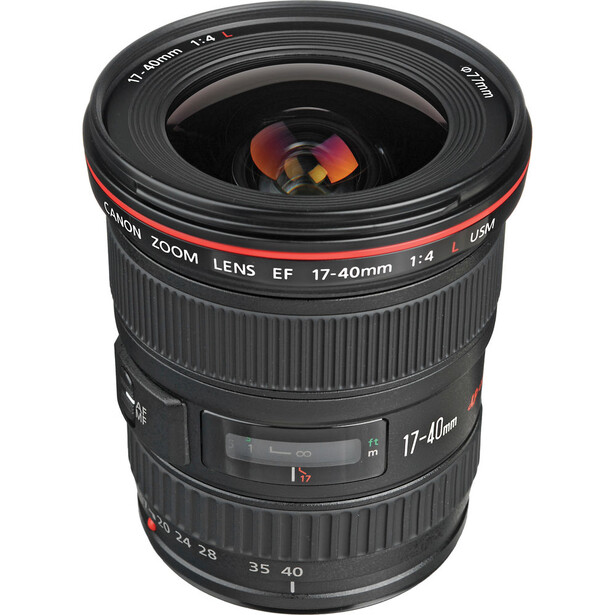
Expect to Pay: $200-250
Canon's most affordable L-series wide zoom, the 17-40mm f/4L USM, democratizes professional wide angle capabilities without requiring substantial investment. This lens provides authentic L-series performance across photography's essential wide focal lengths. From dramatic 17mm ultra-wides through natural 40mm perspectives, it covers architectural, landscape, and environmental photography comprehensively. Constant f/4 aperture maintains consistent performance while optimizing size and weight.
Optical quality defies the modest price point. Corner sharpness matches expensive alternatives, while distortion control remains exemplary throughout the range. Advanced coatings minimize flare and ghosting that plague inferior wide-angle designs. Results consistently impress photographers expecting budget compromises. While it won't match a 16-35mm f/2.8 from the same era, it's a fantastic choice and one that I made plenty of landscape images on.

10. The Industry Standard: Canon EF 70-200mm f/2.8L IS II USM
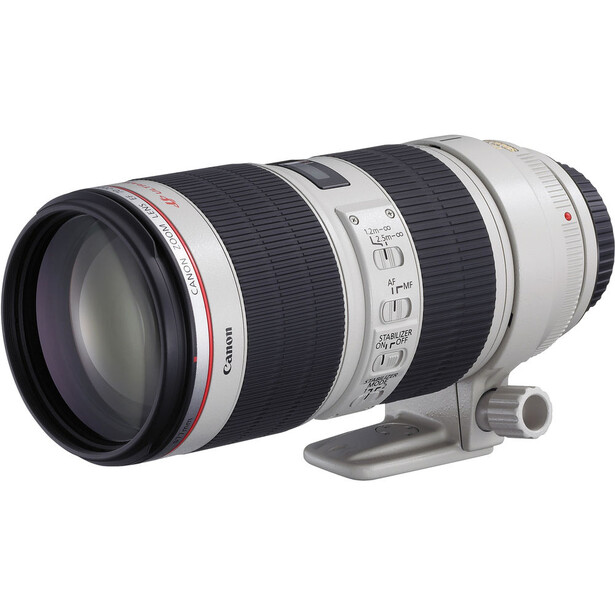
Expect to Pay: $800-1,000
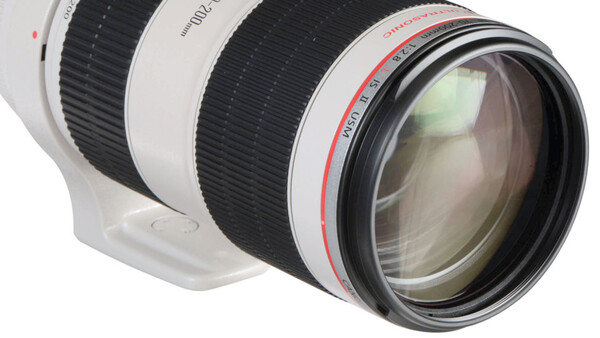
Canon refined perfection with their 70-200mm f/2.8L IS II USM, addressing every professional concern while advancing stabilization technology. This lens defined telephoto zoom excellence for a generation of photographers. The Mark II iteration improved upon an already legendary design. Four-stop stabilization enables previously impossible handheld telephoto work, while enhanced coatings boost contrast in challenging light. Every professional demand received attention, all while significantly improving image quality.
The Enduring Appeal of Classic Glass
These vintage EF lenses offer compelling advantages beyond simple economics:
- Seamless Integration: Full electronic compatibility with modern Canon bodies via official adapters
- Excellent Construction: Fantastic build quality often meeting or exceeding the demands of extreme environments
- Distinctive Character: Optical rendering from photography's pre-digital era
- Proven Longevity: Decades of reliable service demonstrating exceptional engineering
Canon's electronic mount design ensures these lenses remain fully functional on cutting-edge cameras. Unlike adapted manual lenses, EF glass maintains complete autofocus, stabilization, and data communication.
Optical characteristics offer something algorithms cannot replicate: the subtle rendering nuances that defined photography's film-to-digital transition. These lenses shaped visual language for decades, creating looks many photographers still prefer over clinically perfect modern alternatives.
Financial advantages make these lenses practical, but their deeper value lies in proven professional performance. These aren't compromises or stepping stones; they're legitimate professional tools delivering results indistinguishable from contemporary options costing significantly more.


Join the Fstoppers community for free
-
Post comments and join in the discussions
-
Browse the site ad-free
-
Share your work and get featured in the community
-
Compete in the photo contests for fun and prizes
17 Comments
Love this and I agree so much! We are in such an amazing time. Adapting old EF (Canon) or F (Nikon) lenses is the cheat code to getting elite tier glass at budget prices in a way that we have never seen before.
I've had a copy of that Sigma 35mm 1.4 ART since it was first released in 2012 and it is still a staple of my kit. That lens was a game changer then and still competes with modern glass today. Mine has gone through hell and back and it still works like the day I bought it. The thing is a workhorse. Sigma was so ahead of its time, especially with the ability to update firmware on the lens which has allowed it to support newer bodies than it ever was designed for.
My 100LIS has paid for itself 10x over and I love my Sigma 35/1.4 but how about the 50L?
Excellent topic and solid suggestions!
Another lens that fits into this category could be the Sigma 60-600mm f6.3. I got mine used for $1,150. It's a lot of money, but it's a lot of lens, too. Far better in so many ways than the 150-600mm or 200-600mm options out there, but not much more expensive.
Just an amateur but the 100mm has been with me forever and has never failed to produce super photographs. Great Article !!!!!!!
The Canon EF 135 is still magical, even on the R5 II.
I have three of the lenses on this list -- 70-200mm f/2.8L IS II USM, 100mm f/2.8L Macro IS USM, and 28-135mm f/3.5-5.6 IS USM -- and none of them have ever disappointed me. The 17-40mm looks attractive, but I'd really like to stick with f/2.8 to be consistent with my other L lenses... maybe the 16-35 instead?
I went from EF to RF body for the ability to use my R, FL and FD lenses. I have yet to buy a RF lens as my EF lenses dating back to 1988 function better than before. I have the control ring adapter that adds RF features to my EF lenses.
Nikon has issues with 2/3 of their AF lenses do not AF on Z cameras unlike Canon where 100% of EF lenses work 100% on RF cameras better than on EF cameras.
Pure vision of the future in 1987. And now all your old manual Canon lenses work manually on RF cameras also. Thank you Canon.
And if anyone has concerns about these old lenses reaching their end of service life rest assured that there are plenty of 3rd party repair options available. I just had a V1 lens serviced by such a 3rd party not long ago. The repair was very competent and considering the work, the price was not bad.
You're right - that should not be a concern. And when a lens finally gets to the point that no one can service it or no parts are available for it, it is then so inexpensive that you can just buy another one instead of having yours fixed, and buying another old used copy will be cheaper than the repair would be, anyway.
When you're buying cheap lenses, the decisions you make aren't very important - I mean, you shouldn't have the mindset that you really need to make the very best decision because the lens you buy needs to serve you for the rest of your life. It's more like you cycle through a number of lenses periodically and any particular lens only needs to last 5 to 8 years for you to get more than your money's worth out of it. And if it doesn't last quite that long .... so what?
I have an EF 200mm f/2.8 L ii and it is stunning. In fact, it’s the only reason I keep my Canon DSLR. I will definitely be keeping that lens when I move to a mirrorless body.
I like my 200/2.8LII, I've owned a couple and bought into the 70-200/2.8 praise but they were simply too heavy and I like primes.
Solid list, but I’m not convinced that $3,000-4,000 qualifies as “amazingly affordable”.
When I first read the article, I had the same thought.
But then I remembered when the 400mm f2.8 IS was $12,000. And that was in 2007 ..... which means it was $18,600 in today's money.
For that same lens to now be able to be bought for $3,000 actually is "amazingly affordable", relative to its previous cost.
But I do relate to what you are saying. Life has taken some turns for me that have taken a financial toll. I actually owned two of those 400mm f2.8 lenses back in the day ...... but now, a lens that I really want and need is available used for only $800, and there is just no way in the world I will be able to save that kind of money at any point in the forseable future. I may actually be too old to do photography any more by time I can afford the gear upgrades that I need.
I agree with that assessment b/c if you look at the current RF 100-300 f/2.8, that lens is currently $11,000 - albeit it's a new lens, but to get a 400mm for $2 to 3K is still amazing. Not to mention that the mark III version of that EF lens is still $13,000 today. I rented that lens once and I would agree, it's amazing.
I was also thinking that the 400DOII would have been the better choice if we are talking about amazing, affordable glass.
i have the EF 85mm f1.2L ii and would not think that it is an affordable lens but now that it has been superseded by first the EF 85mm f1.4L IS and now the RF 85mm f1.2L, i would think that its price would be more affordable. i consider its rendition to be better and more pleasing than that of the EF 85mm f1.4L IS although its autofocus is almost impossibly slow.
when i purchased the EF 85mm f1.4L IS i immediately considered selling my EF 85mm f1.2L ii however when i examine the photographs taken by both lenses i would consider the inconvenience of a large and slow focussing lens to be worthwhile in certain situations
the RF 85mm f1.2L is a nice lens and seems to produce images that i prefer to the EF 85mm f1.4L IS however i am undecided between that lens, which is out of the scope of this article about affordable lenses worth purchasing, and the RF 70-200mm f2.8L which is also out of the scope of this article but is less suited for portraits due to its smaller maximum aperture
Yeah a quick ebay search tells me that the old 85 1.2 can be had for about $700usd used now which is an insanely good price for a lens as legendary as that prime.
I'm a Nikon shooter myself and I have been seeing similar patterns on Nikon. Can pick up what was relatively recently considered elite tier glass for 1/3 of msrp or less.
I actually find it hard to justify buying the new glass because of that. Yes the latest lenses are a step up, but compared to the last gen of red and gold ring glass, no one but the pixel peepers will ever be able to tell the difference so why spend 4-5x more money?