
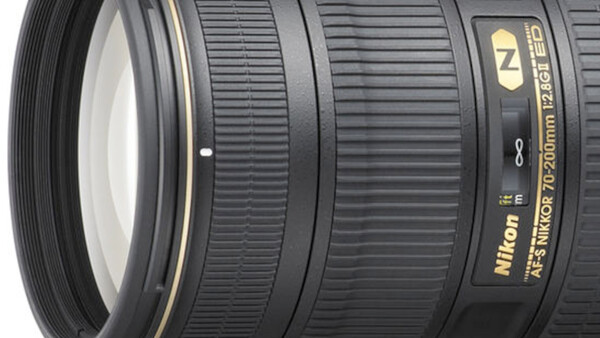
Photography gear costs have skyrocketed. New Z-mount lenses regularly exceed $2,000, putting professional optics out of reach for many photographers. But there's good news: the used F-mount market overflows with incredible glass that performs brilliantly at accessible prices.
The F-mount system's decades-long run created an enormous catalog of exceptional lenses. Virtually any F-mount lens post-1977 can be mounted on Z-series bodies via Nikon’s FTZ adapter with full EXIF, metering, and VR support, but autofocus only works on lenses with built-in focus motors (AF-S, AF-P, AF-I). Screw-drive AF-D and older AI-S lenses must be focused manually.
Note: the quoted prices are on the used market, though some of these lenses are still available new through B&H Photo and Video.
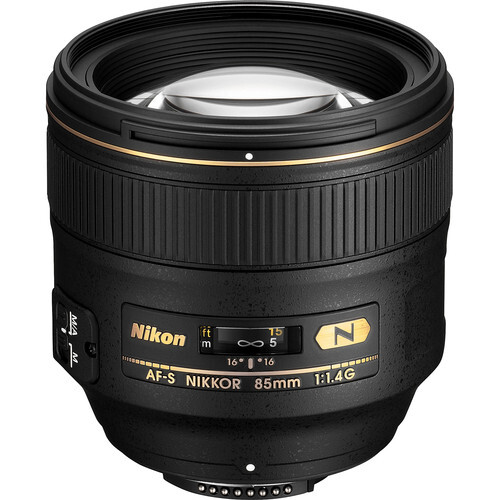
1. The Classic Choice: Nikon AF-S NIKKOR 85mm f/1.4G
Expect to Pay: $500-600
This lens built Nikon's reputation for portrait excellence. It creates the smooth background separation that portrait photographers dream about. What sets this apart isn't just the f/1.4 aperture; it's how the optical design renders out-of-focus areas. Backgrounds melt away beautifully while keeping subjects tack sharp. The 85mm focal length hits the sweet spot for headshots and environmental portraits.
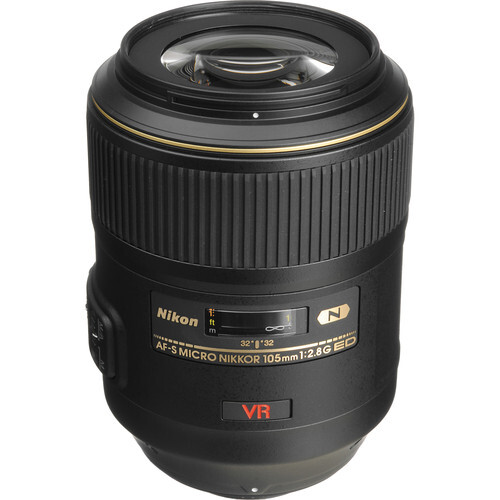
2. The Dual-Purpose Champion: Nikon AF-S VR Micro-Nikkor 105mm f/2.8G
Expect to Pay: Approximately $350
Many macro lenses excel at close-up work but struggle with general photography. This 105mm breaks that pattern completely. For macro shooting, it achieves true 1:1 magnification with remarkable sharpness. The longer focal length means you can photograph insects and flowers without getting so close you cast shadows on your subjects.
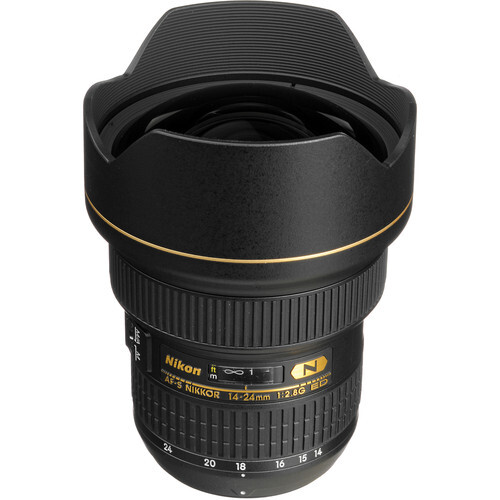
3. The Wide Angle Wonder: Nikon AF-S 14-24mm f/2.8G ED
Expect to Pay: Approximately $450
Wide angle zooms used to be compromises: soft corners, heavy distortion, or massive size. This lens changed everything when it appeared in 2007. The 14mm end delivers an incredibly wide view without the fisheye distortion that makes everything look curved. Architecture stays straight, landscapes maintain their drama, and interior spaces look natural rather than warped.
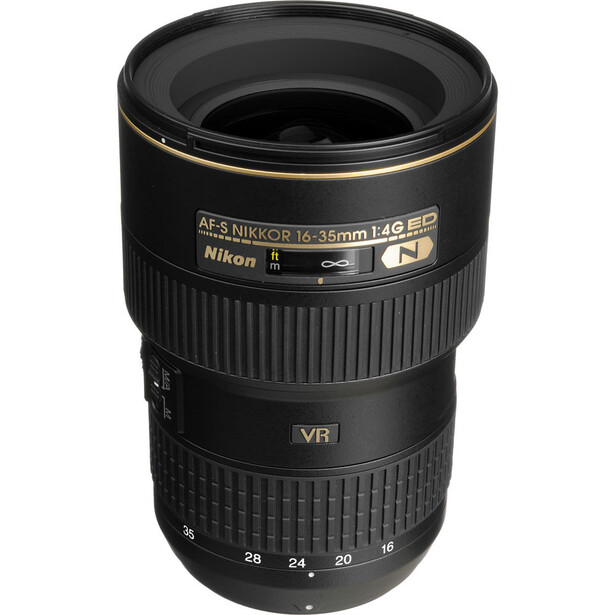
4. The Practical Pick: Nikon AF-S 16-35mm f/4G VR
Expect to Pay: $250-400
Not everyone needs f/2.8 for wide angle work. This f/4 version trades one stop of light for image stabilization and filter compatibility. The VR system compensates for that slower aperture by letting you shoot at slower shutter speeds handheld. For landscape work where you're stopping down anyway, this becomes a non-issue.
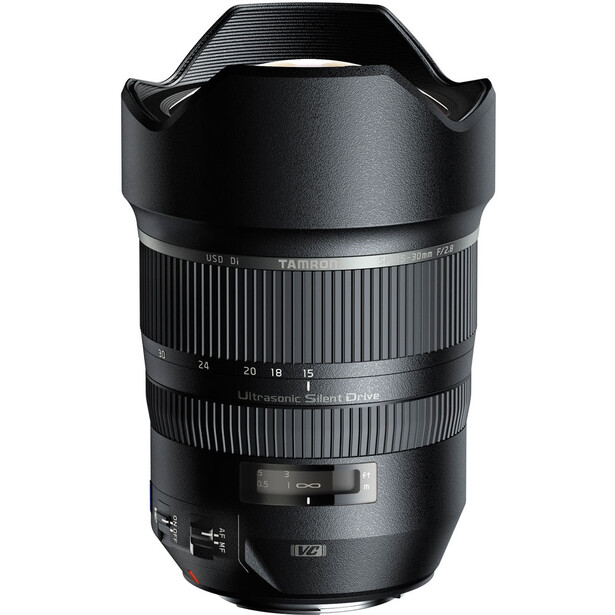
5. The Stabilized Surprise: Tamron SP 15-30mm f/2.8 Di VC USD
Expect to Pay: Approximately $350
Tamron created something unique here: an ultra-wide zoom with both f/2.8 speed and image stabilization. Nikon has never offered this combination in their own lineup. The 15-30mm range captures even wider scenes than the Nikon 16-35mm. Combined with stabilization, you can shoot handheld in low-light situations that would normally require a tripod.
6. The Affordable Alternative: Sigma 50mm f/1.4 EX DG HSM
Expect to Pay: $150-200
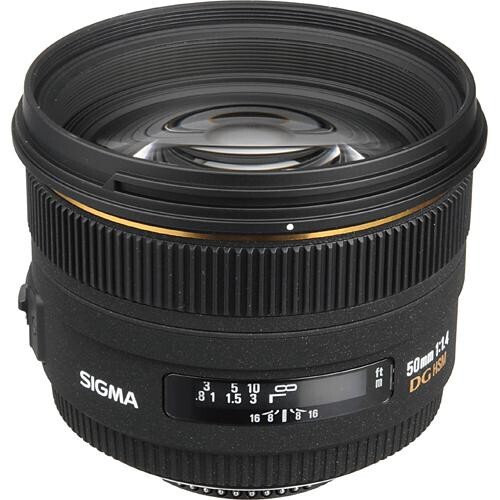
A pre-Art Series Sigma lens!? Sigma proved third-party manufacturers could beat first-party performance with this lens. In many tests, it outperforms Nikon's own 50mm f/1.4G while costing much less used. Wide-open sharpness exceeds what most fast fifties deliver. Stop down to f/2, and it becomes incredibly sharp across the entire frame. The background blur quality stays smooth and pleasing rather than nervous or busy.
7. The Professional Standard: Nikon AF-S 70-200mm f/2.8G ED VR II
Expect to Pay: $600-800
This lens defined telephoto zoom excellence for an entire generation of photographers. Despite being replaced by newer versions, it still delivers the performance that made it legendary. The VR II system provides real-world stabilization that enables handheld shooting in situations where you'd normally need a monopod. Many photographers rely on this capability for work where tripods aren't practical.
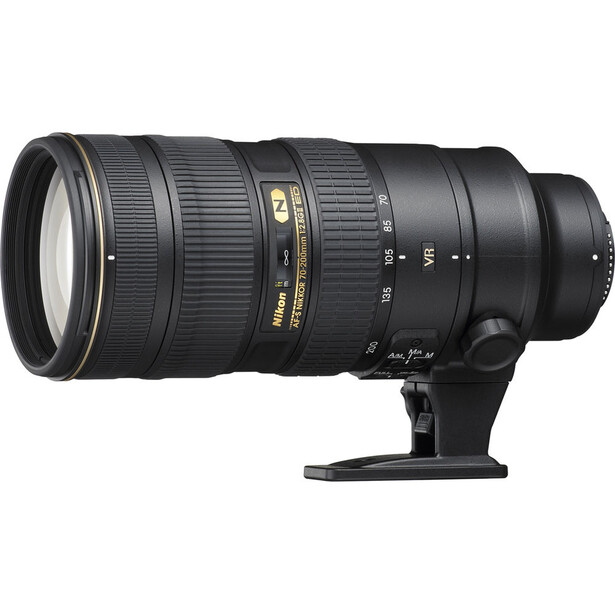
Image quality stays consistent from 70mm to 200mm. Whether you're shooting tight headshots or distant action, the sharpness and contrast remain excellent. The bokeh quality that made this focal range essential for portrait work continues to impress. Professional build quality shows in every detail. The zoom ring operates smoothly under heavy use, and the weather-sealing protects against challenging outdoor conditions. This lens was built for photographers who depend on their gear working reliably.
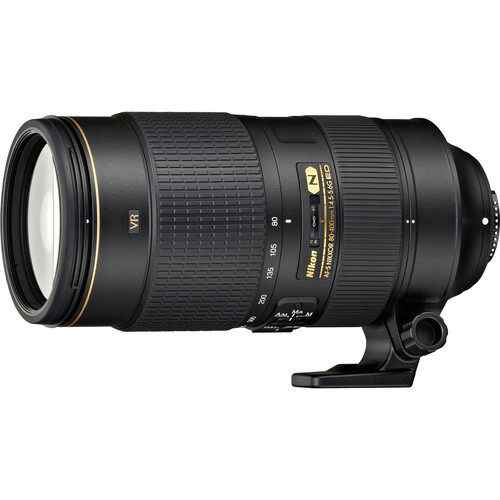
8. The Reach Specialist: Nikon AF-S 80-400mm f/4.5-5.6G ED VR
Expect to Pay: $600-800
Super-telephoto lenses typically cost thousands and weigh a ton. This 80-400mm provides serious reach in a package you can actually carry for extended periods. The 5x zoom range eliminates the need for multiple telephoto primes. Wildlife photographers appreciate being able to adjust framing without changing position, while sports shooters benefit from the flexibility during fast-moving action.
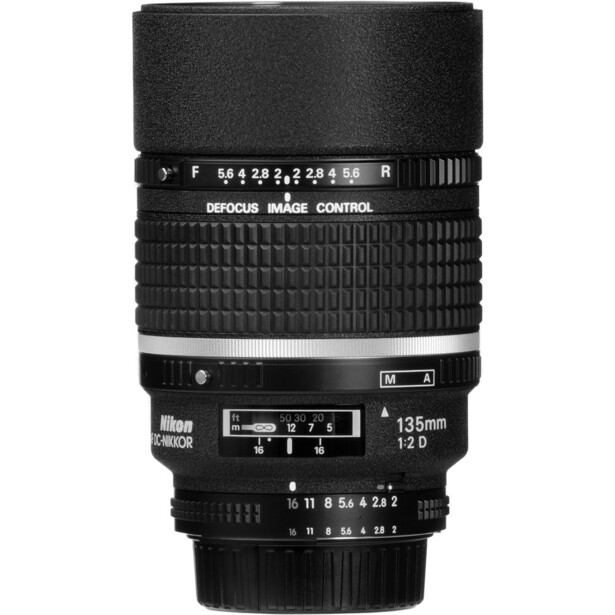
9. The Unique Tool: Nikon AF DC-Nikkor 135mm f/2D
Expect to Pay: Approximately $500
Almost no modern lens offers what this 135mm provides: mechanical control over background and foreground blur quality. The DC (Defocus Control) system adjusts how out-of-focus areas render. This isn't just about blur amount; it's about blur character. You can make backgrounds softer while keeping foregrounds more defined, or vice versa. This level of control over depth rendering cannot be replicated in post-processing.
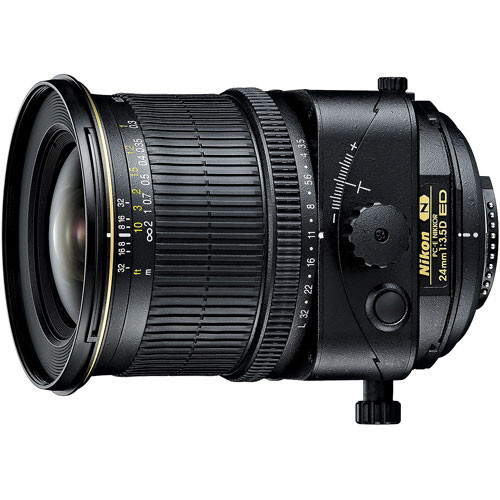
10. The Architecture Essential: Nikon PC-E Nikkor 24mm f/3.5D ED
Expect to Pay: $800-1,000
Architectural photography demands perspective control that normal lenses cannot provide. This tilt-shift lens delivers movements that keep building lines straight and extend depth of field beyond normal limits. The shift movements eliminate converging verticals when photographing tall buildings. Instead of tilting your camera up and getting that "falling backward" look, you keep the camera level and shift the lens upward.
Why F-Mount Glass Still Matters
These lenses prove that great optics age well. The fundamental physics of light gathering and focusing haven't changed. Good glass from 1995 still creates excellent images in 2025. With the FTZ adapter, autofocus (for most lenses, see above), metering, and even VR function normally on Z-mount bodies.
The character these lenses provide often surpasses clinical modern perfection. Sometimes, a little optical personality creates more engaging images than technically flawless but sterile results.
Most importantly, the value proposition remains strong. Professional-grade optics that once cost thousands now sell for hundreds, making exceptional image quality accessible to photographers at every level.




Join the Fstoppers community for free
-
Post comments and join in the discussions
-
Browse the site ad-free
-
Share your work and get featured in the community
-
Compete in the photo contests for fun and prizes
17 Comments
I would also mention that the cheaper F4 version of the 70-200mm is just as good as the 2.8 version just with a slightly smaller constant aperture, They're both super sharp lenses. Same goes for the 85mm f1.8 G vs the 1.4 G. All are awesome lenses. There is just a ton of budget flexibility in Nikon's lens portfolio.
Yeah, when I shot F-mount for work, I preferred the 1.8G 50 and 85 over the 1.4G versions. The 50 1.8G was a better lens, and the 85/1.8G was for all intents and purposes, just as good.
If you’re going to buy a 70-200/2.8 then the last one, the E FL, is the only one that’s sharp at f/2.8.
My 70-200mm f2.8 VR II is plenty sharp at 2.8, however my 14-24 f2.8 isn't sharp almost at all lol. the corners are especially bad. My 18-35mm f3.5-5.6 G ED is sharper than my 14-24 D:
It is called sample variation, doesn't have anything to do with being G or E. My G VRII is perfectly sharp in the center.
While yes, there is some variation, for sure. The E version is much sharper than the G version. A lot of the G era lenses were designed for 12 and 24 mp sensors so Nikon didn’t bother making sure they resolve for higher resolution sensors. E generation were all designed with high mp sensors in mind.
I remember even back then it was a big argument against Nikon whenever the Canon v Nikon debate was happening.
The 24-70, 85 1.4, 70-200, 600 f4, 58 1.4 etc all didn’t resolve detail well enough wide open to fully make use of the the D800 sensor. D800 was super revolutionary and was a game changer but it was years before Nikon’s lens lineup was effectively leveraging their lead in sensor tech at the time.
"The E version is much sharper than the G version. A lot of the G era lenses were designed for 12 and 24 mp sensors "
Oh yeah absolutely. The E version is most definitely sharper than the G version, but it seems John is saying that G version isn't sharp at all which just isn't true. I get tack sharp images with the G version on my 36mp D800e.
"the E FL, is the only one that’s sharp at f/2.8" - I had problem with this, nothing else :)
I also beg to remark, 16 MP on APS-C (like the D7000) is equivalent to 36 MP on FF (like the D800), the E version came out in 2009, the D7000 in 2010, so it is hard for me to believe Nikon didn't have the foresight of a need for higher MTF 10/50/90. Just my 2 cents :)
I think Nikon knew exactly what they were doing. They wanted to sell you a 70-200 in 2009, but also were forward-thinking enough to know they also wanted to sell you another 70-200 in 2019. If the one from 2009 was good enough to last forever, then they lose the 2019 sale.
Thus, they intentionally made the lenses in 2009 to be "just good enough" for sensor tech at the time, but no better.
(And I guarantee the E FL is the same, when sensor tech gets to say 100mp, I bet we will have the same conversation about the E FL being "soft" while whatever the new gen is at the time will be the new "sharp")
(That said, I think the conversation is becoming less and less relevant as AI sharpening gets better and better. We don't need the optics to be perfectly sharp anymore because 1 click in post will take a lens that is a bit soft and make it sharper than the sharpest elite glass.
I agree that the FL version of the 70-200 is significantly sharper than its predecessor.
My G VR II was a mess to start with. Tilted elements, which I did not notice until I dropped it, had Nikon repair the impact damage ($550), saw the tilt on return from Nikon, and then went back through images prior to the drop and saw the same tilt. A bit embarrassing I did not catch this sooner, but I was going through a lot at the time. In any case Nikon failed twice at dealing with this, and finally replaced it. The replacement was a mess. Returned for repair, and they sent it back so poorly packed that the lens cap was forced into the front element, and they issued a replacement......which turned out to be someone else's lens by mistake. I sent it back. They then issued the actual replacement. This had another tilted element just like the original, only more pronounced. I took this one to an independent repairer. For $330, they fixed it beautifully so that I could at least see what a G VR II can do. (Midwest Camera, you were great, you prevented me from switching to another brand, and you added to Nikon's brand value, pity about Nikon USA's attitude to independents and hope it changes before we lose any more).
And the answer of what a properly functioning G VR II can do is, stellar performance in the middle of the range, very good just a hint of field curvature at the short end, and very sharp center but somewhat soft corners toward infinity at the long end which clean up by f4.5 to 5. Overall it was the best f2.8 telephoto zoom performance from a Nikon up to that point, better even than the very good initial version of the 80-200 2.8 AF from 1987 (before they spoiled that one in 1992 with the AF-D version that involved a ham-fisted implementation of closer focusing that mushed up f2.8 performance at the long end), better even than the 80-200 AF-S which was very good optically but vignetted quite a bit and like a lot of AF-S lenses of that era was hard on focus motors. The G VR II was considered to be easily outresolving the 24MP D3X sensor when it launched, and once repaired, mine outresolved the D800, pretty much at all apertures and frame positions 70-150 and in the center at all non diffraction-limited apertures at 200 (corner to corner at roughly f5 to f9). If you are thinking of shooting film with a modern telephoto zoom, this may be your best option in any platform.
The FL, which of course is f2.8 only with film cameras due to the lack of a Nikon film body that supports electronic aperture, is sharp corner to corner right out of the gate, near and far, short, middle and long. Close-up performance on the FL is actually better toward the long end than on the Z-mount S version, at least if you're using it on a non-anti-aliased body like the D850 or Z7/Z8/Z9 (the FL and the standard D800 do not get along with each other at MFD at 200, a noticeably mushy result there), and there is also less vignetting on the FL than on the S, though the S deals with challenging light better on account of its coatings. To quote the LensRentals people, the FL is what happens when a brand decides that having "'one of' the best products in its class" isn't good enough.
Something NOT mentioned in this thread that people need to be aware of when using F-mount glass especially with mirrorless -- focus breathing. It's TERRIBLE on the 70-200 G VR II, which transforms from being roughly a 70-196mm at infinity to being about a 66-138 at close focus. A little noticeable even on the FL, which isn't blatant but still breathes into being slightly more telephoto at close focus. Essentially non existent on the S. This will be an issue if you shoot video.
One of the morals of this story is serviceability. Independents generally can service F-mount lenses effectively, and Nikon USA indeed refers customers to independents in situations where lenses have outrun parts supplies. Hopefully Nikon USA will make a full return to a right-to-repair stance but until then F-mount glass will have an advantage over Z-mount for serviceability.
Only 1/3 of lenses with autofocus work with the FTZ adapter.
The ones without built in motors will still work just fine. They just won't auto focus. With the awesome MF assists Nikon has added to their newer Z mount cameras it has made manual focusing easier than ever before. You still get face, animal, eye detect etc. features in manual mode as well as the standard peaking features.
Just a warning on that Sigma 50mm, it was a great value lens for its time but it does not work with FTZ. Only get one if you intend to only shoot Nikon DSLR.
I have or had 8 of the above lenses. They are/were very good on my D850, and my Z8. Some very good choices on this list.
i have a D810 and a D850 and four f1.4 F-Mount prime lenses which i use for photography. there were occasions when i went to places of interest with my D850 and had to take video and i found that the F-Mount lenses of which i have the 24mm, the 35mm, the 58mm and the 105mm, have distortion which is almost unacceptable for video as the camera does not seem to provide in body lens correction nor is there an easy way of correcting the distortion of the video footage in post. as a result for hybrid shooting or video i often use my Canon EF or RF digital cameras or previously my Fujifilm X-Mount cameras.
On the Nikon AF-S NIKKOR 85mm f/1.4G: "and the aperture ring clicks into place with precision." Were you thinking of the "D" version?