

Come on, hop in those comments and tell me why I'm wrong.
Push-Pull Zooms Are Awesome
Push-pull zooms earned a reputation they didn’t deserve. The internet shorthand is “dust pumps." In real life, the single-barrel slider is a speed advantage you can feel immediately. One hand rides the lens, you nudge forward for tighter framing, back off for context, and you never take your eye out of the viewfinder or your finger off AF-ON. The mechanics suit how decisive moments actually unfold: you recognize the frame, correct in a quarter second, and shoot. There’s no hunting for a tiny ring, no counter-rotations when your gloves are on, and no juggling your grip when the subject reverses direction.
Ergonomically, push-pull is honest. The lens tells you what it wants: shove for longer, pull for wider. When you’re tracking on sideline sports, wildlife, air shows, or events where people move unpredictably, that matters more than ornamental elegance. It also plays well with real stabilization technique. Your left hand can brace high on the barrel for better leverage, your right hand stays relaxed on the body, and tiny framing corrections become linear muscle memory. On gimbals and monopods, the quick throw is the difference between “got it” and “ugh, if only.”
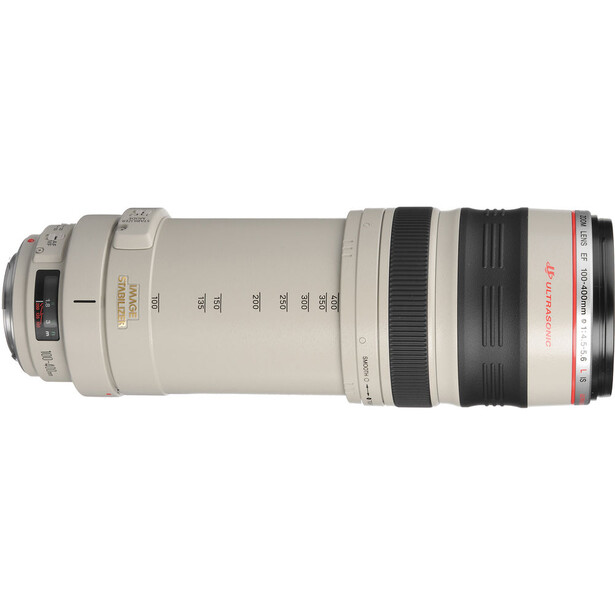
There’s also a creative upside: push-pull encourages dynamic framing. You can “ride” a zoom during a burst to shape a sequence—tight, wider, tight again—without breaking cadence. For storytelling, that gives you the cutaways you want while the subject is still in the same emotional arc. It’s a way of editing in-camera.
If Canon ever makes another push-pull zoom, it'll be in my bag on day one.
All Cameras Should Have Internal Storage
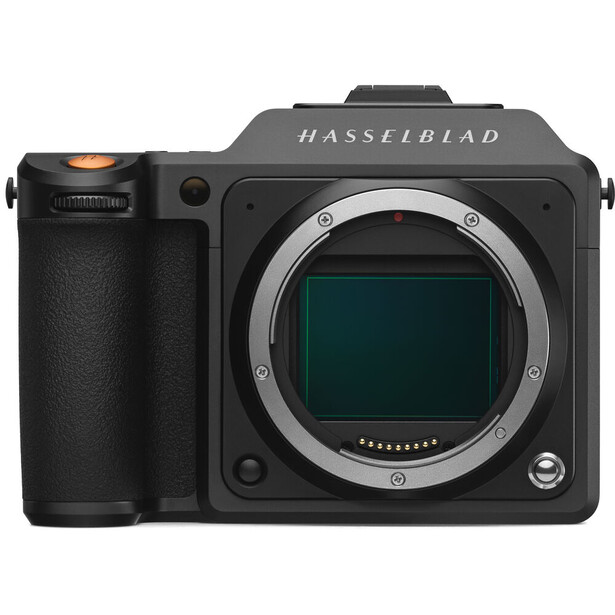
Smartphones solved “where do files go” years ago. Cameras still pretend it’s 2007. Built-in storage would quietly eliminate the most avoidable failure in photography: forgotten, full, mismatched, or corrupt cards. And it would make workflows more convenient. Internal storage isn’t about replacing removable media; it’s about a factory-installed safety net that always exists, never gets lost, and never stays in yesterday’s reader after a midnight export.
The immediate wins are boring in the best way. You arrive at the venue and start shooting even if the card case is still on your desk. You can spill a “last hour” buffer automatically to internal while your primary slot writes, so a card failure or a clumsy ejection costs you annoyance, not a meltdown. On long days, a “roll-over” option lets the camera seamlessly keep recording to internal when Card 1 fills, then alert you with a subtle status change. For hybrid shooters, internal storage doubles as proxy land: the camera can write small review files internally while the high-bitrate masters hit your card, providing instant culling on the ride home.
Supertelephoto Zooms Are Making Supertelephoto Primes Obsolete
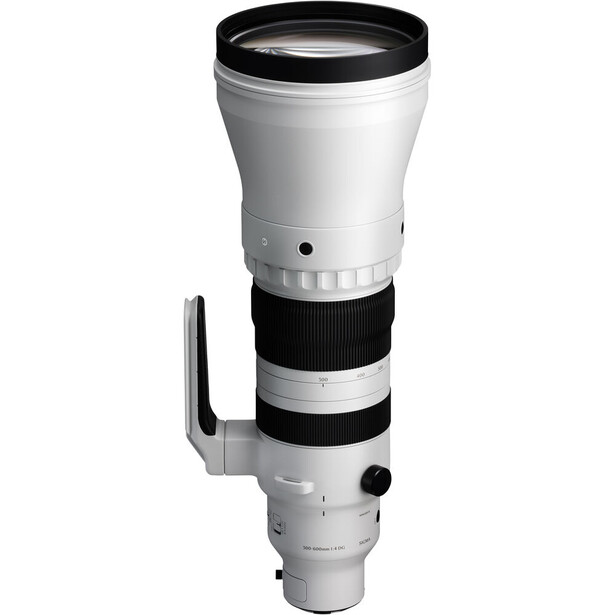
A decade ago, “serious” long-lens work meant a trunk-filling prime and a second mortgage. Today’s 100–400mm, 150–600mm, and 200–600mm zooms are so sharp, so well stabilized, and so consistent across the range that for most wildlife and field sports, they’re not just “good enough, ”they’re the smarter buy. You get real-world reach flexibility without moving your feet, internal or near-internal focusing that keeps balance sane as you track, and optical designs that stay crisp at the long end instead of gasping. Crucially, you also get to bring the lens you actually use, not the one you talk yourself out of carrying.
Zooms win on coverage. The hawk doesn’t care that you paid for f/2.8 on a 400mm if it lands at 320mm. A player doesn’t cut exactly to your prime’s fixed angle. With a modern supertele zoom, you frame what happens, not what you hoped would happen, and you do it while keeping the subject large in the finder so AF can lock with confidence.
Robust Wireless Should Be Standard: Cloud Upload, Remote Control, and Multi-Body Time Sync
Cameras are still strangely shy about the very thing the modern workflow is built on: wireless. Robust, everyday features, like reliable remote control, background cloud uploads, and rock-solid multi-body time sync over Bluetooth/Wi-Fi, should be standard from entry-level to pro. These aren’t “flagship luxuries.” They’re the wiring that keeps jobs moving, clients looped in, and teams aligned.
Start with remote control. A camera that connects quickly to your phone and stays connected changes how you scout, light, and shoot. You can place the body on a boom in a small room, reframe from the doorway, adjust exposure without climbing a ladder, and trip the shutter without awkward timers. A decent live view on a bright phone screen beats squinting into an LCD in high sun. I shoot a lot of classical music concerts, which requires me to be totally silent. I learned to put a second camera closer to the stage and control it from my phone, and I was able to get shots I never could before.
Now think about cloud. A silent, background uploader that sends 2 MP or 4 MP previews as you shoot means your editor or social person can start selects in real time from another city. Weddings and events can push highlight reels to a private gallery before dessert. Commercial teams can confirm that a layout is working without hovering behind your shoulder. You still keep the masters on your cards; the cloud gets “review copies” that move the day along. If you’re on location with spotty signal, the camera queues and sends when you hit Wi-Fi at lunch. That being said, if you have a good Wi-Fi system, there's no reason you couldn't upload full copies. Modern Wi-Fi has more than enough bandwidth.
Time sync is the quiet hero. If you’ve ever tried to align three bodies’ worth of files after a 14-hour day, you know why. Multi-body Bluetooth time sync means every file shares a clock down to the second, so “sort by capture time” interleaves a story perfectly. Interviews from Camera A slot between cutaways from Camera B and detail shots from Camera C with no manual nudging. Dual shooters at a wedding can dump cards into one folder and have a timeline that reads like a documentary script instead of a puzzle.
“But battery.” That’s the default objection. Background radios draw some power, but sensible implementations amortize the cost. Bluetooth LE maintains a low-energy tether to your phone and other cameras. Wi-Fi wakes only for transfers.
Lens Hoods Should Be Included With Every Lens
This is the hill to die on, and it shouldn’t even be controversial. Lens hoods are not optional “accessories”; they’re part of the optical system and the first line of physical defense. A proper hood reduces flare, preserves contrast, and keeps stray light from washing out your colors. It also protects the front element from dings, raindrops, and accidental fingerprints, which means you clean coatings less often and risk micro-scratches less. Hoods make your images better and your gear tougher. Ship them with every lens, from entry kit to halo prime.
The argument against including hoods is thin. “People don’t use them.” Then teach them why they should. “They add bulk.” True—so design smart. Collapsible hoods for travel zooms, petal hoods for wide angle lenses, deep cylindrical hoods for teles, and rotating “trapdoor” hoods with windows for polarizer access. Hoods don’t need to be heavy or clumsy, and they don’t need to be a separate line item on a receipt that already hurts.
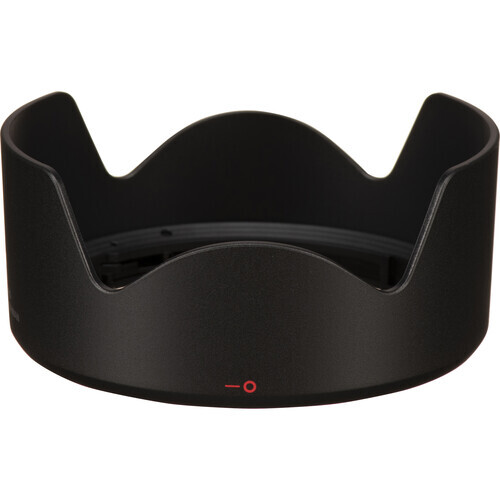
Seriously, the cost of manufacturing a hood is laughable compared to the lens itself. Just include it.
Start Your Engines
Ok, that's it. Hop in those comments and tell me why I'm wrong.






Join the Fstoppers community for free
-
Post comments and join in the discussions
-
Browse the site ad-free
-
Share your work and get featured in the community
-
Compete in the photo contests for fun and prizes
59 Comments
Oh my golly.... I was hoping for an article about actually taking photos, not G.A.S.
You make a good point, Daniel.
After reading your comment, I realize that none of Alex's points are about photography at all. Rather, they are about gear. And the title of the article says, "photography opinions" ..... so it was very reasonable for you to think that the points in the article would be about photography, and not about cameras and lenses and whatnot.
Yes, tossing in a few notes/comments about actually taking photos or dealing with issues would have been nice.
what are some photography topics you want to argue about. be the change!
Love to read and "argue" about stuff involving street photography, and the big questions/comments about the rules people seem to have about that. As with every subject, people have their own opinions and want to force you to follow them!
how important background rendering ("bokeh") is to the overall appeal of the image .... this is for fine art photos, not for photos that "tell a story"
Must we argue? Because I see nothing to disagree with!
Yes. Because this is the internet.
LOL ..... Good point!