

Photography shouldn't feel like work. Somewhere between megapixel counts and autofocus point comparisons, we've forgotten that cameras can simply be enjoyable to use. These five cameras, from vintage film classics to quirky modern experiments, prove that the best gear isn't always the most capable or the most expensive. Sometimes it's just the camera that makes you smile every time you pick it up.
1. Fujifilm X100VI
What makes the Fujifilm X100VI special isn't found in any specification list. This camera succeeds because it understands that the pleasure of photography isn't just in the final image but in the entire process of creating it. Every control you need lives on the outside of the camera: shutter speed, aperture, and exposure compensation all have their own dedicated, tactile dials. You can dial in your entire exposure before the camera is even powered on, a throwback to film era discipline that modern menu-driven cameras have forgotten. The satisfying click of each dial, the physical resistance that makes every adjustment feel intentional, transforms photography back into a hands-on craft rather than a digital exercise. The camera features weather-sealing when paired with a filter adapter, making it a serious tool despite its compact size.
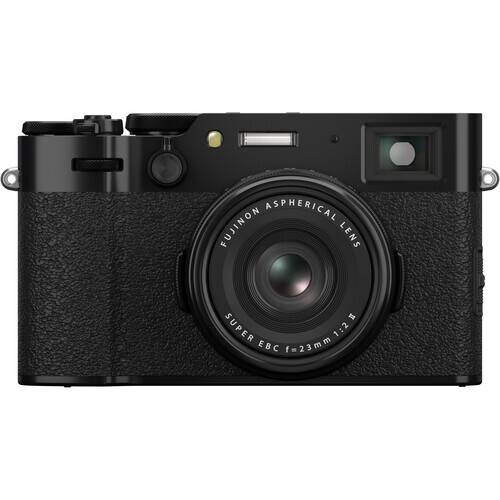
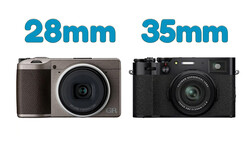
Then there's Fujifilm's famous Film Simulation modes. These aren't just filters you can undo later. They're the camera asking you to make a choice and commit to it, the way film photographers had to choose their film stock before loading the camera. Do you want the stark, grain-heavy contrast of Acros black and white? The muted, vintage tones of Classic Chrome? The vivid pop of Velvia? Make your decision, shoot with intention, and more often than not, the JPEGs that come out of this camera need little editing. In an era where "shoot raw and fix it later" has become dogma, the X100VI reminds us that there's deep satisfaction in getting it right at the moment of capture. The fixed 23mm f/2 lens (35mm equivalent) is sharp and versatile, perfect for everything from street photography to environmental portraits.
2. Ricoh GR Digital IV
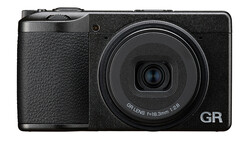
Hunt through the used camera listings and you'll find professionals paying premium prices for a camera from 2011. The Ricoh GR Digital IV (not to be confused with the modern GR IV with its APS-C sensor) isn't sought after despite its age but because of it. This compact digital camera is a used-market gem that features a 10-megapixel CCD sensor and a 28mm-equivalent f/1.9 lens. The older CCD sensor technology that modern CMOS sensors have replaced renders light differently. It has a quality, a texture, an almost indefinable character that makes images feel less clinical and more organic. There's a reason film photographers who go digital often end up with a GRD IV in their bag. It translates light in a way that feels familiar, feels right.
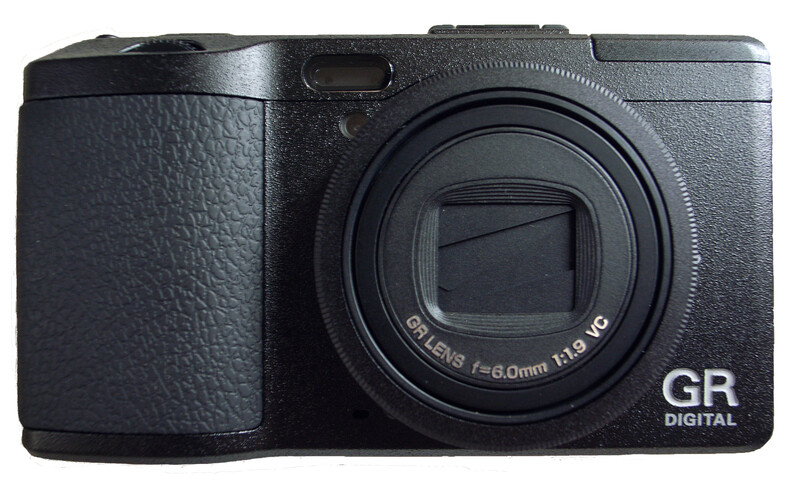
Beyond its sensor and processing, this is a Ricoh, which means it benefits from decades of the company's expertise in making cameras that disappear in your hand. It's small enough to live in a jacket pocket but substantial enough to feel solid and reliable. The Snap Focus system lets you preset a focus distance and zone focus like a film camera, eliminating shutter lag and making the camera almost telepathic in its response. You see a moment, raise the camera, and shoot, all in one fluid motion. For street photography and documentary work, this combination of speed, stealth, and character is unbeatable. People don't register the GRD IV as a "serious" camera, which means they don't change their behavior when you point it at them.
3. Olympus XA
When this camera was released in 1979, it represented a minor miracle of miniaturization. The original Olympus XA (not the later XA2, which uses simpler zone focusing) features a true coupled rangefinder system in a 35mm film format camera that could slip into your jeans pocket. This film camera is a used-market find that seemed impossible when it first appeared, yet Olympus made it happen. Pick up an XA today and you immediately feel the quality of its construction. This isn't a plastic toy. It's a precisely engineered tool built with the confidence that it would still be taking pictures decades into the future. The genius starts with the clamshell cover that protects the lens. Slide it open and you simultaneously power on the camera and ready the shutter. Slide it closed and everything locks down. It's foolproof design that's both elegant and practical.
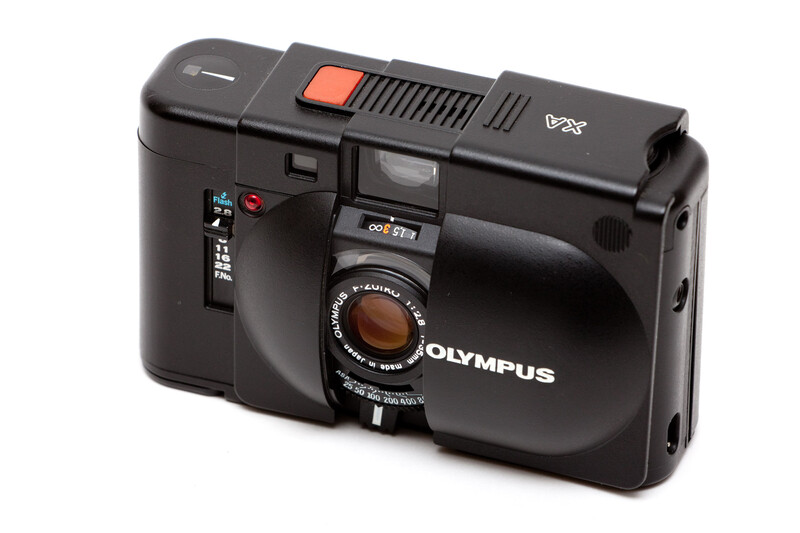
The 35mm f/2.8 Zuiko lens delivers the knockout punch. This lens is sharp enough to satisfy the most demanding photographer, but it renders with the kind of character and warmth that modern lenses often optimize away in their pursuit of technical perfection. The XA proves a fundamental truth that the camera industry often tries to obscure: great photography has nothing to do with sensor size or megapixel counts. It has everything to do with having a tool that's so well designed, so perfectly suited to its purpose, that it gets out of your way and lets you focus entirely on seeing and capturing moments worth keeping.
4. Yashica T4/T5
On first glance, the Yashica T4 looks completely ordinary. It's a plastic-bodied 35mm film point and shoot from the 1990s, the kind of camera you'd find in a thrift store bin. These are used-market cameras that photographers in the know search out and pay serious money for, and the reason is simple: the lens. The Carl Zeiss T* 35mm f/3.5 lens in this camera is extraordinary. It's tack sharp, renders color with vivid saturation and contrast, and helped define the aesthetic of an entire era of fashion and documentary photography. This is the lens that shot countless editorials, the lens that captured the raw energy of 90s street culture, the lens behind that specific high-flash snapshot look that defined the decade.
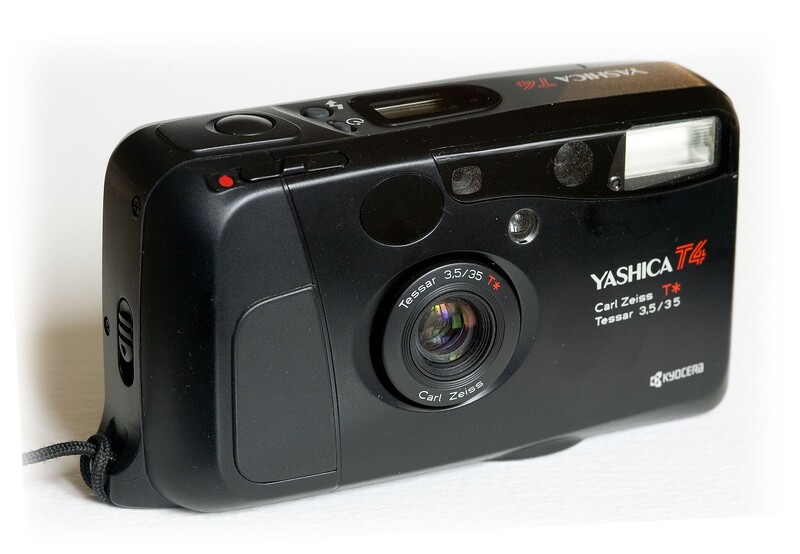
The beauty of the T4 is its simplicity. You don't think, you don't fiddle with settings, you just point and shoot. The powerful flash and excellent lens work together to create that raw, honest, high-flash aesthetic that cuts through any situation. The camera's automatic exposure is consistently reliable, the flash exposure is surprisingly reliable for a compact flash, and the whole package rewards instinct over deliberation. In an age where we've been taught that "serious" photographers must obsess over manual controls and technical perfection, the T4 reminds us that sometimes the best approach is to trust your tools, follow your eye, and just shoot what you see.
5. Fujifilm X Half
The Fujifilm X Half is one of the strangest, most wonderful cameras to come out in recent years. It's a digital camera with a 1-inch sensor and a 32mm-equivalent f/2.8 lens that fully commits to replicating not just the images but the entire experience of shooting with a half-frame film camera like the classic Olympus Pen. The sensor itself is oriented vertically to natively shoot in a 3:4 aspect ratio, breaking you out of the standard horizontal composition mindset that decades of 35mm photography has trained into us. Suddenly you're seeing the world differently, composing in portrait orientation by default, noticing vertical relationships and compositions you'd normally overlook.
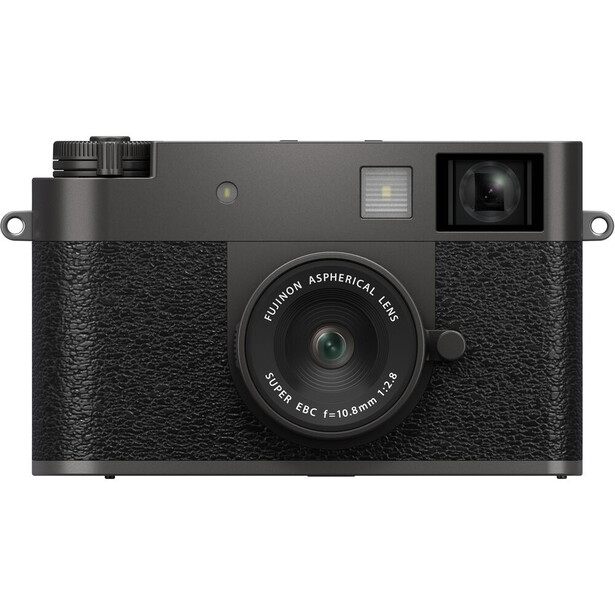
But the real genius move is Film Camera Mode. Select a virtual roll of 36, 54, or 72 exposures, choose one of Fujifilm's Film Simulation looks, and commit. The rear LCD screen disables, forcing you to compose entirely through the optical viewfinder. You can't review your shots immediately in this mode. No chimping allowed. You have to shoot the entire roll before you can "develop" the images through the companion app. It's worth noting that the X Half shoots JPEG-only with no raw support, further committing to the film-like workflow. It's a modern digital camera using technology to recreate the discipline and anticipation of film photography. You have to trust your eye, commit to your choices, and rediscover the pleasure of delayed gratification. In a world of instant feedback and unlimited retakes, the X Half is a radical reminder that constraints don't limit creativity. They enable it.
The Joy of Photography
What these five cameras have in common is simple: they're a blast to use. Each one has a personality, a unique set of quirks and features that make the shooting experience engaging and enjoyable. They prove that great photography gear isn't just about specifications and performance metrics. It's about how a camera feels in your hand, the satisfaction of its controls, the pleasure of its process. These cameras remind us that photography at its best is play, not work. Pick one up, enjoy its particular character and charm, and rediscover the simple pleasure of making pictures for the pure fun of it.


Join the Fstoppers community for free
-
Post comments and join in the discussions
-
Browse the site ad-free
-
Share your work and get featured in the community
-
Compete in the photo contests for fun and prizes
3 Comments
"These five cameras, from vintage film classics to quirky modern experiments, prove that the best gear isn't always the most capable or the most expensive."
Generally speaking, the best gear is the most capable or the most expensive. And if I want a point-and-shoot experience, I suspect even the most complicated latest cameras still have a "P" mode. I appreciate the nostalgic feeling derived from using vintage gear or new gear designed to appear vintage, which makes for a trendy article, but you can have simplicity and fun with about any camera.
I recently went camera hunting in Tokyo. All of these cheap point and shoots have now become collector or enthusiast dream cameras and the prices are nuts. Many of the really clean ones are more expensive than when they were new. I wouldn't doubt if the author bought a bunch of these and wrote the article so everyone could try to get their hands on one and run up the price on ebay! The problem is that any old (vintage) camera will die if it has electronics in it. But they still get a pretty penny.
I wouldn't call the Fuji X100VI or Ricoh GR point and shoot though. They are very capable cameras with fully manual controls. Sure you can just put them in auto or P mode but then you can do that with any camera.
The X-Half is a good concept but the 17mp 1 inch sensor and half frame jpeg only limits it's potential and would be justifiable if it wasn't so expensive. I'd want a camera with enough resolution to make decent sized prints for that money and maybe even RAW. If I wanted point and shoot with some film sims, I'd rather save a lot of money and buy an Instax. Now that is a real point and shoot.
Btw, turn the X-Half 90º and you have landscape. Mind blowing! 😅