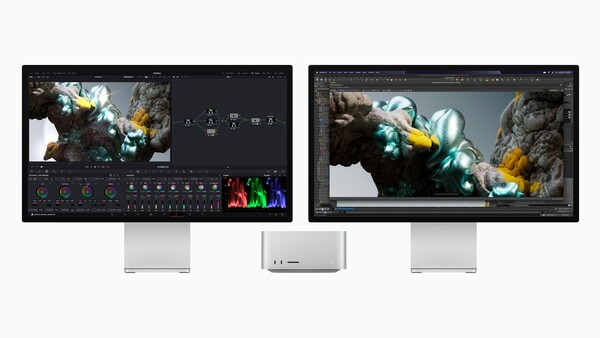
Apple has announced a new generation of Mac Studio, bringing its M5 Max and M5 Ultra processors to the compact desktop along with faster storage, Thunderbolt 5, Wi-Fi 7, Bluetooth 6, and significantly expanded unified memory options.
The new Mac Studio with M5 Max starts at $2,499, while the Mac Studio with M5 Ultra starts at $5,499. Preorders opened August 25, 2026, with general availability scheduled for September 22. Configurations with 512 GB of unified memory are expected in late October.
The update is primarily focused on substantially more CPU, GPU, and AI processing performance while retaining the familiar small desktop form factor. For photographers and video creators, some of the more relevant changes include additional GPU performance, faster SSD storage, hardware acceleration for common video codecs, Thunderbolt 5 connectivity, and support for as much as 512 GB of unified memory.
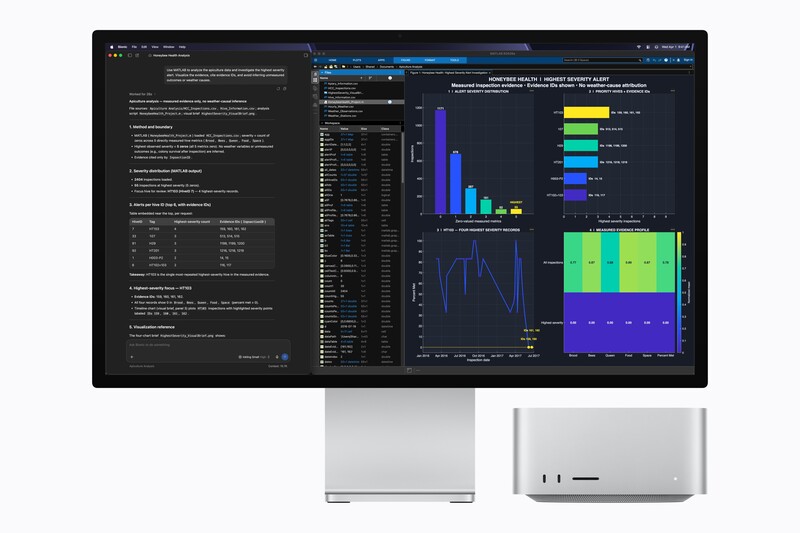
M5 Max: Up to 40 GPU Cores and 128 GB of Unified Memory
The M5 Max version of Mac Studio uses an 18-core CPU consisting of six "super" cores and 12 performance cores. It can be configured with up to a 40-core GPU, with Apple adding Neural Accelerators to each GPU core.
Apple says the GPU is up to 50% faster than the previous generation. Maximum unified memory capacity is 128 GB, while memory bandwidth reaches 614 GB/s.
The GPU also includes third-generation hardware-accelerated ray tracing and updated shader cores. Those changes are aimed largely at 3D rendering, visual effects, motion graphics, and other workloads that rely heavily on parallel GPU processing.
Video processing continues to be handled in part by Apple's dedicated Media Engine, with hardware acceleration for H.264, HEVC, ProRes, and AV1 decoding.
Apple says the M5 Max Mac Studio can color-grade uncompressed 8K footage and process multiple video streams simultaneously.
In Apple's own testing, the M5 Max model delivered up to 5.3x faster Magic Mask processing in Blackmagic Design DaVinci Resolve Studio compared with the Mac Studio with M1 Max, and up to 3x faster performance than the M4 Max configuration used for comparison.
Apple also reports up to 3.9x faster AI performance than the previous generation, along with up to 10.7x faster LLM prompt processing than the M1 Max model and up to 3.9x faster performance than M4 Max in the company's LM Studio test.
M5 Ultra Pushes Unified Memory to 512 GB
At the top of the range is M5 Ultra, which significantly increases the CPU, GPU, and memory resources available in a single Mac Studio.
The processor can be configured with up to a 36-core CPU, consisting of 12 super cores and 24 performance cores. Apple says multithreaded CPU performance is up to 1.3x higher than M3 Ultra.
The GPU can scale to 80 cores and, for the first time on an Ultra-series processor, includes Neural Accelerators in the GPU cores. Apple claims graphics performance is up to 1.8x faster than the previous generation.
Perhaps the most unusual specification is the memory ceiling. An M5 Ultra Mac Studio can be configured with as much as 512 GB of unified memory and provides up to 1.2 TB/s of memory bandwidth, a 50% increase according to Apple.
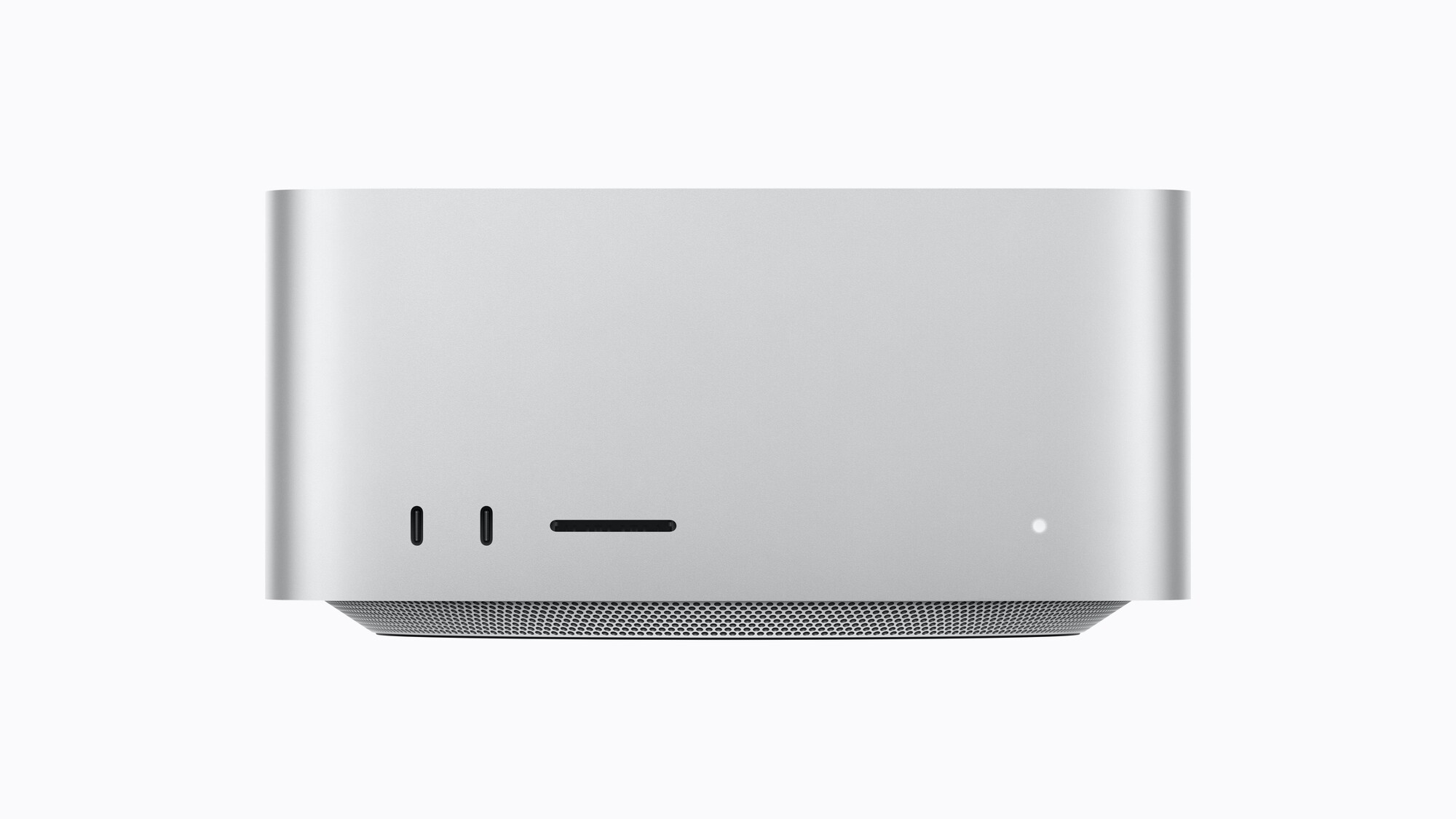
That capacity is particularly relevant for workloads involving very large image datasets, complicated 3D scenes, high-resolution video projects, local AI models, or several demanding applications running at once.
The M5 Ultra Media Engine has twice the video encode and decode blocks found in M5 Max. Apple says the system can simultaneously play as many as 33 streams of 8K ProRes 422 footage at 30 fps.
In Apple's benchmarks, M5 Ultra delivered up to 4.7x faster Maxon Redshift scene rendering than the M1 Ultra Mac Studio and up to 1.7x faster performance than M3 Ultra.
The company also reports up to 15.4x faster CopyCat machine-learning training in Foundry Nuke compared with M1 Ultra and up to 3.3x faster performance compared with M3 Ultra.
Faster Storage and Thunderbolt 5
Apple has also revised the Mac Studio's internal storage architecture. The company says the new PCIe Gen 6-based SSD system can reach up to twice the storage performance of the previous generation.
Faster storage can matter substantially in photography and video workflows, particularly when importing large batches of high-resolution files, generating previews, working with caches, loading projects, or moving large video files.
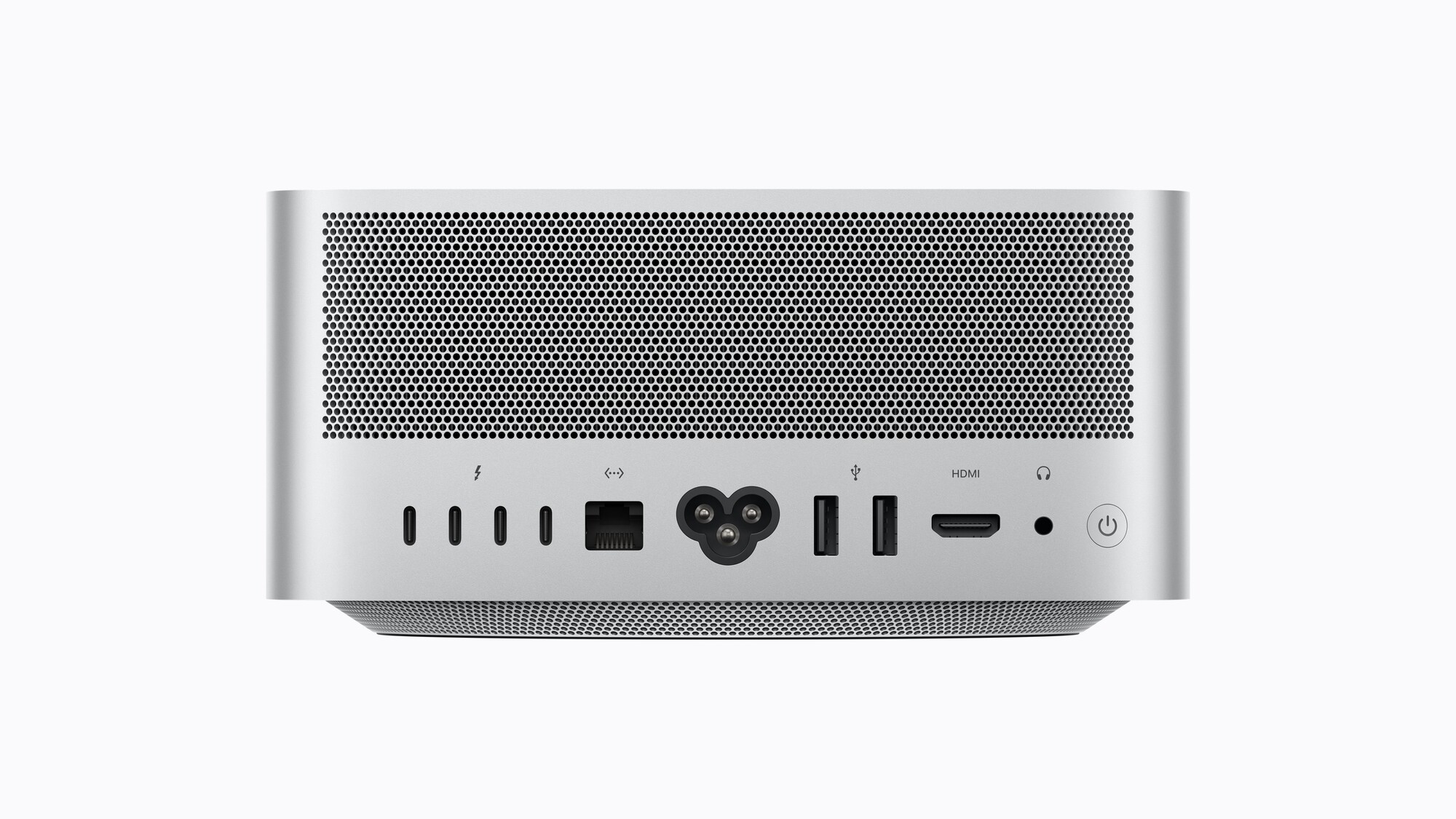
Thunderbolt 5 is also included, providing up to 120 Gb/s of bandwidth. It can be used for high-speed external storage, displays, docks, hubs, and PCIe expansion chassis.
Apple is additionally using Thunderbolt 5 and RDMA, or remote direct memory access, to allow multiple Mac Studio systems to operate together for certain AI workloads. Apple says a four-system cluster can provide up to 3x the AI inference performance of a single system.
That capability is more likely to matter to AI developers, research teams, and larger production environments than individual photographers, but it illustrates the amount of external bandwidth now available through the machine.
Wi-Fi 7, Bluetooth 6, Genlock, and Eight-Display Support
Wireless connectivity has also been updated. Apple's N1 chip brings Wi-Fi 7 and Bluetooth 6 to the Mac Studio for the first time.
For video production environments, another notable addition is genlock over USB-C. This allows a display and compatible capture device to be precisely synchronized. Apple specifically mentions the iPhone 17 Pro as an example of a professional camera capture device that can be used with the feature.
Mac Studio can drive up to eight displays. Alternatively, it can support as many as four Studio Display XDR monitors simultaneously at their full 5K resolution and 120 Hz refresh rate.
Apple also continues to position the computer alongside the existing Studio Display.
Key Specifications
- M5 Max or M5 Ultra processor options
- M5 Max with 18-core CPU
- M5 Max CPU configuration: six super cores and 12 performance cores
- M5 Max with up to 40-core GPU
- Neural Accelerators integrated into each M5 Max GPU core
- Up to 128 GB of unified memory with M5 Max
- Up to 614 GB/s unified memory bandwidth with M5 Max
- M5 Ultra with up to 36-core CPU
- M5 Ultra CPU configuration: 12 super cores and 24 performance cores
- M5 Ultra with up to 80-core GPU
- Neural Accelerators integrated into M5 Ultra GPU cores
- Up to 512 GB of unified memory with M5 Ultra
- Up to 1.2 TB/s unified memory bandwidth with M5 Ultra
- Third-generation hardware-accelerated ray tracing
- Enhanced shader cores
- Hardware-accelerated H.264 processing
- Hardware-accelerated HEVC processing
- Hardware-accelerated ProRes processing
- Hardware-accelerated AV1 decoding
- M5 Ultra capable of playing up to 33 simultaneous streams of 8K ProRes 422 at 30 fps
- PCIe Gen 6-based SSD architecture
- Storage performance claimed to be up to 2x faster than the previous generation
- Thunderbolt 5 connectivity
- Up to 120 Gb/s Thunderbolt 5 bandwidth
- Support for RDMA over Thunderbolt 5 for clustered Mac Studio systems
- Wi-Fi 7
- Bluetooth 6
- Apple N1 wireless chip
- Genlock support over USB-C
- Support for up to eight displays
- Support for up to four Studio Display XDR monitors at 5K and 120 Hz
- macOS 27
- 35% recycled content overall
- 100% recycled aluminum enclosure
- 100% recycled rare earth elements in all magnets
- M5 Max model starting at $2,499
- M5 Ultra model starting at $5,499
- Preorders beginning August 25, 2026
- General availability beginning September 22, 2026
- 512 GB unified memory configurations expected in late October
What It Means for Photographers and Video Creators
The importance of this Mac Studio update for photographers is less about any one headline benchmark and more about the combination of memory capacity, storage speed, GPU performance, and connectivity.
High-resolution stills workflows increasingly involve computationally intensive operations such as masking, denoising, subject recognition, image stacking, panoramic stitching, generative editing, and AI-assisted selections. Those jobs can use the CPU, GPU, and machine-learning hardware simultaneously, which makes Apple's improvements to all three areas potentially useful.
The expanded memory options could also make a meaningful difference for photographers working with very large layered files, stitched panoramas, high-resolution scans, large catalogs, or several memory-intensive applications at the same time. The 512 GB ceiling on M5 Ultra goes well beyond what most photographers will need, but it gives particularly demanding commercial and technical workflows considerably more room.
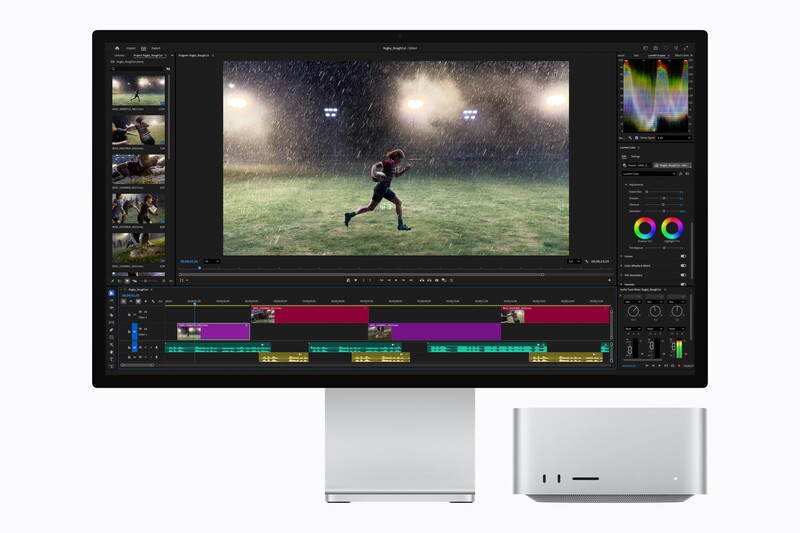
Video users are likely to see more obvious benefits.
Hardware acceleration for H.264, HEVC, ProRes, and AV1 can reduce the amount of general CPU or GPU processing needed for common editing and delivery formats. The M5 Ultra's ability to handle numerous 8K ProRes streams simultaneously is particularly relevant to multicamera editing, finishing, and other high-resolution production environments.
Faster internal storage should help with large video projects as well. Even when source footage lives on external drives or shared storage, editors routinely depend on internal storage for caches, proxies, optimized media, application data, and temporary render files.
Thunderbolt 5 is another important improvement for production work. A theoretical bandwidth ceiling of 120 Gb/s gives high-performance storage arrays, PCIe expansion systems, capture hardware, and other peripherals considerably more room to operate.
Support for up to eight displays will be excessive for most individual creators, but it could be useful in color, VFX, editing, and production environments where separate reference, timeline, scopes, client, and monitoring displays are common.
Genlock over USB-C is similarly specialized, but it is a notable addition for creators integrating the Mac into synchronized capture and display pipelines.
The AI capabilities deserve some attention as well, although Apple's benchmark figures should be treated as manufacturer claims rather than independent testing. Image generation, automated masking, video analysis, machine-learning effects, and other computational photography tools are becoming increasingly common in creative applications. Faster local AI processing could therefore have benefits outside dedicated AI-development workflows.
For creators who do not need hundreds of gigabytes of unified memory or dozens of simultaneous 8K streams, M5 Max is likely to contain most of the immediately relevant improvements: a faster GPU, substantial memory bandwidth, hardware video acceleration, faster storage, and Thunderbolt 5.
M5 Ultra is aimed at a substantially higher level of workload, particularly large-scale video, VFX, 3D rendering, and AI processing where additional GPU cores and much larger unified memory configurations can actually be used.
Pricing and Availability
The new Mac Studio is available to preorder beginning August 25, 2026.
Mac Studio with M5 Max starts at $2,499 in the U.S.
Mac Studio with M5 Ultra starts at $5,499.
Apple says deliveries and retail availability will begin September 22. Configurations equipped with 512 GB of unified memory are scheduled to arrive later, in late October.
macOS 27 is currently available through Apple's public beta program and is expected to be released as a free software update in the fall.
Conclusion
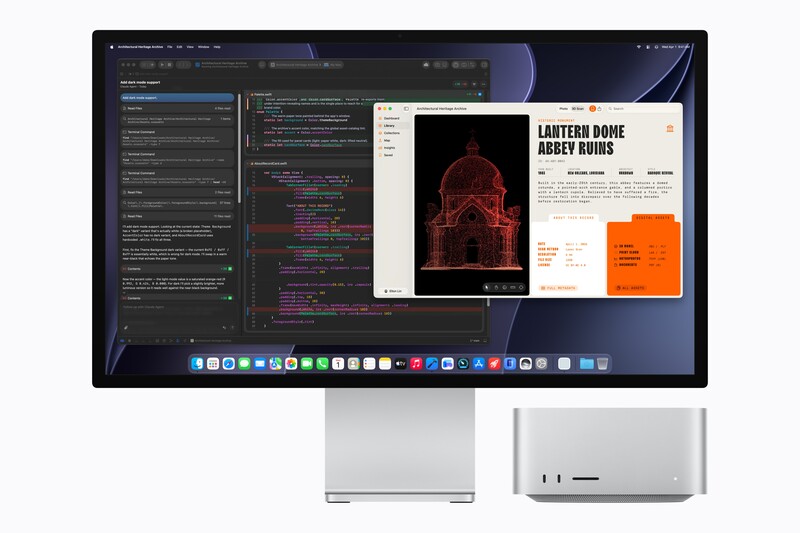
The new Mac Studio is an evolutionary update to the same compact workstation concept, but the changes inside are substantial. M5 Max brings higher CPU and GPU performance, up to 128 GB of unified memory, faster storage, and updated connectivity, while M5 Ultra pushes the platform to an 80-core GPU and as much as 512 GB of unified memory.
For photographers, the most practical improvements are likely to be the faster GPU, SSD, memory system, and Thunderbolt 5 connectivity. Video professionals stand to make greater use of the expanded Media Engine, high-resolution multi-stream playback, display support, and much larger memory configurations.
As always, Apple's performance figures come from its own testing, so independent benchmarks will provide a clearer picture of how large the gains are in everyday creative applications. On paper, however, the new Mac Studio offers a substantial increase in processing and memory capacity without changing the compact desktop format that has defined the product line.





Join the Fstoppers community for free
-
Post comments and join in the discussions
-
Browse the site ad-free
-
Share your work and get featured in the community
-
Compete in the photo contests for fun and prizes
No comments yet