A standard prime is often the second lens people buy, and on Nikon Z, the inexpensive autofocus options have long trailed what Sony E shooters can pick from. SG-image, a brand mostly known for small pancake lenses, now offers a 55mm f/1.8 autofocus prime with a metal body and a look that suits retro-styled cameras.
The SG-image AF 55mm f/1.8 barely needs stopping down. Andrei Dima tested it on his Nikon Zf and found the center and mid-frame already sharp with good contrast at f/1.8. The corners were a little darker from vignetting and only slightly softer. At f/2, detail improves across the frame, and by f/2.8, Dima reports the corners matching the center. A cheap lens rarely reaches even sharpness that quickly. You can shoot near wide open on the street without worrying much about the edges of your frame. Dima tested on the Zf's 24-megapixel sensor, so a higher-resolution body may show different results.
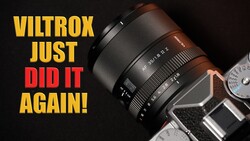
Build quality is another point Dima keeps returning to. The barrel and mount are metal, with a rubber gasket at the mount and a USB-C port on the side of the lens. The metal focus ring has a textured pattern and turns smoothly without odd noises, though Dima finds it looser than he likes. He would prefer more damping, but autofocus makes that less of an issue. The lens has a square hood. Dima has liked that shape since he owned the Fujifilm XF 35mm f/1.4 R, and the hood seats firmly and matches the lens' simple design and engraved yellow logo. He wishes it had an aperture ring. The lens weighs 365 g, takes 58 mm filters, and uses 10 elements in eight groups with nine aperture blades. Versions are also made for Fujifilm X and Sony E.
Autofocus is where the low price shows. For stills, Dima calls it decently fast, with around five missed shots over his time with the lens. Speed is the same in AF-S and AF-C, and he doesn't recommend it for fast-moving subjects. Video focus is smooth, with some hesitation in very bright conditions and a modest amount of focus breathing. Flares are visible. Dima likes how they look, and they don't cut contrast much. The hood only helps with flare in the far corners of the frame.
Over the past few years, budget lens makers such as TTArtisan, Meike, and SG-image have moved from mostly manual focus glass into autofocus primes for mirrorless mounts. The USB-C port on lenses like this one is for firmware. Instead of mailing a lens in for service, you connect it to a computer and install updates from the maker. These updates usually refine autofocus behavior or restore compatibility after a camera maker changes its own body firmware. If you buy a third-party autofocus lens, check for lens firmware before your first important shoot, and check again whenever you update your camera. The 55mm focal length also frames slightly tighter than a 50mm. That small difference can help with head-and-shoulders portraits and with isolating details on a busy street. On the Zf, a fully metal lens with a dial-heavy body makes a coherent package that handles more like an older film-era kit than a modern plastic zoom.
Color is the area Dima singles out most. He describes a warm rendering with a vintage feel that makes certain colors pop, backed by strong contrast. Purple fringing shows up on high-contrast edges at f/1.8 and goes away by f/2.8. Longitudinal chromatic aberration takes longer to clear and needs f/4. Close-focus sharpness at the 50 cm minimum distance is decent wide open with good contrast, and it improves at f/2.8. For sun stars, he stops down to f/11. Dima finds the bokeh smooth, with no harsh edges or odd blooming in the transition from sharp to soft, and he thinks it looks better than what more expensive lenses produce.
Pause the video on Dima's sample frames to judge the warm, vintage color for yourself.




Join the Fstoppers community for free
-
Post comments and join in the discussions
-
Browse the site ad-free
-
Share your work and get featured in the community
-
Compete in the photo contests for fun and prizes