

On paper, the L-Mount Alliance has never been healthier. Ten members. Over 120 lenses. More than 20 camera bodies. Sigma shipped nine new lenses and an alien-looking unibody camera in 2025. Panasonic finally buried its autofocus reputation with the Lumix S1R II and Lumix S1 II. Leica celebrated its centennial. Viltrox joined as the tenth member and already delivered its first native L-mount autofocus lens. By the numbers, this is an ecosystem that should be thriving.
But numbers can be misleading. Underneath those figures sit structural tensions that determine whether L-mount is genuinely sustainable or simply surviving on the enthusiasm of its most dedicated partners. What follows is a report card: five categories, honest grades, and a clear-eyed assessment of where the alliance stands heading into 2026.
Lens Selection: A-
This is L-mount's strongest category by a wide margin, and the reason is almost entirely Sigma. In 2025 alone, Sigma released full frame headliners including the 135mm f/1.4 DG Art, 200mm f/2 DG OS Sports, and a second-generation 35mm f/1.2 DG II Art, plus two full frame zooms (the massive 300-600mm f/4 DG OS Sports and the travel-friendly 20-200mm f/3.5-6.3 DG Contemporary), three APS-C lenses including a spiritual successor to the beloved 18-35mm f/1.8 Art, and refreshed silver versions of all nine I series primes to match the new BF camera. Add in Leica's own premium glass and Panasonic's growing lens lineup, and L-mount offers genuine coverage from ultra-wide to super-telephoto, fast primes to practical zooms, at price points ranging from the affordable to the astronomical.
The issue is concentration. Sigma produces the broadest range of L-mount glass at the most accessible prices, and nearly every lens they make for L-mount also ships for Sony E-mount. Most of their recent releases also come in Nikon Z and Canon RF versions where licensing permits. This means Sigma's best glass is not exclusive to L-mount. It is a shared benefit. The practical consequence is that Sigma's L-mount lenses are an argument for the system, but they are not a moat around it. If you can get the same Sigma 135mm f/1.4 Art for your Sony a7 IV, the lens alone is not a reason to switch. L-mount's lens advantage is real but fragile: it depends on Sigma continuing to prioritize the mount with day-one availability, and on that availability gap narrowing as Sigma expands to RF and Z.
The grade stays high because no other niche system comes close to 120+ lenses across this many manufacturers. But the asterisk is enormous.
Camera Bodies: B
The body lineup improved materially in 2025. Panasonic shipped the S1R II with the following specs:
- 44.3 MP full frame sensor
- 40 fps electronic shutter
- 8K video
- 779 phase-detect AF points
- $3,299 body only
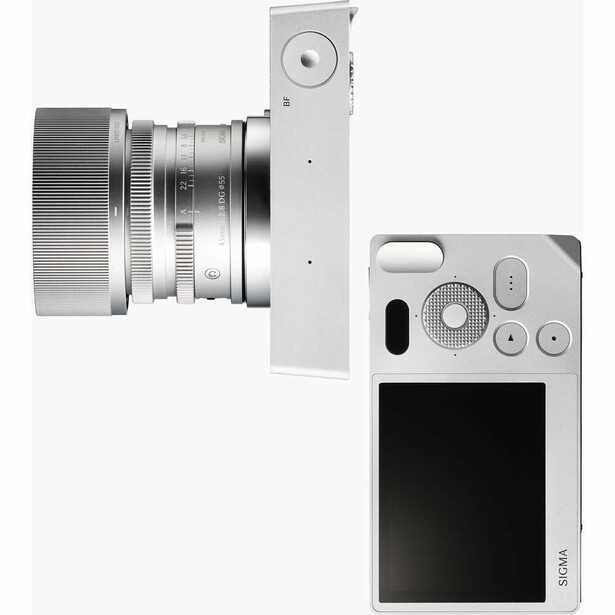
The Lumix S1 II ($3,199) and the more stripped-down S1 IIE rounded out the lineup. All three use the same redesigned chassis borrowed from the S5 II, making them dramatically smaller and lighter than the original S1 series. The S1R II in particular hits an aggressive price point that significantly undercuts the Canon EOS R5 Mark II (currently $3,899), while the Lumix S5 II and S5 IIX remain strong mid-range options. Leica's SL3 occupies the luxury tier at $7,485 with a 60 MP sensor and what is arguably the best build quality in the mirrorless market. And the Sigma BF, carved from a single block of aluminum with internal-only storage and haptic controls, is unlike anything else in any mount.
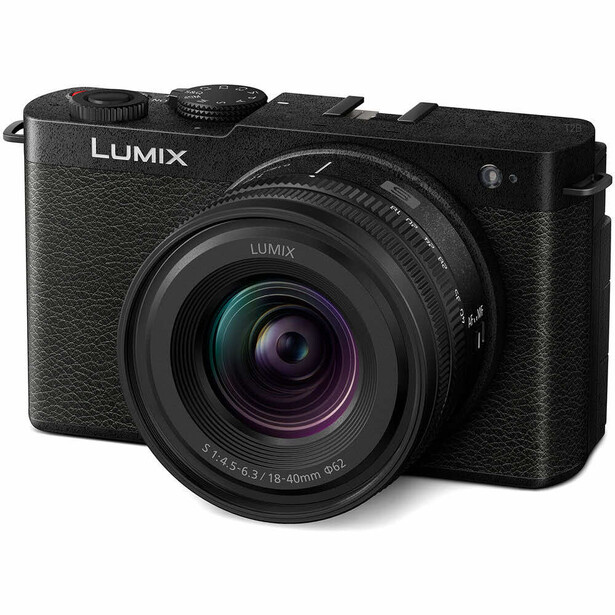
The problem is what is missing. There is no entry-level L-mount gateway. Canon has the EOS R10 and R50. Nikon has the Z50 II. Sony has the a6700. These cameras cost between $700 and $1,400 and serve as on-ramps to their respective ecosystems, hooking first-time buyers who later invest in lenses and upgrade to full frame bodies. L-mount has nothing equivalent. The cheapest current entry point is the Panasonic S9 at around $1,398, a compact lifestyle camera rather than a traditional enthusiast body. Sigma's fp and fp L are fascinating niche products, but they are not beginner cameras by any stretch.
This matters because ecosystems grow from the bottom up. The photographer who buys a $900 crop sensor body today is the photographer who buys a $3,300 full frame body in three years. Without that pipeline, L-mount is recruiting almost exclusively from photographers who already know what they want. And as we will see in the price accessibility section, even L-mount's mid-range bodies have a positioning problem that compounds the entry-level gap.
Autofocus Competitiveness: B-
This is the category where L-mount has made the most dramatic improvement and still has the furthest to go. For the first several years of the alliance, Panasonic's Depth from Defocus contrast-detect system was a genuine liability. It was slow, hunted in low light, and could not reliably track moving subjects. The system was so frustrating that it became shorthand in the photography community for "great video, terrible AF," and it drove away photographers who might otherwise have been drawn to Panasonic's excellent image quality, video specs, and competitive pricing.
The S5 II broke the pattern in 2023 by introducing phase-detect hybrid autofocus for the first time in a Lumix full frame body. The S1R II and S1 II continued that trajectory in 2025 with AI-powered subject detection. Reviews have been generally positive.
The ghost of DFD still haunts L-mount. Not because the current cameras are bad at autofocus. They are not. But because the reputational damage from 2019 through 2022 was severe enough that many photographers who tried and rejected early Lumix S bodies have not come back to check whether things have changed. Panasonic's autofocus is now competitive for most shooting scenarios. It is not yet best-in-class for any of them. And in a market where Canon and Sony set the bar for subject tracking in sports, wildlife, and fast-paced event work, "competitive" may not be enough to win back the skeptics.
Price Accessibility: C+
L-mount has a pricing paradox. The lenses are remarkably well-priced, particularly Sigma's Art and Contemporary lines, which routinely undercut equivalent Sony and Canon glass by hundreds of dollars. Panasonic's bodies are aggressively positioned relative to their specs: the S1R II at $3,299 is a genuine value proposition against a $4,299 Canon EOS R5 Mark II. But the system as a whole lacks the extremes of the price spectrum that drive volume adoption.
As mentioned, at the bottom, there is no entry-level L-mount gateway. Canon has the EOS R10 and R50. Nikon has the Z50 II. Sony has the a6700. These cameras cost between $700 and $1,400 and serve as on-ramps to their respective ecosystems, hooking first-time buyers who later invest in lenses and upgrade to full frame bodies. L-mount has nothing equivalent.
In the mid-range, L-mount does have bodies. The Lumix S5 II lists at $1,998 and is frequently discounted below $1,800. The S1 IIE slots in at $2,199, though it was recently discontinued. These are real options in roughly the same price territory as the Sony a7C II ($2,198) and Nikon Z6 III ($2,497). But the issue is not whether L-mount has cameras at these prices. It does. The issue is whether those cameras serve as "system movers" that pull new users into the ecosystem the way a Canon EOS R6 Mark III or a Sony a7 V pulls people into RF or E-mount. The S5 II is an excellent hybrid camera that punches well above its price in video. The S1 IIE is a genuinely compelling value, giving you the S1 II chassis and feature set (minus the partially stacked sensor) for a thousand dollars less than the full S1 II ($3,199). But neither the S5 II nor the S1 IIE has generated the kind of crossover buzz that gets Canon or Sony shooters to seriously consider switching. Panasonic's mid-range lineup is competitive on specs and price. What it lacks is the intangible gravity that makes photographers say "that is the camera I need to own." Whether that is an autofocus confidence gap, a marketing problem, or simply the inertia of smaller market share, the result is the same: L-mount has the bodies to compete, but has not yet translated them into the user-base growth the system needs.
Third-Party Momentum: B
Viltrox joining the alliance in September 2025 was the most significant expansion since DJI and Blackmagic signed on. Viltrox brings something L-mount genuinely needs: high-performance autofocus lenses at aggressive prices, backed by a product lineup that has matured rapidly across three distinct tiers.
At the top sits the LAB series, which represents Viltrox's statement that it can compete optically with anyone. The AF 135mm f/1.8 LAB announced the series by matching or exceeding first-party alternatives in optical testing. The AF 35mm f/1.2 LAB followed and earned near-universal praise. Viltrox has confirmed that 50mm f/1.2 LAB and 85mm f/1.2 LAB lenses are coming in 2026, which would give them a complete f/1.2 prime trinity. Below the LAB tier, the Pro series (including the well-reviewed 85mm f/1.4 Pro at $598) and the lightweight Evo and Air lines fill out a comprehensive range that covers everything from budget primes to flagship glass. These lenses are weather-sealed, feature OLED information displays (on the LAB models), declickable aperture rings, and VCM linear motors. They are, by any reasonable standard, professional-grade optics.
The significance for L-mount is that if Viltrox ports even a fraction of this lineup to L-mount, it would transform the ecosystem's affordability picture overnight. A 35mm f/1.2 LAB for $999 on L-mount would be roughly one-third the cost of a comparable Leica prime and substantially less than Sigma's $1,549 35mm f/1.2 DG II Art. Their first L-mount lens, the AF 16mm f/1.8 L, shipped in early February 2026 at $580, and the company has said more full frame L-mount lenses are in active development with its R&D team working closely alongside Leica's.
But there is a cautionary precedent. Samyang joined the alliance in 2023, and the expectation among L-mount users was that its popular E-mount lineup would be quickly ported over. That has not happened. As of early 2026, Samyang has released just one L-mount lens, the 35-150mm f/2-2.8, while continuing to ship new designs exclusively for Sony E-mount. As the L-Mount Forum community has observed, Samyang "missed the opportunity to establish themselves well in the alliance before Viltrox, Meike, and TTArtisans take over the lower end." Membership in the alliance does not guarantee active product development. It provides the technical license to do so, but the business case has to follow.
The broader third-party picture is mixed. The alliance's ten members include companies like Astrodesign (professional broadcast equipment) and Sirui (primarily a tripod and filter manufacturer that has released some cine lenses). DJI makes gimbals and drones, not interchangeable-lens cameras for photographers. Blackmagic makes cinema cameras. These are all legitimate members whose presence expands the ecosystem's reach into video and professional production, but they do not contribute to the stills photography experience that drives most consumer purchases. For working photographers, the third-party story is really about two companies: Sigma and, increasingly, Viltrox. If Viltrox delivers on its L-mount roadmap with the same pace and quality it has shown on E-mount and Z-mount, it could meaningfully expand L-mount's appeal to budget-conscious buyers. If it follows Samyang's pattern, the membership will be symbolic.
There is also an interesting competitive dynamic to watch. Sigma has been the de facto "affordable" L-mount lens brand since the alliance's founding. Viltrox's entry puts competitive pressure on that positioning, since many Viltrox lenses undercut even Sigma's Contemporary line. Whether that pressure accelerates Sigma's innovation or dilutes the value proposition of the alliance's most productive member is an open question. As Thom Hogan noted, "Sigma doesn't really seem to care how many cameras they actually sell. Sigma's low-volume camera business is a hobby playground for their design teams." Sigma's commitment to L-mount appears durable. But it is worth remembering that Sigma's interests and Panasonic's interests are not identical.
The Structural Question Nobody Asks
Behind all five of these categories sits a deeper issue that rarely gets discussed in gear reviews: the L-Mount Alliance is structurally dependent on a company whose primary business interest lies elsewhere. Sigma makes the best and most diverse L-mount lens lineup, but Sigma also makes those lenses for Sony E-mount, and increasingly for Canon RF and Nikon Z. Sigma's camera business, as Hogan observed, accounts for a fraction of its revenue. Panasonic's full frame mirrorless share measured just 7.7% in BCN's full frame mirrorless rankings for April 2025 in Japan, and the company did not noticeably increase its global shipments in 2024 even as Canon pushed past 2 million mirrorless units. Leica's volume is deliberately low. There is no L-mount manufacturer for whom L-mount full frame cameras represent a primary revenue driver.
This does not mean L-mount is doomed. It means L-mount exists because it serves the strategic interests of its three founding members in ways that go beyond unit sales. For Leica, it provides access to a modern lens ecosystem without having to develop one alone. For Sigma, it provides a mount where the company has full parity and influence, unlike the Sony and Canon ecosystems where Sigma is a tolerated guest. For Panasonic, it provides a differentiated position in a market dominated by three giants, with video-forward bodies that attract a loyal if small user base. These interests have aligned for seven years and show no signs of diverging. But alignment of convenience is different from alignment of necessity, and photographers considering a long-term investment in the system should understand the distinction.
Overall Grade: B
The L-Mount Alliance is the most interesting camera ecosystem in the industry. It is not the largest, the safest, or the most convenient. But it offers something none of the big three can match: genuine multi-manufacturer interoperability, a lens selection that punches absurdly above its market share, and cameras that range from Leica's handcrafted luxury to Sigma's avant-garde experimentalism to Panasonic's spec-sheet aggression. If you know what you want from a camera system and what L-mount offers aligns with that vision, there is no reason to hesitate. The glass is superb. The bodies are competitive. The autofocus works.
The risk is not that the system will collapse. It is that it will plateau. Without an entry-level on-ramp, without a clear answer to the market share question, and with structural dependency on a lens maker whose best products are available everywhere, L-mount's ceiling may be lower than its quality deserves. That is the tension the next few years will resolve: whether an ecosystem built on openness and quality can grow, or whether it will remain a brilliantly stocked boutique in a market that rewards scale.




Join the Fstoppers community for free
-
Post comments and join in the discussions
-
Browse the site ad-free
-
Share your work and get featured in the community
-
Compete in the photo contests for fun and prizes
2 Comments
I think its worth mentioning that the Sigma and Viltrox lenses aren't artificially held back on the L-Mount like they are on Sony's E-Mount. For example, with the Sigma 70-200 DG DN, the Sony A9III cannot match the 40 fps you can accomplish with the Lumix S1R2 despite having a much faster burst mode. Sony hinders all 3rd party lenses to 15 fps. For this reason, at the same price for each version of the lens, the L-Mount version is the better bargain. The optical quality of the Viltrox and Sigma's recent lenses have proven they can compete with Sony. Photographers will justify paying higher prices for Sony lenses because of the fps advantage.
I feel Lumix is a really great system, that kind of nails the best of each brands. Maybe lagging acceptably behind other brands in terms of AF. The lens system if rather complete. However, It seriously lacks a telephoto zoom like a portable 28-400mm or 28-300mm for example. That only prevents me from going for them. The thing is that it may unfortunately never come...