
There is a thing Leica does that no other camera manufacturer is willing to do, and it is the thing that makes Leica interesting even to photographers who will never own one. Leica refuses to pretend to be what it is not.
It does not chase Sony's autofocus benchmarks. It does not chase Canon's video specifications. It does not cram every possible feature into every new body and then market the result as a revolutionary all-in-one creative tool. It builds expensive cameras designed around a specific shooting experience, charges the prices that experience costs to produce, and lets the rest of the industry exhaust itself trying to be everything to everyone. That clarity, more than any individual camera, is what makes the brand worth paying attention to in 2026.
What Leica Is Actually Selling
The standard way to analyze a camera is by its specifications. Sensor resolution, autofocus points, video capability, continuous shooting rate, buffer depth, weather sealing, battery life. Leica is, by this standard, a bad value at every price point. The M11 at around $10,400 does not autofocus at all. The Q3 at $7,350 has a fixed 28mm lens. The SL3 at around $7,485 has autofocus that reviewers politely describe as "improved" rather than "competitive."
On a spec sheet, these cameras should not exist. Every competitor at every price point offers more capability per dollar. And yet Leica keeps selling them, keeps raising prices, and keeps finding buyers who want exactly what those cameras offer and nothing else. The honest answer to the question of what Leica is selling is not "cameras." It is a shooting experience that deliberately excludes most of what other camera companies add. The manual focus rangefinder of an M. The fixed-lens simplicity of a Q. The tank-built, L-mount commitment of an SL. Each one is a decision about what to leave out, and the leaving-out is the product.
The Cameras Where This Actually Works
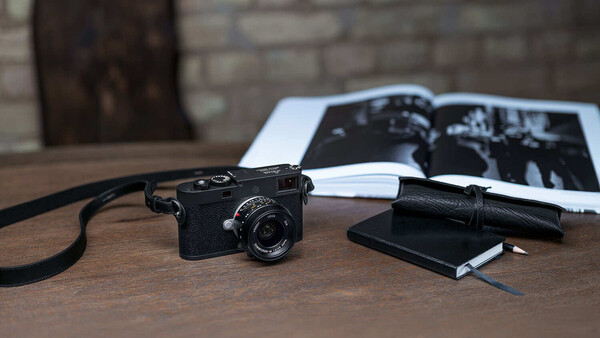
The M-system is the argument in its purest form. A digital rangefinder with no autofocus, no video-forward features, no twin card slots, and a user interface that has barely changed across decades of iteration. The M11-P at $10,400 in black (or $10,650 in silver chrome after the March 2026 price increase) is selling to photographers who want to be slowed down, who want to think about each frame, and who want a camera that asks them to do the work rather than offering to do it for them.
This is not a universal appeal. Most photographers would find the M system actively frustrating, and Leica does not pretend otherwise. The company's marketing does not claim the M is the best camera for sports, events, weddings, or fast-moving documentary work. It claims the M is the M, which is either what you want or what you do not.
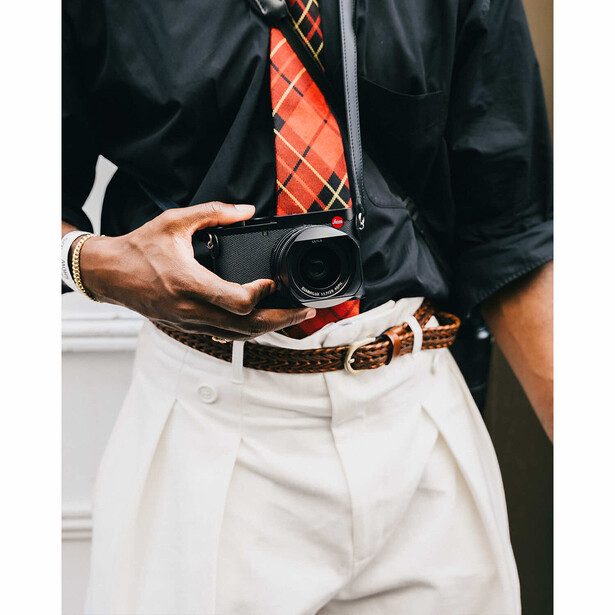
The Q-system broadens the appeal. The Q3 and Q3 43 are full frame fixed-lens compacts with autofocus, video, and tilting screens, aimed at photographers who want the Leica rendering without the rangefinder learning curve. The Q3 is the closest thing Leica makes to a "normal" camera, and it is probably the body most photographers outside the Leica faithful could imagine actually using. The price, at $7,350 for the 28mm Q3 and $7,950 for the 43mm Q3 43, is still steep compared to competitors, but the Q is where the Leica aesthetic translates most directly into a working tool.
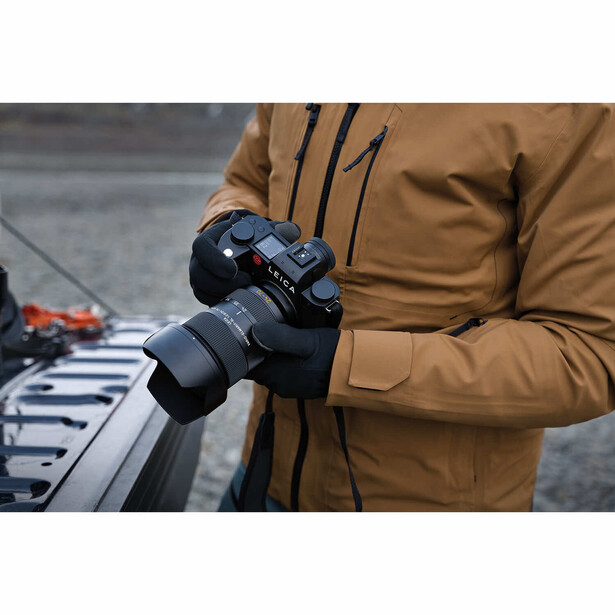
The SL-system is the interesting third path. The SL3 and SL3-S are full frame mirrorless bodies that opt into the L-mount alliance (shared with Panasonic and Sigma), which means Leica SL buyers have access to a genuine working ecosystem of lenses at prices below Leica's own glass. The SL3-S, in particular, has become an unexpected favorite among hybrid shooters because Leica has been shipping substantive firmware updates to it, including the Firmware 4.0 update in December 2025 that added Camera-to-Cloud connectivity, improved autofocus, and anamorphic support. Leica is not just selling nostalgia on the SL side; it is building a working platform for filmmakers and photographers willing to pay for build quality. For working photographers who want to explore the full range of genres and test whether a specific system fits their needs, The Well-Rounded Photographer covers eight genres with eight different instructors, and the craft principles transfer cleanly regardless of what body you end up shooting.
The Price Conversation That Everyone Avoids
Leica cameras are expensive. Leica lenses are more expensive. A kit with an M11 and two Summilux lenses can easily reach $25,000 in replacement value, which means that owning one is either a significant financial commitment or, for the many Leica buyers for whom it is not a financial commitment, a purchase that exists outside the normal consumer calculus entirely.
Leica knows the prices are high, and unlike much of the industry, it rarely tries to disguise that fact behind feature-per-dollar messaging. Even when it offers financing, the pitch is still fundamentally premium rather than entry-level. The company does not run "affordable entry point" marketing campaigns suggesting a first-time buyer can get into the M system for the price of a used full frame Sony. It sets the price at what the camera costs to produce at Leica's scale and margin, and it lets buyers decide whether that price is worth it to them.
The honesty cuts both ways. Leica is not for most photographers, and the company's pricing makes that clear without requiring an argument. A working photographer evaluating whether to buy a Leica body is evaluating a premium purchase with specific tradeoffs, not wondering if they are being tricked by marketing into buying something that secretly is not worth it. Whatever else you want to say about Leica, you always know what the deal is.
What Other Camera Companies Could Learn
The industry has spent the past decade trying to make every camera do everything. Mirrorless bodies are marketed as hybrid photo-video tools, vlogging cameras, sports cameras, studio cameras, travel cameras, and content-creation platforms, often all at once. The result is that most modern cameras do many things acceptably and almost nothing exceptionally, and the marketing has to work harder every year to convince buyers that the incremental differences between models matter.
Leica offers a counter-example. Every Leica camera does a few things extremely well and explicitly refuses to do many others. The M does not shoot video. The Q does not take interchangeable lenses. The SL does not pretend to be a rangefinder. Each body has a clear identity, a clear buyer, and a clear use case, and the prices reflect the depth of commitment to that identity rather than the breadth of features it supports.
Could other manufacturers sustain a business on that model? Probably not at scale. Leica's approach works because the company operates on small volumes and high margins, which is the opposite of how Canon, Sony, and Nikon have structured their businesses. But the lesson is available for anyone willing to look at it: a camera designed with a specific user in mind, built without compromises to chase secondary markets, and priced at what it is actually worth is a more coherent product than a camera that tries to be all things to all buyers. Leica proves the model is viable, even if most of the industry will never choose to follow it.
Why This Matters for Photographers Who Will Never Buy One
Here is the part that is easy to miss. Most of the photographers reading this article will never buy a Leica, and that is fine. Leica is not trying to sell a camera to most photographers. What Leica is doing matters anyway, because the clarity of its product strategy is a useful reference point for every other purchasing decision a photographer will make.
The next time you are evaluating a camera body, ask the Leica question: what is this camera actually for? Not what does it list on the spec sheet, not what does the marketing claim, but what specific shooting experience is it designed around? Most cameras cannot answer that question clearly because they were not designed around a specific experience. They were designed to list well on spec sheet comparisons. Leica's willingness to build cameras that have clear identities, clear tradeoffs, and clear audiences is a reminder that the spec-sheet approach to camera buying is a choice, not a requirement.
You do not have to buy a Leica to learn from Leica. You just have to recognize that a camera with a clear identity is worth more than a camera with better specs, and you have to be willing to ask which cameras on the market actually have one.
Leica will remain expensive. The March 2026 price increases made sure of that, adding several hundred dollars to most M-system bodies and lenses while the March 2026 U.S. adjustment left the SL3 and SL3-S bodies unchanged (a signal, perhaps, about where the company sees its competitive pressure). The brand will continue to exist on the periphery of photography's mainstream, loved by its own audience and dismissed by everyone else as irrelevant to working photography. Both positions are defensible. Both miss the more interesting point.
Leica is the most honest camera company because it builds what it builds, charges what it charges, and asks nothing more than that. In an industry increasingly dominated by marketing that promises everything and delivers competence at most things, that clarity is worth something, even if the price of the cameras themselves is out of reach. The photographers who benefit most from Leica are not always the ones who buy one. They are the ones who learned, from watching Leica, to ask what a camera is actually for before they buy one.




18 Comments
Thank you, Alex, for a rare piece without the usual Leica hate. That honesty is exactly why I moved from Fuji and Canon to Leica cameras and lenses. At this point I don’t really see alternatives for the way I work, even in medium format. My M11 is irreplaceable for ICM. The SL3 is irreplaceable in rain and snow. Leica doesn’t try to do everything, and doesn’t seem interested in pleasing everyone. That alone puts it in a different place than most of the industry, trying to please everyone with another feature-packed compromise.
Great article! Unfortunately it took me several years before I figured out exactly what you wrote about in this excellent article - buy the system that provides the shooting experience you like. These days almost any camera will take great photos, so figure out where you find enjoyment in photography before you go shopping. I only wish I could have read your article before I cycled through several camera systems (and a considerable amount of money) learning that lesson the hard way.
The statement "The result is that most modern cameras do many things acceptably and almost nothing exceptionally" is rebutted by a browsing through the year's latest international photo contest winners, most of whom are clearly producing exceptional images with un-Leica gear.
"The tank-built, L-mount commitment of an SL. Each one is a decision about what to leave out, and the leaving-out is the product." So the leaving out of proper autofocus is the product 😬👍
Great article Alex. "Every Leica camera does a few things extremely well and explicitly refuses to do many others". This was the reason I moved to a Leica Q2 Monochrom for my black and white photography.
Nice Article I'm one of those guys who will probably never own a Leica...
Indeed too expensive for this hobbyist...
Therefore I have wannabee Leica lenses for M43 Leica Vario Elmarit 24-60 Leica Vario Elmar 100-400mm and the 9mm Summilux....
That said aged 54 and a Streetphotography and Travel Photography fan I'm hugely fascinated from Leica....
And can't resist to give every 🔴-owner a 📷👍 in passing by...
Maybe when I someday change my Profession from Communinty Psychiatric Nurse to Bank Robber I would love to own a Q-camera 😉
Very appreciated. As a Pro shooter from the film era i found M Leicas most suited my work. Now the digital cameras are rewarding me every day with every press of the shutter.
I never tried a Leica, so I'm not here to agree or disagree on anything. Rather, the article makes me raise some genuine questions.
If it's about the shooting experience, the built quality, no autofocus, the absence of extra features, like video, one could say that, except for the rangefinder part, these are aspects that can be found in old, good DSLRs for a few hundred bucks.
I'm also confused by what to me sounds contradictory. The premise is that Leica does not rely on autofocus. When it does, it's not even competitive. So, at that point, by entering the AF arena (Leica Q), Leica is indeed entering the comparison zone, and thus, isn't that a lower-performing camera for more money?
As for the Leica SL: "a working platform for filmmakers and photographers willing to pay for build quality". But there are old and new cameras built like a tank, so, again, I'm not sure where the uniqueness lies here when it comes to construction quality.
"A working photographer evaluating whether to buy a Leica body is evaluating a premium purchase with specific tradeoffs". It sounds to me that the article is almost confirming the complaint I often hear about Leica.
"The industry has spent the past decade trying to make every camera do everything." I couldn't agree more, and you're right in that camera manufacturers are chasing a unicorn. But I think there's also no escaping this scenario.
Again, I haven't used a Leica, so I'm just reacting to what I read: "The Q does not take interchangeable lenses. The SL does not pretend to be a rangefinder." It appears to me that the M cameras could be the only line that makes sense.
Maybe Leica proves the model is viable because its model it's built on a strong, long heritage deeply rooted in its loyal user base.
Coming to what other brand could learn, I don't think it's as easy as the author of the article makes it sound.
A camera that would focus on a specific user in mind would most likely fail. Just in the past few days, I was thinking about this. I'm a happy Zf owner. Following some recent hype, I purchased an old Nikon D700. No video, no IBIS, a body designed rather ordinarily. Nothing seems particularly special about this camera. And yet, I enjoy shooting with it at least as I shoot with my Zf, if not more in some cases.
The D700 when paired with old Nikon AI/AI-s lenses, can read the aperture, while on the Zf, I have to turn the dial to tell the camera what aperture I'm using; the colors are truly beautiful as they say; twelve megapixels are more than enough; there's focus confirmation for my old manual lenses; knobs and dials for any needs; solid and sturdy, I wouldn't be worried carrying it in any kind of environment; apparently, great AF (I haven't tested it yet). How did we go from that to modern mirrorless with video, IBIS, and all the bells and whistles? The answer is users. When a new camera is rumored, you read all types of comments: I want IBIS or I won't buy it; I need at least 4k video; I need open gate; etc.
It's an endless loop: users ask, manufacturers provide. Rather than risking disappointment, they throw in the new camera, whatever the users ask. The more, the better, so the price can be inflated.
How many would really buy a "limited" camera? If not many, the manufacturer is losing money. The only way around is to market the product at prohibitive costs (like Leica does). And again: who would buy such a camera? No other brand has built its image on the luxury factor. How could they compete in such a market?
P.S. Sorry for the long post.
Well, well, well...
I wil keep it simple. I am a full time pro photographer, and I've been (and still am) using nikon bodies and the best lens this brand has to offer. I recently saved some cash and had a crazy convulsive need, owning a Leica, and I wanted a monochrom, to get rid of color distraction. M11 was waaaaay to pricy and at my age and my sight problems, telemeter system is a no go, especially for the 18k price tag. Decided to get the Q3 monochrom with the 28mm. As to say I descovered again the pleasure to photograph again, with a slower approach, and it has been a game changer for me.
Still expecting a EV1 monochrom in order to get those crazy sharp lenses.
I had a real Leica (either IIIG or F it was a long time ago), the kind that used film and I had to take it apart to change film IIRC! They seem to be well made cameras that are loved by some, ignored by most and hated by some.
Thankfully Leica don't do a small 'M' or else I would be very tempted.
As a former Leica owner, but especially as a photographer who worked on assignment for Leica Camera AG, I can say that nobody except Leica paid that good. And that means Leica respects the work of photographers for real. When they asked me to work for them and proposing me that quote I was surprised. It happened in 2013, already a pro but not experienced as today. Leica always will have a special place to me, because by working for them I discovered how much professional they are. This also gave me a comparison scale against other brands.
Whether or not Leica charges what it actually costs to produce is highly debatable. It is certainly true that most of what you're paying for is the "experience" rather than any tangible technical benefits. It is a bit like arguing whether a Rolex watch is worth what it costs. Does a Rolex tell time better than a Casio? Actually, no, it does not. The same can be said of Leica cameras. They do not record photographic images any more accurately than a Sony camera. In fact, in many measurable ways, a Leica produces technically inferior and less accurate image compared to less expensive alternatives. You are paying for the exclusivity of owning something that few other own. As long as you are honest about that you can produce equally honest images regardless of the equipment used.
Personally I see Leica about as "honest" as all the other brands. They have marketing just like everyone else. For instance the Q43 digital zoom is somewhat (slightly) misleading in that its just a digital enlargement, it doesn't give you any additional options apart from a digital crop. A family member who bought the Q43 was expecting a better result, and I think it was slightly down to the marketing, and she has started using her Canon again, as the digital zoom just did not match up to her experience with the canon and a prosumer zoom, the Leica remains her main camera, but not for all shooting scenarios. So you are right that there are clear compromises; and with the Q43 the marketing kind-of leads a little (just like for all other brands). Then there was the whole issue with the lens hood on the Q43 not working for the lens in macro mode without a custom adaptor, that was never mentioned anywhere in the marketing, and not something you might expect when spending that sum... I agree that Leica are unique, especially in terms of build quality and personal service, and I can see clearly the reasons for buying, and have been tempted myself. The body I use though is a nikon Z8 - and that for its flexibility (as maketted ;) ).
I never thought I would own a Leica camera to be honest, I was like what is so special about this camera and is it just an expensive toy that I really don't need?...... And then I had a fantastic 12 months in my photography business and I went let's just do this so I purchased a Q3 28 .... And I absolutely love it. I've probably had the camera now about a month and a half and it would take a brave person to take it out of my hands. Are the files out of it any better than some of the other high-end cameras? Probably not but what I love about is the simplicity of use and actually yes how it feels in the hand and you can only know that if you've used one. I figured at that cost that if I didn't like it I wouldn't lose any money on it. In fact you can own one for four or five years and sell the camera what you paid for it so in many ways it's actually not a risky purchase.. and I do love the photos out of it but more importantly I love the experience with the camera. It's got me back doing what I love and it's just going out with one camera one lens and capturing the world. Is the camera overpriced? probably? People will spend $7000 on a holiday that last three weeks ..? Go down to your local vintage car club guys will spend 50k or $100,000 on a vintage car that they will own for the rest of their life again. And surprisingly, I've been able to incorporate into my workflow for events. It makes a great event camera where you're shooting groups of people at parties, weddings and a whole bunch of other stuff.
Ahh Leica the Harley Davidson of cameras. Does nothing better than every competitor but charges like it does. After being a pro for 52 years in a town of 1.5M people I have never met a photographer who uses a Leica. An art director, dentist and a Lawyer maybe but no full timers.
I don't work full-time in photography but I have a reasonably well paid day job but I worked hard to buy mine. I think it's a bit of a generalisation to say the only people that owned them are doctors and lawyers and dentist that is a massive over judged Mensch and simply not true there are a lot of guys that just spend money on camer but probably driving. I will beat up car but they love their cameras. I don't think you can make a generalisation like that at all.
You're basically trying to justify Leica's insane prices by what it cannot do, or does but worst than camera system costing less by a factor of 8. That make no sense.
Personally, I hate the fact that Leica even exist. Why? Because the fact that they are profitable while charging insane prices is an incentive for other manufacturers to also raise their prices, which they have and do. It's anti consumers.
A Leica is a fashion accessory for yuppies, I will never own one, and I hate everything this company stand for.