

Why would anyone pay more for a camera that does less? In an era where our phones can shoot HDR video in a billion colors, buying a camera that only sees in black and white seems like a pretentious downgrade. But you might be surprised by these three cameras.
The dedicated monochrome camera is not a gimmick. It is arguably the highest-performance imaging tool available to photographers today. To understand why, you have to understand the fundamental flaw of almost every digital camera in existence: the color filter.
On a standard camera sensor, the pixels are color-blind. To create a color image, manufacturers place a microscopic mosaic of red, green, and blue filters over the pixels (usually the Bayer array). This means that to capture red light, the camera has to block green and blue light. You are essentially putting sunglasses on your sensor, blocking about one stop of light from ever hitting the photodiodes. Furthermore, because a red pixel cannot see green, the camera's processor has to "guess" the missing color data based on its neighbors. This process, called demosaicing, inherently softens the image and introduces digital artifacts. A monochrome-only camera removes this filter entirely.
When you strip away the Bayer array, three things happen. First, sharpness: every single pixel records true luminance data. There is no guessing, no interpolation, and no demosaicing blur. Each pixel captures "real" detail rather than interpolated data, giving monochrome files a per-pixel sharpness and micro-contrast that color sensors cannot match. Second, sensitivity: because you are not splitting light through colored filters, the sensor receives far more of the photons that enter the lens. High-ISO performance skyrockets. Noise does not look like ugly, splotchy "color noise"; it looks like tight, organic film grain. Third, dynamic range: the higher light efficiency and optimized sensor tuning translate to smoother transitions from shadow to highlight and better overall range.
It is not just a filter you apply in post. It is a fundamental change in the physics of light capture. If you are ready to commit to the grayscale, these are the five best tools to do it.
1. Leica M11 Monochrom: The Purist's Holy Grail
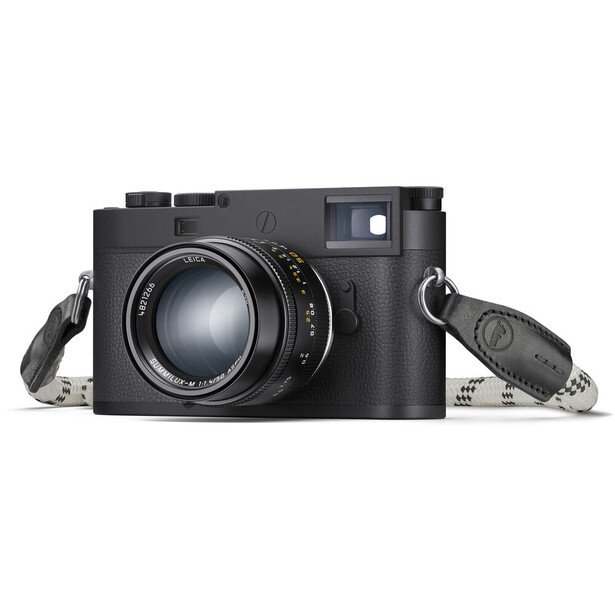
The Technology:
- 60 MP BSI CMOS sensor designed exclusively for luminance
- "Triple Resolution" technology: shoot at 60 MP, 36 MP, or 18 MP raw files
- Lower resolutions offer even better noise performance
- 256 GB of internal storage
The Look: The files from the M11 Monochrom are often described as "three-dimensional." The micro-contrast is so high that subjects seem to pop off the screen. Because the base ISO is 125 and the sensor is filter-free, the dynamic range is roughly 15 stops, allowing you to recover shadows that would be pure black on any other camera.
Best For: The fine-art photographer and the wealthy enthusiast who wants the absolute highest fidelity 35mm image possible, and who enjoys the slow, methodical process of a rangefinder.
Price: Approximately $10,160
2. Pentax K-3 Mark III Monochrome The Affordable Hero
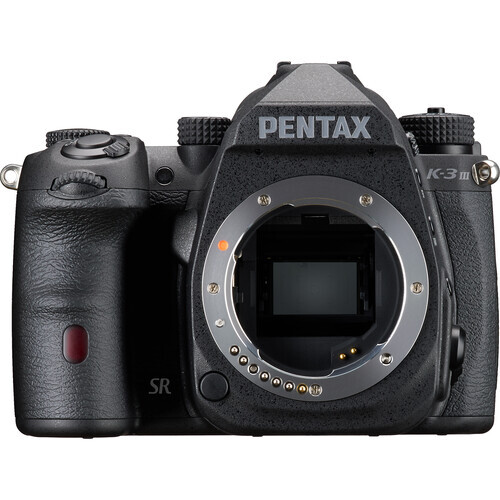
The Technology:
- 25.7 MP APS-C monochrome CMOS sensor
- True optical DSLR with pentaprism viewfinder
- Approximately 1.05x magnification with nearly 100% field of view
- 101-point phase-detection autofocus system
- Weather-sealed magnesium alloy body
The "It" Factor: The noise structure on the Pentax K-3 Mark III Monochrome is distinct. While Leica files are clinically clean, the Pentax produces a gritty, textured noise at high ISOs (6400 and above) that looks a lot like classic black and white films. It feels punk-rock. It feels analog.
Best For: The landscape photographer who shoots in bad weather or the DSLR die-hard who refuses to give up the optical viewfinder.
Price: Approximately $2,197
3. Leica Q3 Monochrom The Complete Package
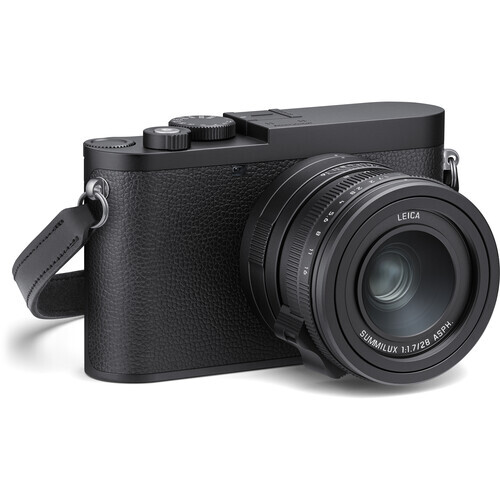
The Technology:
- 60 MP BSI CMOS sensor with Triple Resolution technology (60 MP, 36 MP, or 18 MP)
- Fixed Summilux 28mm f/1.7 lens with stabilization and macro mode
- Contrast-detection autofocus with subject detection and eye-tracking
- Tilting touchscreen for waist-level shooting
- Up to 15 frames per second continuous shooting
- ISO range: 100 to 200,000
- 8K monochrome video
Night Vision: This camera is basically a night-vision device. Because the lens is an f/1.7 and the sensor has no color filter array, you can shoot handheld in conditions where your eyes can barely see. The high-ISO performance is noticeably cleaner than converting color files to black and white.
Best For: Documentary photographers and travelers. It is the ultimate "one camera, one lens" setup.
Price: $7,790
4. Phase One IQ4 150MP Achromatic: The NASA-Grade Overkill
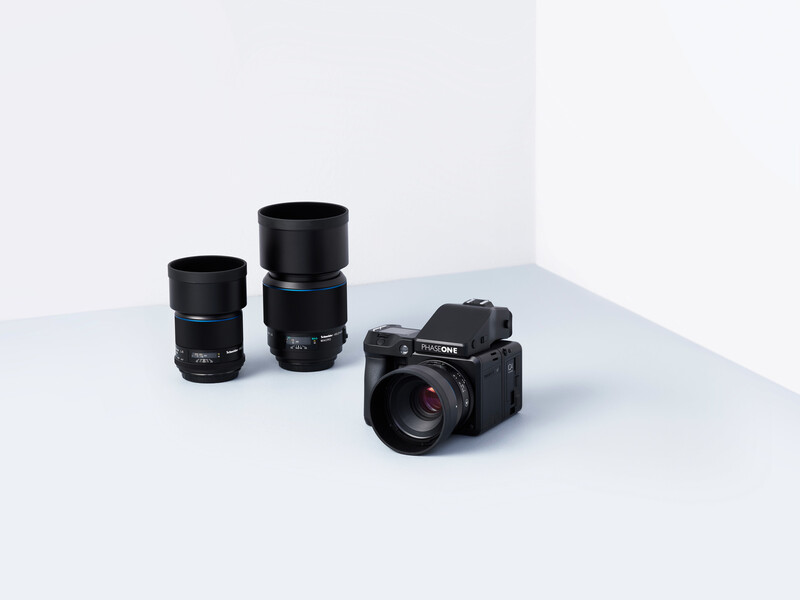
The Technology:
- 151 MP BSI sensor, 53.4 × 40mm (approximately 2.5× the area of full frame)
- No Bayer color filter array
- No IR (infrared) cut filter
The Trick: Because the Phase One IQ4 150MP Achromatic is "full spectrum," it sees light that human eyes cannot. By using different filters on the lens, you can shoot standard black and white, or you can shoot deep infrared, turning green foliage into ghostly white while keeping the sky jet black.
Best For: Archivists, scientific researchers, and high-end fine art landscape photographers who need to print massive gallery pieces.
Price: System starts around $50,000+ depending on configuration
5. Ricoh GR IV Monochrome: The Pocket Stealth Weapon
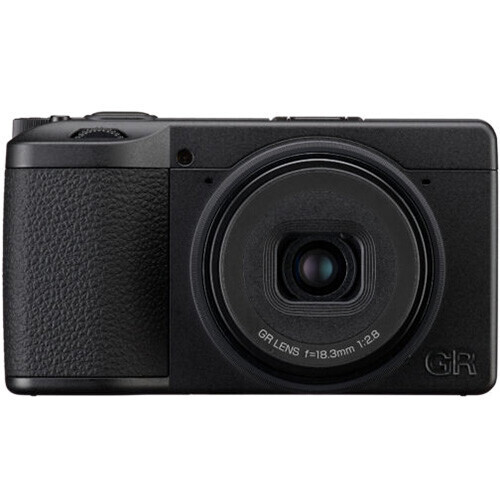
The Technology:
- 18.3mm f/2.8 lens (28mm equivalent), same optical formula as color GR IV
- Dedicated monochrome APS-C sensor, approximately 25.7 MP
- Genuinely pocketable body that slips into a jacket or jeans pocket
- ISO range: 160 to 409,600
- Dedicated Image Control options for black-and-white photography
The "Snap" Factor: The GR's superpower is "Snap Focus." You can pre-set the focus distance to 1.5 meters. When you press the shutter button, the camera bypasses autofocus and fires instantly. Combined with the monochrome sensor, it allows for instinctive, split-second capture of street scenes with high contrast and deep blacks.
Best For: Street photographers who want to be invisible. It looks like a cheap point-and-shoot, allowing you to work in public without drawing attention, while capturing raw files filled with rich tonal data.
Price: TBD
The Bottom Line
A monochrome camera is not for everyone. If you need versatility, if you want to shoot weddings one day and landscapes the next, if you ever need to deliver a color file, stay away. But if you have made a commitment to black and white as your primary medium, if you want to see the world the way Ansel Adams or Henri Cartier-Bresson saw it, a dedicated monochrome sensor is not a limitation. It is a liberation.
The Leica M11 Monochrom and Q3 Monochrom represent the pinnacle of the craft for those with deep pockets. The Pentax K-3 Mark III Monochrome offers surprising value for DSLR enthusiasts. The Phase One Achromatic is for those who refuse to compromise on resolution. And the upcoming Ricoh GR IV Monochrome promises to democratize the format even further.
The choice is simple: Do you see in color, or do you see in light?



Join the Fstoppers community for free
-
Post comments and join in the discussions
-
Browse the site ad-free
-
Share your work and get featured in the community
-
Compete in the photo contests for fun and prizes
14 Comments
The Pentax K-3 III went out of production in February 2025. It has now disappeared from dealers shelves, a real shame. You can still get a used one though, and it is a very robust camera so you can be reasonably confident it will be fully functional.
These are pretty much the only monochrome cameras being made, let alone being the best.
How ironic and unexpected it is that a color photograph was chosen for this article's lead image
Expect a black and white discussion.
Thanks for putting all of these monochrome options in one article. I own the Leica Q3 Monochrom, but the Ricoh really seems like a game changer for those who want to experiment with black and white photography and not break the bank. 95% of my photography in the 70's was Tri-X due to high cost of color. (Of course I bought film in 100 foot rolls and had a B&W darkroom setup.) Those Ricoh ISO numbers are unbelievable!
Thanks, Alex!
I realize it's a completely different deal, but a few older smartphone (like the Huawei P10) have cameras with dedicated monochrome sensors.
I shot black and white for most of my career, mostly due to time constraints and doing everything in house. That was all film and darkroom work. I fail to understand monochrome in this era, but as an old man I seem to find many things perplexing. If shooting monochrome inspires a person, then that is a good thing.
I also spend many, many hours in a darkroom, and while I certainly see the lure of monochrome images, a camera that shoots only black and white in the digital era makes no sense to me. You may (maybe) gain a little resolution, but you surrender the ability to post process and apply "filters" and other adjustments. And the thought of carrying a batch of filters again, well, no.
I hear you. Your used my keyword, "inspired." I have the Leica Q3 Monochrom because of the inspiration I get in telling a story in black & white. (I have other cameras that shoot in color, including the Leica Q3 43.)
I am blown away by the improvement in tonal graduations, low light performance and sharpness of the 60MP sensor.
I still shoot color, but there's something different and artsy when I pick up the Q3 Monochrom.
I have thousands of monochrome negatives from my film days most of which I'm dumping soon. I just don't have the room. Nowadays with my digital SLRs I'm happy. Shooting raw, I can shoot in monochrome. If I need a colour image I convert back to monochrome either in the camera or using quick software. I've just checked my pockets. I just have some pennies for the Phase One. Then again I could remortgage the house.
Why would you want a monochrome camera? You completely loose the option of adding a color filter in post to enhance the image. I get that you get more resolution,but I'd sure hate to lose post processing options.
Another good reason to shoot color.
Yes, a monochrome sensor will always be better than the same resolution color sensor. But as color sensor resolution has climbed beyond 60 megapixels, the converted monochrome images really are excellent. 20 megapixels of luminance data is more than enough for printing up to A3.
I've had enlargements way over A3 from my died in the wool 12mb Nikon D700 colour and monochrome images - 40" square and not a sign of pixilation. Huge over 40mb cameras are a con, their images not any better.