
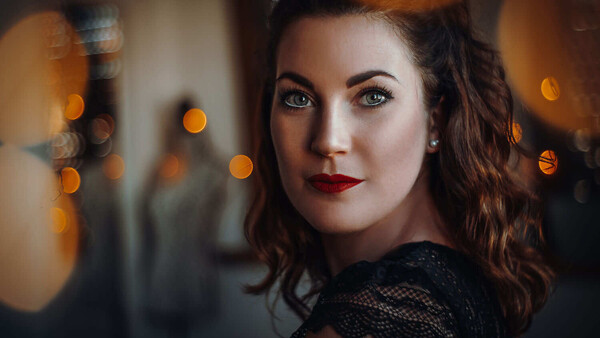
There's a quiet rebellion happening in photography right now. After a decade of manufacturers racing to produce the sharpest, most clinically corrected glass ever made, a growing number of photographers are deliberately reaching for something else. They want glow. They want swirl. They want the kind of optical rendering that looks like it was pulled from a dream sequence in a 1970s art film. They want character.
This isn't nostalgia for its own sake. When every modern 50mm f/1.4 from every major manufacturer resolves 40+ megapixels with near-zero chromatic aberration, the lens itself disappears from the creative equation. Your Sony GM and your Nikkor S-line and your Canon RF L will all produce functionally identical results. The images are perfect, and they are interchangeable, and increasingly, they look like they could have been generated by a machine. In 2026, that last point hits differently than it did five years ago.
The good news is that we're living in a golden age for "character" optics. Small manufacturers are reviving legendary vintage designs with modern tolerances, and creative lens makers are pushing the boundaries of what an optic can do in-camera. Every lens on this list is available right now at B&H, and every one will give your images something that's extremely difficult to convincingly replicate in post.
1. TTArtisan 75mm f/1.5 "Swirl" (M42 Mount) | $289
If you've ever scrolled past a portrait where the background appears to rotate around the subject like a visual whirlpool, you were looking at the signature of a Zeiss Biotar-type optical design. The original Zeiss Jena Biotar 75mm f/1.5 is one of the most coveted vintage lenses in existence, with clean copies selling for $2,000 to $3,000 on the secondhand market. The TTArtisan 75mm f/1.5 is a modern tribute built on a matching six-element, four-group double-Gaussian formula with updated glass types and coatings, and it costs less than $300.
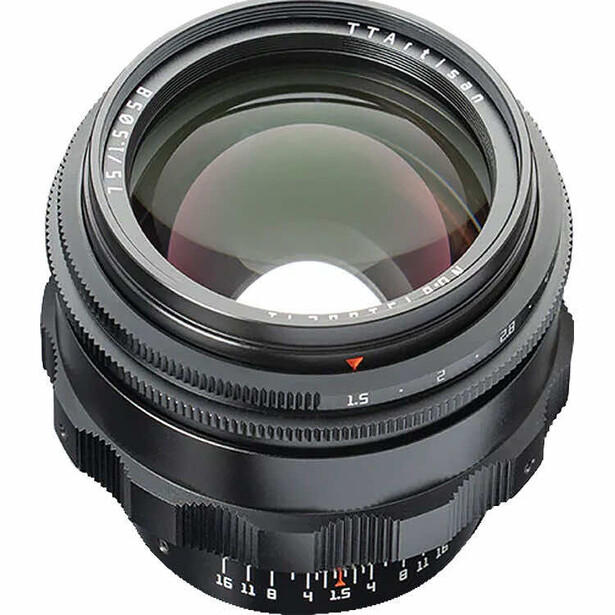
The swirly bokeh effect is most pronounced at wide apertures and on full frame or larger sensors. The background doesn't just blur; it wraps itself around the focal point in concentric arcs that create an almost three-dimensional sense of separation between subject and environment. Reviewers have mounted the lens on Fujifilm GFX medium-format bodies via adapter and found that the larger sensor extracts even more dramatic swirl, though expect noticeable vignetting and edge degradation at the extremes. At f/2.8 and beyond, the effect calms down and the lens renders more conventionally, so you're not locked into a single look. The M42 screw mount is the most universally adaptable mount in photography history. With a $15 adapter, this lens works on Sony E, Canon RF, Nikon Z, Fuji X, Leica L, and Micro Four Thirds bodies. Build quality is excellent for the price, with an all-metal body, metal lens caps, and aircraft-grade aluminum construction. If you want one lens from this list to experiment with, this is the one.
2. Meyer Optik Gorlitz Trioplan 100mm f/2.8 II | $999
The Trioplan's claim to fame is an optical effect that no other lens on the market can replicate: soap bubble bokeh. Where most lenses render out-of-focus highlights as soft, diffused circles, the Trioplan's triplet optical design produces highlights with bright, sharply outlined edges and darker centers. The effect is most visible at f/2.8 in backlit conditions. Shoot through a sunlit forest canopy, or aim at city lights at dusk, and the background transforms into a field of luminous, clearly defined orbs that look like they were illustrated by hand.

This is the Version II of the lens, a modern remake from the revived Meyer Optik Gorlitz brand. The update brings improved contrast and resolution, coated Schott glass for better color neutrality, a reduced minimum focus distance of about three feet, and a 15-blade aperture diaphragm that keeps those bokeh circles perfectly round even when slightly stopped down. The mechanical build is German-precision smooth, and the noiseless focus travel has made it popular among videographers. The Meyer Optik Gorlitz Trioplan 100mm f/2.8 II ships in practically every mount: Canon EF, Nikon F, Sony E, Fuji X, MFT, Leica L, Leica M, Pentax K, and M42.
3. Meyer Optik Gorlitz Primoplan 58mm f/1.9 II | $899
If the Trioplan is the graphic designer of the Meyer Optik lineup, the Primoplan is the painter. Originally developed by Paul Schäfter over 80 years ago, the Primoplan 58mm was legendary for its versatility: at maximum aperture, it produces a soft, swirling bokeh where highlights bleed into one another almost like watercolors; stopped down, the blur becomes creamy and smooth with just enough retained detail to feel organic rather than clinical. The transition from sharp focus to blur is gradual and painterly, with none of the abrupt "onion ring" patterning common in modern aspherical designs.

The Version II uses a five-element, four-group construction with coated Schott glass and O'Hara anti-reflex coatings on every surface. A 14-blade diaphragm keeps the aperture opening circular across its entire range, which is critical for a lens whose primary appeal is the quality of its out-of-focus rendering. Where the 100mm Trioplan is a specialist best suited to nature and macro-adjacent work, the 58mm Primoplan sits in the normal-to-short-telephoto range that makes it practical for street photography, lifestyle sessions, and environmental portraits. Wide open, it also flares beautifully in backlit conditions, producing streaky rainbow artifacts that add a filmic quality to the right scene. The Meyer Optik Gorlitz Primoplan 58mm f/1.9 II ships in the same mount selection: Canon EF, Nikon F, Sony E, Fuji X, MFT, Leica L, Leica M, Pentax K, and M42.
4. Voigtlander Nokton Classic 35mm f/1.4 II SC | $599
Voigtlander's "Classic" lens series is built on a genuinely interesting idea: what if you designed a lens using retro optical formulas from the 1960s and 70s, but manufactured it with modern tolerances and housed it in a contemporary body? The Voigtlander Nokton Classic 35mm f/1.4 II SC is the result, and the "SC" designation is the key detail. It stands for Single Coated. Where the multi-coated (MC) version of this same lens suppresses flare and maximizes contrast like any modern optic, the SC version deliberately uses a single-layer coating that allows more internal reflections, producing lower contrast, warmer tones, and vintage-style lens flares that photographers who shoot Leica glass often spend thousands of dollars chasing.
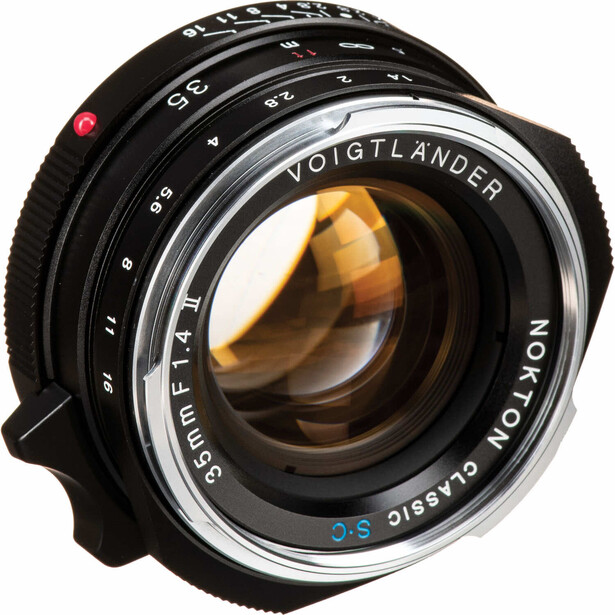
This is a Version II lens, which corrected a focus-shift issue present in the original. The symmetrical optical design includes an abnormal partial dispersion element that improves sharpness and reduces curvature of field while retaining the character of the older formula. A 10-blade diaphragm produces smooth, pleasing bokeh. This lens is made exclusively for the Leica M mount, which means it's rangefinder-coupled and works natively on any Leica M body. With an adapter, it's equally at home on Sony, Nikon, Canon, and Fuji mirrorless cameras. At $599, it's a fraction of the cost of Leica's own 35mm Summilux, and for photographers who prize rendering character over clinical perfection, many would argue the Voigtlander is the more interesting lens.
5. Lensbaby Velvet 85mm f/1.8 | $499.95
The Velvet 85 is essentially two lenses in one body, and which one you're using depends entirely on the aperture ring. Wide open at f/1.8, it produces a pronounced "velvety" glow: a layer of soft, luminous haze that wraps around highlights and skin tones. This isn't the same as shooting through a fog filter or smearing Vaseline on your UV filter. The effect is optical and three-dimensional; the glow interacts with the underlying detail in a way that feels like the light itself is being sculpted, though expect reduced microcontrast at maximum aperture as a natural consequence of the design. It's extraordinarily flattering for portraits, fine-art work, and anything where you want a dreamlike atmosphere straight out of camera. If portrait retouching is part of your workflow, the Fstoppers Skin Retouching Course pairs nicely with character glass like this.
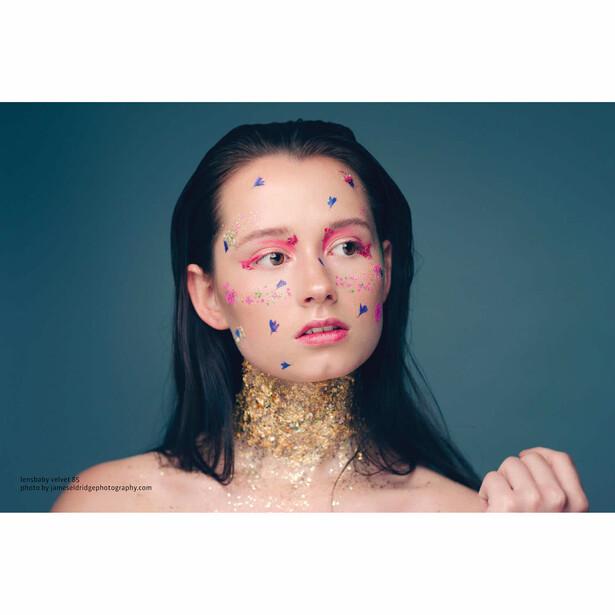
Stop down to f/4 or f/5.6, and the glow recedes almost entirely, revealing a surprisingly sharp and capable 85mm prime with a subtle vintage warmth that's more restrained and usable for everyday shooting. The lens also doubles as a macro with a minimum focus distance of just 9.5 inches and a maximum reproduction ratio of 1:2. A 12-blade diaphragm keeps bokeh smooth and circular at every aperture. The Lensbaby Velvet 85mm f/1.8 ships in native mounts for Canon EF, Canon RF, Nikon F, Nikon Z, Sony E, and Fuji X. The all-metal construction reflects a level of care that belies Lensbaby's reputation as a "toy lens" company. This is a serious creative tool.
6. Lensbaby Double Glass II Optic | $199.95
The Double Glass II is the most hands-on, physically interactive lens on this list. It's a 50mm f/2.5 optic built for Lensbaby's Optic Swap System, meaning you'll need either the Composer Pro II body ($369.95 as a bundle) or Lensbaby's Fixed Body to mount it. Once assembled, the lens creates a sharp central "sweet spot" of focus surrounded by an impressionistic blur that increases toward the edges. The size of that sweet spot is controlled by the 12-blade internal aperture: wide open, it's a tight circle of clarity in a sea of blur; stopped down, it expands to cover most of the frame.

The real party trick is the magnetic drop-in aperture disk system. The Lensbaby Double Glass II Optic ships with nine specialty aperture plates designed by visual artists in the Lensbaby community, featuring shapes like five-pointed stars, hearts, spirals, and even a flock of birds. Drop one of these plates into the lens, and every out-of-focus highlight in your image takes on that shape. It sounds gimmicky, but in practice it opens up in-camera creative effects that would be extremely difficult to replicate in post. The Optic Swap System is available for Canon EF and RF, Nikon F and Z, Sony E, Fuji X, L Mount, and Micro Four Thirds.
7. Lomography Daguerreotype Achromat 64mm f/2.9 | $299
This is the most historically significant lens on the list. It's a modern reproduction of the achromat doublet designed by Charles Chevalier in 1835, the very first optical formula created specifically for photography. Lomography took that original two-element doublet design, manufactured it with modern multi-coated glass, and housed it in a handsome aluminum body available in brass, silver, and black. Wide open, there's a radiant, halation-like glow that wraps soft light around every edge in the frame, producing an effect that looks genuinely historical.

Instead of a conventional iris diaphragm, the Achromat uses a Waterhouse aperture system. You physically slide small metal plates with different-sized holes into a slot on the lens barrel to change your f-stop, just as photographers did 180 years ago. The lens ships with six standard Waterhouse plates covering f/2.9 to f/16, plus six creative "Lumiere" and "Aquarelle" plates that produce different bokeh textures and glow effects. The Lomography Daguerreotype Achromat 64mm f/2.9 is available in Canon EF and Nikon F mounts, and since both are DSLR flange distances, adapting to any mirrorless system is trivially easy. At smaller apertures the lens sharpens up considerably, so you can shift from ethereal soft-focus to detailed rendering within the same session.
8. Lensbaby Twist 60 | $279.95
The Twist 60 is Lensbaby's take on the Petzval optical design, the same 1840 formula that Joseph Petzval created for portrait photography and that has experienced a massive resurgence in recent years. The defining characteristic of a Petzval lens is a sharp center surrounded by increasingly swirled blur toward the edges of the frame. The Lensbaby Twist 60 delivers exactly this: your subject stays crisp in the middle while the background spirals outward in a circular pattern that naturally draws the viewer's eye inward.

It's a 60mm f/2.5 manual-focus lens with a 12-blade diaphragm, and like all Petzval-type optics, the swirl effect is most pronounced at wide apertures on full frame sensors. On APS-C bodies, much of the edge swirl gets cropped out, so full frame shooters will get the most from this lens. It's built on Lensbaby's Optic Swap platform, and the Twist 60 is available with straight fixed bodies for Canon EF and Nikon F mounts, with broader compatibility through any Optic Swap body.
9. Thypoch Simera 35mm f/1.4 | $699
Thypoch is a relatively new Chinese lens manufacturer that entered the market in late 2023 and immediately turned heads. The Simera 35mm f/1.4 draws clear design inspiration from the legendary Kern Macro Switar, the Swiss-made cinema lens for Alpa 35mm cameras that has become a grail item among collectors. The depth-of-field scale, in particular, is a nod to the Alpa "Visifocus" system from 1951. The Simera doesn't replicate the Kern's exact rendering, but it shares the same philosophy: sharp center resolution with an organic, high-character fall-off toward the edges, and smooth, rounded bokeh from its 14-blade aperture diaphragm.
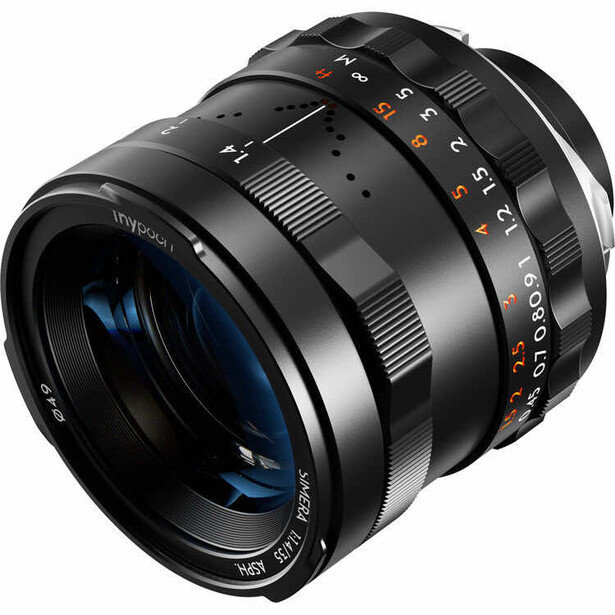
The build quality is genuinely remarkable for the price. The all-metal body features a unique depth-of-field scale that uses color-changing mechanical indicators (red-to-white vents that shift as you change aperture) to show your zone of focus at a glance. The aperture ring switches between clicked and declicked modes via a "Sun/Moon" toggle, making it equally suited for stills and video. The optical design uses three high-refractive index elements and one aspherical element, with a floating focus system that maintains sharpness from the 0.45-meter minimum focus distance to infinity. Originally a Leica M-mount exclusive, the Thypoch Simera 35mm f/1.4 is now available in Sony E, Nikon Z, Fuji X, and Canon RF. At $699 regardless of mount, it's a genuine alternative to Voigtlander and a surprisingly capable rival to glass costing several times more.
10. NiSi 15mm f/4 Sunstar | $199 to $249
Every other lens on this list is about what happens behind the subject. The NiSi Sunstar is about what happens in front of it. Most wide angle lenses need to be stopped down to f/11 or f/16 before point light sources resolve into crisp star patterns, and at those apertures you're deep into diffraction territory on high-resolution sensors. The NiSi Sunstar solves this problem. Its 10 straight-bladed aperture produces clean, symmetrical 10-point sunstars at every aperture, including wide open at f/4. That's a game-changer for landscape, architectural, and nightscape photographers who want dramatic starburst effects without sacrificing sharpness. If you're the type of photographer chasing dramatic landscapes and cityscapes, Elia Locardi's Photographing the World series is worth a look for post-processing technique that complements glass like this.
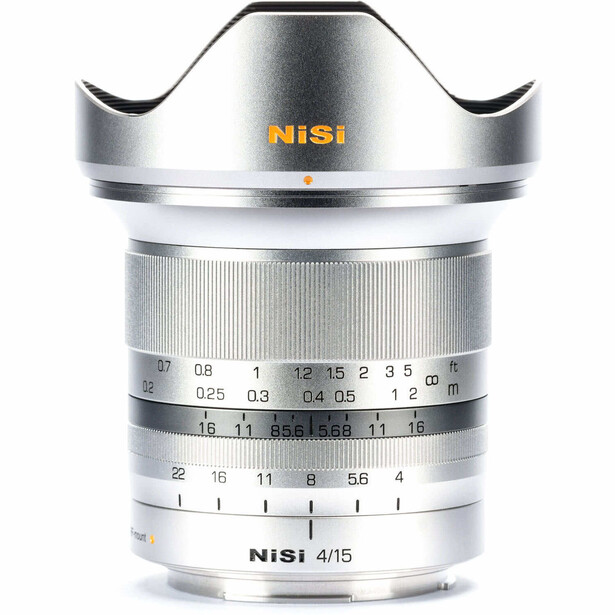
Optically, the Sunstar is no slouch in conventional terms either. A double-sided aspherical element and two low-dispersion elements control aberrations and distortion, producing sharp results across the frame. NiSi made its name in the filter world, and the 72mm front filter thread is designed to work seamlessly with NiSi's 100mm square filter system, a thoughtful integration for landscape shooters who rely on graduated ND and polarizer stacks. The NiSi 15mm f/4 Sunstar is available in Sony E, Nikon Z, Fuji X, Canon RF, and L mounts in both black and silver finishes. It's fully manual with a manual aperture ring, so you won't get EXIF aperture data, but for a specialty ultrawide at this price, that's a reasonable trade-off.
The Bottom Line
If you can only buy one lens from this list, the TTArtisan 75mm f/1.5 offers the most dramatic impact for the least money. At $289, it's an absurdly affordable entry point into a world of image-making that most photographers have never explored.
But the broader point is this: in a landscape increasingly defined by computational photography, AI-generated imagery, and lenses so optically perfect that they've become invisible, there's real value in glass that leaves its fingerprints on your work. Imperfections are not flaws. They're signatures. And in 2026, a human signature is worth more than ever.

Join the Fstoppers community for free
-
Post comments and join in the discussions
-
Browse the site ad-free
-
Share your work and get featured in the community
-
Compete in the photo contests for fun and prizes
15 Comments
"Character" aside, I absolutely hate the digital crunch and hyper sharpness of even the lowest end lenses when it comes to people photography. In almost every instance, the first thing I do when editing photos is turn sharpening all the way down in Lightroom.
I’m the same with street photography. Don’t care for modern sharpness and high megapixel detail. It just to me looks too digital and clinical. Give me character (flaws) any day. I’ve stopped Capture One automatically adding sharpness when importing photos.
I'd have think Alex could have include the 3 "dual bokeh" lenses from TTartisan ciné line in this list...
https://youtu.be/cPlQEjK1Y3w?si=QFFA03agTKEipq4c
Mitakon 65mm and FUJI 35 1.4
TTArtisan makes a copy of the Meyer Optik Gorlitz Trioplan 100mm f/2.8 II which is a fifth of the price, including adapter. I have one and can’t see why anyone would choose the much more expensive Meyer Optik over this. The fact the Meyer Optic has no electronic contacts means using an adapter with the cheaper TTArtisan doesn’t feel like a tradeoff.
That photo is not real, looks like AI to me.
Pentax shooters don't need a "quiet rebellion" for that, given that even modern Pentax-for-digital glass has retained some character, and the designers of these lenses have rarely pursued mere clinical sharpness. This doesn't mean that you get a lot of twirly bokeh and the like, but you do get optics with considerable pop and vibrant colour rendering. Not all of these lenses rank super-high in laboratory tests, so may underwhelm the measurebaters, but they tend to produce images that print amazingly well and look appealingly lifelike.
Rather than new wannabe lenses I get that awesome classic look using true classic lenses for substantially less. Canon FL and Canonmatic R lenses are amazing. The Canon FD lenses are basically the same as the coveted K35 Canon cinema lenses that sell for thousands.
So check out these lenses for $30 for some before wasting money on expensive modern wannabes.
Old lenses do this well: Helios 44 and 44-m, Jupiter 8 and older Tamron lenses with adapters for digital cameras.
Just to have a bit of fun...."Character" is really a lens manufacturer trying to get you to buy an optically flawed, imperfect lens, and telling you that these defects are product benefits. Kinda like a sports car going from zero to sixty in twenty minutes and the manufacturer convincing you that glacial excelleration is a safety feature.
Most sensible people will already know character is just the flaws of a lens producing certain characteristics but plenty find those flaws can produce pleasing and unique results. Modern corrected lenses produce cleaner results but can to some look too clinical and boring. Most of the highly revered photographers of the 20th century took their most celebrated photos using flawed lenses.
You are forgetting the first one and probably the best : the Leica Thambar 90 mm
How about old EF lenses? The affordable and legendary creamy bokeh lenses like 85mm F1.8 USM, 135mm F2L USM. Heck I even think the lower contrast and compact 70-300 DO IS USM has great bokeh for a zoom.
And if you don't feel like paying $199 to $999 for the character of imperfection, you can do something similar to many of these with a $10 UV filter and some Vasoline™, or save even the cost of the Vasoline by using nose grease on a finger.
The key is restraint. Start with a tiny bit around the edge. Then clean your finger, and use it to make swirls or other patterns in the grease. Or build up the layer to make it softer. You can touch it in a pattern to impart a pattern in the result. Creativity unleashed!
When you're done, toss the filter in the dishwasher — preferably not on lasagna night — then start all over!
Sorry but smearing Vasoline on a cheap filter is not the same. It cannot reproduce swirly bokeh or bubble bokeh and a lot of other vintage inspired characteristics. It might soften the image but that's it. Next you'll tell us you can just recreate these effects in Photoshop.🙄