
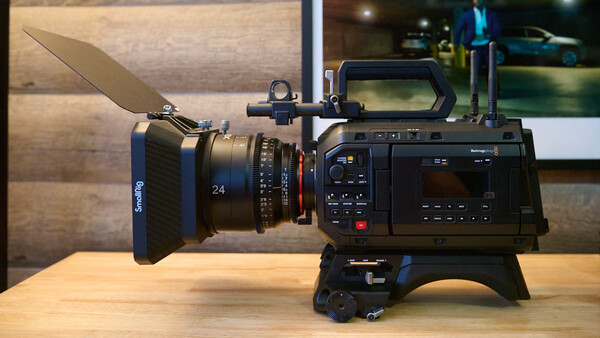
For my latest film, The Love Nest, I opted to shoot using the Blackmagic Design URSA Cine 12K LF. Here's a little of what went into the decision, as well as some of the results.
So, I’m often fond of saying that gear doesn’t matter when it comes to film and photography. Beyond a certain set of minimum criteria, the idea that you have to spend more to get a beautiful image is one of the most oversold concepts in the photographic arts. Case in point, filmmakers have been making amazing images for over 100 years without the advantages of super-high resolution, impeccable autofocus, or in-body image stabilization. So, the idea that you need expensive gear to be a legitimate filmmaker is simply crazy sauce.
But there are more subtle shifts where gear can make you more efficient at achieving a unique look and amplify your workflow. For instance, generally, when I’m shooting in resolution higher than 4K, it’s less because I’m trying to get an extra-crisp image and more because I already have plans for how I’m going to use that resolution for specific crops in post. Ideally, one has multiple cameras. But when one is shooting single-cam, knowing that the medium shot can double as a close-up in a pinch is a massive production advantage well beyond tech specs. And this advantage was why I was so interested in testing out the Blackmagic Design URSA Cine 12K LF.
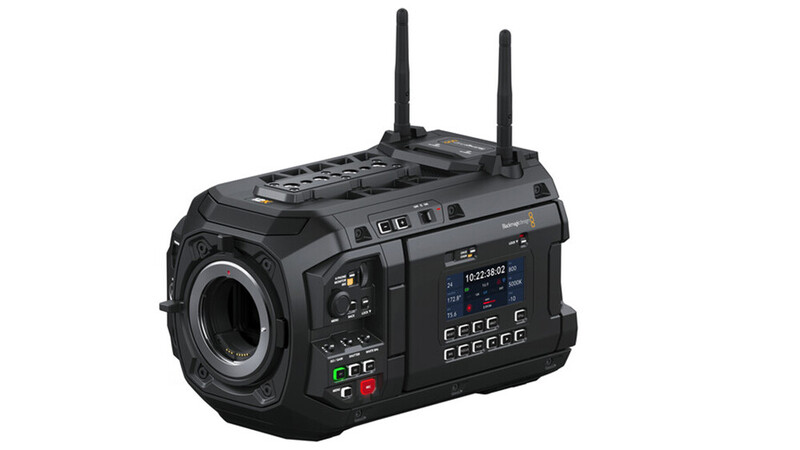
Now, at first glance, most people hear about the 12K and immediately ask a very logical question. Who in their right mind needs 12K? And there is logic in that complaint. Most broadcast TV signals are still, in 2026, sent out in 1080. Virtually never do I deliver a project in more than 4K. 12K files are understandably larger files, which means more storage needs on the back end. But I had two very specific uses for the added resolution during my time with the Blackmagic Design URSA Cine 12K LF that reinforce the adage: the right tool for the right job.
On the commercial side, I was shooting a campaign for a major pharmaceutical company. There was nothing particularly novel about the shots themselves, except that they would be making extensive use of VFX in post-production. A lot of intricate detail work that would require a team of VFX pros to go over the footage with a fine-toothed comb to alter minute details. I can’t tell you or show you more due to confidentiality. But this was exactly the kind of situation where more resolution is just what the doctor ordered. Being able to provide more detail in your image means you are able to give your VFX team more detail to work with, which means cleaner rotoscoping and cleaner VFX at the end of the pipeline. So, even though the final deliverable would be in 4K, using this specific tool leads to a much better result.
But that wasn’t the only project I used the Blackmagic Design URSA Cine 12K LF for during my time with it. I was also shooting my next film, The Love Nest, a romantic comedy set in the realm of dating apps. This would be a narrative project with limited special effects beyond some screen replacements, so the motivation to use the 12K was different from that with the commercial project.
Instead, I used the 12K for two practical reasons. The first is something that is true of the entire Blackmagic cinema camera line. I just have always really liked the Blackmagic image. That’s not a point I can prove mathematically. It’s just a subjective feeling every time I shoot footage with a Blackmagic camera. There’s something that feels more organic and filmic than most other digital cameras. And, quite simply, I like it.

I would be pairing the Blackmagic Design URSA Cine 12K LF with what is quickly becoming my favorite cinema lens, the Zhongyi ZONE 50mm T1, a lens built to work with larger sensors. The combination of the two provided an amazing image, in my humble opinion. True, I shot it, so I’m biased. But when I mean an amazing image, what I mean is that, judging against my own skill set, I was immediately able to tell the difference in the raw, ungraded footage shot with this combination versus any of the many other camera/lens combinations I work with on a regular basis. In this case, gear really did matter. Those two elements together gave me exactly the native look out of camera that I was looking for in a way that 18 years spent in post might not have been able to achieve.
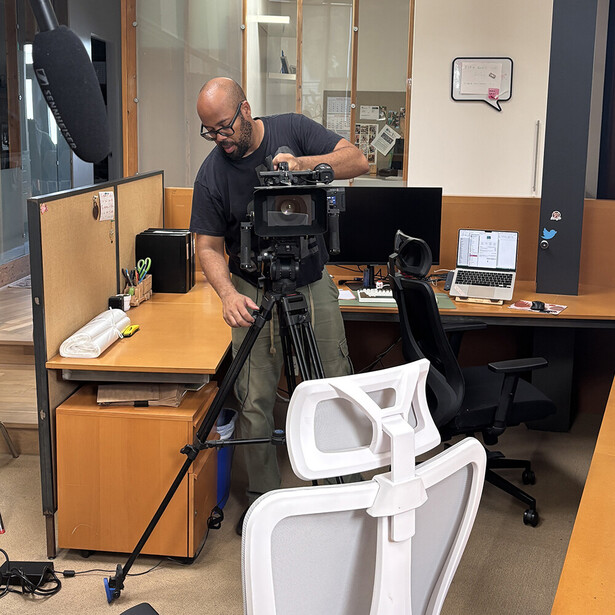
The second reason I chose the 12K for my film was equally practical. I was going to be shooting with a skeleton crew on a very tight schedule with a single camera. So, I knew I was going to need the extra resolution to both crop in to get two shots for the price of one on occasion and to be able to add camera movement since I wasn’t always going to be blessed with a dolly grip to help with smooth moves. I didn’t need the full 12K, so I shot the entire project in 8K, with the final project being in 4K 2.39:1.
One thing I was actually pretty surprised about was that storage didn’t actually go through the roof. I opted for 8:1 compression shooting Blackmagic RAW. That’s one thing I’ve always appreciated about Blackmagic cameras. The ability to choose your level of compression is key for a narrative project like mine where footage can really add up. But, objectively speaking, the data storage needs for my project were relatively light considering the whole project was shot in 8K. Uniquely, the camera records to proprietary internal 8 TB drives. This was more than sufficient for my project and meant that I never had to change my card for the duration of the shoot. To offload the footage to my computer, I used the Blackmagic Media Dock. I won’t lie, it took me a hot second to figure out how to get this connected, but that was more due to me than the device. While you can offload footage through other methods, I highly recommend the Media Dock as it makes working with the footage much easier.
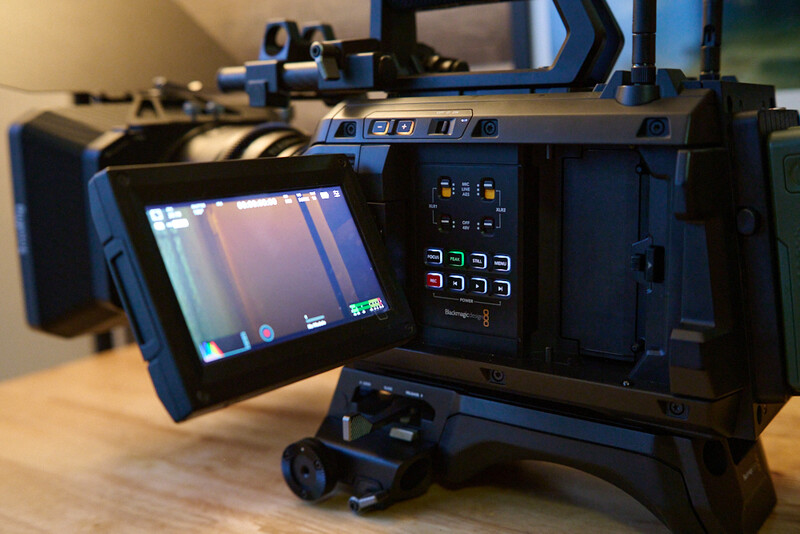
I was also impressed with the viewing options native to the 12K’s body. I pulled my own focus for this project. And while I wouldn’t be opening the Zhongyi ZONE 50mm all the way up to T1 very often, I was still nonetheless unsure that my questionable eyesight and manual focus skills would be sufficient. Well, I am proud to say that, with the exception of one or two takes, my manual focus skills held. And much of that is a testament to the ample size and clarity of the operator-side 5-inch flip-out touchscreen LCD. Coincidentally, on a less practical and more humorous note, the second, larger status screen LCD that encompasses the opposite side of the camera body was also an endless source of entertainment for my cast, who would remain glued to it when they were off-camera.
The Blackmagic Design URSA Cine 12K LF also has built-in antennas for Wi-Fi. And, very importantly, the unit I used had the Blackmagic URSA Cine EVF kit, which was critical in getting exactly the shot that I wanted without any guesswork.
The body itself is heavy. There’s no getting around that. This is a purpose-built cinema camera for team production. It’s meant to be tripod-mounted, stabilized, or shoulder-rigged. It’s a small thing, but I should also point out the extreme comfort of the shoulder rig that arrived with the unit. I only did limited handheld shooting on this project, but when the time came to whip the camera off of the sticks and test my balance, the rig held up perfectly. One actual advantage of a heavier camera is that it removes hints of microjitters that you might get from a smaller unit.
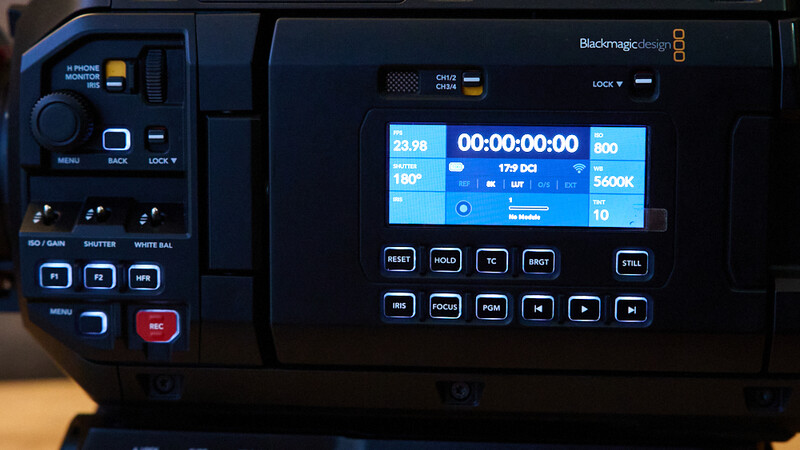
The other advantage of a larger body is that you have enough real estate to include lots of physical controls that don’t require you to go menu-diving every time you want to change your settings. Most important of them all, perhaps, are the built-in ND toggles. I had a mixture of interior and exterior shots, so never having to alter the contents of my matte box throughout the shoot was a major time-saver.
There is also plenty of I/O built into the body. With two SDI ports, dedicated timecode ports, and Ethernet connectivity, you won’t be at a loss for connection points. The body also has XLR audio inputs, although I recorded my audio separately, so I didn’t get a chance to put those to a full test.
I do have to note that the camera simply devours power. I was burning through large-capacity V-mount batteries like water. So that is a real consideration. For my interior shots, I took to plugging the camera into AC power to reduce my dependence on batteries. But that is a real consideration if you want to shoot mainly handheld or when moving quickly from set to set.
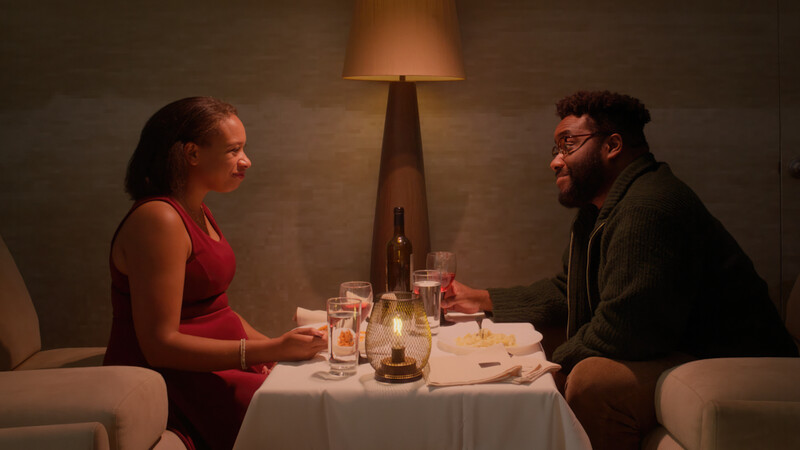
It’s always a pleasure when what a camera promises is exactly what it delivers. I chose the Blackmagic Design URSA Cine 12K LF for its image quality, resolution, and dependability. And that’s exactly what I got. Pairing that sensor with my Zhongyi lens and careful lighting provided me with an image that I could be proud of and really helped set this particular shoot apart. It is a fully featured cinema body purpose-built for team production workflows that afforded me the opportunity to shoot multiple shots at once, ensure adequate resolution for intense VFX, and get the native image out of camera that set my project up for success.



Join the Fstoppers community for free
-
Post comments and join in the discussions
-
Browse the site ad-free
-
Share your work and get featured in the community
-
Compete in the photo contests for fun and prizes