
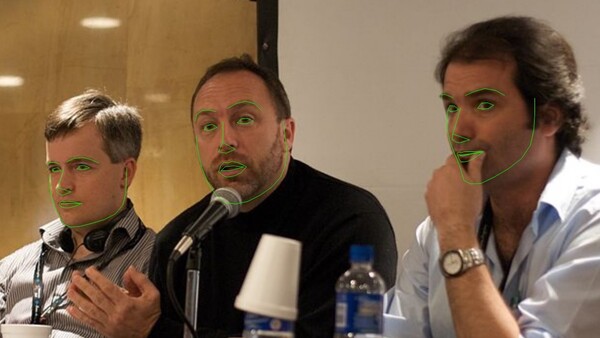
Your passport photo got rejected because of a shadow. Not a dramatic one. A soft gradient under your jaw, maybe a quarter-shade darker than your cheek, the kind of thing you would never notice and the clerk who handed the print back probably could not have described either.
The rejection did not come from a person's taste. It came from a specification written for a machine. Every rule that makes a passport photo look so lifeless, the flat frontal light, the closed mouth, the head sized to a fraction of an inch, the featureless off-white wall behind you, exists so that image can be turned into a number and compared against another number captured years later at a border, and so an officer at a desk can make the same comparison by eye. ICAO writes the standard for both, manual inspection and automated processing. The photo is not a portrait of you. It is an enrollment sample. Once you see it that way, the rules stop looking like bureaucratic fussiness and start looking like an engineering datasheet, because that is what they are.
The Rules
Start with the numbers, because the numbers are the most obviously non-human part. A US passport photo filed on paper has to measure 2 x 2 inches, or 51 x 51 mm, be in color, sit against a plain white or off-white backdrop, and have been shot no longer than six months ago. Renew online and you upload a digital file instead, cropped in the application itself, but the geometry it has to end up in is the same. Your head, measured from the bottom of the chin to the top of the crown, has to fall between 1 inch and 1 3/8 inches, which the State Department also expresses as 50 percent to 69 percent of the total image height. That is a tolerance band of about three-eighths of an inch for the size of your own head.
No portrait photographer thinks in those terms. A biometric system does. The reason the head has to be a specific fraction of the frame is that the matching software needs a predictable number of pixels between your eyes before it will trust the geometry it extracts. The international rulebook here is the International Civil Aviation Organization's Doc 9303, backed by the ISO/IEC face-image standards, and those documents get explicit about it. The floor is 90 pixels between the eye centers, with 120 or more preferred for the image that ends up on the chip. Those are a minimum and a best practice sitting side by side, not an old rule and a newer, looser one. The distance between your pupils is supposed to land at a little under a quarter of the image width. Frame your head too small and there are not enough pixels spanning your eyes to resolve the fine structure the algorithm depends on. Frame it too large and the crown or chin clips out of the standardized crop. The three-eighths-of-an-inch window is the range where a machine can reliably find your face and measure it the same way every time.
The plain background is the same idea aimed at everything that is not your face. A busy wall gives an edge-detection step false contours to chase, and a colored or shadowed backdrop can bleed tones into the segmentation that separates head from not-head. White behind you means the software can lift your face cleanly off the frame with nothing to argue about. The rule against glasses, added for US passports in 2016, closes another failure mode. Frames occlude the eye region, lenses throw glare, and the eyes are the single most important landmark cluster on the whole face. If the system cannot lock the eyes, it cannot align anything else.
How a Face Becomes a Number
To understand why the photo has to be so controlled, you have to know what the receiving system actually does with it, and it is not looking at your face the way you look at a friend's.
The first move is landmark detection. The software finds a set of fiducial points, the reliable anchors that every face has in the same rough places: the inner and outer corners of each eye, the tip and base of the nose, the corners of the mouth, the edge of the jaw. Classic face-recognition systems from the 2000s described this as mapping roughly 80 nodal points and measuring the relationships between them, the distance between the eyes, the width of the nose, the depth of the eye sockets, the shape of the cheekbones. The landmarks let the system perform a canonical alignment, rotating, scaling, and translating your face into a standard pose so that two photos taken under different conditions can be laid on the same grid.
Modern systems have moved past hand-counted nodal points. A deep neural network now learns its own internal features and collapses the whole aligned face into a compact string of numbers, an embedding or faceprint, often a few hundred or a couple thousand values long. Two photos of the same person should produce embeddings that sit close together in that mathematical space; two different people should sit far apart. Matching is then a distance measurement. The system computes something like the Euclidean distance between the two faceprints and compares it against a threshold. Under that threshold, it calls a match. Over it, no match, and the process falls back on a person: an airline agent or a CBP officer checks your travel document by hand.
The algorithm never decides you look like your photo in any human sense. It decides whether two vectors are close enough. Everything the passport rules control, the pose, the lighting, the expression, the crop, exists to keep the enrollment vector clean and repeatable so that the live vector captured at the border lands next to it instead of drifting across the threshold. The boring photo is a low-noise input.
Why a Smile Breaks the Match
People say you cannot smile in a passport photo. For the US that is not quite true, though the wording now depends on how you apply. The instruction for a photo filed with a paper form is a neutral expression, both eyes open and visible, and mouth closed. The online renewal page is looser on its face, allowing a neutral facial expression or a natural smile while telling you not to show your teeth. Either way a closed-mouth, relaxed smile gets through. What is banned everywhere is the exaggerated expression, the big open grin, the raised brows, the squint. And the reason that ban exists is pure geometry.
A face is not rigid. When you smile broadly, your cheeks rise, your eyes narrow, the corners of your mouth pull outward and up, and the visible proportions across the lower half of your face change. Every one of those shifts moves the landmarks the algorithm is trying to measure. The distance from the corner of your eye to the corner of your mouth changes. The eyes, which the system weights heavily, close down toward slits and offer fewer stable points to lock onto. A wide smile can even push cheek tissue up far enough to alter the apparent contour of the eye sockets. The enrollment photo is supposed to represent your face in its default, low-variance state, because that is the state the system can most reliably reproduce when it sees you again.
The failure is not abstract. Border and boarding systems compare a live capture of your face against the stored passport image. If your document shows a beaming grin and the camera at the gate catches you tired and neutral, the two embeddings move apart and the match score falls. Push it far enough and you cross the threshold into a false non-match, which sends you to that manual document check instead of through the gate, and to secondary inspection only if the discrepancy will not resolve. Neutral-versus-neutral is the pairing least likely to drift, because a neutral face is the one you can reproduce on demand at a gate years later. What the rule is not is a finding that neutral reads best. NIST's own work points the other way. A study of how subject and image variables affect three face recognition algorithms concluded that the effects are "strong and algorithm specific," that "few or no universal effects emerge," and, singling out one result, that "there is evidence that verification systems should enroll subjects with smiling rather than neutral expressions for best performance." Neutral became the global default because it is repeatable and because a human inspector can read it, not because testing crowned it.
Why Flat Light Wins
Shadow is the other great enemy, and it is the one that trips up more home-shot passport photos than anything else. The requirement is flat, even, frontal illumination with no shadows on the face, the neck, or the background. To a portrait photographer this is heresy. Shadow is how you sculpt a face, how you give a nose dimension and a jaw definition and cheekbones drama. The standards are less absolute about this than the US application form suggests. ICAO's portrait guidance wants uniform, balanced light without extreme shadow that obscures the nose, eye sockets, mouth or chin, and it warns the other way too: some shading has to survive, because the volume around the nose and eyes should render reality rather than a flat mask. Its own worked example puts the lights roughly 35 degrees off the lens axis, not on it.
The problem is that a shadow looks like a feature. When light rakes across your face from one side, it darkens the far cheek, deepens the eye sockets, and drops a wedge of shade under the nose and jaw. The edge-detection and landmark stages cannot always tell the difference between a real anatomical contour and a shadow's edge. A shadow under your chin can read as a jawline in the wrong place. A shadow beside your nose can shift the apparent nose width. Worse, shadows are not a property of your face. They are a property of where the light happened to be that day, so they do not reproduce at the border. Enroll with dramatic side light and the live capture under flat airport lighting will not contain the same dark shapes, and the two faceprints diverge for a reason that has nothing to do with your identity.
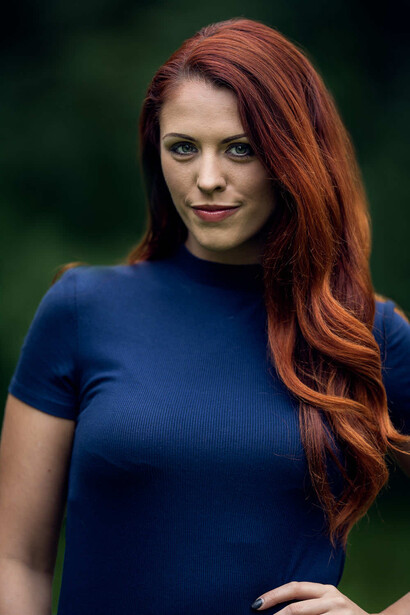
Even frontal light removes the variable. Light the face evenly and the structure left in the image is the structure that belongs to your head rather than to the lamp, which is what both the algorithm and the officer are trying to read. This is why studios that shoot passport and visa photos light them so blandly, usually with a pair of lights or a large softbox placed close to the lens axis to fill the shadows out. A single hard source aimed from one side would produce a gorgeous, and completely non-compliant, portrait. The compliant version is the one that looks like nobody tried, because trying, in the photographic sense, adds exactly the noise the system is built to reject.
The Boring Photo Is Everywhere Now
For a long time the passport photo was a strange little island of biometric rigor in an otherwise casual photographic life. That island is now the mainland. The same standards that govern the picture in your passport are quietly becoming the template for how you get photographed for identity everywhere, because the matching happens more and more often and in more and more places.
Look at what a US airport now does. Customs and Border Protection runs biometric facial comparison at 238 airports, matching a live camera against the photo already on file from your passport or visa, with the agency claiming an accuracy rate above 98 percent. The Transportation Security Administration had more than 2,100 of its second-generation credential-authentication scanners with face cameras running at over 250 airports as of April 2025, and plans to enable the technology at more than 400. Full coverage of every federalized checkpoint lane would take 3,585 devices, which at current funding is not scheduled until 2049. Its PreCheck Touchless ID program, which lets your face stand in for your boarding pass, has been rolling out to 65 airports, with 2026 World Cup host cities prioritized. Biometric exit, photographing travelers as they leave the country, was targeted for essentially full commercial-air implementation by the end of 2026. Every one of those checkpoints is running the same enroll-then-match logic your passport photo was designed to feed.
Retention makes the stakes concrete. The rules are not one rule. CBP deletes the live images of biometrically confirmed US citizens within 12 hours, and where the system identifies a citizen up front it bypasses storage altogether. Images of other travelers, including lawful permanent residents, are held up to 14 days in the matching service. Noncitizens who fall inside the statute get enrolled in the DHS biometric identity system, where an image can sit for up to 75 years. The image standard that once mattered for one 2 x 2 print now shapes a record that, for a lot of people, outlives them.
The template is spreading past travel too. The phone in your pocket enrolls a face template when you set up face unlock, and while the on-device systems use their own capture geometry, and some, like Apple's Face ID, deliberately enroll your face from multiple angles using infrared and depth sensing rather than a single evenly lit frame, the underlying demand is related: a controlled reference the live match can be checked against quickly and reliably. State ID and driver's license photos are increasingly captured against the same kind of standards, in part because those databases now get searched by face. The reason a DMV clerk tells you to wipe the smile and face straight ahead is the reason the passport office does. Someone, or something, is going to run your picture through a matcher later.
So the next time your photo comes back rejected for a shadow you cannot see or a smile that was apparently too sincere, understand what actually turned it down. Nobody is grading your appearance. You are being asked to produce a clean, repeatable input for a system that will measure the distance between your face and a number. The rules are strict because the tolerance is small, and the tolerance is small because the camera at the far end of the trip is not going to give you the benefit of the doubt.
Lead image: Automated landmark detection marks the fiducial points around the eyes, nose, mouth, and jaw that a matcher uses to align a face. Image by MTheiler, CC BY-SA 4.0, via Source.



Join the Fstoppers community for free
-
Post comments and join in the discussions
-
Browse the site ad-free
-
Share your work and get featured in the community
-
Compete in the photo contests for fun and prizes
No comments yet