
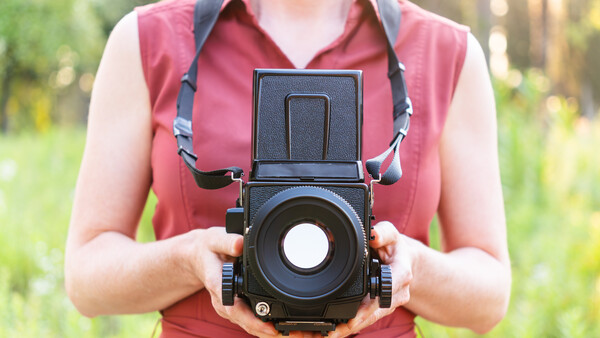
There's a Hasselblad 500C/M sitting in a pawn shop somewhere, priced at a few hundred dollars, gathering dust between the guitars and the jewelry cases. Thirty years ago, that camera was a professional's most prized tool—the key to a serious career. By today's standards, it would have cost several thousand dollars when new. Ten years ago, it was an expensive paperweight. Today, it's becoming desirable again, but for entirely different reasons. Medium format photography died and came back to life, and the story of how that happened reveals something essential about what we value in an image and why craft sometimes matters more than convenience.
The Golden Age (1950s–1970s): When Quality Was Everything
Medium format was the professional standard for decades because the physics were undeniable. A frame of 120 film, whether 6x6 cm on a Hasselblad or 6x7 cm on a Mamiya RB67, had roughly three to four times the surface area of 35mm film. The quality gap wasn't subtle. It was the difference between a contact print you could examine with a loupe and an image that revealed grain under any scrutiny. Sharper detail, smoother tonal gradations, and richer color depth weren't just marketing claims. They were measurable facts that showed up in every commercial job, every fashion spread, every serious portrait.
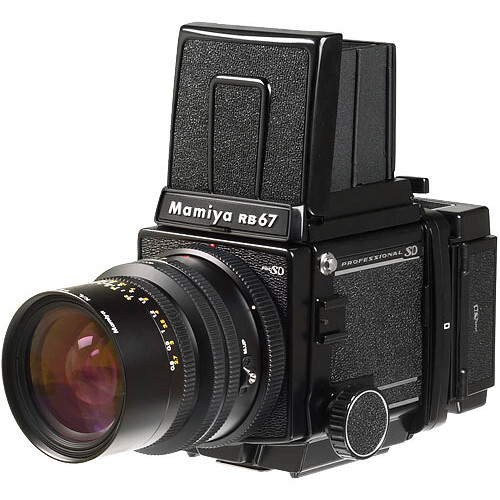
This was the era when NASA sent modified Hasselblad cameras to space (modified 500C bodies starting with the Gemini program, then 500EL electric models for Apollo lunar surface photography), when Diane Arbus shot her unsettling portraits on a Rolleiflex, and when Richard Avedon stripped fashion photography down to stark white backgrounds and 6x6 frames. Medium format wasn't just a choice. It was the baseline expectation for anyone who wanted to be taken seriously. Yes, it was slower than 35mm. Yes, it was heavier and more expensive. But that was precisely the point. Photography was a craft, and the tools announced your commitment to that craft before you'd exposed a single frame.
The Decline (1980s–1990s): Speed Beats Quality
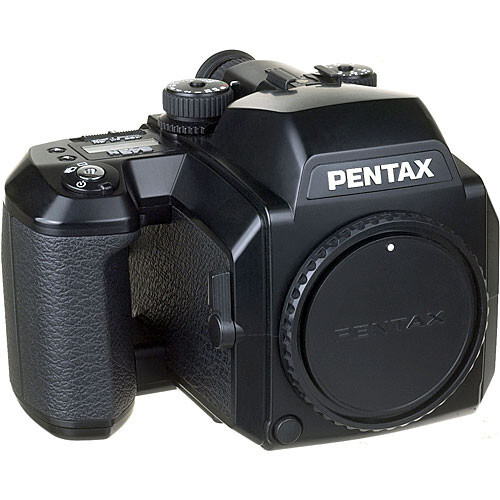
Then 35mm started catching up in ways that mattered more than ultimate resolution. Better film emulsions helped close the quality gap starting in the 1980s with improved stocks, then further with Fuji Velvia in 1990, building on earlier advances from Kodachrome 64 and Ektachrome. The difference stopped being obvious to anyone except people examining prints with magnifying glasses. More importantly, 35mm evolved features faster. Autofocus arrived in the late 1980s and became standard. Motor drives got quicker. Lenses became sharper and more diverse. Medium format did eventually gain autofocus in the late 1990s with cameras like the Pentax 645N, but by then, 35mm had already established its speed advantage. The cameras themselves had become more responsive, more intuitive, and more capable of capturing the moment rather than requiring you to carefully construct it.
Commercial photographers who'd built their careers on medium format found themselves in an uncomfortable position. They could continue shooting the way they always had and watch younger photographers with Canon and Nikon systems undercut their prices and deliver results that clients found perfectly acceptable. Or they could adapt, which meant abandoning decades of accumulated equipment and expertise. Many did both, keeping their medium format gear for specific high-end jobs while doing the bulk of their work on 35mm. The professional standard was eroding, and everyone could feel it happening.
The Death (2000s–Early 2010s): The Digital Abyss
Digital photography didn't just disrupt medium format. It nearly destroyed it. When Canon and Nikon released full frame DSLRs that cost $3,000 and produced files that could be endlessly manipulated in Photoshop, the economic argument for medium format collapsed overnight. Digital medium format existed, but the prices were catastrophic. Early complete systems in the late 1990s and early 2000s could exceed $100,000 when you factored in the camera, digital back, and computer workstation. By the mid-2000s, Phase One and Hasselblad digital backs had dropped to the $25,000–$40,000 range, but that still required a compatible camera body and support ecosystem. These weren't standalone cameras but modular systems where the back could be upgraded or moved between bodies, which made the economics even stranger. They were investments that only museum reproduction photographers, catalog shooters, rental houses, and the absolute pinnacle of commercial photographers could justify.
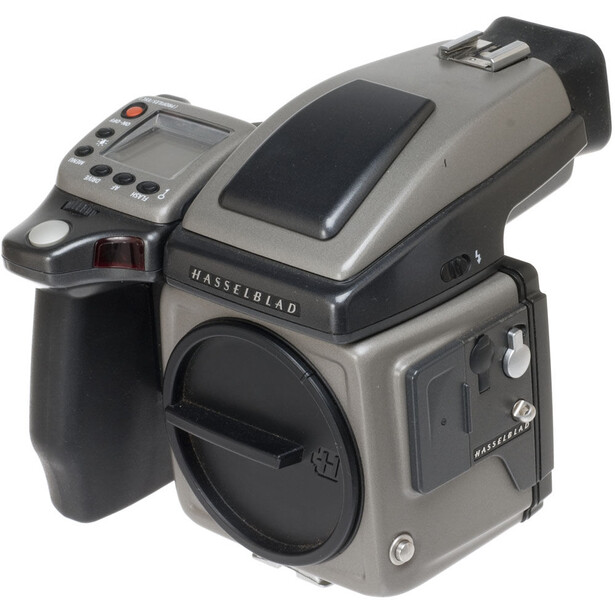
The cameras themselves told the story. Used Hasselblad 500 series bodies that had sold for several thousand dollars new were now available for a few hundred. Mamiya RZ67 systems showed up at estate sales. Film labs that specialized in medium format processing closed or scaled back their operations. For nearly a decade, medium format was effectively dead for everyone except fine art photographers with trust funds and the tiny handful of commercial shooters whose clients specifically demanded it. The format had become a monument to an older era of photography, admirable but impractical, like insisting on processing your own daguerreotypes.
The Zombie Years (2008–2015): Only the Elite Remained
These were the strange years when medium format existed only at the absolute extremes. On one end, Phase One and Hasselblad continued refining their digital backs for the microscopic market of clients who needed files so large they couldn't be opened on consumer computers. High-end fashion studios shooting for Vogue continued using Hasselblad H1 and H2 systems with digital backs. Product photographers created images for Times Square billboards. Archive work for museums digitizing collections. These were jobs where the cost of the equipment was a rounding error compared to the production budget, and medium format never truly disappeared from these rarefied spaces.
On the other end, a small group of film photographers kept the format alive through sheer stubbornness. Michael Kenna, for example, made his nocturnal landscapes on film medium format, valuing the slowness and contemplation it enforced. These weren't photographers adapting to digital. They were artists who'd chosen their medium and refused to compromise, understanding that the tool itself shaped the vision. But they were anomalies: respected but not remotely representative of how photography actually worked in the 2010s.
If you encountered someone shooting medium format during this period, they fell into one of three categories: wealthy enough not to care about practicality, committed to film as an artistic statement, or deliberately choosing inconvenience as a way to slow down and think differently. The format wasn't dead in the literal sense. It was simply irrelevant to the vast majority of photographers, a niche within a niche that was admirable but disconnected from how images were actually being made and consumed.
The First Pulse (2010–2014): Pentax Tests the Waters
Before anyone else saw the opportunity, Pentax made a radical bet. They released the Pentax 645D in Japan in 2010, with international availability following in 2011. This digital medium format camera launched at around $10,000 but quickly settled to street prices closer to $7,000–$8,000. This wasn't affordable in any normal sense, but compared to Phase One’s digital backs that had cost over $100,000 just years earlier, it was practically accessible. More importantly, it was a complete camera, not a back that required an existing medium format system. Weather-sealed, built like a tank, shooting 40-megapixel files that dwarfed anything full frame DSLRs could produce, Pentax was testing whether a market existed between consumer full frame and stratospheric professional medium format.
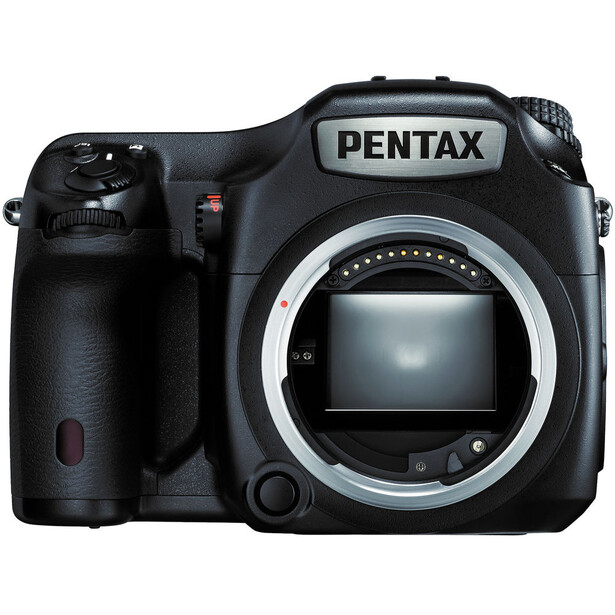
But Pentax also revealed the limitations of being first. They didn't have the marketing muscle to make medium format feel inevitable again. Their lens selection was functional but limited. Most crucially, they couldn't create the sense of momentum that transforms a niche product into a movement. The 645D and 645Z opened the door to affordable digital medium format, demonstrating the viability of the concept. They were essential pioneers, but they couldn't quite turn their technical achievement into a cultural shift. That would require someone else to walk through the door they'd opened.
The Resurrection (2016–Present): Fujifilm and Hasselblad Make It Cool
Fujifilm looked at what Pentax had started and understood something crucial about timing and presentation. When Hasselblad X1D was announced in mid-2016, followed by Fujifilm GFX 50S later that year, it became clear that multiple manufacturers were betting on the same shift. The GFX arrived in stores in early 2017 with a body price of $6,500, and with a lens, you had a working system for under $10,000. This wasn't just a larger sensor in a camera body. It was a philosophy about image quality, about the kind of files that would matter in an era when everyone had access to excellent full frame cameras. The GFX had retro-modern design that felt both serious and approachable. It had Fujifilm's renowned color science. Most importantly, it had momentum, the sense that this was the beginning of something rather than the end.
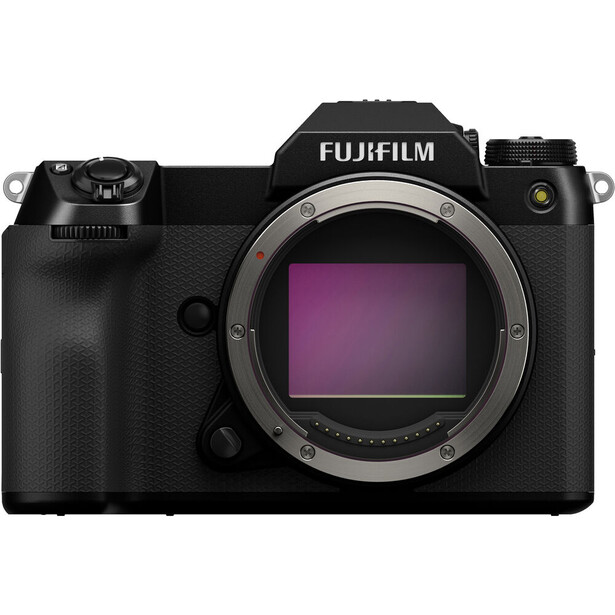
The market dynamics had completely inverted from a decade earlier. Full frame digital had become so good and so common that it stopped being differentiating. Every wedding photographer had a Sony a7 series or Canon R5. Every YouTuber reviewing cameras shot on full frame mirrorless. If you wanted your work to stand out, you needed something else. Medium format offered that distinction, not because most people could see the technical difference, but because the photographers themselves could feel it in how they worked and what they produced.
Why It Actually Came Back
The resurrection of medium format happened for reasons that had almost nothing to do with why it was dominant in the first place. In the film era, medium format meant more detail, period. In the digital era, it means something more subtle and perhaps more important: a different rendering. It's worth noting that today's digital medium format sensors vary in size. Most affordable systems use 44x33 mm sensors, smaller than film medium format frames like 6x4.5 cm. Higher-end systems like the Phase One IQ4 and Hasselblad H6D-100c use larger 53x40 mm sensors that approach film medium format dimensions. But regardless of exact size, the distinction still matters: smoother tonal transitions, a certain three-dimensionality that's hard to articulate but obvious when you see it, and depth of field that falls off differently—more gently, more naturally. Fujifilm's film simulations added another layer, bringing color science that felt distinctive in an era of increasingly homogenized digital rendering. These qualities matter less for technical reproduction and more for aesthetic distinction.
Modern medium format forces you to work differently, and that difference has value. No 20-frame-per-second burst mode. Larger files that make you think before pressing the shutter. The cameras are generally bigger, heavier, more deliberate. In an age of computational photography and AI-assisted everything, shooting medium format is a statement about craft and intentionality. For photographers drowning in automation and infinite options, it feels real in a way that's increasingly rare.
The technology finally caught up to make this possible without masochism. Modern digital medium format has autofocus, image stabilization, and reasonable ISO performance. The arrival of in-body stabilization with cameras like the Fujifilm GFX100 in 2019 was transformative. It's no longer a punishing choice that requires you to sacrifice speed and convenience on the altar of quality. You can shoot medium format handheld in available light and get results that would have been impossible just a few years ago. The format came back because it stopped being exclusively about ultimate technical quality and started being about a distinctive way of seeing.
Perhaps most surprisingly, social media played a role in medium format's revival, though not in the obvious way. The technical advantages of medium format aren't visible on compressed platforms like Instagram, where files are downsized and heavily processed. Instead, the revival is cultural. Medium format became a signal, a way for photographers to communicate their commitment to craft and quality even when the final delivery platform couldn't display those differences. When photographers share medium format images online, they're not just showing photos. They're demonstrating membership in a club that values craft over convenience, quality over quantity. The camera itself became part of the photographer's identity and brand.
The New Medium Format Photographer
Who shoots medium format now bears almost no resemblance to who shot it in 1975. Then, it was commercial photographers, wedding studios, and serious photojournalists who needed the quality for reproduction. Now, it's landscape photographers who have time to work deliberately, portrait photographers differentiating themselves in a crowded market, and fine art photographers who want their process to match their aesthetic. The economic justification has shifted from technical necessity to creative distinction.
The cameras themselves have evolved to match this new market. They're smaller than their film ancestors, more portable, more adaptable. The Fujifilm GFX system has zooms and fast primes. Hasselblad makes compact medium format cameras that don't look like technical instruments. Phase One still exists at the ultra-high end, but they're now the exception rather than the only option. Medium format has fractured into tiers, from used digital bodies that cost less than new full frame cameras to cutting-edge systems that still command premium prices but no longer require mortgaging your house.
What Comes Next
The resurrection of medium format suggests something important about the future of photography. We're not moving inexorably toward smaller, faster, more automated cameras. There's a countercurrent, a desire for tools that enforce deliberation, that create images with a distinctive character, that resist the homogenization of computational photography. Medium format won't ever return to being the default professional format. But it doesn't need to. Its value now lies precisely in being different, in offering an alternative to the algorithmic smoothness of modern digital imaging.
Pentax proved the concept was viable. Fujifilm made it aspirational. Hasselblad added prestige. Together, they resurrected a format that everyone assumed was finished, and in doing so, they revealed that photographers don't always want the most convenient option. Sometimes, they want the option that makes them work differently, think harder, and produce images that feel distinct in an era when everyone has access to technically excellent cameras. Medium format died when it stopped being necessary. It came back to life when it became meaningful again, but for entirely different reasons. That transformation might be the most interesting story in modern photography, a reminder that obsolescence isn't always permanent and that craft can reassert its value even in a digital age.


Join the Fstoppers community for free
-
Post comments and join in the discussions
-
Browse the site ad-free
-
Share your work and get featured in the community
-
Compete in the photo contests for fun and prizes
28 Comments
Thank you, Alex, great article! It’s rare to see the technical history of photography told through the real experience of photographers.
I really like the point that medium format is no longer a necessity but a conscious choice. It’s one thing to admire the specs, but it’s another to really understand how to use that potential. Smooth tonal transitions and that unique breathing in an image can often be achieved with top-tier lenses, though the cost ends up close to medium format or even higher. But once you get to printing, that’s where medium format truly shows its value.
I’ve faced the same choice between the Leica SL3 and the Hasselblad X2D and decided to stay with full frame for now, though the idea of a medium-format Leica keeps getting harder to resist.
No question the quality is better, but sometimes resistance is easy...$$$$
Still rocking a Mamiya RZ67 Pro II and even a couple of large format cameras, all film. Digital cameras can rival these formats now, for sure, but there is still magic in film, especially when you develop it yourself to boot (and then there's infrared photography, with digital unable to match the uniquely dreamy look of film no matter how much post-processing is done).
I shoot digital for most things, but the whole process of shooting and developing film is like comfort food for the soul. Digital feels like too much of a shortcut to get the full dose of dopamine only the dark room can inject. And, hoo boy at the almost electric sense of excitement that comes from holding 6x7 and 4x5 black-and-white negatives.
All of my nostalgia for shooting film vanishes the split-second I get a whiff of fixer.
Cool story bro. Let's see how many RZ67 Pro II's sell now.
Like endless amount on eBay?
First, you posted that "film sucks," and then you edited it to cast personal aspersions. Either you're a bot, or you need a hug. Either way, if you can't contribute constructively to the conversation, kindly stay the f*** out of it.
People think film looks good because their eyes are tricking them. You can't trust anything you look at through a loupe either. Whenever you look closely at something the eye rapidly scans the image and increases the perceived resolution. Hard copies look sharper than they really are. Scan them in and blow them up to 100% view so you're inside the scanning resolution of the eye and you'll see what I mean... boat loads of grain... Not to mention, most MF lenses aren't sharp wide open either.
Most exciting change in photography for me, in decades. The files from my GFX are unbelievable. Almost endless dynamic range. So much nicer to work with than R5 files. I love it
And you're very lucky to have that camera.
Interesting article and well written. I grew up shooting medium format and was my preferred cameras. I started shooting digital in 96 with the Kodak 460 attached to a Nikon film body. The sensor was small, smaller than the APC sensors and the crop factor was extreme. Of course the technology was new and it was expensive to make sensors. The failure rate was high and size of the sensor was limited. This as much as anything prevented the development of medium format digital cameras. It took a few years for medium format sensors to come along.
I would not have said 35mm was catching up in the 80s with better emulsions even though that is a technically true statement. Before the 80s, 35mm rangefinders and SLRs were common for professionals who needed lighter cameras, faster loading and unloading film and the ability to shoot on the move. Photojournalists following election campaigns or diving into a foxhole with soldiers used 35mm. Sports photographers used 35mm. While some medium format may have been used, if you run into a Nat. Geo. photographer in the middle of the jungle photographing people living mostly isolated lives, she probably had a 35mm camera. So medium format defined certain professional roles, but surely not all of them.
Yes - my father had a Mamiya for fashion & portraits, but OM2 for travel advertising work, where he knew it would be printed in a newspaper or brochure that wouldn't take advantage of image quality anyway. Studio clients got MF, travel got 35mm, and everyone stayed in their lane.
An interesting coincidence based on a totally speculative rumour. The first Fujifilm GFX came out in 2017. Two years later, Olympus brought out the huge E-M1X with its side and bottom grip but with a 4/3 sensor. It was reasonably successful as a wildlife camera. The body was supposedly a prototype for a MF camera. Image from DPR.
Trying to tell that 44x33 has something to do with medium format is diabolical. You guys should stop this circus.
Sony. Sony? Yes, Sony. The sensors in these Fuji and Hasselblad medium format cameras are manufactured by Sony. They are technically identical to their smaller camera sensors just larger.
Those old Phase One, Leaf and Hasselblad sensors were manufactured on a small scale by one of three or four companies. One of those manufacturers was Kodak but that's another story altogether. Those sensors were CCD sensors unlike all other sensors which are CMOS sensors. The CCDs yielded superior results but were not at all versitile. They had to be used at or near their native ISO and they needed a lot of electricity. You never saw those cameras out in the wild, they required a support system. Under controlled circumstances though they were spectacular.
CCD sensors were however difficult to manufacture and unreliable. They said that if you had a Phase One you needed two of them because one was broken. I met the digital camera boss at Hasselblad at a meet and greet event here in NYC when the Sony sensors were first introduced. He told me that at least ten percent of the older sensors they received were rejected after testing. I asked him how many of the new Sony sensors were getting rejected and he told me, none. They were all perfect. I asked if Sony had just put those other sensors companies out of business and he said absolutely yes.
Photography isn't always just about image quality. A camera has to fit into your life. So now we have medium format cameras that are versitile and friendly. They fit. Thanks Sony.
Greatly enjoyed reading this well-written & well-informed article. Yet I have a slightly different point of view here.
Psychophysical research has shown that it generally takes a doubling of a dimension to make something a different "kind" and not just a different "degree" of something. For film (ignoring panoramic formats here) the psychophysical dimension is generally accepted to be the film diagonal (and not, as often thought, film area). This is well supported by looking, for example, at the diagonal of the three most popular film formats: 43mm for small format (35mm), 88mm for medium format (67) and 153 mm for large format (4x5”). I believe this also to be true for digital. For example, the diagonal of Fujifilm's two camera lines, 30mm Fujifilm X and 55mm Fujifilm GFX, are roughly spaced by a factor two. And I don't think this is a coincident.
Applying this thinking to the current digital sensor offerings, the jump from 35mm to 44x33mm, 43mm to 55mm diagonal, less than a factor 1.3, is therefore, not a jump in kind. I rather see 44x33mm cameras as 35mm plus. Even the jump from 35mm to 54x40mm, 43mm to 67mm diagonal, is just slightly more than a factor 1.5 and therefore, is only an "intermediate".
44x33 is great who wants a technical edge over 35mm but isn’t a jump into a different type or kind of format size – irrespectively what being told by marketing. It's quite unlikely that we ever will see a true MF sensor (6x6 or 67), and hence, a digital MF camera. The best we can hope for as to MF is a new PhaseOne DB (following P1 nomenclature, would be IQ5) approximating the 645 format.
I have used Hasselblad 500Cm and 500ELm cameras for more than forty years. By far the best optical system ever. Very rugged and reliable. I was climbing a catwalk once on an industrial job. About 30 feet up my 500Cm fell out of the camera bag onto the concrete floor beneath. I thought it was probably toast, climbed down and picked it up. The pentaprism was absolutely destroyed, but the body was intact - no damage, it worked perfectly as did the film back. The 50mm Distagon lens focussed fine and the shutter worked fine. Finished out the job and sent the lens out for repair, and the body for adjustment - $750.00 for both, and I still use both to this day. I use both digital and film. Digital works well, however the smoothness of tones out of film is unmatched. I tried a Leaf 80mp back on my 500Cm and it worked okay. However, there isn't $25,000 worth of difference between the image quality from the Leaf back and my Canon 5D MkIII. So I sent the Leaf back back to Leaf.
Hey Nathan, read your articles here. Enjoy your work! I have owned and used a number of medium format film cameras including a 500C. Great camera and the 80mm Planar is legendary. It had some limitations for my work so I sold it and bought a Rollie 6006. Same great Zeiss lens but a more advanced body. Built in motor drive, built in dark slide and auto exposure that was pretty decent. The one thing that made a big difference was the MRC-120 remote. You could do multiple exposures without touching the camera. My lighting at the time was not so powerful and if I needed to stop down it would require multiple exposures. I would measure the flash with a Gossen light meter and it would calculate the number of exposures needed. The leaf shutter in the Zeiss lens are very smooth and almost no vibration. No matter how many exposures you can achieve sharp results. It worked beautifully. I have the 50, 80 and 150 lens and all are wonderful. They did release the 6008 but never used one of those. The 6006 remains my favorite medium format camera. I shoot a roll of B&W from time to time. I love my Nikon mirrorless but the Rollie is an incredible camera from the 1980s.
In my studio I used to use Speedotron 2400WS flash. For studio set ups using large format cameras where I had to get extreme DOF I would find mid scene focus the stop the lens down to f-45 and pray. Even using those high horse power flash units getting a good exposure might require 16 or more pops with the lights. Those were surely different days. Final exposure was arrived at using Polaroid material, although after many years I could estimate exposure pretty close since I knew my camera room very well. I kind of miss the studio, thought truth to fiction I have no love for wedding photography and there isn't enough money to persuade me to photograph another one.
My wife asks why I don't shoot wedding any more. I look at her like have you lost your mind?
I never really liked doing them, though I did win album contests at PPA. It was always an issue of caring for my clientele. Economically they never made sense since they were so time consuming. Send the film out for processing. Number and catalog the proofs. Sit down with the client and put together the album the way they wanted it. the negatives that needed printing. Assemble the album. One of these jobs from front to finish would take up at least a full day of studio time, which my staff did. So even at several thousand dollars basic wedding cost it was a revenue sink hole. The last one I did I loaded all of the negatives up in a container and shipped them to the customer. That was after dealing with a nightmare client. I would have refunded the whole amount just to be rid of her. All nicey nice until the payment was due. Then o boy.
My journey into medium format was an unusual one. I actually was using Nikon full frame camera D850 and I love that camera..... I wasn't a massive fan of the early Z cameras and I did hire a couple and then one day just out of the blue. I bought a very small Fuji camera and straight away. I love the colour science but miss the low light performance of a full frame, camera and image quality but I did love Fuji so there's only one way to go when you're in Fuji from crop sensor and that's to medium format if Fuji made a full frame camera I would probably use one but they don't so that's how I ended up in medium format and I know a lot of people in Fuji land say that Fuji is not true medium format well you could argue to the cows come home but it's kind of a mute point really...... And I don't have any historical involvement in medium format. I was always a 35 mm film shooter and I never even looked at medium format..... I have two GFX cameras now and they are going nowhere the faster GFX 100 SII which performs very close to a full frame camera in terms of speed and the GFX 50 SII which is a much lower camera but I use this for certain jobs where I don't need the big file size of the hundred it's the perfect combination for me and I won't be leaving Fuji GFX any time soon - happy days
I've been GFX since the moment the original 50 showed up and then went to the 100. I will keep that until either I or it are beyond repair. And I also came from Nikon -- D750 here, and I loved the hell out of that camera. It was a huge commitment for me but wow what I've gotten out of the GFX.
Wow. For once I actually agree with you! Quite often you tend to favour the bland do-everything but have no soul mega companies like Sony or Canon over the more exotic and interesting, but I think you’ve hit the nail on the head here.
I find it funny that both during the film era and now in the digital era Hasselblad is beyond my reach.
Thank you sir. Nice article. I've been doing photography for over 55 years now. I was able to buy all the cameras i had been dreaming about during the 'Zombie Years'. The one I live yhe most is the Hasselblad 500CM with 3 lenses, 3 backs, 3 viewfinders, macro setup....all for just over $1900. Bought the bidy for just 115...3 backs for 76 each and so on. I had a feeling back around 2006 or 7 that film would make a comeback. Also purchased a Fuji GX680 with 2 lenses, 2 backs and the 6 battery pack. Love this camera too...oh, with movements. The Mamiya C330 is another favorite of mine. I got damn lucky but also feel that the decisuons I made at the time were not just fortuitous but with a bit of insight. Won't mention all the other cameras bc if my wife finds out....this might be my last posting. That you for the article and its....timeline of resurgence. Keep shooting and be safe.
Cool. I just did the Bronica S2A thing back then.