

The DSLR era may be winding down, but its legacy is undeniable. These cameras revolutionized photography, democratized professional tools, and created entirely new industries. From wedding photography to YouTube content creation, the DSLR shaped modern visual culture in ways that are still being felt today.
This list celebrates the 13 best DSLRs ever made, judged by their impact and excellence at the time of their release. These aren't just great cameras; they're the tools that changed everything, from the prosumer market to Hollywood production. Some were revolutionary game-changers, others were the ultimate workhorses, and a few managed to be both.
1-3. The Canon 5D Dynasty (Original, Mk II, Mk III)
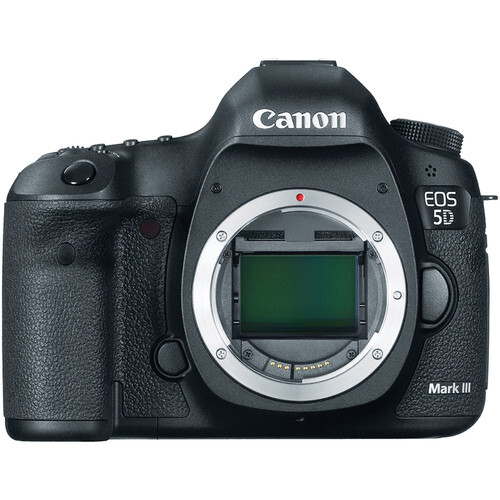
The Original 5D (2005): This is the camera that truly democratized full frame photography. Before the 5D, "full frame" was a feature reserved for massive, $8,000 flagship bodies like the Canon 1Ds. The 5D changed everything by putting a 12.8 MP full frame sensor into a standard, accessible body at a price point that wedding and portrait photographers could actually afford. For the first time, shooters on a budget could achieve the "look" that defined professional work: shallow depth of field, superior high-ISO performance, and the perspective characteristics that only a full frame sensor could deliver.
The 5D Mark II (2008): This is arguably the single most influential camera of the last 20 years. It wasn't the first DSLR to shoot video (the Nikon D90 beat it by a few months), but it was the first to shoot truly cinematic 1080p, 24 fps video with a full frame sensor. This capability was almost a happy accident, but it single-handedly disrupted the expensive video camera market, created the "HDSLR" revolution, and launched the careers of countless independent filmmakers and content creators. Hollywood took notice immediately. The 5D Mark II was used to shoot episodes of "House," scenes in major motion pictures, and countless commercials and documentaries. It proved that you didn't need a $50,000 cinema camera to create beautiful, cinematic imagery.
The 5D Mark III (2012): If the Mark II was the revolution, the Mark III was the perfection. It addressed the one massive flaw of its predecessor: the autofocus system. By inheriting a professional-grade 61-point AF system from the flagship 1D X, the Mark III became the ultimate, reliable, dual-slot workhorse. It was the bulletproof, "I-trust-this-with-my-career" tool that defined a generation of wedding photographers, portrait shooters, and working professionals. Its combination of full frame quality, video capability, and professional reliability made it an industry standard for nearly a decade.
4. Nikon D850
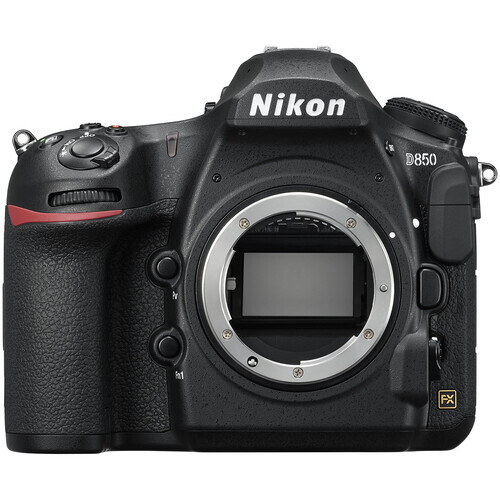
The D850 combined a 45.7 MP back-illuminated sensor (delivering medium-format levels of resolution) with a 7-9 fps professional-speed body. It inherited the autofocus system from Nikon's flagship D5, added 4K video capability, a tilting touchscreen, focus stacking, and an unprecedented level of dynamic range. It could shoot landscapes with breathtaking detail, handle fast-paced action with ease, dominate in the studio, and even serve wildlife photographers who needed both reach (through cropping) and speed.
Many photographers and reviewers consider the D850 to be the single greatest "do-everything" camera ever made. It didn't compromise on anything, and in many ways, it set a standard that even modern mirrorless cameras have to work to match. The D850 was Nikon's mic drop moment, proving that the DSLR platform still had life in it even as mirrorless cameras were beginning to dominate the conversation.
5. Nikon D3
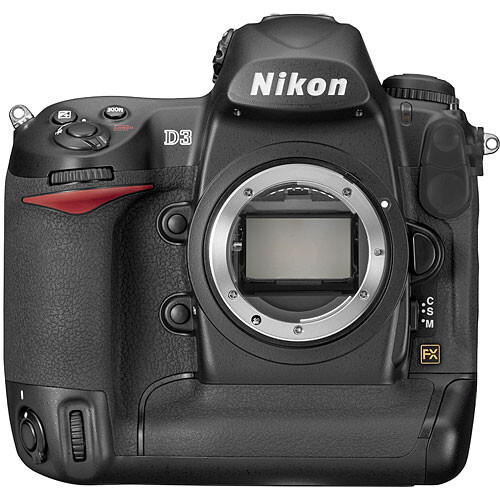
The D3's 12.1 MP sensor was a low-light monster that could produce clean, usable files at ISO 3200 and even ISO 6400, a feat that was simply unheard of at the time. It demolished the competition in high-ISO performance, and photojournalists and sports shooters (Nikon's traditional base) came flooding back to the brand. The D3 combined this sensor with Nikon's legendary build quality, a 51-point AF system, and 9 fps continuous shooting. It was an instant classic and set the standard for high-ISO performance that influenced camera development for the next decade.
The D3 proved that megapixels weren't everything and that there was tremendous value in prioritizing low-light capability and speed. It also demonstrated that Nikon was serious about competing at the highest levels of professional photography.
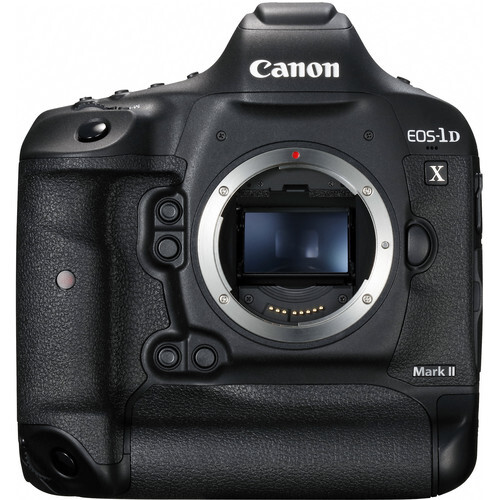
6-7. Nikon D5 / Canon 1D X Mark II (a Tie)
Nikon D5: The D5 was an autofocus machine. Its revolutionary 153-point AF system, with 99 cross-type sensors, could famously "focus in the dark" with a sensitivity rating down to -4 EV. This meant it could acquire focus in conditions where you could barely see your subject with your own eyes. Combined with 12 fps continuous shooting (14 fps with the mirror locked up), a buffer that seemed bottomless, and ISO capabilities extending to 102,400 (expandable to an insane 3,280,000), the D5 was built for one purpose: to capture the shot no matter what. Sports photographers and photojournalists trusted it with the most important assignments of their careers.
Canon 1D X Mark II: Canon's flagship was no less impressive. It delivered 14 fps continuous shooting with full AF tracking, a Dual Pixel CMOS AF system that revolutionized live view and video autofocus, and 4K video recording at 60 fps. The 1D X Mark II was perhaps the more well-rounded tool, excelling not just at stills but also serving as a legitimate hybrid camera for professional video work. Its build quality was legendary, and like the D5, it was a camera you could trust in any condition, from arctic cold to tropical humidity to dusty sports arenas.
Both cameras cost around $6,500 and represented the peak of what a DSLR could be. They were tanks, they were fast, and they were absolutely reliable.
8. Nikon D500
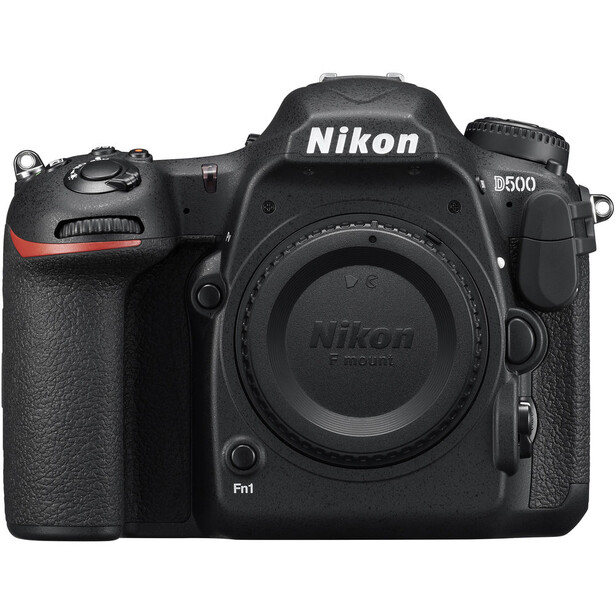
The D500 was essentially a "baby D5." It took the entire 153-point flagship autofocus system from the D5 and packed it into a rugged, weather-sealed body that could shoot at 10 fps. But the real magic was in the buffer. With a legendary 200-shot raw buffer, the D500 could shoot high-speed action seemingly indefinitely. Combine that with 4K video, a tilting touchscreen, and excellent high-ISO performance, and you had a camera that could compete with full frame bodies in many scenarios while offering the reach advantage that crop-sensor shooters loved.
The D500 remains arguably the greatest APS-C DSLR ever created. Even years after its release, many wildlife and bird photographers refuse to give it up, as no mirrorless APS-C camera has quite matched its combination of speed, AF performance, and handling.
9. Nikon D800
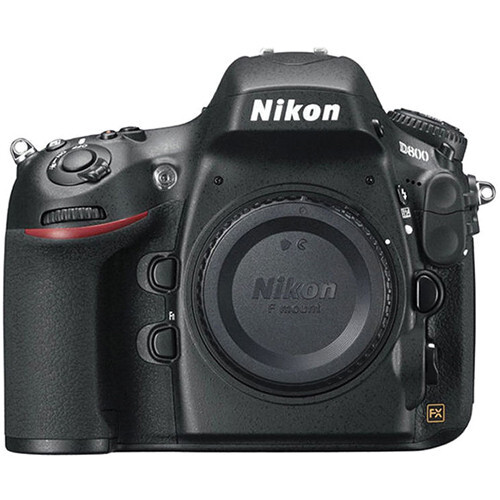
The D800 (and its D800E variant, which removed the anti-aliasing filter for even more sharpness) completely upended the studio, fashion, and landscape photography markets. Photographers who had been considering a $20,000+ medium-format system could now get similar resolution in a familiar DSLR body with access to Nikon's extensive F-mount lens lineup. The files were massive and demanding, requiring excellent technique and quality glass to take full advantage, but when used properly, the D800 delivered stunning, poster-sized prints with incredible detail.
Canon eventually responded with the 5DS and 5DS R years later, but Nikon had established itself as the resolution leader. The D800's sensor also had phenomenal dynamic range, making it a favorite for landscape photographers who needed to capture extreme lighting conditions.
10. Canon 7D Mark II
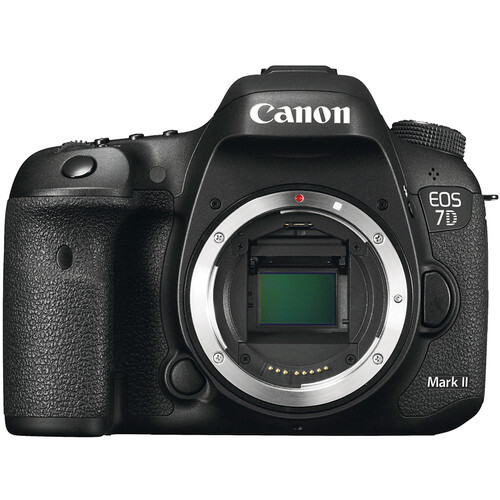
The original 7D had been a legendary camera, and this sequel delivered on the promise. It featured 10 fps continuous shooting, a professional-level 65-point all-cross-type AF system (at the time, the most advanced AF system Canon had ever put in a crop-sensor body), and build quality that rivaled Canon's 1D series. It was weather-sealed, reliable, and tough as nails.
For Canon wildlife photographers and amateur sports shooters, this was the tool. It gave them the 1.6x reach advantage of the APS-C sensor, professional-level autofocus, and the speed needed to capture fast action, all at a more accessible price point than the 1D X flagship. The 7D Mark II was a camera you could trust in harsh conditions and challenging lighting, and it remained relevant for years after its release.
11. Canon T3i (Rebel T3i / 600D)
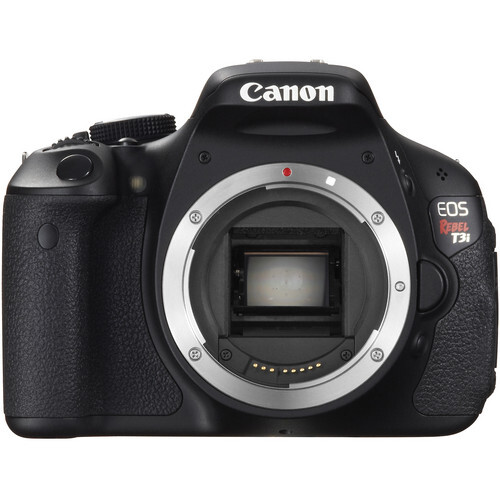
The T3i took the 1080p video capability that was revolutionizing professional filmmaking and packaged it in an $800 consumer body with one killer feature: a fully articulating flip-out screen. This single feature changed everything for self-shooters. Suddenly, bedroom YouTubers, independent filmmakers, and aspiring content creators could shoot themselves, check framing, and monitor their recording all at once.
The T3i launched a million creative careers. It was the camera that taught a generation how to make videos, how to think cinematically, and how to create professional-looking content on a budget. While it may not have been the most technically advanced camera on this list, its impact on visual culture and content creation cannot be overstated.
12. Canon EOS 6D
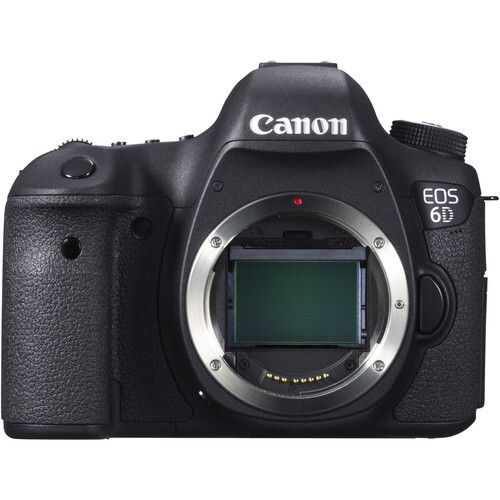
The 6D was smaller, lighter, and featured the first-ever built-in Wi-Fi and GPS in a Canon EOS body. While it had a more basic 11-point AF system and single card slot, it delivered excellent image quality, superb low-light performance, and the full frame "look" that photographers craved. Many photographers (myself included) actually considered its sensor notably superior to the one in the 5D Mark III, and that was what really gave the camera its staying power. The shallow depth of field and superior high-ISO capability made it a massive hit with travel photographers, landscape shooters, and hobbyists who wanted to step up from APS-C.
The 6D proved that you didn't need every professional feature to create stunning images. Sometimes, a great sensor in a simple, affordable package is exactly what photographers need.
13. Pentax K-1
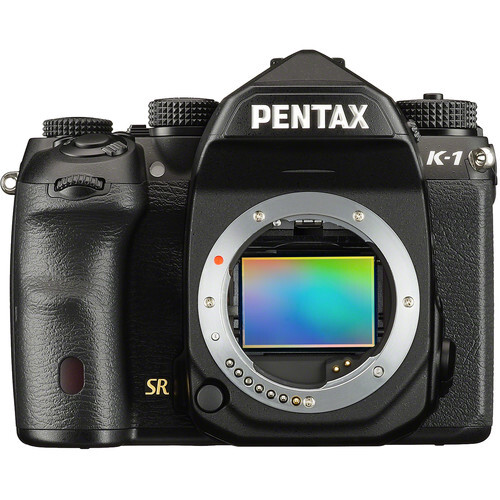
The K-1 featured 5-axis in-body image stabilization (a rarity in DSLRs, especially at its launch), a "Pixel Shift Resolution" mode that combined multiple exposures for even higher resolution and better color accuracy, and built-in GPS with a unique "AstroTracer" function. This AstroTracer feature was pure Pentax magic: it used GPS data to move the sensor in sync with the Earth's rotation, allowing photographers to take long exposures of stars without star trails, all without needing an expensive tracking mount.
The K-1 also featured an absolutely wild cross-tilt articulating screen that could move in ways no other camera screen could, making it perfect for unusual angles and macro work. It was weather-sealed, built like a tank, and offered exceptional value for money.
The K-1 was a landscape photographer's dream and a true cult classic. It represented everything that made Pentax special: innovation, value, and a willingness to do things differently. While Pentax never achieved the market share of Canon or Nikon, the K-1 earned fierce loyalty from those who used it.
The End of an Era, The Beginning of a Legacy
These 13 cameras represent more than just technical achievements. They represent moments when photography changed, when new markets were created, when barriers came down, and when the impossible became possible.
The DSLR era gave us cameras that could focus in the dark, shoot 4K video, capture 45 MP of detail at 9 fps, and cost less than $1,000 while delivering professional results. These cameras launched careers, captured history, and created art that will last forever.
While mirrorless technology has largely taken over, the DSLR's legacy lives on in every camera released today. The features we take for granted, the standards we expect, and the accessibility we enjoy all trace back to innovations pioneered during the DSLR golden age.
These 13 cameras didn't just define an era. They defined photography as we know it today.

Join the Fstoppers community for free
-
Post comments and join in the discussions
-
Browse the site ad-free
-
Share your work and get featured in the community
-
Compete in the photo contests for fun and prizes
39 Comments
I feel like this list more or less is bang on. The only major omission imo is the D700.
I think it is also worth considering the D810A just because it revolutionized astrophotography so much that it is still selling for above MSRP all these years later. No other DSLR can claim it held full value for a decade going strong.
That’s a nice walk down memory lane! I’ve owned 10 of those at one point or another 😂
One key plus for the 7D Mk II that was missed in the GPS and accelerometer. Its a key feature that I need, so much so that I traded my trusty high shutter count workhorse for an essentially "new" 7D M 2 just recently.
I've owned that 5D II and the 5Ds and now the R5 I. Of the two DSLR's I miss the 5Ds the most and wish I kept it (sold it with some EF lenses to buy RF glass).
I’m perfectly happy with my 5DIV’s and 1Dx with L lenses, good resolution, ISO performance and speed of tethering to Capture One.
Overall a good list. I owned a 5D III (now a 5D IV) and still have a 7D II. I may dabble in mirrorless at some point, but there's still plenty of life left in these DSLRs for the shooting I do.
Owned 4 the 13. The 7DmkII was sold off the winter of 2018 when I switched from Canon to Nikon. Still have the 5DmkIII, Nikon D500, and D850, complemented by the Z9 bought on release date.
I bought my Nikon D800 in 2012 and shot many of my favourite images with it, like this one.
I picked up a Pentax K-1 with the 28-105 kit lens back in late 2016/early 2017, and it's still my daily driver. I shoot a lot of astrophotography with it sometimes with Astrotracer and other times with telescopes on tracking mounts.
I'm surprised that you didn't mention that Pentax offered a low cost ($600) upgrade/update for the K-1 to the K-1 mkii when that was released. You would send in your K-1 and Pentax would replace the main board and autofocus unit for those in the K-1 mkii. They'd also rebadge the body. To the best of my knowledge, they're the only camera company to do this.
I've recently gone back to using a DSLR. I have the 5Diii, 5DSR (both of which I inherited) and a 6D with a small number of L series lenses. I mainly use the 6D as it is small and light, in fact just a slither larger and heavier than my 70D and 80D. The 6D definitely has a better sensor than the 5Diii. One day I will add one of those Nikon beasts as well. Although I like the size of mirrorless I much prefer using an OVF.
Should have made it 15 and included the D750 and D700. The D750 is still phenomenal. The D700 was as dream to use.
I never understood the love of the D750. I mained one for a year and never was very impressed with it. It just felt like a D600 with a newer sensor to me. Like it was “fine” but it didn’t stand out to me at all.
The stripped pro features drove me insane and its poor AF point coverage also was super annoying.
Like, for a hobbyist, it was “fine”, but I don’t feel it added anything or innovated in any way that actually changed the industry the way the 5d, D700, D800, etc did.
Maybe the 750 was so beloved because a lot of people who shot like D7000 upgraded to it so it felt like a massive bump up? But compared to other similar bodies, it just didn’t stand out to me.
Love the Nikon D780. It does it all for me.
I think the only change I’d make to this is instead of the Rebel chosen, the original Digital Revel should be there in its place. Yes, it was a slow, basic camera, but it was the first DSLR that really opened serious digital photography to the masses, and was the entry point for an entire generation of photographers. The first DSLR for under $1,000, it jump started the entire digital revolution in the SLR space.
How could your most memorable not be your first? .... DSLR that is. Cameras introduced in 2003 had to have had the greatest impact on photography since the Kodak Brownie brought photography in 1900 to the masses. While Nikon had sold the D1 since 1999, it was only 2.7 megapixels and cost $5,500. I was mildly interested at that time but not persuaded that it would be all that useful for image reproduction with my work in commercial printing.
However, 2003 brought numerous five and six megapixel choices, at a more affordable price. Arguably the most popular for hobbyists was the Canon Digital Rebel, the first DSLR under $1,000. The Canon D60 and Nikon D2H were introduced then, and I labored for weeks over which to buy. I finally had to make the 250 mile trip to Denver and put them all in my hands. Sometimes it simply boils down to feel. In the end, I chose an Olympus E-1. The colors were vibrant... like shooting Kodachrome. It had a dust-shaking feature that was unparalleled by other brands. I really loved that camera. I remained a loyal Olympus customer until 2013, when the Nikon D800E 36-megapixel camera was too compelling for large print sizes. In fact, that's the last camera I've purchased, and probably will be until, if and when, it croaks.
You missed a huge point on all round camera . The D850 was horrible in video due to lousy AF whereas the 5D IV had DPAF so the video AF was as amazingly great as the still AF.
So the D850 was pretty good at stills only the 5D IV was great at stills and video.
You could have gone back a tad further to the D50. That was a great beginner's digital. It was a true workhorse of a camera. I used it for several years and taught my wife how to use it. She took home numerous awards at the local fair against more seasoned photographers. I stepped up to the D700 and it's still going strong. I love my D800 with one of the last new shutters installed, and should last me the rest of my lifetime.
OK, a Conikon extravaganza. And IMHO you missed a great full frame DSLR - Sony a99ii. The a99 was good, but the a99ii is an amazing camera. Especially paired with the Sony G series lenses (85mm 1.4, 24-70 2.8 and the 300 2.8). So disappointed.
The earliest DSLR cameras were far more innovative than the later ones listed here. The Nikon D1x and D100 were how many photographers transitioned from film to digital. The Kodak 14n and Canon 1Ds were the first commercially viable full frame digital cameras. They made direct digital capture for stock and print publishing possible.
Of course I like this very realistic listing...also because my fantastic never let me down Canon 7D MKII is on the best of list...I see these great DSLRs in use today by many pro photographers as a reminder, that they are made to last and that mirrorless never really put these DSLRs out of business...as a good example, the Canon APSC 90D brand new is still being sold in Europe, and is one of the best sellers.
IMO, the Canon 70D - 90D - should be on that list, as these cameras have a touch screen AF that is still non plus ultra...
I feel the 1DX MK1 is missing, it is still my daily driver when i don't need video or silent shooting 🙃
That D500 is a workhorse. I recently pass it on to my son which makes it the gift that keeps on giving.
I would have added the nikon D780. Nobody talks about this camera and its advante of using old nikkor screw drive lenses like the Nikkor AF DC 135mm f2 D lens which is a beauty. You can use Live view and have eye AF with this combo.
This guy gets it. Flip up the mirror, and it's an F-Mount Z6.
The D780 and D6 were the swan songs. The D850 might have more resolution and a better AF system, but the D780 had more functionality. I shot D3-D6 and D700-D850 professionally...
But when I sold it all to migrate to Z, the D780 was my camera of choice I re-bought for using old F-Mount lenses I'll acquire over the rest of my lifetime.
Right on.
Currently owning and using, D500, D850, D6 - I can agree with your article 100%
Interesting article. I collect cameras. I love the things. I've been fascinated by the hardware as much as the photo since I was 14, some 58 years.
But I have to remind myself that a camera is a mere confection. Nothing more. Despite the intense and often heated discussions about noise levels, fps, dynamic range, battery life, ergonomics, revolutionary cameras, market dominance, etc, the camera has only ever had one simple, untaxing job to do: to create a visual record of an object. Even a Box Brownie can do that.
This list either show why Canon and Nikon was the biggest names in photography, in the DSLR days, or it shows a bias toward, what people considered the biggest names in photography.
Nice historical roundup, non the less.
I think its a bit of both but the reality is those two companies dominated the market which meant they had wildly more R&D money than anyone else so were able to innovate the most. If you were a pro there was very little reason not to use Nikon or Canon unless you were moving to Medium Format.
Canon's and Nikon's "bigness" was well deserved. They didn't emphasize odd little niches, but rather focused on the mainstream. They designed and produced what was useful to most photographers. When they made niche products, they were geared toward the high end usage (like world class sports action cameras that require extreme frame rates, AF performance, and processing power), not some little hobbyist niche for weak older people who want a lighter camera.
Great article, Alex!
The whole time I was reading this, I was wondering what question you would ask the readership at the end of the article, to drive engagement. Surprisingly, there is no question. So I guess I can't really give a response if you never asked us anything. But I did enjoy reading about these historic DSLRs.
Since when has a formal written invitation by the author been required before replying that we agree, disagree, or add a thought? We do it all the time.
You are correct that we do it all the time.
However, it is good form for a writer of an article on an interactive platform to invite responses
As I read this article, I thought of so many different things that I wanted to say in the comments. Like, literally dozens of different comments came to mind that I could have written. I do not have hours and hours to write all of the different comments that came to mind, so I would have to somehow narrow it down and just choose one. But going through that narrowing down process is very time consuming and tedious. So in such cases I think, "I'll just wait until the end of the article and see what question the author asks and then write the comment that fits that question".
So I rely on the author's question to help me with the laborious narrowing down process of deciding what to write. But when that question never comes, I find myself faced with that daunting task that I was hoping to avoid. And it frustrates and irritates me that I am now faced with a tedious narrowing down process that I really don't feel like doing.
Plus, I want to be made to feel that my input and feedback are valued and desired, and an author asking the readership for their feedback accomplishes that. So the absence of such a question does the opposite - makes me feel as though my thoughts and opinions don't really matter that much to the author. So I feel a bit slighted and unappreciated when our feedback is not directly solicited.
Hmmm.... I recall you saying that it was of no great concern whether anyone responded to your comments. And that you enjoy writing notes to yourself, regardless of whether they're seen or acknowledged in a public forum. So it's hard for me to reconcile that you feel slighted if not formally invited to comment.
I do think it's nice when authors engage with the audience, and I can predict which ones will or won't, so I avoid responding to articles which are clearly just pulled off a YouTube channel. Many of these content creators are just looking for clicks and followers; probably could not care less about the Fstoppers community. A few staff writers are interested in a discussion. I appreciate them. I put more stock in who the writers are rather than an expressed invitation to respond.
One camera that is missing is the EOS 300D. That was the biggest driver towards digital ILC's for the masses. $999 was insane at the time. Throw in the "10D firmware hack", and it was even better.
It's amazing how many cameras Canon has released that have shifted the entire market.
The article should be "14 best" :)
I was hoping that at the end of the article Alex would have asked us if we think there is a camera that should have been included, but wasn't. I like that you made such a suggestion even though we weren't invited to do so.
Although I owned two in the list, the EOS 7D2, & 6D; and though it falls far short of being in the "best: DSLR category, the EOS 20D fits the "Define an era", as like myself, it was for many the first venture into Digital SLR photography.
The Fuji FinePix S2 and S3. Both out-Nikoned Nikon. The S2 could fully use film-era Nikon flashes that Nikon digital cameras could not. And both had the dual matrix CCD array that was revolutionary.