
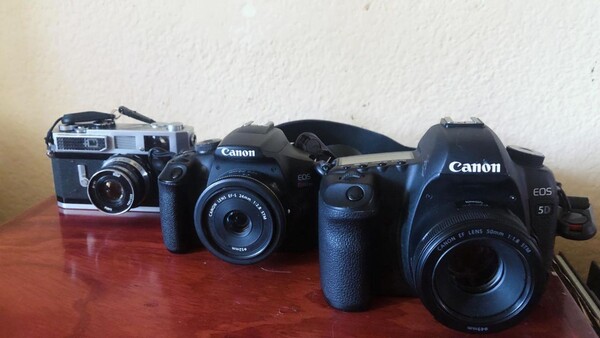
I was an early mirrorless adopter. Not in the “influencer early” sense, but back when using mirrorless for professional work still meant explaining yourself. Other photographers said I was crazy, that I was just betting on a passing technology.
Around 2010, I switched to mirrorless because it made sense to me: smaller cameras, lighter kits, fewer mechanical parts, and a clear direction toward the future. For years, mirrorless systems were my primary working tools. Over a decade, I have worked with cameras made by Panasonic, Olympus, Canon, Ricoh, Leica, and Fujifilm.
Then, in 2020, I went back to DSLR. Yes.
That decision tends to confuse people, especially those who see technology as a straight line forward. But photography, at least in my experience, doesn’t move that way.
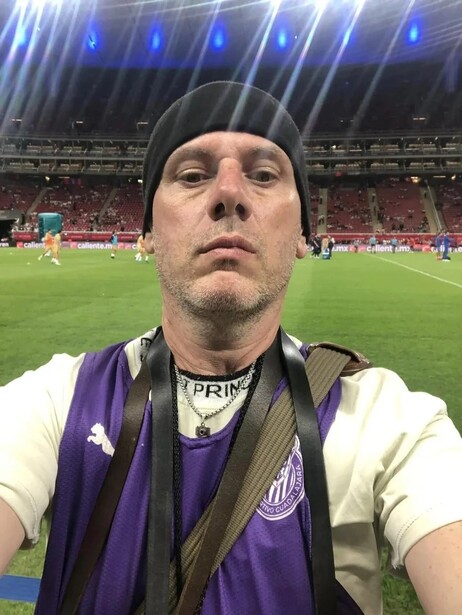
Mirrorless Didn’t Fail Me. It Changed My Behavior.
This isn’t about image quality. Mirrorless cameras are extremely capable. Autofocus systems are better than ever, sensors are clean, and dynamic range is impressive. I still have mirrorless cameras.
The issue wasn’t what mirrorless cameras could do. It was what they made me do.
I found myself checking screens more often, trusting previews more than my judgment, and staying mentally connected to the camera instead of the scene. The constant availability of confirmation changes how you shoot, whether you admit it or not. That’s on me, and I’m not pretending it works that way for others. In fact, I know it can be the exact opposite.
But for me, with a DSLR, that layer disappears.
You don’t see a simulation of the final image. You see the world, just like with a film camera—light as it is, not as the camera interprets it. That difference is subtle, but over long periods of work, it matters.
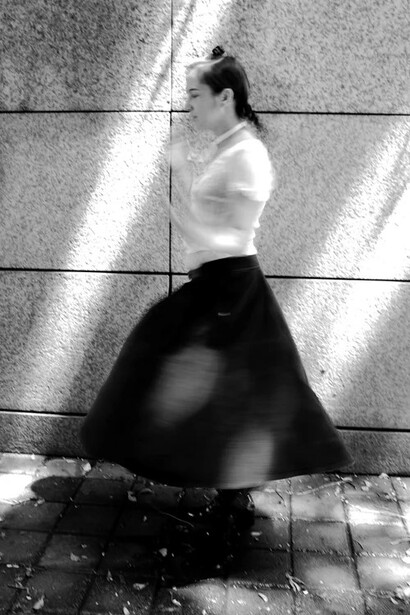
In 2020, I Needed Less Technology, Not More
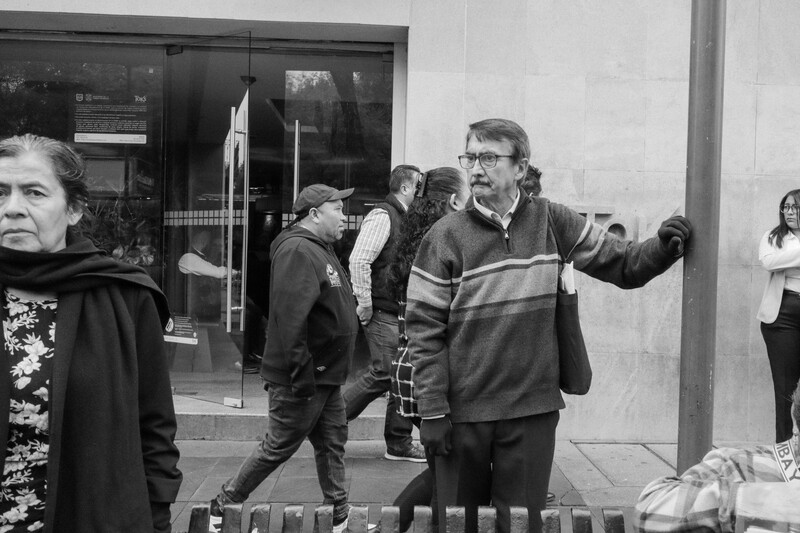
Most of my work happens outside controlled environments: streets, public spaces, real people, unpredictable situations. I’m not talking only about street photography; I include my fashion street style, portraits, and documentary coverage.
I don’t need a camera that asks for attention. I need one that stays out of the way.
A DSLR does that naturally.
No constant previewing: I know it’s possible to turn off the immediate preview of the result, but I also mean the effect of looking through the viewfinder. No temptation to adjust after every frame. No artificial brightness in dark situations.
I shoot, I move on, I stay present. I am in the scene. That is the most important thing to me. The photograph is already behind me, mentally, and I am ready for the next moment.
That mental economy became important to me.
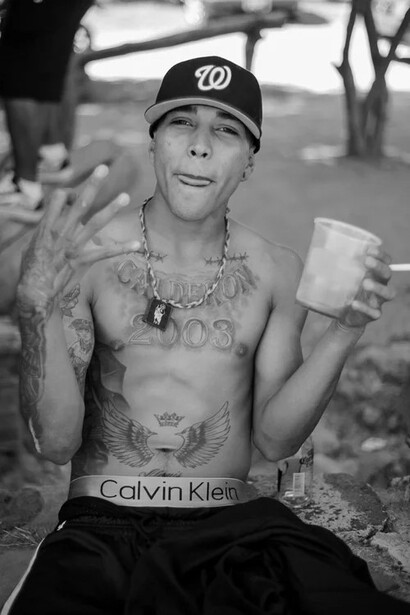
I Didn’t Go All In Immediately
I didn’t abandon mirrorless overnight. At first, I went back using a single DSLR: a Pentax. Almost as a personal test.
I expected it to be temporary, also because I was still an ambassador for a camera manufacturer at that time, and they had immense success by focusing their entire market on mirrorless cameras.
Something happened, because I noticed I was calmer using a DSLR. More focused. I kept the camera on for entire sessions. No overheating. No unexpected standby behavior. Battery life stopped being something I thought about. Believe me, that was an amazing plus after many years with mirrorless cameras.
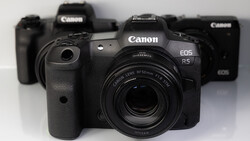
Eventually, I returned more decisively to DSLR systems, especially Canon. Not flagship bodies, not high-end status symbols—entry-level and mid-range cameras, tools I could trust without constantly thinking about them.
The results didn’t suffer. If anything, they became more consistent.
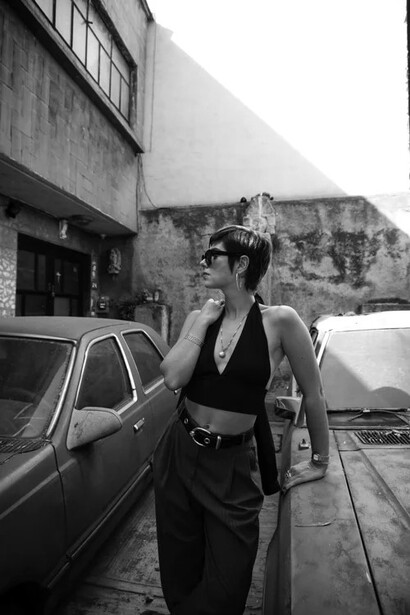
I Don’t Want to Look Like a Photographer
Mirrorless cameras have become part of a visual culture. They signal being current, optimized, efficient. There’s nothing wrong with that, but it’s not something I’m interested in projecting. I did it in the past—not anymore.
Because I totally get, believe me, the idea of “wearing a camera” that looks cool. But that need disappeared, ironically, when I purchased my 35mm film rangefinder Canon 7, a totally mechanical, super-cool camera that I enjoy working with when I want to shoot a roll. Fact is:
I don’t want to perform photography. I don’t want my gear to be part of the message. I don’t want to look “cool.”
DSLRs are boring for many, and that’s a strength. They don’t draw attention. They don’t suggest luxury or novelty. They don’t ask to be admired.
They just work. And doing the job is my priority.
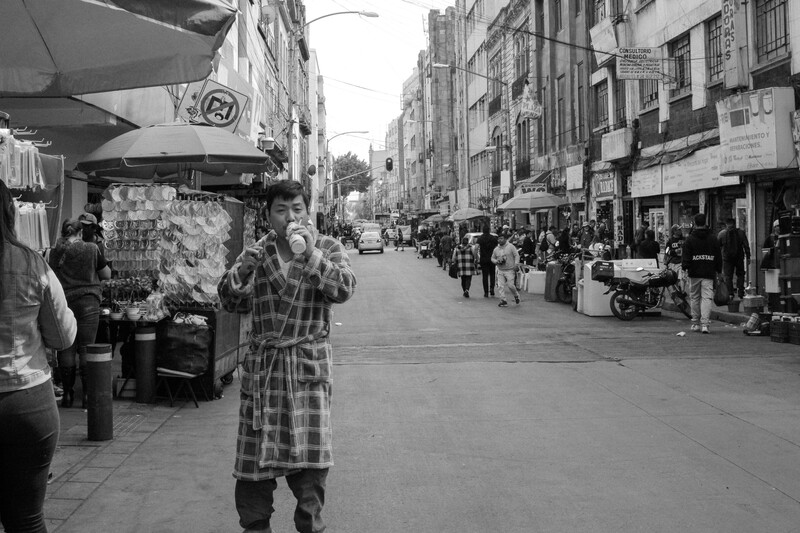
Ethics, Context, and Comfort
I often work in poorer places and socially fragile environments. Carrying gear that looks expensive or fashionable feels out of place.
With a simple DSLR, I feel more comfortable and, frankly, more ethical. Even in rough neighborhoods, even in places where discretion matters, I don’t feel like I’m carrying a luxury object.
That sense of ease affects how you interact with people. And that affects the photographs.
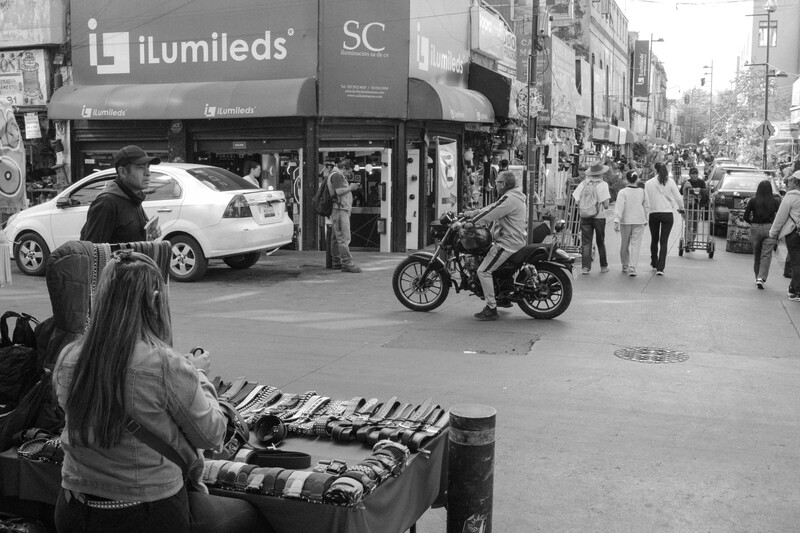
About Resolution and the Myth of Progress
Twenty-four megapixels are enough for me. They’ve been enough for years. Everything beyond that, for most photographers, is marketing.
A strong photograph from 25 years ago doesn’t become weaker because technology improved. Meaning doesn’t expire. Vision doesn’t get outdated.
If someone needs a $6,000 camera to justify their work, that already says something. I am a working and published photographer, selected by important international brands through their art directors. That says more.
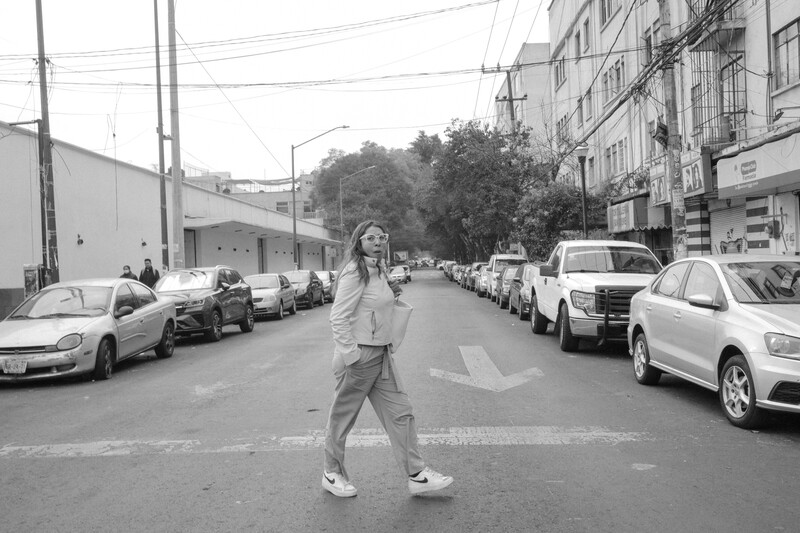
Cameras Don’t See. Photographers Do.
If I can produce stronger work with an entry-level DSLR than someone using a top-tier mirrorless camera, it doesn’t make me special.
It makes the point obvious.
Mirrorless systems promise control and assistance. DSLRs demand intention and responsibility.
They don’t protect you from mistakes. They don’t correct your decisions. They force you to commit.
Exactly like photography has been practiced for more than a century.
One System, One Aesthetic
I need to do everything with the same cameras and lenses: street photography, portraits, sports, documentary work. I care about consistency and aesthetic coherence.
DSLR systems still allow that without constant upgrades, without rethinking workflows every couple of years, and without turning photography into a software ecosystem.
If you want a structured way to strengthen that “all-around” consistency across genres, The Well-Rounded Photographer: 8 Instructors Teach 8 Genres of Photography is a solid reference point.
This Isn’t About Going Backward
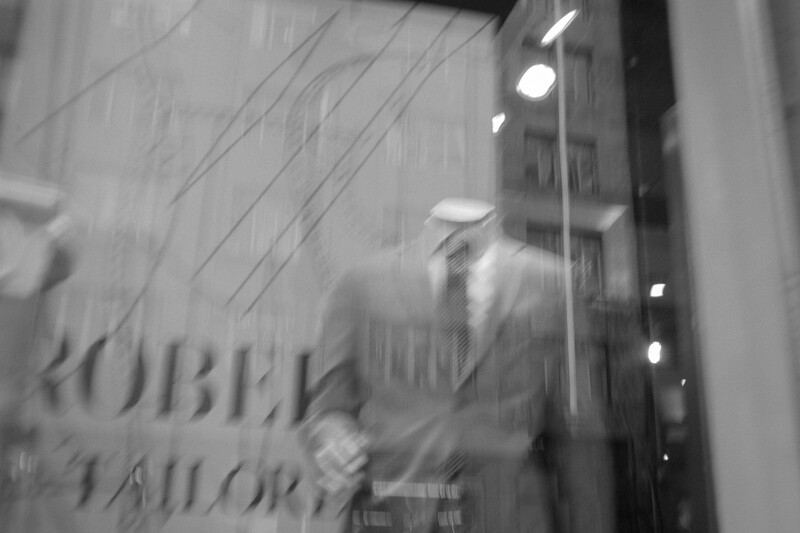
Going back to DSLR wasn’t a rejection of progress. For me, it was a conscious subtraction. Less is more, right?
Less distraction. Less noise. Less dependence on technology.
More attention. More presence. More trust in my own decisions.
When everyone moves in the same direction, sometimes the most productive move is to step aside, reassess, and choose differently.
In the end, only one thing matters:
The result.
Not the specs. Not the trend. Not the tool.
Just the photograph. Because, in the end, it’s the photograph we see—not the camera I used to make it.

Join the Fstoppers community for free
-
Post comments and join in the discussions
-
Browse the site ad-free
-
Share your work and get featured in the community
-
Compete in the photo contests for fun and prizes
84 Comments
Uh, mirrorless cameras focus on the sensor so there's no need for micro focus adjustment. None. AF is spot on every time. And none of my mirrorless cams have "AI" features in them. Honestly, I don't know of any that do.
I bought a Nikon D800 in 2013 and it's still my only camera. While I've had more people than I can count tell me that I'd love shooting with a mirrorless camera, I would only be persuaded to buy one if I believed it would improve my photographs. And if I expect to improve, it will undoubtedly come from the mind, not the machine.
I've owned two D800's and have many other DSLR's and mirrorless cameras in medium format, full frame, and APS-C. The D800 is still my favorite of the bunch. It's also a killer deal of a camera right now. It's so incredibly underrated. I have no Idea how so many people are sleeping on the D800 as a used option right now. I payed $900 for my first one used and thought that was a steal of a deal. Now you can find them form 400-600 bucks. What a crazy low price for such a good camera.
For me? It’s D850 outdoors/Z8 in studio.
In studio, the Z8’s autofocus? Miles beyond the D850’s and it’s critical the camera tracks a model’s eyes.
Outdoors/Street?
It’s almost always the D850/Zeiss manually focused lenses. Creativity stems from my mind’s eye, and only my eye can visualise the resulting image I’m expecting to create before pushing shutter release
Makes a lot of sense. Virtually nothing in my images is moving which demands better autofocus. If the D800 dies, I'd probably buy the D850, although at about $500 or so for a used D800/810 in good condition, it'll be a hard decision. The D800 might outlast me though.
here’s a lot of clarity in what you’re saying, and I respect that.
But I’d refine one thing.
Improvement does come from the mind, no doubt. That’s the core. No camera will give you vision, sensitivity, or intention. If those aren’t there, nothing else matters.
At the same time, the machine can influence how easily that vision translates into a photograph. Not create it, but facilitate it. Sometimes in small ways, sometimes in very concrete ones.
The risk in your position is not being wrong… it’s becoming a bit too absolute.
You don’t need a mirrorless camera to improve your photography. That’s true. But it’s also true that certain tools can open different possibilities, or simply make certain situations more fluid.
The real question is not “will it make my photos better?”
It’s “will it change the way I work in a way that’s useful to me?”
If the answer is no, then staying with the D800 is not just fine, it’s coherent.
And honestly, a camera like that in the hands of someone who knows exactly why they’re using it… that’s already more than enough.
I have answered both questions.... the same way for several years. I make artwork for people to hang on their wall. I'm not shooting the Olympics. As I understand newer technology, there are no features which would be useful for me in the way I work. I shoot deliberately, taking as much time as necessary in making compositional and editing decisions. My subjects aren't moving anywhere very quickly.... take a peek at my portfolio and that will make more sense.
Software updates are even less enticing than new cameras because of the continual emphasis on machine automation. But speed and simplicity do not work in my favor. Technology is creating a generation of button pushers. Computational photography... let's see what this button does. Presets... let's see what this button does. Everything to make editing faster and easier, but replaces the intention and craft of photography. The finished image may look the same to the viewer, but I prefer my relationship with a machine to limiting it to capturing light and following my instructions. That is my definition of art. I could be using a Rolleiflex, D800, or even a paintbrush and it really wouldn't matter.
Yes, I agree. And you are right when you call for computational photography. Many don't get the difference, but there is a difference. Remembering when I fell in love with photography, when I was a child and everything was absolutely and wonderfully imperfect. For me, and from what I read, for you too, nothing has changed.
I was always happy with my DSLRs. Then I bought an R7 and jumped into a thicket of additional annoyances. And for all that it doesn’t even have the GPS that any $100 phone has. I kept my DSLR, so back I go.
Yes, because is a total different experience.
Hi There. Greetings from a South African wildlife photographer who operates in the wilderness areas of sub-Saharan Africa.... I think I get what you are trying to say, but with great respect to your professional integrity, why do you even care what you look like when you are working/photographing? As for people identifying film/DSLR or mirrorless electronic image capturing devices, I put it to you that only other photographers would notice what gear you are using, and not the clients because they justy want the best bang for their bucks.. In my case nothing like that applies, because my subjects only worry about eating, and procreation of their species....
I honestly have tried to understand your reasoning, and justification to regress, but, again, with deep respect, I can't see any sense in why you would commit this to an article?
But hey man, whatever blows your hair back, and good luck for you travelling in your chosen direction.... So, why did you really write this article?
If I might intrude here... the point of the article transcends the outward appearances of a particular camera. The author writes about functionality and how using a mirrorless camera differs in actual shooting habits and interaction with the camera itself. As someone who has watched the comparison between mirrorless and DSLR unfold over the last decade, I find the article, as well as the comments, enlightening. Certainly the comments by readers here have done nothing to change my mind that I'd replace my DSLR with another DSLR when it comes that time. But it would be the first time in my life that I would purposely choose older technology instead of newer.
You define the answer to your question in your introduction. Wildlife is for the most part unpredictable and for you, extremely fast focus and it’s precision are key. You can shoot brackets as fast as doing a video. The tool for you becomes added flexibility. That becomes your consistency, your rate of success, even your visual memory to determine if you have captured what you positioned yourself to obtain.
Other photographers including those who do street photography might feel that choosing the capture’s instant is more predictable in the environment they operate, therefore less dependent on the device’s technicality.
Ever heard of Emile Leray? He crossed part of the Sahara desert with a 2 wheel drive Citroen 2cv. After a crash that rendered it unusable, he took time to repurpose it into a motorcycle to finish his journey. Had he done it with a Land Rover (new or old) and crash would have terminated any hope to reach destination without major help and replacement parts.
It’s all about vision and adaptation. We all have different needs.
What you’re describing, working in sub-Saharan wilderness, is a completely different reality. Your subjects don’t react to social cues, they don’t care about presence, perception, or intention in the same way people do. In that environment, the question I’m raising simply doesn’t exist. Performance, reliability, reach… that’s the language.
But my work lives somewhere else. In the street, in human environments, the camera is not invisible. It changes behavior. Sometimes subtly, sometimes immediately. People do react, not because they analyze the model or the brand, but because they feel something about the situation. And that feeling can shift depending on how you show up.
So when I talk about “how it looks,” I’m not talking about vanity. I’m talking about presence. About friction. About how much you alter the scene just by being there.
Why write the article?
Because too much of the conversation today is locked into performance, specs, upgrades. Useful, sure. But incomplete. There’s another layer, more psychological, more human, that rarely gets discussed. And for certain kinds of photography, it’s not secondary, it’s central.
You don’t see the sense in it, and that’s fair. It’s not meant for your context.
But for someone working with people, in close proximity, in unpredictable situations… it might resonate.
That’s enough reason to write it.
Well, Tim, I am writing articles because I am a writer and not only a photographer and is part of my activity (paid). It is only a discussion proposed through an article.
After nearly two years on the Z8, I went back to the D850 for everything outside the studio. For street-creative photography, I found it easier to align my vision-expectations of the final image when seeing it unaltered, ala DSLR.
Perhaps I work backwards, but when I’m seeing something I wish to shoot, It’s the image in my mind’s eye, not the picture-perfect-as-displayed-on the LCD, that I wish to recreate.
In studio, forget about it. I work fast, more often than not with fast moving models, and the Z8’s as tenacious as a pitbull with its favourite toy when it latches onto the models eye. The Z8’s absurdly good at tracking, and as every aspect regarding lighting is tightly controlled, creativity is more an interaction between me and the model.
Honestly, outside of accidentally flipping the lens itself from “A” to “M”, I haven’t been able to make the Z8 miss.
This is a very clear way of putting it, and I think you’ve nailed the distinction.
What you’re describing with the D850 is not nostalgia, it’s alignment. The optical view doesn’t interpret, it doesn’t “finish” the image for you. It leaves space for your imagination to project. You’re not confirming an image, you’re chasing one. That’s a very different mental process.
With mirrorless, especially something like the Z8, the camera tends to close that gap. It shows you a resolved version immediately. Efficient, precise… but sometimes it can subtly shift you from imagining to verifying. For certain types of work, that matters.
And then in studio, everything flips.
There, control is already established. Light is yours, environment is yours, the interaction is direct. In that situation, the Z8 becomes what it’s meant to be: a ruthless tool. Fast, precise, relentless. You don’t need to “search” for the image, you need to lock it in. And like you said, when it grabs the eye, it doesn’t let go.
What I like about your approach is that you’re not trying to force one camera to do everything. You’re letting each tool exist in the context where it actually makes sense.
That’s where things become intelligent. Not in choosing a system, but in knowing when each one is the right instrument.
The very term chimping came from the use of DSLRs. Not sure I understand the author's point. With mirrorless I seldom need to check exposure so Im looking at screens far less with mirrorless not more. Shoot...and move on. The DSLR looks less professional argument is strange as well, they're bigger and draw more attention to you, not less. But...whatever floats your boat...
Yep. Chimping was definitely one of the first things I learned to not do....on DSLR's lol. Like you said i already know what my exposure is going to look like on mirror less cameras thanks to exposure previews, so i almost never chimp on my Zf.
You’re right about chimping, historically. It came from DSLR use, no argument there.
But I think you’re reading the point too literally, again.
With mirrorless, yes, you can check less. Exposure preview is accurate, WYSIWYG, so in theory you shoot and move on. That’s a real advantage.
But behavior is not always rational.
What I’m talking about is not what the camera allows, but what it invites. When you have a constant live preview, information, overlays, perfection already displayed… there’s a subtle pull to engage with it, to confirm, to refine in real time. Some people ignore it. Others don’t. That difference matters.
Same with the “looking professional” part.
It’s not about size alone. A bigger camera can draw attention, yes. But attention is not a single thing. There’s curiosity, there’s intimidation, there’s indifference. Different tools trigger different reactions depending on context, culture, and how you carry yourself.
In some situations, a DSLR reads as “serious photographer.” In others, it just blends in as an older, less intrusive object. It’s not universal.
So yeah, if mirrorless lets you shoot without checking and move freely, that’s great. You’ve integrated it into your flow.
My point is simply that tools don’t just do things… they also shape how we behave around them.
And that part is less obvious, but just as real.
Alex, this was a great post and as a working pro i too switched back to using a DSLRs. main reasons the viewfinder and the size of 35mm format mirrorless.I love seeing as you stated the subject, the lighting live not through an LCD screen. I use mirrorless the same as i do my DSLR, i don't preview with the screen, I have my settings saved in customs settings and I concentrate on the subject or scene in front of me. Both systems have their advantages and disadvantages. I find the smaller micro 4/3rds mirrorless systems better than the 35mm format systems as those are still large especially the lenses and that takes away form the freedom the smaller systems allow. So when it comes to shooting 35mm format I now use my DSLRs. I will also add, since using my Olympus OMD EM1 mark one, OMD EM1 Mark2 and the PEN F Digital, I haven't used my Leica M digital bodies. The image quality from the OMD's is stellar and the features and lenses offered in the system make the Leica M digital bodies seem like expensive dated relicts. The film cameras are what Leica Ms are all about.
Thank you, I really appreciate this.
What comes through clearly is that you’ve built a method, not just a preference. And that’s the difference. You’re not reacting to gear, you’re deciding how to use it.
I like what you said about not previewing, even with mirrorless. That’s a conscious choice, almost a discipline. In a way, you’re forcing the camera to behave on your terms, not the other way around. And that brings you back to the essential thing: the subject, the light, the moment.
On full-frame mirrorless, I agree with you more than many would expect. The promise was compactness, but in reality, once you add serious lenses, that advantage often disappears. And at that point, the question becomes: if I’m carrying something substantial anyway, what do I gain, and what do I lose?
Your point about Micro Four Thirds is interesting too. That’s a system where the idea of mirrorless actually makes sense as a philosophy, not just as a technology. Freedom, portability, coherence between body and lenses. It’s a complete thought.
And on Leica… I’ll say this carefully.
Digital Leica M bodies are beautiful objects, but they live in a very specific space, almost symbolic. Once you step into systems like the OM-D, where performance, flexibility, and lens ecosystem are so well integrated, the Leica starts to reveal its limits more clearly. Film M, that’s a different story. That’s where the essence is.
What I take from your comment is this: you’re not chasing systems, you’re building consistency across them.
The great photographers of the 20th century did it with manual exposure and manual focusing on film.
Right! And we still appreciate their work!
Humans always have trouble adjusting to new things lol. Nothing new about that. But having more technology on camera do not make you less of a photographer. At the end of the day, you are the one who have to compose and create the image, camera can't do that itself. People tend to overlook the bad things on one thing and miss the good things. if you are deciding to switch back, do it for the right reasons. I switched to mirrorless not because I wanted a more expensive piece of equipment, I switched because I balanced out the pro and cons and decided that I could take advantage of some features in the type of photography I do to create the images I wanted to create. Sometimes people switch cameras because they want the latest technology in the market, when the thrill go away, they regret it, that's why I don't buy nothing the first time it comes out, and I wait when everything is well tested out and improved over time.
There’s a lot of common sense in what you’re saying, especially about not jumping on things just because they’re new.
But I’d push back slightly on the idea that this is just about “humans struggling with change.” Sometimes it is, sure. Other times it’s simply about recognizing that not every technological step aligns with the way you work.
I agree with you on the core point: more technology doesn’t make you less of a photographer. That’s a false fear. The camera doesn’t compose, doesn’t decide meaning, doesn’t give direction. That’s always on us.
At the same time, tools are not neutral. They can make certain ways of working easier, and others less natural. So the decision is not emotional resistance vs progress… it’s about fit.
What I like in your approach is exactly that: you evaluated pros and cons based on your photography, not on the market narrative. That’s the only way it makes sense.
And yes, the “honeymoon phase” with new gear is real. Once that fades, what remains is whether the tool actually integrates into your process or not.
In the end, switching or going back are equally valid. The only wrong move is doing it without understanding why.
A while back I was looking at old photos I took 10 years ago with my old Canon Rebel T3 and realized I absolutely loved the colors. These were some of the nicest photos I've ever taken, it seemed to me. So recently I got a really good deal on an old Nikon D700 plus 55mm lens, so I nabbed it. And I absolutely loved the photos too! I've attached one I took of my dog. It's got me thinking about selling my mirrorless (Canon R6) and getting a D850. There's just something about these DSLRs.
Yes, right? I think that the marketing made a lot of noise in these years, but then when we have the opportuntiy to look at old photos made with old cameras we discover that still have a place in photography.
Mirrorless cameras feel more like an electronic device. Like a phone or a computer.
A DSLR still feels like a traditional, mechanical camera.
Absolutely agree with you. In fact, we can consider DSLR still a bridge between the two worlds.
I agree too, when everything is guaranteed the interest drops drastically. I used to shoot a lot of very fast cars at night and I developed my own style. A month ago I posted a few of those images on a social media platform. A young photographer who actually sells a lot of images and is present at many races asked me about my technique. I shared and I said: You get only one chance and no guarantee. As soon as I said that, he was no longer participant in the conversation. Why?, despite having the technique free explanation and understanding the potential of capturing very unique images, even with more a capable camera than my DSLRs, the technical aspect and the chance of success were never on his agenda.
That happens with certain photographers who don't love the idea of not control. an example of that can be the ICM, the intentional camera movement of the camera, especially with flash, a technique I used to create the ghost effect of people passing by. Well, that exposed me to a random approach that counts more on experimenting while I work. I think there is a certain psychology in some poeple that want full control everytime, and others that simply enjoy the process to obtain something and not always and evrything can be in control. Some hate it...some love it...
I'm just not buy something that give an advantage over others it's not a competition. If you live what doing why fix it. My Canon EOS 90D doesn't have all the extra help which I love the most. Yeah Mr. Cooke I hear you but the fact they have animal tracking doesn't make sense. AI photography too me. The guy said as soon as he placed in animal tracking it immediately started tracking the bird. That's help😂
I think we may actually agree more than disagree.
My concern has never been that photography is a competition or that someone else has an unfair advantage. What concerns me is the growing tendency to remove more and more of the photographer's involvement from the process.
Autofocus itself is not new, of course. But when a camera can automatically identify a subject, recognize an eye, track it across the frame, predict movement, and maintain focus with minimal input from the photographer, I think it's reasonable to ask where we draw the line between photographic skill and technological assistance.
That doesn't mean these tools are bad or that people shouldn't use them. Everyone is free to choose the equipment and features they prefer. Personally, I simply enjoy a more direct relationship with the camera and the act of making photographs.
The more decisions I make myself, the more satisfying the process becomes.