
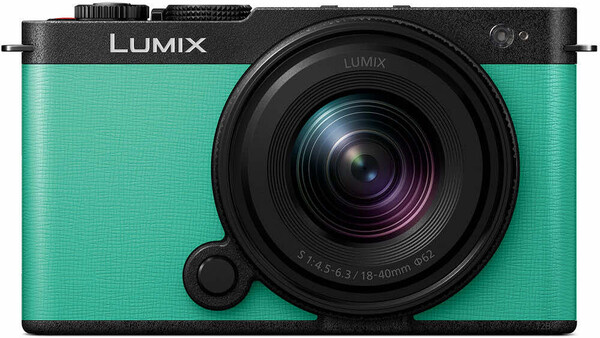
Somewhere in a closet or on a shelf, many photographers have a camera they love holding. Not because it has the best sensor or the fastest autofocus or the most impressive spec sheet, but because it feels right in the hand and looks right hanging from the neck. The texture of the grip. The color of the body. The glint off a machined aluminum dial when you tilt the camera in your hand. These are not specifications. They are qualities, and they affect how often the camera leaves the house, which is the only variable that determines how many photographs get made.
The camera industry has never fully embraced this reality. With a few notable exceptions, the default aesthetic of a modern camera is functional anonymity: black body, textured rubber grip, gray buttons, and an overall shape optimized for ergonomics and heat dissipation rather than visual pleasure. There is nothing wrong with any of these choices individually. Collectively, they produce objects that are excellent tools and forgettable possessions. The exceptions prove that it does not have to be this way, and the exceptions have been proving it for over a decade.
Pentax Got There First
Pentax has been offering cameras in nonstandard colors longer and more aggressively than any other manufacturer, and the photography press has never given them enough credit for it.
The Pentax K-x, released in 2009, was an entry-level DSLR available in over a dozen body colors including pink, purple, blue, green, yellow, navy, metallic brown, gold, silver, black, and white. Pentax offered matching colored versions of the DA L 18-55mm kit lens, so the photographer could color-coordinate the body and the glass. The K-r followed in 2010 with the same extensive palette, matching colored DA 35mm f/2.4 lenses, and special editions: a multi-colored Korejanai Robo edition limited to 100 units (a collaboration with toy designers ZariganiWorks), a Bonnie Pink collaboration, a Tower Records Rainbow edition, and five patterned grip variants (two camouflage and three marble designs). In 2012, the Pentax Q10, a tiny mirrorless interchangeable-lens camera, offered 100 color combinations (20 body colors and 5 grip colors), and the Pentax K-30, a weather-sealed mid-range DSLR, launched in three standard body colors before expanding in 2013 to 18 color and finish combinations across nine colors in either a glossy Crystal or matte Silky finish.
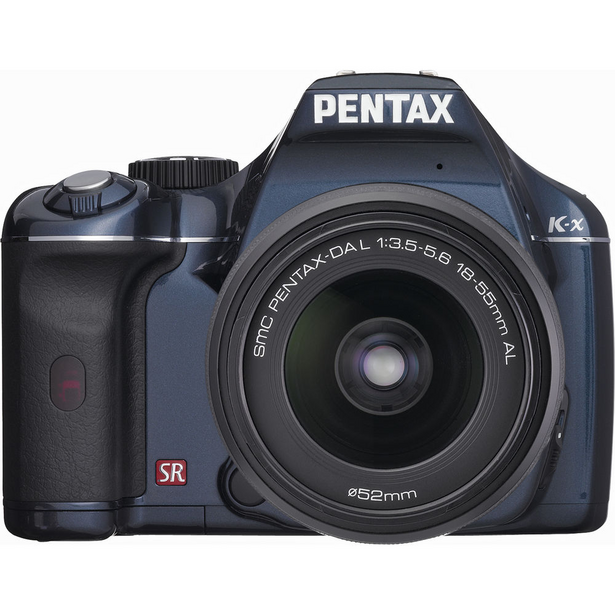
These were not luxury collectibles. They were affordable cameras that happened to come in orange. The custom color versions typically carried a modest premium (the K-30 color kits were roughly $50 more than the standard colors), but the markup was trivial relative to the body price. The colored versions used identical sensors, processors, and autofocus systems. The only difference was the exterior, and that difference was enough to generate press coverage, forum excitement, and a sense of personal ownership that a black camera does not provide.
The tradition continues. The Pentax KF, released in 2022, is available in Crystal Blue and Crystal White special editions limited to 700 units each worldwide, alongside the standard black. Pentax understood something the rest of the industry is still learning: a camera you are proud to carry is a camera you carry more often.
Nikon Followed (And Then Went Further)
Nikon adopted the philosophy with the Nikon Zfc, released in 2021. From the start, Nikon offered the Zfc's leatherette panels in six colors alongside the standard black: white, coral pink, mint green, sand beige, amber brown, and natural gray. Nikon later expanded the Premium Exterior color options to twelve in some markets, adding midnight grey, chalk blue, mustard yellow, crimson red, walnut brown, and olive green. The Nikon Zf, the full frame sibling released in 2023, has followed with its own Premium Exterior variants including a bordeaux red option.
Then, in 2024, Nikon pushed the concept beyond solid colors with the Nikon Zfc Heralbony Edition. Four designs by neurodiverse Japanese artists from Heralbony Co., Ltd. replace the standard leatherette on the front, rear grip, and viewfinder housing. Bold brushstrokes from Masahiro Fukui. Geometric patterns from Masaharu Honda. Vibrant sponge paintings from Momoko Eguchi. Dense pen work from Teppei Kasahara. Each design is available on a black or silver body in some markets (Nikon USA lists four designs), producing up to eight distinct options depending on region.
The Heralbony editions werere priced at $1,199 with the 16-50mm lens, the same as Nikon's other Premium Exterior color kits (about $100 more than the standard black or silver Zfc kit, but no additional premium for the artist designs themselves). The internals are identical. The only differences are the exterior artwork, a set of custom welcome screens that display the art when the camera powers on, and special packaging. Heralbony is a company whose mission is to challenge preconceptions of disability through art, and the collaboration directs attention and revenue toward neurodiverse artists whose work is selected from a licensed collection of over 2,000 pieces. The cameras are meaningful beyond aesthetics. But the reason they work as a product is simpler: they are beautiful, photographers want to carry them, and carrying a beautiful camera makes the act of photography more joyful.
Fujifilm Understood From the Start
Fujifilm's approach is less colorful than Pentax's or Nikon's but no less deliberate. The Fujifilm X-T5 is available in silver and black because Fujifilm understands that the color of the body affects how the photographer feels about carrying it. The Fujifilm X100VI has been backordered since launch, and while the image quality and film simulations are part of the appeal, the camera's physical design (the rangefinder profile, the chrome accents, the tactile shutter speed dial) is doing significant work. The Fujifilm Instax Mini 12 comes in Lilac Purple, Blossom Pink, Mint Green, Clay White, and Pastel Blue, and it is one of the best-selling cameras in the world, in part because it is an object young buyers want to be seen holding.
Fujifilm's film simulations extend the aesthetic philosophy from hardware into software. Classic Chrome, Eterna, and Acros are not just image processing presets. They are aesthetic identities that shape how the photographer sees and how the image feels. The film simulation recipe community, where Fujifilm shooters share custom settings to replicate specific film stocks and color moods, is a form of creative collaboration that no other brand has generated at comparable scale or visibility (though smaller recipe communities exist for Ricoh, Nikon, and Canon). The camera is not just a tool. It is a canvas, and the aesthetics begin at the body and extend through the image.
The Leica Exception (And Why It Should Not Be One)
Leica is the only manufacturer that has consistently treated the camera as a luxury design object, and they charge accordingly. Seal, the Grammy-winning musician, collaborated on a Q2 edition capped at 500 units. A partnership with A Bathing Ape and graffiti artist Stash produced a D-Lux 7 that belonged as much in a sneaker collection as in a camera bag. The M-A "Titan" set paired an all-mechanical film body with a matching titanium lens, with only 250 produced worldwide. The 100 Years of Leica collection, released in 2025 to mark a century since the commercial debut of the Leica I at the 1925 Leipzig Spring Fair, included commemorative editions of the M11-D, D-Lux 8, and SOFORT 2. Leica releases more limited editions than any other camera manufacturer, and each one sells out.
The problem is that Leica's most prominent special editions treat camera aesthetics as a luxury product category. An M or Q special edition typically costs $5,000 to $20,000 and is produced in quantities of 250 to 1,000 (though Leica also produces more accessible editions of the SOFORT and D-Lux in the $500 to $2,200 range). The buyer is a collector or luxury consumer, not a photographer who wants a pretty camera at a normal price. The design is extraordinary. The price makes it irrelevant to 99% of photographers.
What Pentax proved in 2009 and what Nikon proved in 2021 is that you do not need the Leica price tag to make a camera people want to look at. A Pentax K-30 in Crystal Orange cost roughly $50 more than a standard black one. A Nikon Zfc in Coral Pink cost about $100 more than the standard black kit. These are modest premiums for cameras that feel personal rather than generic.
Why This Matters
A camera is a tool you carry with you. It hangs from your neck or your wrist. It sits in your hand for hours. It is visible to the people around you. It is, whether photographers want to admit it or not, a fashion accessory in the same way that a watch, a bag, or a pair of glasses is a fashion accessory: a functional object that also communicates something about the person carrying it.
The photography community has historically resisted this framing. Caring about how a camera looks is treated as superficial, as evidence that the photographer is not serious. The "serious" photographer buys the camera with the best specs, the best ergonomics, and the best autofocus, and does not care whether it is beautiful because beauty is irrelevant to image quality.
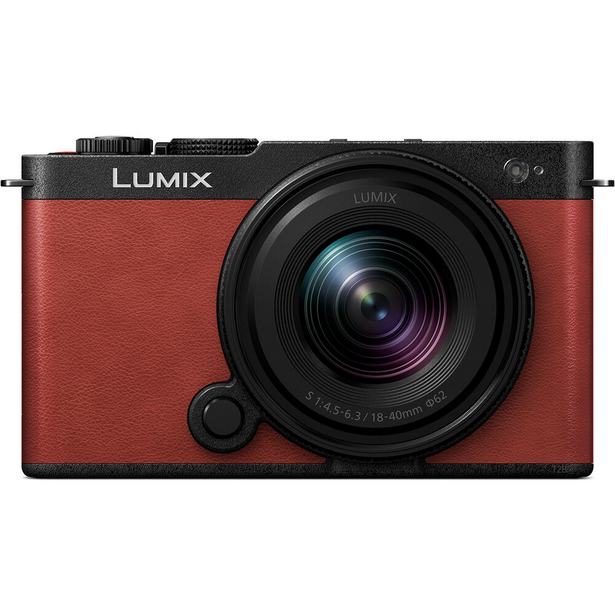
This attitude is understandable and incomplete. People use objects they enjoy carrying. A camera that makes the photographer happy to pick it up is a camera that gets used more often. Design affects that decision. Color affects that decision. Texture and shape and the feel of the dials affect that decision. Pentax understood this in 2009 with the K-x. Nikon understood it in 2021 with the Zfc. Fujifilm has understood it all along. Sony has begun offering bodies like the ZV-E10 II in white alongside black, Panasonic sells the Lumix S9 in nine colors, and Canon offers the EOS R50 in white. The momentum is building, but most manufacturers still treat color as the exception rather than the default.
What the Industry Should Do
The lesson is not that every camera needs art on it or twelve leatherette options. It is that aesthetics are a product feature, not a luxury indulgence, and that the cost of implementing them is low relative to the value they create.
Offering a camera body in three or four colors instead of one adds minimal manufacturing complexity. Leatherette and grip materials can be swapped for textured, patterned, or colored alternatives without redesigning the body. Artist collaborations like the Heralbony project produce distinctive products that generate press coverage, social sharing, and emotional attachment at a cost that is negligible relative to sensor R&D. Custom welcome screens, themed packaging, and matching strap options are finishing touches that cost almost nothing and signal that the manufacturer cares about the ownership experience.
Canon, Sony, and Nikon's professional bodies are likely to remain mostly black, because working photographers need equipment that does not draw attention. But the enthusiast tier, the compact camera market, and the entry-level segment are all spaces where aesthetics could be a differentiator rather than an afterthought. Pentax proved it works on a DSLR in 2009. Nikon proved it works on mirrorless in 2021. Fujifilm proved it works on instant cameras with the Instax line. The question for every other manufacturer is not whether photographers care about how their cameras look. The evidence is in. They do. The question is how long the rest of the industry will take to catch up.
If you are exploring what your camera can do regardless of what it looks like, the Fstoppers Photography 101 tutorial covers the fundamentals of exposure, composition, and camera operation that apply to every body, beautiful or otherwise.




Join the Fstoppers community for free
-
Post comments and join in the discussions
-
Browse the site ad-free
-
Share your work and get featured in the community
-
Compete in the photo contests for fun and prizes
5 Comments
Amen. I find it so ridiculous that photographers reject the notion that cameras should be beautiful. As a photographer, your task is literally to see beauty, but so many in the community just shout, "IT'S A TOOL LOOKS DON'T MATTER!!!11"
Meanwhile, go to a Home Depot and browse through the tool aisle. You'll see a wide variety of different colors and aesthetics for functionally identical tools... because for some reason construction workers are allowed to care how their tools look, but photographers are not.
It's a tool. Form *must* follow function. Apologies to Tony, but I'll take an excellent "ugly" cam over a 2nd rate "beautiful" one any day.
Uh, camera manufacturers know how to make a good camera internally. They can just get people to make them look good afterwards. It's not a mutually incompatible situation.
I'm going to guess most photographers don't buy cameras based on their looks. What working pro would even consider anything but the unit's capabilities when making that decision? For me, well, unless it's something totally idiotic, like the Hassy Lunar, looks don't matter. Nothing more beautiful than a perfectly functioning tool.
All I'm saying is that the two don't have to be mutually exclusive. However, each person thinks differently. That's why there are many different looks out there. Anyway, isn't photography all about how something looks?