

Your camera can connect to Wi-Fi. It can pair with Bluetooth. It can talk to your phone, your computer, and your cloud storage through various cables, dongles, and apps that work half the time. But here's what it can't do natively: connect directly to cellular networks the way your phone, your tablet, your smartwatch, and even your car already can.
No mainstream interchangeable-lens camera ships with built-in 4G or 5G. Yes, cellular solutions exist. There are Sony's PDT-FP1 (a first-party 5G portable transmitter with nanoSIM/eSIM support, not an in-body modem), LiveU and Teradek bonded encoders, and smartphone hotspots enabling camera-to-cloud workflows. But these are all external accessories or workarounds. In an era where a $200 smart doorbell has LTE connectivity, why hasn't the camera industry integrated cellular directly into camera bodies the way every other device category has?
The question isn't whether cellular integration in cameras is technically possible, as it obviously is. The question is whether the camera industry will overcome its institutional inertia, whether photographers actually want this feature, and whether the economics make sense for manufacturers. The answer to all three questions is complicated, and while the trajectory of technology points toward greater connectivity everywhere, cameras may prove to be one category where the old disconnected model persists longer than expected.
The Case for Cellular Cameras: More Compelling Than You Think
At first glance, adding cellular connectivity to cameras sounds like a solution in search of a problem. Photographers have managed perfectly well for over a century without their cameras connecting to cell towers. But that argument ignores how fundamentally workflows have changed and how many pain points exist in the current disconnected system.
Consider the most obvious benefit: instant backup to cloud storage. Every photographer has a memory card horror story: corruption, accidental formatting, physical failure, theft, or loss. The anxiety of walking around with thousands of irreplaceable images on fragile silicon wafers is so normalized that we forget how absurd it is. With cellular connectivity, every image could upload to redundant cloud storage the moment it's captured. Memory card failure becomes an inconvenience rather than a catastrophe. You'd still have local storage as primary, but cellular backup would function as automatic insurance. For wedding photographers, event shooters, or photojournalists capturing unrepeatable moments, this alone could justify the feature.
Then there's real-time image delivery, which fundamentally changes several professional photography workflows. Sports photographers currently use complex systems involving camera-mounted wireless transmitters, FTP servers, and dedicated network infrastructure to get images from field to editor in real time. With built-in cellular, a photographer could shoot a touchdown, and editors could have selects before the extra point is kicked. News photographers could file breaking news images without finding Wi-Fi or returning to the office. Wedding photographers could have a second shooter's images uploading to the primary photographer's cloud storage automatically, eliminating end-of-night card swaps and import sessions. The workflow improvements are transformative for time-sensitive work.

Live streaming is another capability that makes increasing sense for cameras to own natively. Right now, if you want to live stream from a professional camera, you need a complicated setup involving HDMI capture devices, computers, encoders, and stable internet connections, or external solutions like Sony's Xperia PRO, a 5G phone with HDMI-in that acts as the cellular uplink and monitor (the camera itself has no cellular). Professional photographers are stuck with elaborate rigs or expensive workarounds. A camera with built-in cellular could live stream directly to platforms without intermediary devices, which could be useful for events, behind-the-scenes content, real estate tours, or anyone building an audience online.
The smaller quality-of-life improvements add up too. Camera-to-cloud workflows would eliminate cable transfers entirely: shoot all day, and your images are waiting in cloud storage when you get home, already organized and backed up. For photographers working in teams, collaborative workflows become seamless when everyone's cameras are uploading to shared storage automatically.
Technical Feasibility: We're Already There
The technology to build cellular-connected cameras exists today. In fact, it's surprisingly mature and affordable. Modern cellular modules (the physical components that connect to cell networks) have shrunk considerably. However, integrating cellular isn't as simple as dropping in a chip. The complete RF subsystem includes antennas, power amplifiers, filters, and supporting circuitry that collectively occupy significant board space. Smartphones achieve this through years of miniaturization engineering and purpose-built layouts; cameras would need similar investment. We're not talking about strapping a full smartphone to the side of your camera, but we're also not talking about a trivial integration that takes up no more space than existing Wi-Fi radios.
The cost of these modules has plummeted in terms of base silicon: cellular chips themselves can cost manufacturers $20–30 in bulk. However, that's misleading as a total cost estimate. The real expense is regulatory certification: FCC approval in the US, CE marking in Europe, carrier-specific validation for each network, plus ongoing compliance costs. These certifications can run tens of thousands of dollars per region per model. Add antenna engineering, RF shielding, testing, and the overhead of maintaining carrier relationships, and the real cost, amortized across production runs, climbs considerably. Manufacturers might add $100–200 to the retail price, but their actual investment per model would be substantially higher, especially for lower-volume professional cameras where certification costs can't be spread across millions of units.
Battery technology is increasingly capable of supporting cellular connectivity, though the power impact depends heavily on usage patterns. Modern cellular modules are more efficient than older generations, especially in burst mode, where they're transmitting periodically rather than continuously. A camera configured to upload selects every few minutes or only when idle could realistically see 20–30% battery reduction. However, continuous transmission tells a different story. Professional photographers already know this: Such devices drain batteries dramatically faster during active transmission, especially in weak signal areas where the radio amplifies power to maintain connection. A photographer uploading raw files constantly throughout a shoot could see battery life cut by 50% or more. Camera batteries also vary widely in capacity. Some mirrorless batteries are comparable to or even smaller than flagship smartphone batteries, while larger camera batteries offer more headroom. The impact would be manageable for burst-mode workflows but potentially severe for continuous transmission, especially since cameras don't optimize radio firmware as aggressively as smartphones do.
5G speeds are potentially fast enough for the use case, though real-world performance varies dramatically. Uploading JPEGs would be quick on any modern network. Raw files at 50–100 MB each present more challenges. Typical real-world 5G uplink speeds range from 20–100 Mbps (2.5–12.5 MB/s), meaning a 50 MB raw could take anywhere from 4–20 seconds under good conditions and longer in congested areas, weaker signal, or when falling back to LTE. In ideal mmWave 5G conditions, uploads could be much faster, but mmWave coverage remains limited to dense urban areas, and most photographers would be working on sub-6 GHz 5G or LTE networks. You wouldn't necessarily upload every single raw file in real time, but you could upload selects, JPEGs for client review, or work on a throttled upload schedule (every 10 images, or during shooting pauses). For video, 4K footage could be uploaded in the background if you're not shooting continuously. The bandwidth generally exists; it's just a question of implementing smart software to manage realistic network conditions, signal variability, and congestion rather than best-case laboratory scenarios.
Security protocols for cellular data transmission are mature and widely deployed. Banks, hospitals, and governments use cellular networks regularly, though always with additional layers, including VPNs, end-to-end encryption, and private network infrastructure, rather than trusting bare carrier protocols alone. The camera industry would need to implement similar layered security: proper encryption, secure authentication, and privacy controls. Whether camera companies would make those investments, given their historical reluctance to prioritize cybersecurity, is an open question. They wouldn't be pioneering new security territory, but they would need to execute competently in ways they haven't always demonstrated with previous connectivity features.
Industry Resistance: Why Cameras Don't Already Have This
If cellular integration is technically feasible and offers compelling benefits, why isn't it already standard? The answer involves economics, culture, and legitimate concerns about how photographers would react.
The subscription model issue looms largest. Cellular connectivity requires data plans, and data plans mean recurring costs. Camera manufacturers have built their business models around one-time hardware sales, not ongoing subscriptions. Introducing cellular means either: (a) forcing customers into monthly subscription fees they'll resent, (b) expecting customers to add cameras to their existing phone plans (requiring carrier partnerships and complicated logistics), or (c) manufacturers absorbing data costs themselves, which isn't sustainable long-term. Every option has significant downsides. The industry has struggled to monetize subscription services for years—Adobe's Creative Cloud faced backlash before becoming normalized, and camera-specific subscription services like Canon's image.canon have seen mixed adoption. Adding another monthly fee for camera functionality risks customer rebellion. More fundamentally, manufacturers have discovered that selling external cellular solutions can be far more profitable than integration. Sony's PDT-FP1 portable data transmitter sells for $1,300 as an accessory; bonded cellular encoders like LiveU's LU300S and Teradek's VidiU Go command similar premium prices. Selling high-margin accessories to the subset of professionals who need cellular connectivity is a better business model than adding $200 worth of integrated technology to every camera body that most customers won't activate.
Battery life impact is a genuine concern beyond just the technical feasibility. Professional photographers already complain about mirrorless cameras draining batteries faster than DSLRs. Adding cellular, even with intelligent power management, would exacerbate this frustration. For photographers shooting all-day events or traveling without reliable charging access, any additional battery drain is unacceptable. Manufacturers would need to either increase battery capacity (adding weight and size), accept reduced battery life (risking customer dissatisfaction), or make cellular completely optional (reducing its utility). There's no perfect solution, just trade-offs.
Data plan costs concern consumers as much as manufacturers. Adding a camera to your phone plan might cost $30–100 per month. For professional photographers, that's manageable. But for enthusiasts or hobbyists buying a $2,000 camera, an additional $300+ annually for cellular feels excessive, especially if they're not using the features that require connectivity daily. The economics work better for professionals doing time-sensitive work than for hobbyists who are perfectly happy uploading images manually when they get home. This creates market segmentation challenges: do you offer cellular only on professional bodies, making it a premium feature most customers never access?
Privacy and security concerns run deeper than just technical implementation. Photographers, especially photojournalists and those working in sensitive environments, are rightfully paranoid about connectivity. A camera that's constantly transmitting location data, image metadata, or even the images themselves creates surveillance vulnerabilities. What happens if you're a journalist in an authoritarian country and your camera is broadcasting your location? What if someone hacks your camera's cellular connection? What if governments mandate backdoor access to cellular-enabled cameras? These aren't hypothetical concerns; they're real considerations that would require careful implementation and user control. At minimum, photographers would demand the ability to completely disable cellular functions with hardware switches, not just software toggles.
Carrier partnerships introduce complexity and fragmentation. For cellular cameras to work seamlessly, manufacturers would need deals with carriers in every country where they sell cameras. Different regions use different cellular standards. International travelers would need roaming or multi-region support. The logistics are solvable—smartphone manufacturers manage it—but it's a significant operational burden for camera companies that are smaller and less globally coordinated than Apple or Samsung. This complexity might delay or limit the feature to specific markets initially.
Professional skepticism toward connectivity shouldn't be underestimated. Professional photographers are notoriously conservative about new technology that complicates their workflows. They want cameras to be reliable tools that capture images, not computing devices that require troubleshooting. “My camera doesn't even need to connect to anything” is a common sentiment, even among younger photographers. The industry learned this lesson with Wi-Fi connectivity. While sports and news photographers adopted wireless FTP workflows successfully in the early 2010s, broader consumer adoption was much slower. Wi-Fi was heavily marketed for years, often poorly implemented, and remained frustrating enough that many photographers simply ignored it. Camera companies are understandably cautious about repeating that uneven adoption pattern with cellular.
Who Might Build It First: Reading the Tea Leaves
Not all camera manufacturers are equally likely to pioneer cellular integration. Based on their corporate cultures, existing technology investments, and market positioning, some companies are far more likely candidates than others.
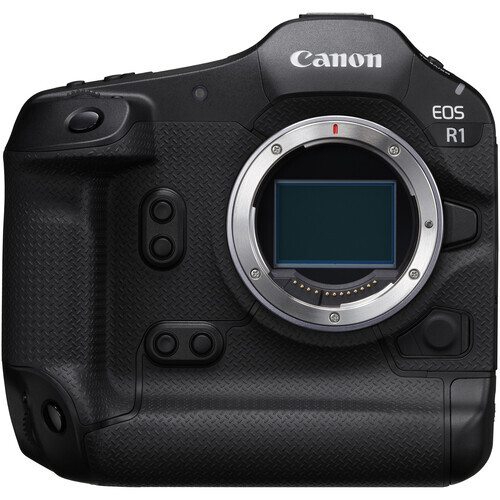
Canon is probably the most likely first mover. They've invested heavily in cloud connectivity with their image.canon platform, they've offered accessories like WFT wireless file transmitters for professional bodies for years, and they have the market dominance to absorb risks. Canon also serves high-end professional markets like sports and news photography where cellular would provide immediate value. Their strategy has increasingly focused on ecosystem integration rather than just selling cameras. However, there's a compelling business reason Canon might not integrate cellular: those WFT transmitters sell for $600–1,000 as optional accessories. From a profit perspective, selling expensive add-ons to the subset of professionals who need them is far more lucrative than adding $200 worth of integrated technology that most customers won't use. If Canon does introduce cellular, it might be as an optional battery grip or module first, preserving the accessory revenue model while testing market demand. Full integration into camera bodies, where the feature becomes standard rather than premium, is less certain from a business standpoint, even if technically feasible.
DJI is an interesting possibility if they expand into interchangeable lens cameras. DJI already offers cellular connectivity for drones for real-time video transmission. They have experience with mobile data transmission, and their corporate culture prioritizes connectivity and smart features over traditional camera company conservatism.
Nikon probably won't lead here. They're financially weaker than Canon or Sony, they've traditionally been conservative about connectivity features, and their engineering focus prioritizes optical and sensor quality over digital integration. Nikon's strengths lie in traditional photography values—excellent ergonomics, reliable performance, and optical excellence—not in pioneering new connectivity paradigms. They'll likely follow if cellular becomes standard, but they won't lead.
Fujifilm is similarly unlikely to pioneer cellular integration. Their brand identity centers on tactile controls, film simulation aesthetics, and a more analog shooting philosophy. Their customer base trends toward enthusiasts and artists who explicitly don't want their cameras to be computing devices. Adding cellular would feel off-brand for Fujifilm, even if it made technical sense. They might add it eventually to remain competitive, but they won't champion it.
Leica will be last, if ever. Leica's brand is built on timeless simplicity and mechanical excellence. Adding cellular connectivity to a Leica would be ideologically anathema to everything the brand represents. Their customers are paying for cameras that feel like analog instruments, not connected devices. Leica will resist cellular integration as long as commercially viable.
The more likely near-term scenario involves modular approaches, with companies like Canon releasing optional cellular accessories or battery grips with integrated cellular that professionals can add if needed. This avoids forcing subscriptions on all customers while providing the feature for those who value it, and, crucially, maintains higher profit margins on accessories rather than commoditizing connectivity as a built-in feature. Several manufacturers could test the market this way before anyone commits to fully integrated solutions. From a business perspective, selling $800 cellular accessories to 10% of customers might be more profitable than adding $200 of integrated technology to every camera body, even if full integration makes more technical and workflow sense.
Timeline: If This Happens, When Does It Become Real?
Predicting technology timelines is notoriously difficult, and that's doubly true for a feature that may never materialize at all. But assuming cellular cameras do happen, based on current trajectories, market readiness, and technical requirements, some educated guesses are possible.
In the next 3-5 years, expect more sophisticated wireless accessories and incremental improvements to existing connectivity. Canon and Sony will likely release updated wireless file transmitters with better speeds and more reliable connections.
The 5-10 year window is where first-generation cellular cameras become plausible. This likely starts with high-end professional bodies aimed at sports, news, or wildlife photography—markets where instant transmission already exists through dedicated accessories. The first implementation probably won't be elegant. It might require separate data plans, have frustrating activation processes, drain batteries faster than manufacturers admit, and work reliably only in certain regions. Early adopters will tolerate these limitations for the workflow benefits; mainstream users will wait for refinement. Video-focused cameras are especially likely candidates because live streaming provides clearer value propositions than still photography workflows. Some cameras might launch with eSIM capability (digital SIM cards) even if they don't actively market cellular as a primary feature. Think of this period as groundwork: manufacturers testing technologies and customer receptiveness without committing fully.
By 10-15 years, cellular could become optional on mid-range cameras and standard on professional bodies, assuming the first-generation implementations prove successful. At this point, carriers might offer specialized camera data plans, activation might become streamlined, battery efficiency will have improved, and the feature will feel less experimental. Photographers will have figured out which workflows benefit most from cellular integration, and manufacturers will have refined the user experience based on real-world feedback.
Looking 15–20 years out, if cellular hasn't stalled out entirely, the connectivity could become as standard on cameras as Wi-Fi and Bluetooth are today: present on most models, largely reliable, but still ignored by photographers who don't need it. Just as many photographers never connect their cameras to Wi-Fi despite the feature existing, many might never activate cellular despite its availability. But for those who need it (event photographers, photojournalists, content creators, team shooters), it could prove indispensable.
The trajectory parallels what happened with GPS in cameras. Early implementations were clunky, draining, and often disabled. Now, GPS is common, works reasonably well, and photographers who need it use it while others ignore it. Cellular will likely follow a similar adoption curve, just compressed into a shorter timeframe because the enabling technologies are more mature.
One potential accelerant: if smartphone cameras continue improving and eating into entry-level camera sales, traditional camera manufacturers might embrace cellular connectivity as a competitive differentiator. The pitch becomes: “our cameras offer smartphone-like convenience with professional image quality.” This could push timelines earlier if camera companies feel existential pressure to prove their continued relevance.
Do Photographers Actually Want This?
Here's the uncomfortable question lurking beneath all the technical and business analysis: even if manufacturers build cellular cameras, will photographers actually use the feature, or will it become another unloved gimmick like the touchscreens everyone complained about?
The answer splits along professional and amateur lines more clearly than almost any other camera feature. Professional photographers working in time-sensitive fields would absolutely use cellular integration. The workflow improvements are too substantial to ignore. Being able to shoot a corporate event and have selects uploading in real time so clients can post to social media before the event ends? That's a competitive advantage. Being able to shoot a news event and file images immediately without finding Wi-Fi or returning to the office? That changes job requirements. For these users, cellular isn't a gimmick; it's a tool that directly impacts their ability to work efficiently and meet client demands.
Enthusiast photographers are less clear. Many would never activate cellular even if available, preferring to maintain complete control over when and how their images are transmitted. The subset who are content creators building online audiences might value automatic cloud backup and streamlined posting workflows. Landscape photographers shooting in remote locations might appreciate automatic backup without needing to pack laptops for manual transfers. But a substantial portion of enthusiast photographers shoot for personal enjoyment without time pressure or need for instant sharing. For them, cellular adds cost and complexity without meaningful benefits.
The generational divide matters too. Photographers who came up in the film era often view cameras as discrete tools that shouldn't need to be “smart” or connected. Younger photographers who've never known a world without smartphones might have different expectations about what cameras should do. As generational turnover occurs in professional photography, acceptance of connected cameras will likely increase.
There's also the question of whether photographers want their cameras to be computing devices at all. Cameras have been gradually absorbing smartphone functionality: touchscreens, apps, connectivity features, computational photography. Some photographers welcome this convergence; others resent it. The latter group views cameras as tools for capturing light, period, and bristles at every addition that makes cameras more complex. Cellular integration falls squarely into this philosophical divide.
The Path Forward: Connectivity as Choice, Not Mandate
If cellular integration comes to cameras, the implementation approach matters enormously. Camera manufacturers need to learn from smartphone industry successes and their own Wi-Fi connectivity failures. Encouragingly, manufacturers are already iterating on camera-to-cloud workflows, typically via Wi-Fi or USB-tethered 5G smartphones. Fujifilm and Panasonic have documented official camera-to-cloud setups that work today, showing that the user experience challenges of seamless connectivity are actively being addressed, even if cellular isn't yet built directly into camera bodies.
The feature must be optional at every level. The ability to never activate it without compromising other camera functions. No mandatory subscriptions to access basic camera features. Photographers must feel that cellular enhances the camera when wanted, not that the camera is crippled without it.
Privacy controls need to be comprehensive and transparent. Photographers must know exactly what data transmits, when, and where. Location tracking must be explicitly opt in with clear indicators when active. The ability to shoot in “offline mode” with zero transmissions must be straightforward and reliable. For photojournalists, corporate photographers under NDA, or anyone working in sensitive contexts, these aren't nice-to-haves; they're deal-breakers.
Pricing models need innovation beyond simple monthly subscriptions. Prepaid data packages, pay-per-gigabyte models, included first-year service, or tiered plans based on usage could all make the economics more palatable. The industry should study how automotive manufacturers handle cellular in connected cars, how GoPro handles their subscription service, or how drone manufacturers bundle connectivity features.
The real question isn't whether technology will enable cellular cameras, as it will. It's whether the camera industry can implement it thoughtfully enough that photographers recognize the value rather than resenting the intrusion. That requires understanding that photographers don't want cameras to be smartphones. They want cameras to be better cameras, and connectivity should serve that goal rather than transforming cameras into something else entirely.
Conclusion: Possible but Far from Certain
Will we see cellular integration in cameras? It's a decent possibility, though far from guaranteed. When? If it happens, probably sooner than skeptics think but later than enthusiasts hope. The technology exists, the use cases are compelling for specific markets, and the trajectory of connectivity in other device categories suggests cameras could follow, but the unique economics and culture of the photography industry might keep cameras disconnected longer than other products.
But this isn't a revolutionary transformation that will remake photography overnight. It's an evolutionary step that will matter tremendously for some photographers and not at all for others. It'll arrive gradually, probably imperfectly at first, and will take years to mature into something reliable and broadly useful.
For professional photographers in time-sensitive fields, cellular cameras might arrive in the next 5-10 years and quickly become indispensable workflow tools. For enthusiast photographers shooting for personal enjoyment, cellular might remain a background feature they never activate, much like GPS in cameras today—technically present but functionally ignored.
The more interesting question isn't whether cellular comes to cameras but what happens afterward. Once cameras can transmit images instantly, what new workflows emerge? How does photography change when the capture-to-publication timeline compresses from hours to seconds? Do photographers embrace or resist the expectation of instant delivery? Does the always-connected camera enable new creative possibilities or just create new pressures?
Technology rarely evolves in the directions we expect. Camera manufacturers thought photographers desperately wanted touchscreens and got ambivalent shrugs. They didn't predict that in-body image stabilization would become a make-or-break feature for entire market segments. Cellular connectivity in cameras will likely have unexpected consequences that we won't fully understand until the technology is actually in photographers' hands.
What seems likely, though not certain, is that if cellular cameras do become widespread, the disconnected, memory-card-dependent camera of today will eventually seem as quaint as cameras that required film processing. The question isn't just whether cameras join the connected world; it's whether the benefits justify the costs and complications, and whether they do so in ways that genuinely serve photographers rather than simply chasing technological trends for their own sake.
For now, we wait. And it's entirely possible we'll be waiting forever, that the unique challenges of implementing cellular in cameras will prove too difficult, too expensive, or too misaligned with what photographers actually want. But if it does happen, it probably won't be too much longer.





Join the Fstoppers community for free
-
Post comments and join in the discussions
-
Browse the site ad-free
-
Share your work and get featured in the community
-
Compete in the photo contests for fun and prizes
28 Comments
Preach!! Thanks for advocating for this, Alex.
Even before we get cellular, there's a lot of work to do improving Wi-Fi transfer speeds (which tend to be 10-50x slower than smartphone speeds). We should also integrate wireless accessories, including a flash transmitter and wireless mics. DJI has wireless mics integrated and both DJI & Hasselblad already have excellent Wi-Fi transfer speeds. CRAZY that nobody builds a flash transmitter into their cameras!
Tough to see where the ROI is for pro photographers given they will need to replace their cameras. Take your example of the wedding photog, how long does it take for the primary and assistant to meet, collect the memory cards and for those to be up loaded to a portable hard drive? At the last wedding I was at, both photographers were using full frame Sony or Canon and each had 2 cameras. They could be looking at $20K to upgrade to get cellular connectivity.
The argument for sports/event/news photographers is different and the ROI wouldn't be driven by the photographers time, but speed to publication for the media company. But would that market be large enough to justify the development?
Improving camera to phone performance as @Tony Northrup suggests makes more sense, the phone already has the network connectivity and potentially enough memory to buffer the images coming from the camera in the event of poor connections.
Before cellular connectivity, more likely the mfg will add AI to process the image in camera.
Nobody would replace their existing cameras just to get these capabilities. When the current camera wears out and is going to be replaced anyway, then the new cameras that are available would be ones that are equipped with android capabilities. That's how it will work. No one, except you, is thinking that anyone would need to upgrade ASAP just to get the smartphone capabilities. That's just not how people have ever done things.
Wrong.
:
We do not need to replace existing cameras. Just integrate cell phone connectivity into new battery grips allowing room for the battery and cell phone guts (there is much wasted space in current battery grips) for existing DLSR models like the D850, D750, and perhaps a couple of other models and integrate into new Mirrorless bodies and/or battery grips
:
I would pay $1,200 for such a battery grip and a monthly $100 data plan from a carrier of my choice. Offer new mirrorless bodies with cell phone connection for an additional $1,200 or without for a price option, or only with cell phone connectivity at the higher price point.
"
Must include the ability to download download Apps for sharing and light editing and file size reduction for fast and easy sharing. QuickPic for Android is small and simple as an example. The camera's already have touch screens.
:
Must have two variants, both Android and Apple so we can work within our chosen software and ecosystem.
I actually disagree with your assessment about Nikon. Nikon is last in the big three, and are looking for a way to claw back market share. They also have the best thermal solution compared to Canon and Sony. Nikon is pushing firmware updates and features like mad trying to catch up, and just released the Zr, which breaks all known forms/standards about cinema cameras (for better or worse). I think Nikon is the natural choice to jump first because they have the most to gain if it works, and their cameras can handle the extra heat better than both Canon and Sony. I do think it will be an APSC camera to get it first.
-From a 2nd generation Nikon owner who switched to Canon a year ago.
Camera hacking may become a thing.
But why? Just to make them more expensive and to have more parts that can break? I'd rather not, or have the same version without it. I just have never needed or wished my camera had cellular in it. Maybe for those sports journalists, but a big pass for me.
I can buy a fully functional smartphone for $49. So I do not see where there would be any extra manufacturing expenses for camera makers to overcome if they were to put the android software into their cameras. Yeah of course a few dollars but that just doesn't matter at all in the context of cameras that retail for $500 to $5,000.
And it does not matter AT ALL if cameras become a wee bit bigger in order to house the extra capability. Cameras are already so small that they are uncomfortable to hold, and a bit larger camera would actually be more comfortable to use.
Even if the user chooses not to get a cell plan for their camera, android capabilities would be invaluable. I know many teenagers who have and use smartphones but do not have any plan and no carrier. They just use their phones via WIFI. And with just a WIFI connection and no cell plan or carrier, they are able to get their phones to do everything that I can do with my carrier-connected phone ..... yes, even phone calls. The same could be done with a camera that has android software in it, whenever there is a WIFI signal within range.
Personally, I could REALLY benefit from a camera that is able to use apps. If my camera could host the Merlin and eBird and iBird Pro apps, that would make my bird photography so much easier. I would be able to use my brain and my fingers more for photography and less trying to manage two cell phones while afield. Yes, as it is now, I need to have two cell phones with me while afield photographing birds, because running 3 different apps simultaneously on one phone just doesn't work well for me. But having 2 phones readily accessible is difficult, as is making sure that I keep them both charged, because these apps drain battery life FAST. It is no problem at all to have a couple extra camera batteries in my pocket, but keeping the phones charged requires me to carry a battery pack with me and then I have to plug the phones into that with cords, which get tangled and come loose frequently. A huge pain in the ass that could be so easily resolved if only the camera could run some apps for me.
Many of us use apps while we photograph, in order to get our subjects in close to us so we can get good photos of them. So it would be super helpful if our cameras could shoulder some of that load and be able to run one or two of the apps that we need in order to do our photography.
I also make and receive a great number of texts and a fair number of phone calls while photographing. It would be so nice if I could just see the texts on my camera's rear LCD, and use a speaker / mic in my phone to have phone conversations. I mean my camera and huge lens are already set up on a tripod right in front of my eyes, so it would be so much easier to use the camera for texts and calls than it would be to have to get my phone out and use that.
I think this is a great conversation to have. As a techie IT person and someone who has owned devices for more than two decades with these capabilities, it feels like the lack of features such as GPS, cell service and bright hi-res screens is more about the age of the camera companies and the age of the people who buy and can afford the behemoth professional camera bodies. These groups have an outsized presence here on all these photography sites and they are very vocal about 24 megapixels and DSLRs and not needing anything new. The word curmudgeon comes to mind and it is real here, perhaps to the point of smothering the entire industry.
Partnerships with DJI, Oppo, Xiaomi, etc. with Hasselblad, Leica, etc. have had excellent results in one direction, mobile phone and drone cameras. I am anxious to see that flow in the other direction as well. But this only works if there is a market for such features. If the target audience is mostly old-timers, no one will want nor buy these features. The reason it works so well for the cell phone manufacturers is because people are receptive, no pun intended.
Alex wrote:
"Live streaming is another capability that makes increasing sense for cameras to own natively. Right now, if you want to live stream from a professional camera, you need a complicated setup involving HDMI capture devices, computers, encoders, and stable internet connections ..... A camera with built-in cellular could live stream directly to platforms without intermediary devices."
I see this as something that would be extremely useful for one industry in particular - the adult entertainment streaming industry. The first decent camera that offers this capability will probably sell tens of thousands of units to broadcasters of adult realtime content. Why? Because broadcasters would only need the camera and its built-in mic, and not need to have a computer, which is a real barrier of entry to this industry for broadcasters in 3rd world and "developing" countries.
I am 64 and began buying Nikon gear in 1977. I have too many F-mount lenses to go mirrorless for now discernable gain. I own pairs of D850, D750, D700, D7500, D300, D40 DLSR's and for film pairs of N80, Ftn, and F with Photomic metering viewfinder.
I gave up on Nikon's Snapbridge (really, I have to connect to my phone by Wi-Fi after disabling my home WiFi, then connect by Bluetooth, remembering to turn home WiFi back when done?) for file sharing years ago. I simply Carry card readers in each camera bag, insert the card, pull images to my Android Smartphone, edit lightly and shar,which is way faster with less steps than using Snapbridge. I tried WiFi SD cards for awhile but gave up in those to to slow speeds.
I would spend $20,000 for a pair of bodies and a set of Holy Trinity F2.8 zoom lenses and a 200mm 1:1 Macro or same in 70-180mm, perhaps one or two other fixed lenses.... Even if Nikon changed the Mount.
However, I will only spend that kind of money to gain cell phone integration. Nothing else will cause me to upgrade.
Nikon nor any other Japanese camera manufacturer have figured out that if I can afford $3,000 bodies that I can afford another $500 for the cellphone hardware (add it inside the battery grip for God Sakes for a new system, or in battery grips for existing cameras and charge me $1,000. We already have the touch screen, this cannot be that difficult to bring to the market.
I can easily afford another data plan of $100 per month to bring the dumbest electronic gear I own (hello...McFly ...Nikon DLSR's) up to the standard of the IOT (internet of Things where even my crock pot and refrigerator are better connected than Nikon DLSR's).
We also need the ability to download Apps for light editing, cropping, size reduction for easy sharing, contrast, saturation, exposure, curves, that is small and simple like QuickPic for Android.... Need two variants, Android and Apple so we can maintain our workflow with our software and APP ecosystem.
This loyal Nikon devotee would even switch brands for such connectivity and ease of instant file sharing.
Hey Craig!
Kudos for you for not being a "curmudgeon"! Even some of us aging folks see the sense in advancement, instead of keeping cameras in an archaic state.
It wouldn't be the first time I've been called a curmudgeon, so I guess if the shoe fits.... But really, all of that connectivity so I can share photos when I have little interest in sharing them (at least on the spot) anyway? What's the hurry? Or editing pictures in camera when it's a task that a real computer monitor is needed to do well? I just don't understand the rush unless there's a "breaking news" newspaper deadline. The last thing I want while my mind is focused on the scene in front of my camera is to deal with texts or phone calls. They can wait. I prefer the fewer distractions from archaic cameras.
Ed wrote:
" ..... all of that connectivity so I can share photos when I have little interest in sharing them ..... What's the hurry? ..... I just don't understand the rush "
Ed,
I totally get that these features would not help you at all for the type of photography you do and the way you do it.
But some of us have embraced technology and use it to advantage. For instance ......
For the last two weeks of September, I was guiding a couple of photographers in Yellowstone and Teton National Parks. I would often go off by myself to scout wildlife for them as they shot landscapes. When we had cell service, I would be on the phone texting or calling to let them know about the opoportunities I had found. There were several times when I needed to show them images I hd just taken, so they could decide for themselves if it was an opportunity that they wanted to come shoot, or not. So I was so often using the camera on my cell phone to photograph the image on the LCD playback on the back of my camera, and then texting it to them so they could see the type of images that were available. Getting a clear shot of an image on the back of a camera is a freaking hassle! The glare makes it so stinking' difficult. So I waste precious minutes getting my camera into a shaded spot, or holding a spare garment over the whole thing, as I try to shoot the back of my camera with my cell phone camera.
Imagine how much better and easier it would be to just shoot them a file, directly from my camera to their phone?
For some of us, we collaborate with others A LOT and are constantly letting everybody at the refuge know what critter just showed up, and where, so they can get themselves there ASAP to get in on the shooting before the subject takes cover. For us, it isn't about having a serene outdoor experience. It is about getting as many high quality wildlife images as possible.
Shooting wildlife is NOT always a solitary experience. It is sometimes frantic, pushing ourselves to get every shot possible and keeping in constant communication with others in the Park or Refuge so that we can share what we come across and all get to the best opportunity before it is over.
Joe sends a group text to 5 of us at the State Park, "guys, I have a big fully mature buck with a 4 by 5 rack on the east edge of the cattails, south of the big pavilion ... he is generally holding, but gradually heading west as he feeds." So then 5 wildlife photographers who are currently in different areas of the park all start to hoof it to the cattails as quick as we can so that we can shoot that buck before he gets into cover. That's just how we shoot wild animals when possible - a bunch of us all communicating continually, in real time, so that we can all get in on whatever anyone finds.
That is the reality for the way many of us shoot wildlife and nature at least some of the time. And having a camera that is "in the loop" would be immensely helpful for such fast-paced, communicative photography styles.
That all sounds exhausting. No wonder you've said (correct me if I'm mistaken) that you don't enjoy the process near as much as coming home with the picture. If I couldn't really enjoy the quiet solitary experience, it would be too much like work.
Yeah, for me it is definitely the results that drive me. Not the experience. Although some, even most, experiences photographing in nature are enjoyable, that is certainly not a necessity or an objective for me.
EDIT:
Bird photography is even more demanding of technology. Because not only are we trying to get great photos of the birds, but we are also all on eBird, running a real-time checklist as we are afield. That means keeping track of every single bird we see or hear, attempting to accurately identify every bird seen, and keeping an accurate count of every species. Which means constantly being on our phones and adding each bird we encounter.
So if I am looking through my viewfinder at a sandpiper working the shallows of a shoreline, and track the bird as it moves about, waiting for the moment it lifts its head into a good pose, or waiting until that moment when it turns at just the right angle, relative to the sunlight, I also need - at the same time - to be keeping track of every bird I hear call or sing in the background. And then I need to enter all of those birds into my running checklist on eBird as soon as the sandpiper I am shooting gives me a break.
I do NOT think this type of birding / bird photography would be something that you would enjoy at all. But for those of us who do it this way, we really need all the tech we can get, not only in our phones but in our cameras also.
"I do NOT think this type of birding / bird photography would be something that you would enjoy at all." - that may be the understatement of the year. You used the expression "fast-paced" in a previous comment. I don't even enjoy fast-paced television shows anymore, much as less real life. It will undoubtedly keep you young though.
Oh wow, I'm different. If a movie pauses for a moment with nothing happening, to "build mood" or whatever, I just can't stand that and quickly just pause it or close it out and put YouTube or something on instead. Gotta have multiple things going on all around me all the time!
I also hate music that is slow and "relaxing". My friends and I call these songs "snoozers". There's just never any time in my life where I ever want to hear something slow like that. Give me pumping bass and a bunch of busy instruments all playing hard at the same time, that's way more my style.
Music is in a category by itself. Good old 50s rock n roll... Jerry Lee Lewis, Chuck Berry, Little Richard... ahhhh, great stuff.
I'm surprised nobody has mentioned the Samsung Galaxy NX yet - a mirrorless camera manufactured between 2013 and 2017 which supported NX mount lenses and had full Android running on it.
It built on the previous Samsung Galaxy S4 Zoom cell phone/point&shoot hybrid, and the Samsung Galaxy Camera, which was more of a compact camera with an Android phone welded to it. I owned both; they were OK cameras for what they were but the Android part was terrible, and battery life sucked.
The NX camera series was quietly abandoned by Samsung so we never saw any updates to the Galaxy NX.
One issue was that in the 2010s the cell phone upgrade cycle was much faster, and a 2 year old phone was leagues behind current model - but the upgrade cycle for cameras is much slower, and you don't want to change cameras every two years. It might be more feasible to build a 5-10 year life span cellular device nowadays.
1) Your asking the right question: "Who would want this?" I don't think that's the right direction. This is a generation where high-end cameras are becoming ever-more a niche market, I don't think they are the same genre, or a place for that. (Let them eat Cake...) 2) Plus, the cellular telephones are already claiming even some long-time photographers. Meaning even some of them are saying that an Iphone is good enough for what they do. Of course that is a different argument altogether, on whether a device without a real lens or much real zoom capabilities, or that has built in john-doe AI features that you usually can't turn off, unless you go into guts of the settings, but yes more and more people are using those devices to do whatever work, that used to require expensive cameras. No need to add cell-feature to a camera too. Bluetooth is good enough.
Another thing to add that I didn't think of, was in a place like the United States the large cell carriers like AT&T and Verizon have made it very difficult in the last 10 years to add extra devices to your plan. In the past you could just pop a Sim-Card into a device, and have it work, but nowadays the cell-networks are really locked down. In fact what happens is you may have a device that you bought, and all of a sudden your carrier decides that it no longer supports that device on the Network. AT&T decided to lock-out all non-store bought devices a few years ago. We were able to retain one internet device we owned, only by hacking it. My point is, that I doubt that a deal could be struck between the cell-networks and the carriers (who own them) to get these devices to work with each other. And for how long? Meaning you could buy your device it works for a year or two, than the carrier decided it won't support it anymore on the network. In some place like Asia, this might work, where the cell-networks are not as locked down.
I think you have an exaggerated view of carriers not supporting devices, a.k.a. "locking them down".
I have Verizon and I buy old used cell phones off of eBay, and every one has worked great for me. In fact, when I first receive the phone from the eBay seller, I take it to a Verizon store and the employees there transfer everything from my other phone onto it and set it all up for me and get it up and running on their network. And I only have a $50/month prepaid plan, no commitment to them at all.
Even from the AI-Overview: "Discontinued support: Many older devices, including specific models from manufacturers like LG, Nokia, and Samsung, are no longer supported by Verizon. You may be unable to activate these devices on the network..." Glad it has worked for you so far, but the view from where I'm sitting is to lock further down, not more open. The point being made here is Canon or Sony would have to strike a deal with the networks to open these ports. More than likely the future is not in Cellular anyway. It will be some sorta Wifi, that takes over or something.
Well of course old stuff isn't going to work forever. Just like you can't use an old computer on the internet because the operating system isn't compatible with browsers anymore. But as long as you're not trying to use a 6 or 7 year old device that only has 3G, then you should be good. My 2020 Motorola still works great on Verizon.
BTW: "Old Computers" can still use the internet. I have a Windows-7 machine that has no trouble running the Chrome browser, it is from 2015 (I use it as a media-server). It is cellphones that age-out faster, and become completely unusable after a couple years pass. The Cell technology is moving way faster than 'PCs'. With 3G to 4G to 5G... plus they keep updating the 'App store development and security requirements'. But with a PCs you can literally run some of the same applications that ran on them 20 years ago. Everybody is talking about how Windows 10 is about to lose it's security contract, but that doesn't mean those PCs will actually stop working. Part of my point above was though, that let's say you do get Sony to contract with Verizon to allow you to add a brand new 'Sony Camera' to a plan. What happens when you have that same device 2 to 5 years later? Will it still be allowed to be attached to the plan....? That is where the idea gets dicey, and more than likely another technology is a better idea anyway.
It is probably best not to make overarching generalizations the way you do.
While your 2015 Windows-based computer can still use Chrome (according to you), my 2014 iMac can not use Chrome. Why? Because the most recent operating system that my computer is able to run is Big Sur, and the current version of Chrome are no longer able to be run on Big Sur. And Google does not make older versions of Chrome available to us.
Questions for you:
Do you have the latest version of Chrome, or are you using a version of Chrome that you downloaded a couple years ago?
If your 2015 computer got a glitch or something, and had to be wiped clean and have the operating system re-installed, would you then be able to download the current version of Chrome?
Apple computers were built to run Safari, at some point, you could start downloading and using Chrome, google says that it was available as early as 2009. Since you don't have it already, you'll need to find an older 3rd party Chrome installer for your iMAC, not the live one on Google.com. My windows-7 machine says "to get future chrome updates you'll need Windows 10". So no it is not the latest Chrome either. The machine is beefy enough to run Windows-10, but I'm purposely running Windows-7 for "Windows Media Center", that Microsoft dropped. Could it be restored? Yeah no problem. There are places where 3rd party sites keep old-Chrome-Binaries. I will not link that here.